
Dashun (Taishun), from the series "Twenty-four Paragons of Filial Piety as a Mirror for Children (Nijushiko doji kagami)"
- Date:
- c. 1843
- Medium:
- Color woodblock print; oban
- Format:
- Oban
- Source:
- Art Institute of Chicago
Description
Dashun (Japanese: Taishun) is the mythological sage-emperor Shun, the paradigmatic exemplar of filial piety in Confucian tradition, celebrated for enduring his cruel father and stepmother's abuse with unfailing devotion. This oban print from the series "Twenty-four Paragons of Filial Piety as a Mirror for Children" (c. 1843) uses the Chinese moral canon to instruct young Japanese readers through images of exemplary behavior. Kuniyoshi depicts Taishun surrounded by wild animals who, moved by his virtue, helped cultivate his fields.
More Prints by Utagawa Kuniyoshi
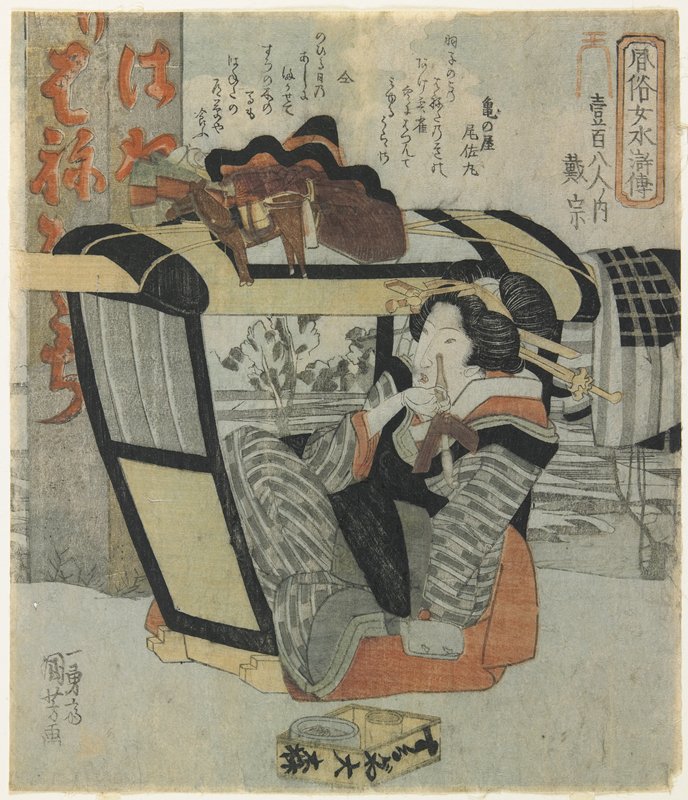
Woman as the Hero Taisō in Palanquin Holding a Pipe
c. 1830
Woodblock print (surimono), ink and color on paper

Yan Qing (Roshi Ensei), from the series "One Hundred and Eight Heroes of the Popular Water Margin (Tsuzoku Suikoden goketsu hyakuhachinin no hitori)"

Poem by Abe no Nakamaro, from an untitled series of One Hundred Poems by One Hundred Poets

Hu Sanniang (Ko Sanjo Ichijosei), from the series "One Hundred and Eight Heroes of the Popular Water Margin (Tsuzoku Suikoden goketsu hyakuhachinin no hitori)"
More Children Prints
Frequently Asked Questions
Dashun (Taishun), from the series "Twenty-four Paragons of Filial Piety as a Mirror for Children (Nijushiko doji kagami)" was created by Utagawa Kuniyoshi (歌川国芳) in c. 1843.
Yes — Dashun (Taishun), from the series "Twenty-four Paragons of Filial Piety as a Mirror for Children (Nijushiko doji kagami)" is part of the Twenty-four Paragons of Filial Piety as a Mirror for Children (Nijushiko doji kagami) series by Utagawa Kuniyoshi.
Dashun (Taishun), from the series "Twenty-four Paragons of Filial Piety as a Mirror for Children (Nijushiko doji kagami)" depicts children and daily life.