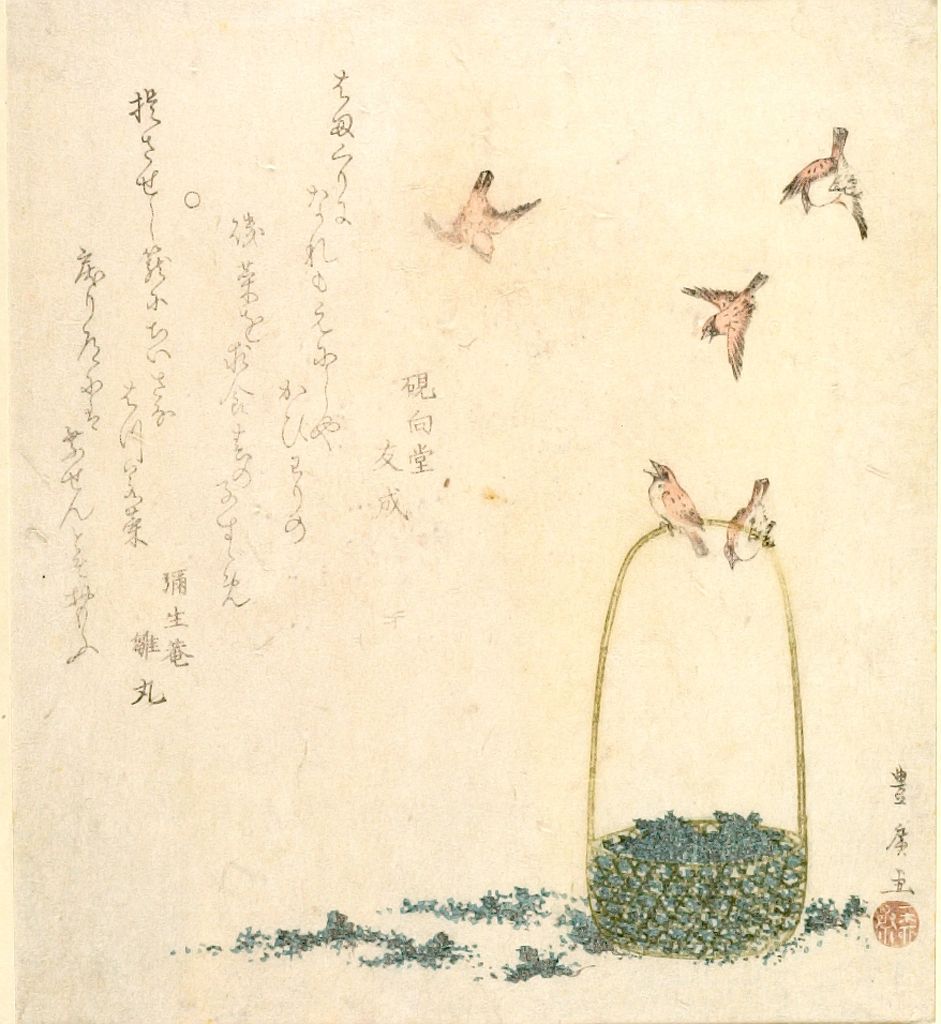
Birds
- Medium:
- Woodblock print
- Source:
- Harvard Art Museum
Description
Birds, undated and probably produced in the late 1790s or first decade of the nineteenth century, belongs to the kachō-e or bird-and-flower category that Utagawa Toyohiro practiced alongside the bijin-ga and landscape subjects for which he was more widely known. As one of the two leading pupils of Utagawa Toyoharu, the founder of the school whose uki-e perspective views had reoriented late-eighteenth-century ukiyo-e toward measurable architectural space, Toyohiro developed a quieter and more lyrical idiom than that of his brother-rival Utagawa Toyokuni I, whose actor prints and bold figural prints of the Kansei and Bunka eras came to define the commercial face of the early Utagawa school. The present sheet treats its avian subject with the careful contour and patterned plumage that the kachō tradition had codified, the birds arranged across the sheet with the auspicious resonance familiar from Chinese and Japanese decorative painting. The kachō-e mode had been a recognized print category since the mid-eighteenth century, when artists such as Suzuki Harunobu and Isoda Koryūsai had established the small-format bird-and-flower study as a vehicle for refined seasonal sentiment, and Toyohiro's handling preserves the contemplative tone associated with the genre while keeping the line legible to a wider commercial audience. Color is restrained, with the patterned feathering of the birds carrying the principal visual interest and the surrounding paper left largely uninked so that the group dominates the sheet. This understated bird-and-flower idiom is consistent with the broader sensibility through which Toyohiro became, in his later years, the formative teacher of Utagawa Hiroshige, whose own lyrical kachō-e production half a century afterward would carry the genre to one of its highest expressions in nineteenth-century ukiyo-e. The Harvard Art Museum preserves this impression (https://ukiyo-e.org/image/harvard/HUAM-CARP04512) as a witness to Toyohiro's range across the kachō-e tradition that complemented his better-known bijin-ga and meisho-e production.
More Prints by Utagawa Toyohiro

Autumn Moon at Atago Hill (Atago shugetsu), from the series "Eight Views of Edo (Edo hakkei)"
c. 1804/18
Color woodblock print; oban

The Seventh Month, from the series The Twelve Months by Two Artists (Ryoga juni ko)
n.d.
Color woodblock prints; oban triptych
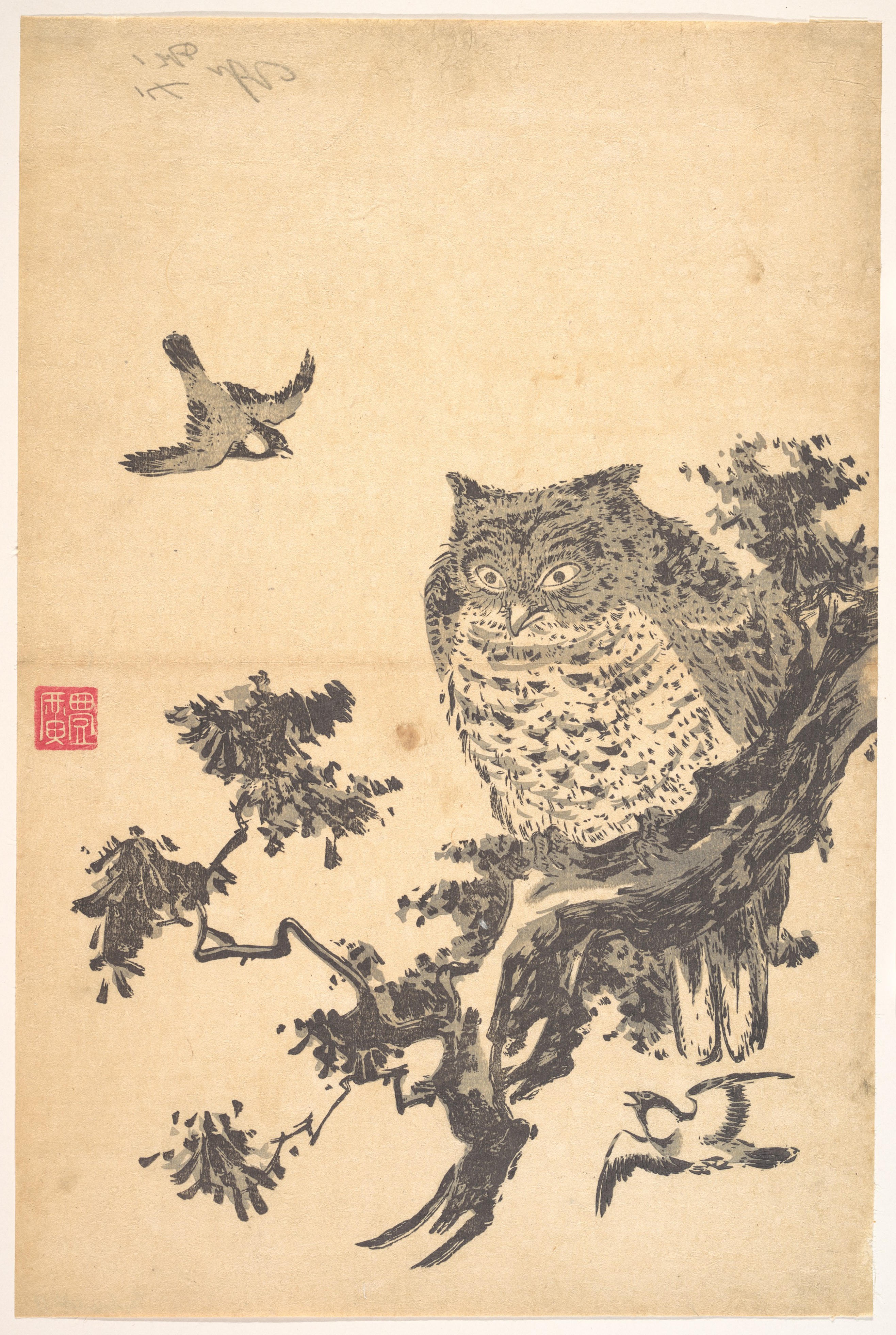
Owl and Two Swallows
Woodblock print; ink and color on paper
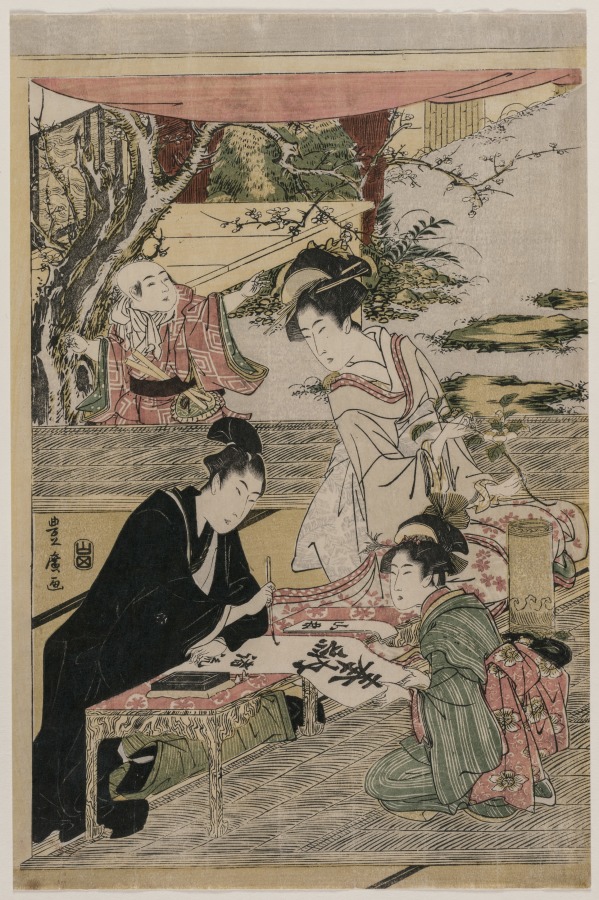
Young Man Writing at a Table
c. 1800
color woodblock print
Frequently Asked Questions
Birds was created by Utagawa Toyohiro (歌川豊広).