
Biography
Utagawa Toyohiro (1763-1828) was a pivotal late-Edo ukiyo-e artist whose career spanned the transition from the Kansei to the Bunsei era, a period that saw Edo woodblock printmaking expand from portraiture and pleasure-quarter subjects into the landscape tradition that would come to define the genre in the nineteenth century. As one of the two senior pupils of Utagawa Toyoharu, the founder of the Utagawa school, Toyohiro became a foundational figure in what would eventually grow into the largest and most influential lineage in the history of ukiyo-e. His most enduring contribution to the medium, however, was not his own designs but his decades-long mentorship of Ando Hiroshige, who entered his studio in 1811 and went on to revolutionize Japanese landscape printmaking. To understand the look and ambition of Hiroshige's later masterworks, one must look first at the quiet, atmospheric prints of his teacher.
Toyohiro trained in Edo in the workshop of Utagawa Toyoharu, which he entered as a young man. Toyoharu had established the Utagawa school in the latter half of the eighteenth century and was particularly celebrated for his uki-e perspective prints, which adapted Western linear-perspective conventions to Japanese subject matter. From Toyoharu, Toyohiro absorbed two complementary strands of the school's identity: a confident handling of figural design rooted in the kabuki and pleasure-quarter traditions, and a serious interest in landscape as a subject worthy of careful, atmospheric treatment. Working alongside his fellow student Utagawa Toyokuni I, who would become the most commercially successful designer of his generation, Toyohiro developed in a different direction, favoring restraint, soft palettes, and lyrical compositions over the bold theatrical designs that made Toyokuni famous.
Toyohiro's mature bijin-ga, produced from the late 1790s through the 1810s, exemplify this restraint. His women are slender, elegant figures who lean, write, arrange flowers, or step from boats with a stillness that distinguishes his work from the harder graphic energy of his contemporaries. Many of his single-sheet prints take the hashira-e (pillar print) format, a tall, narrow shape whose compositional challenges he solved with quiet ingenuity. He also produced numerous surimono, the privately commissioned, deluxe prints associated with poetry circles, where his refined draftsmanship and tasteful color sense were especially well suited to the medium's discerning patrons.
It is in landscape, however, that Toyohiro's historical importance becomes clearest. He produced an Eight Views of Edo series in the early nineteenth century and contributed to the broader fashion for meisho-e (famous-place pictures) that swept ukiyo-e during the Bunka and Bunsei eras. He also engaged the classical Eight Views of Omi theme, transposing the Chinese poetic convention of evening bells, autumn moons, and returning sails onto the lake-shore landscapes around Lake Biwa. These prints feature small figures placed in spacious, weather-inflected settings, with delicate gradations of color used to suggest twilight, mist, and rainfall. The compositional and atmospheric vocabulary Toyohiro developed in these series was directly inherited by Hiroshige, who would later make the same Omi and Edo subjects famous in his own celebrated landscape series.
Toyohiro also worked frequently in collaboration. He partnered with Toyokuni I on a notable series, The Twelve Months by Two Artists (Ryoga juni ko), in which the brothers in art alternated designs across the calendar year. Such projects underscore the collaborative, workshop-driven nature of Edo print publishing and Toyohiro's standing within the Utagawa lineage as a designer whose name carried independent weight. He illustrated kibyoshi yellow-cover books and other popular literature, taught a small group of pupils, and accepted private commissions for surimono celebrating the New Year and other seasonal occasions.
The young Hiroshige came to Toyohiro's studio in 1811, at the age of fourteen, and remained his pupil until Toyohiro's death seventeen years later. Hiroshige's earliest signed works follow Toyohiro's lead closely, in subject, scale, and palette, and the older master's landscape sensibility, his preference for atmospheric effects over hard outline, and his willingness to leave passages of paper unmodulated as sky or water, are all unmistakable presences in Hiroshige's later Tokaido, Edo, and Omi series. Hiroshige's lifelong reluctance to adopt the name Toyohiro II, even when it was offered to him after his teacher's death, is itself a measure of how high a value the younger artist placed on his master's legacy.
Toyohiro died in Edo in 1828. His designs survive today in major collections including the Art Institute of Chicago, the Metropolitan Museum of Art, the Cleveland Museum of Art, and the Victoria and Albert Museum, where they document an artist whose sensibility quietly shaped the direction of Japanese landscape printmaking. For collectors and scholars of Edo ukiyo-e, Utagawa Toyohiro is essential reading, both for the intrinsic quality of his bijin-ga and landscapes and for the way his work prepares the ground for the great landscape generation that followed.
Key Facts
- Active Period
- 1763–1828
- Nationality
- 🇯🇵Japan
- Movement
- Ukiyo-e
- Works Indexed
- 24
Frequently Asked Questions
Utagawa Toyohiro (1763-1828) was a pivotal late-Edo ukiyo-e artist whose career spanned the transition from the Kansei to the Bunsei era, a period that saw Edo woodblock printmaking expand from portraiture and pleasure-quarter subjects into the landscape tradition that would come to define the genre in the nineteenth century. As one of the two senior pupils of Utagawa Toyoharu, the founder of the Utagawa school, Toyohiro became a foundational figure in what would eventually grow into the largest and most influential lineage in the history of ukiyo-e. His most enduring contribution to the medium, however, was not his own designs but his decades-long mentorship of Ando Hiroshige, who entered his studio in 1811 and went on to revolutionize Japanese landscape printmaking. To understand the look and ambition of Hiroshige's later masterworks, one must look first at the quiet, atmospheric prints of his teacher.
Utagawa Toyohiro was active from 1763 to 1828. They were associated with the Ukiyo-e movement.
Utagawa Toyohiro's work was shaped by the Ukiyo-e tradition in Japanese woodblock printmaking. Ukiyo-e: ## What is ukiyo-e? Ukiyo-e ([浮世絵](/glossary/ukiyo-e)) — literally "pictures of the floating world" — is the Edo-period Japanese print and painting tradition that flourished from roughly 1660 to 1868, depicting the pleasures of urban life in Edo (modern Tokyo): courtesans, kabuki actors, sumo wrestlers, famous landscapes, and seasonal beauties.
Utagawa Toyohiro's prints frequently feature birds & flowers, bridges, autumn foliage, moonlight, mount fuji, rain.
Original prints by Utagawa Toyohiro can be found in collections including Art Institute of Chicago, Metropolitan Museum of Art, Cleveland Museum of Art, Victoria and Albert Museum.
Woodblock Prints by Utagawa Toyohiro (24)
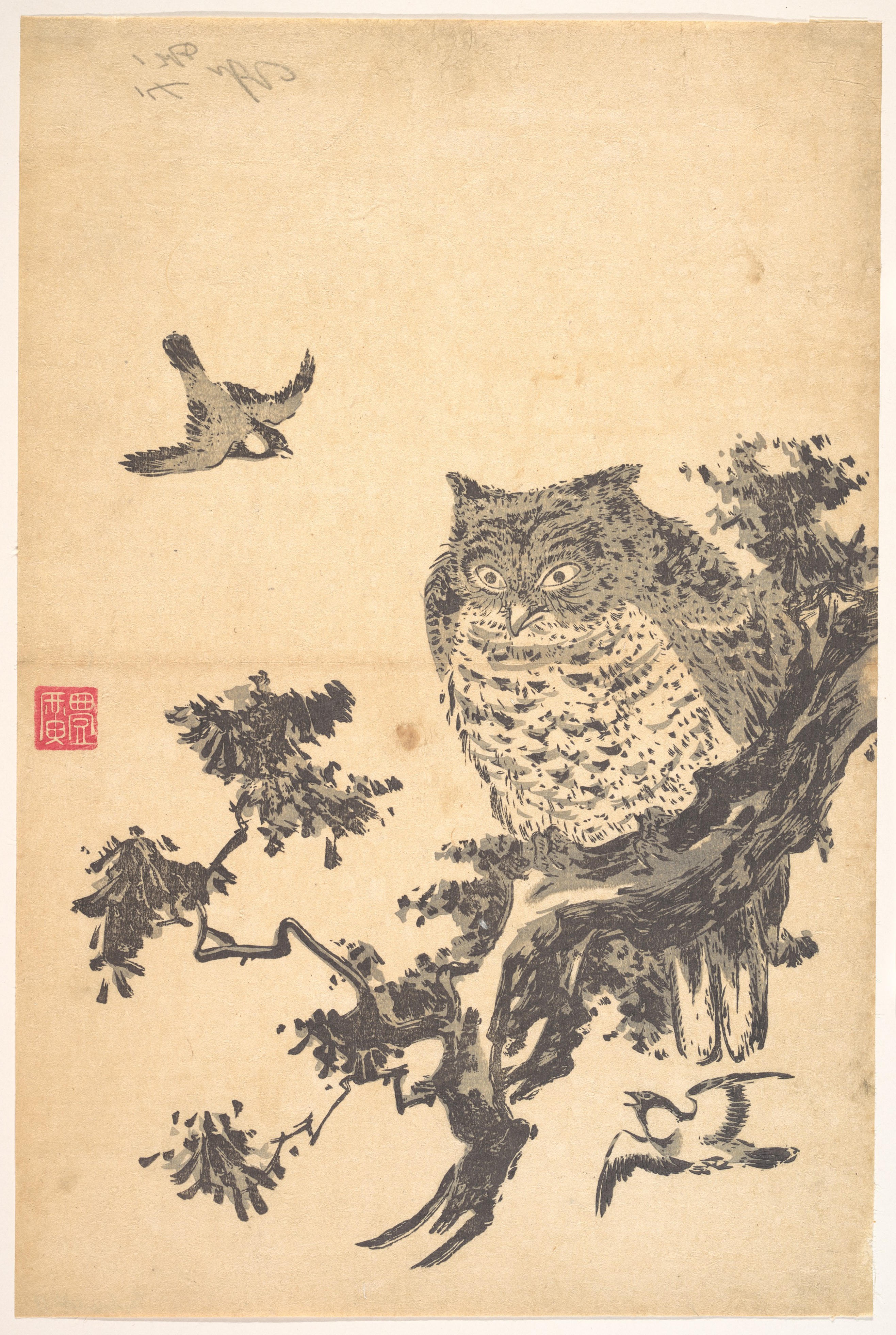
Owl and Two Swallows
Woodblock print; ink and color on paper

Version of Legend of Michizane: Woman Riding Ox Which a Man is Leading
Woodblock print (surimono); ink and color on paper

Young man arranging irises in a vase
n.d.
Color woodblock print; hashira-e

Young woman holding poem slip
n.d.
Color woodblock print; shikishiban, surimono

Hawk on a Cherry Tree
1773-1828
Color woodblock print; hashira-e

The Seventh Month, from the series The Twelve Months by Two Artists (Ryoga juni ko)
n.d.
Color woodblock prints; oban triptych

Woman playing shamisen, from an untitled series of women at leisure
c. 1795/1800
Color woodblock print; chuban

Party of falconers near river
c. 1798/1801
Color woodblock print; right and center sheets of oban triptych
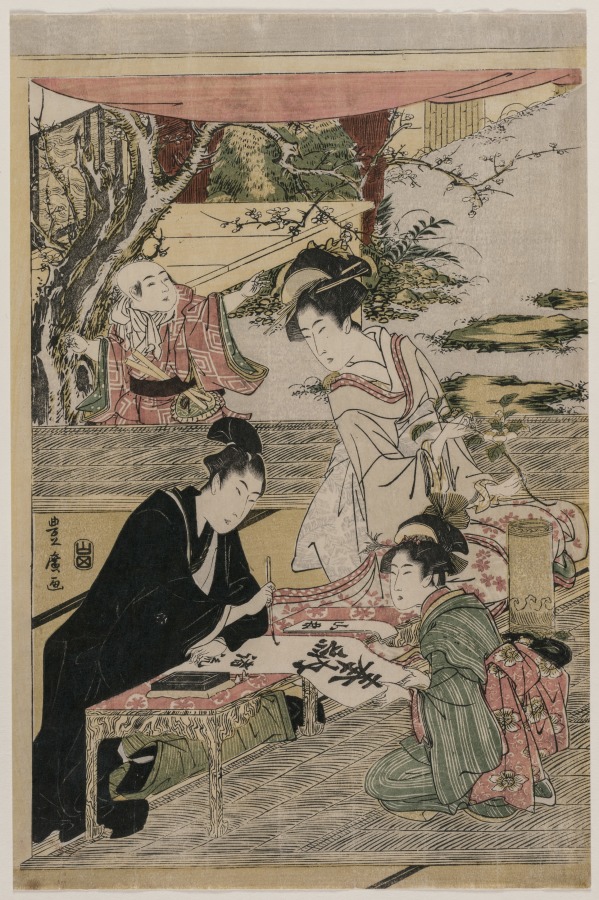
Young Man Writing at a Table
c. 1800
color woodblock print

Viewing Ikebana
c.1802
Color woodblock print; aiban
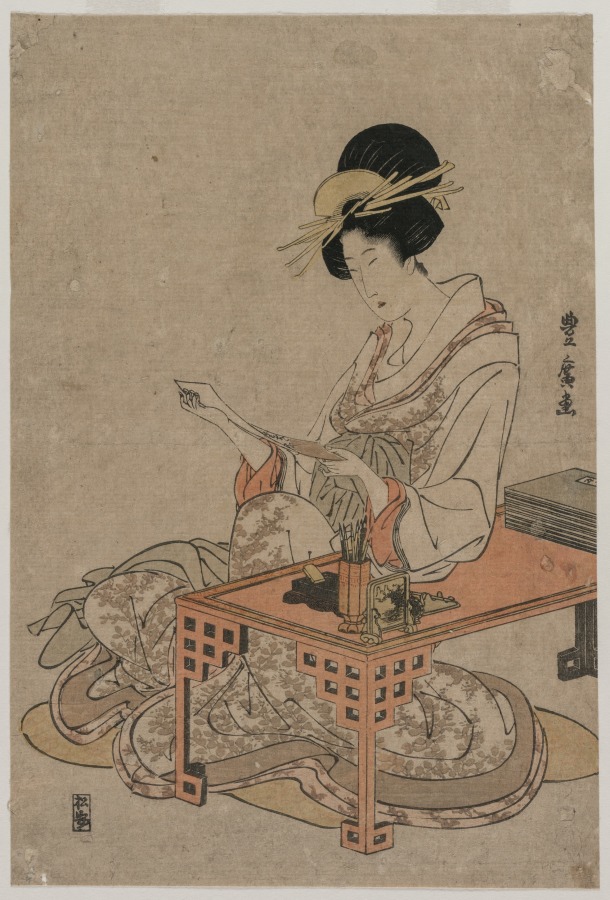
Courtesan Seated at a Writing Table
c. late 1790s
color woodblock print

Autumn Moon at Atago Hill (Atago shugetsu), from the series "Eight Views of Edo (Edo hakkei)"
c. 1804/18
Color woodblock print; oban

Evening Glow at Ryogoku Bridge (Ryogoku sekisho), from the series "Eight Views of Edo (Edo hakkei)"
c. 1804/18
Color woodblock print; oban

New Year's Pilgrimage to Myohoji Temple in Horinouchi (Horinouchi Myohoji eho mairi no zu)
c. 1804/10
Color woodblock print; center right sheet of oban pentaptych (three left sheets: 1928.1080)

Parody of a daimyo procession
c. 1805/07
Color woodblock prints; 6 of 12 sheets (see 1928.391-396)

Gazing at Mt. Fuji on the Horse
19th century
Color woodblock print; surimono

Wild Geese and Reeds
About 1810
Woodblock print; oban
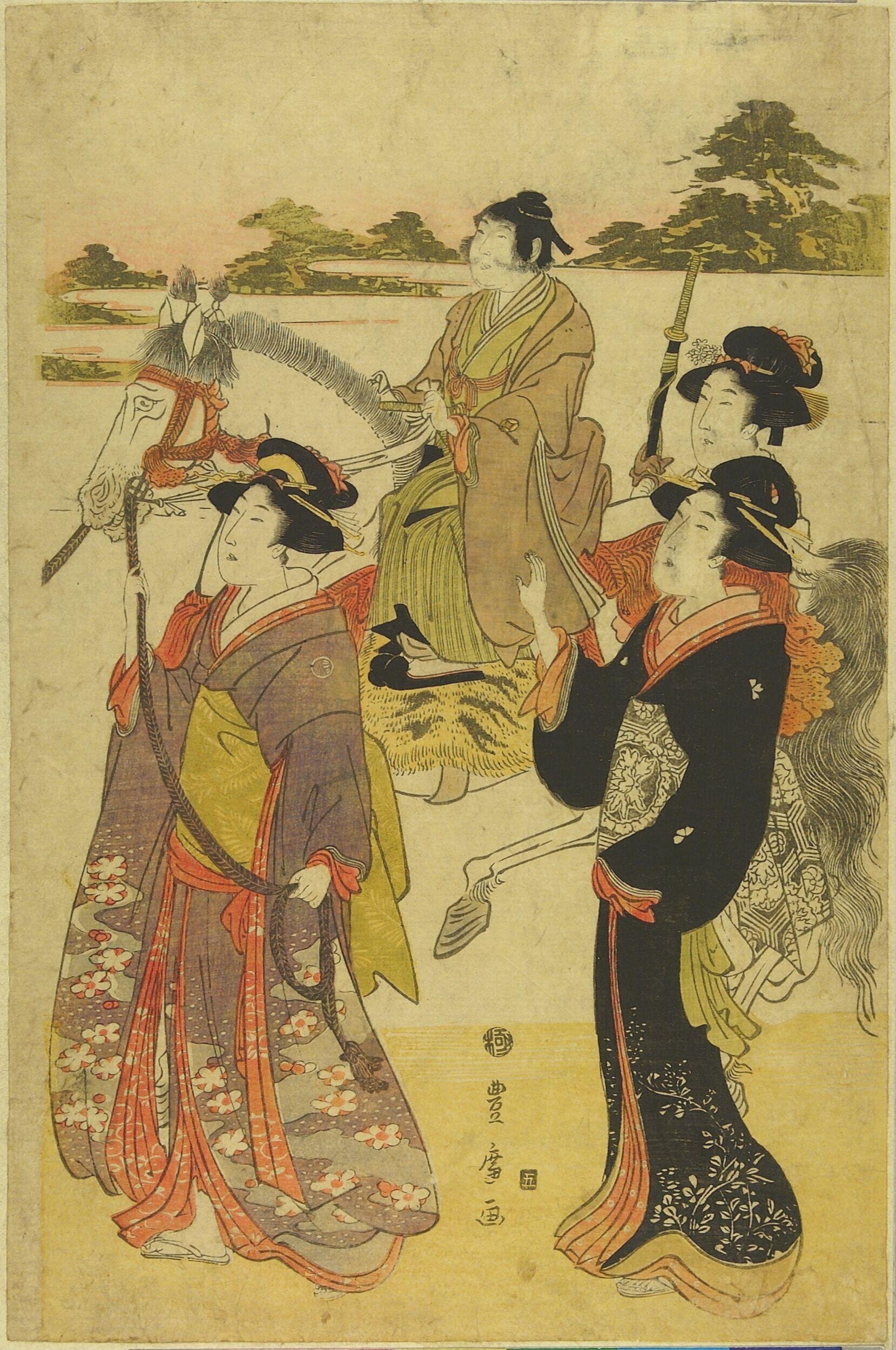
Untitled
1808

The Festive Custom of Asahina Continued by Jihinari for Twenty-three years (Nijusan-nen tsuzuki Jihinari kichirei Asahina)
1820
Color woodblock print; horizontal nagaban, surimono

Sunset at Awadzu from the series "Eight Views of Omi Hakkei"
Unknown
Color woodblock print
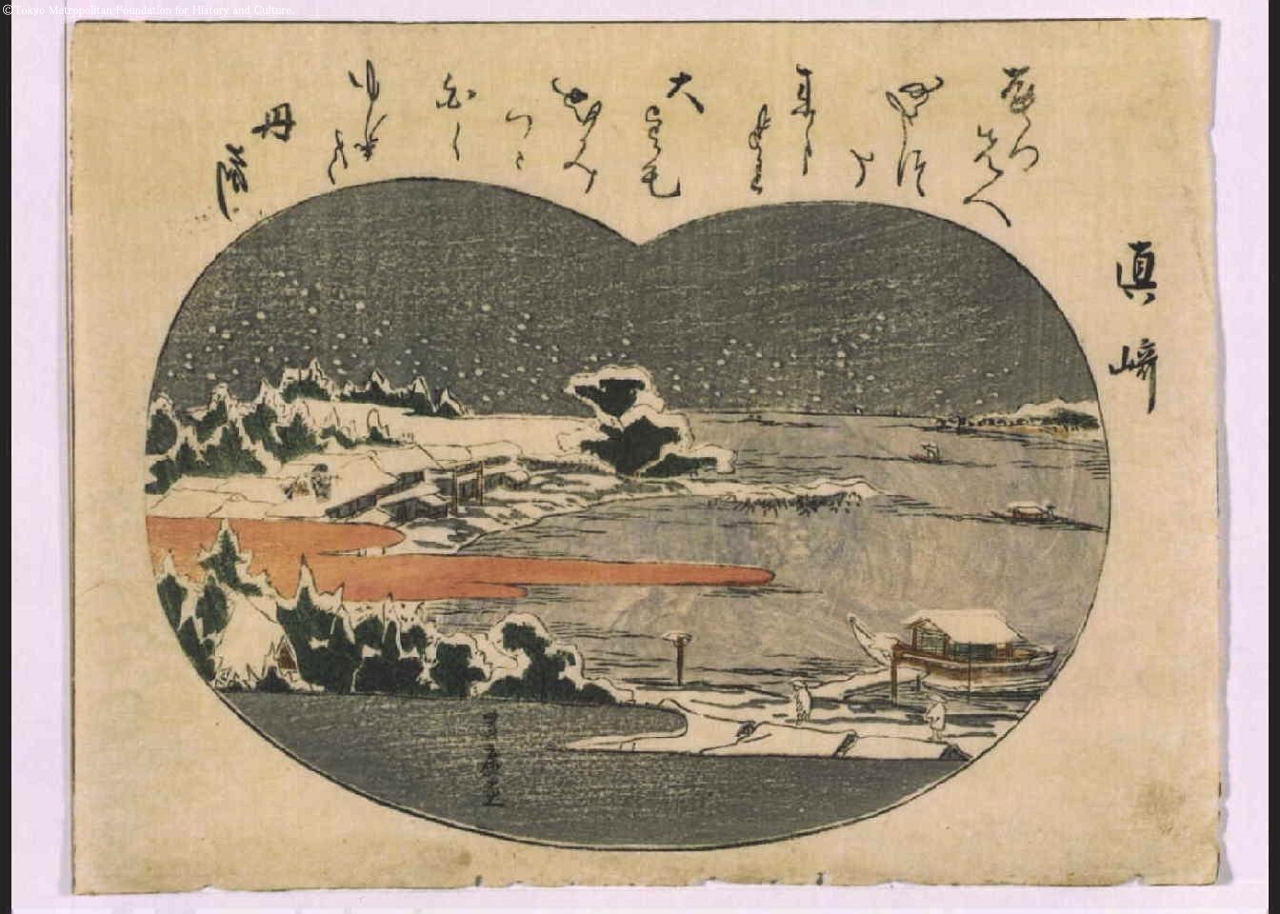
Masaki
Woodblock print
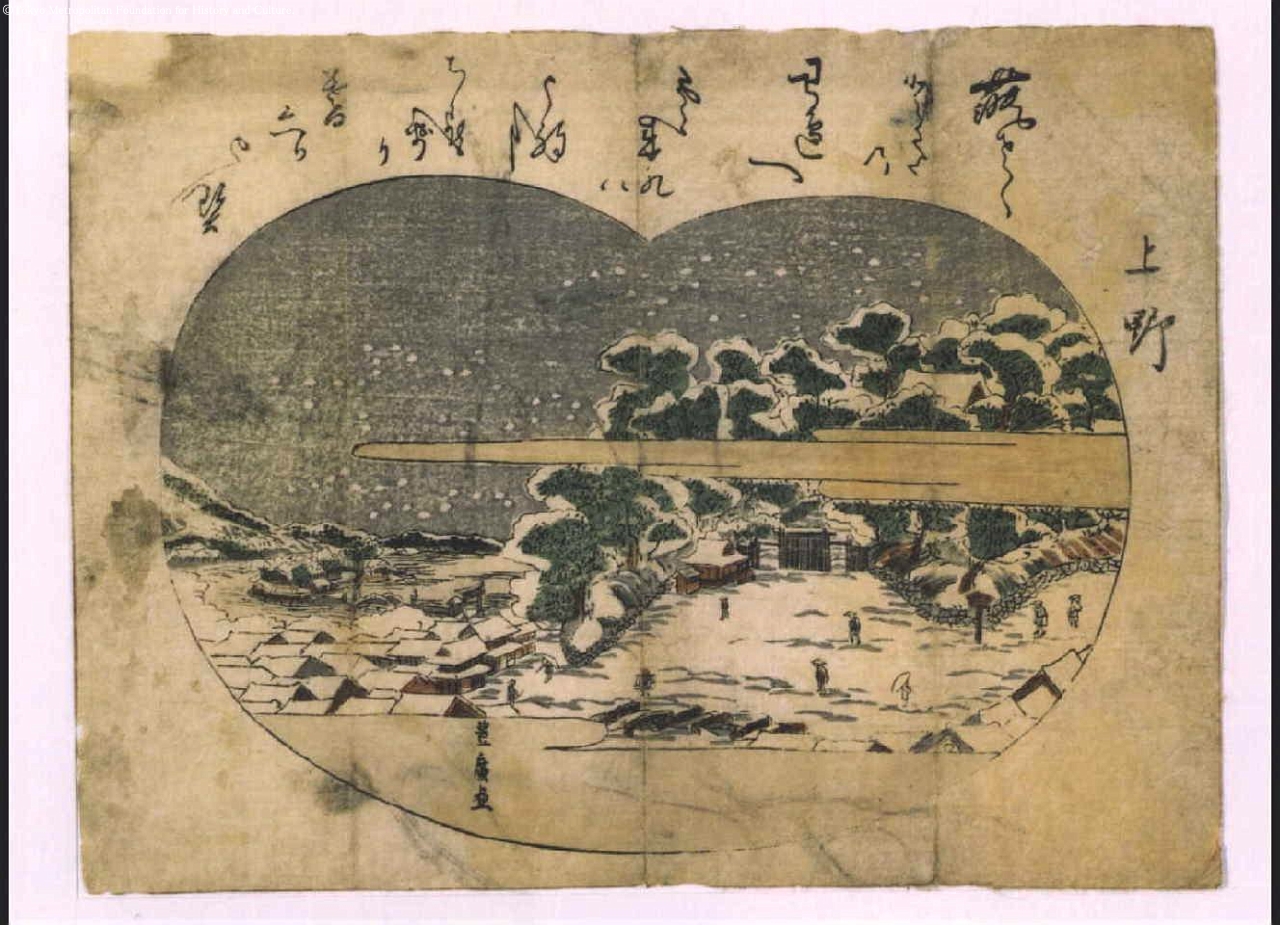
Ueno
Woodblock print
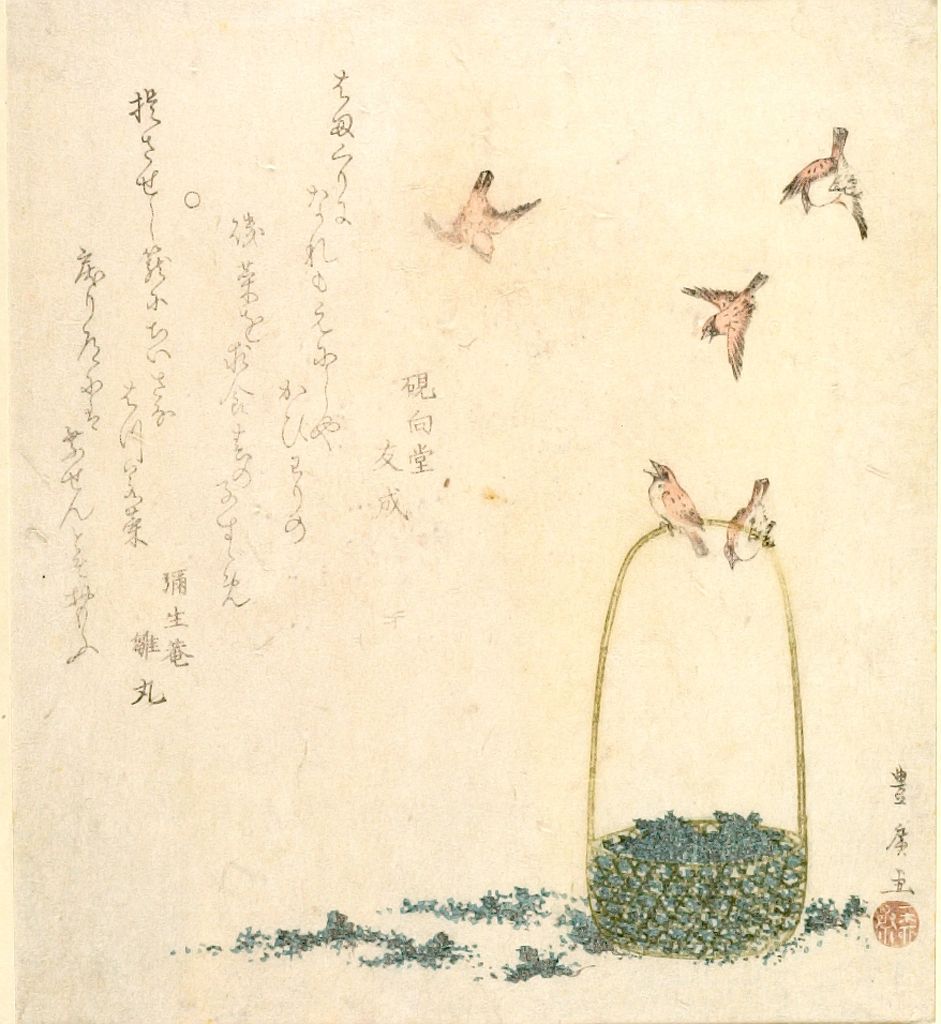
Birds
Woodblock print

Evening rain at Karesaki from the series "Eight views of Omi Hakkei"
Unknown
Color woodblock print