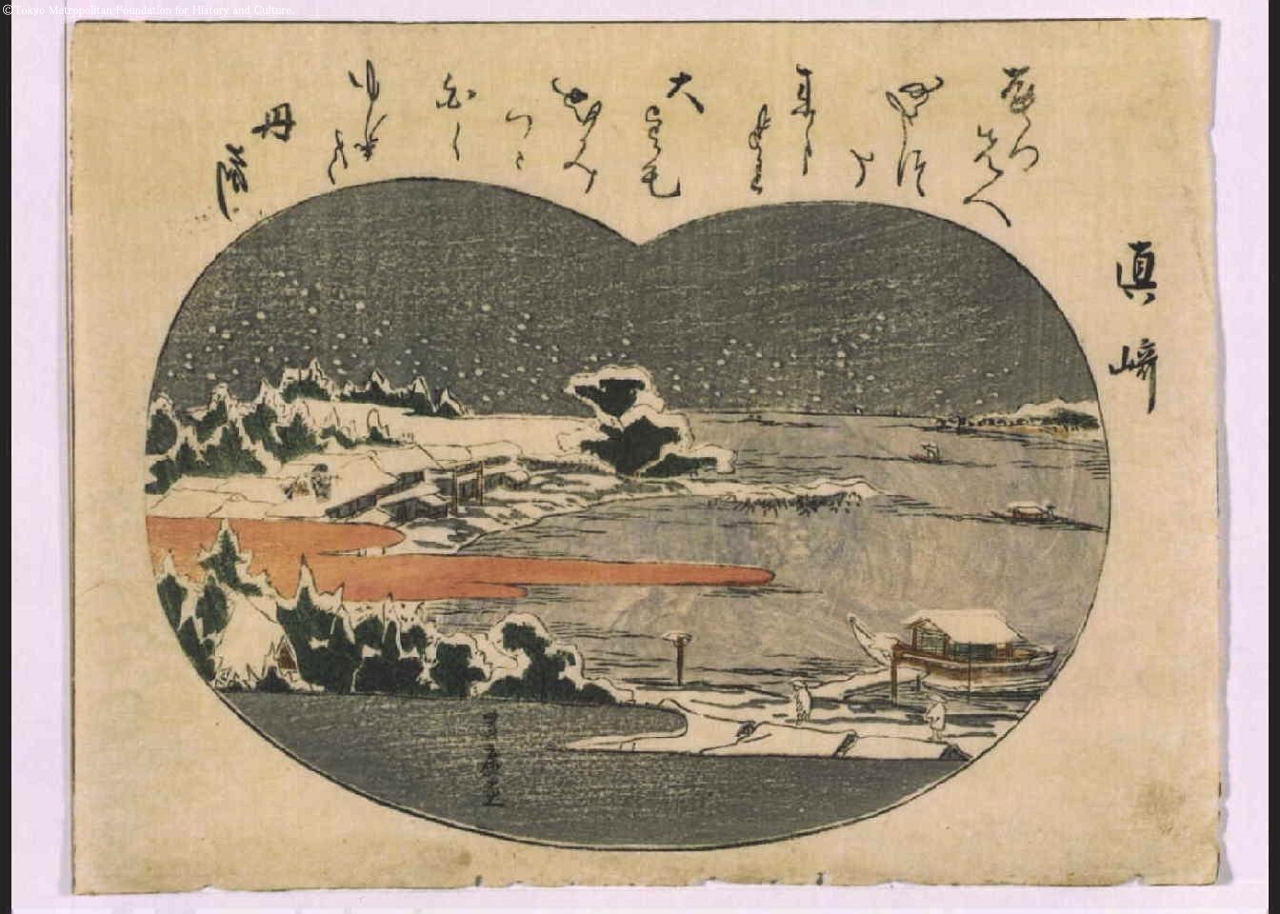
Masaki
- Medium:
- Woodblock print
- Source:
- Edo-Tokyo Museum
Description
Masaki, undated and most plausibly produced in the first decade of the nineteenth century, treats one of the celebrated sites along the lower Sumida and belongs to Utagawa Toyohiro's meisho-e or famous-places production. Masaki, on the east bank of the river near Mukōjima, was associated with the Shinto Masaki Inari shrine and with the scenic stretch of the Sumida that drew strollers and pilgrims throughout the year, with particular intensity during the cherry-viewing of spring when the embankment was famous for its rows of blossoming trees. Toyohiro's print stages the site in a perspective register consistent with the spatial project his teacher Utagawa Toyoharu had naturalized in Japanese prints, with the converging diagonals of the embankment, river, and architectural elements and the distributed visitors producing a measurable depth across the sheet. As one of Toyoharu's two leading pupils, alongside the bolder figural Utagawa Toyokuni I, Toyohiro inherited the school's interest in spatial construction and applied it to the more lyrical meisho-e idiom that anticipated the landscape work of his own pupil Utagawa Hiroshige, whose own treatments of Masaki and the Sumida embankment half a century afterward would carry the subject to its mature expression. Color is held to a soft tonal register suited to the riverine prospect of the subject, with the patterned robes of the figures and the distinctive features of the shrine and embankment carrying the principal visual interest. The print belongs to the body of Edo famous-places production through which Toyohiro extended his teacher's perspective project into the early nineteenth-century landscape idiom, and his Masaki view occupies a representative position within his treatments of the Sumida geography. The Edo-Tokyo Museum preserves this impression (https://ukiyo-e.org/image/etm/0190207401) as a representative document of Toyohiro's meisho-e production.
More Prints by Utagawa Toyohiro

Autumn Moon at Atago Hill (Atago shugetsu), from the series "Eight Views of Edo (Edo hakkei)"
c. 1804/18
Color woodblock print; oban

The Seventh Month, from the series The Twelve Months by Two Artists (Ryoga juni ko)
n.d.
Color woodblock prints; oban triptych
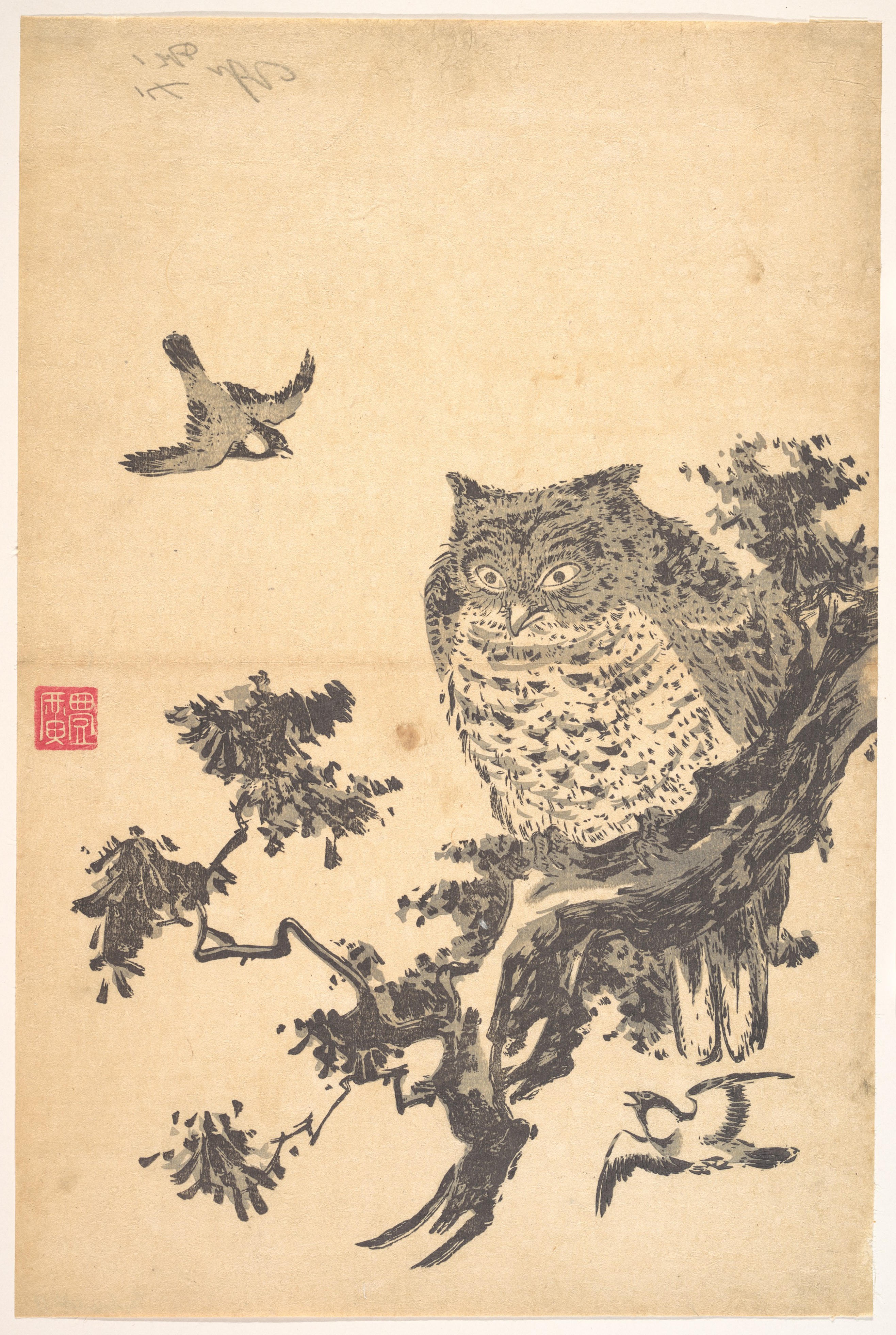
Owl and Two Swallows
Woodblock print; ink and color on paper
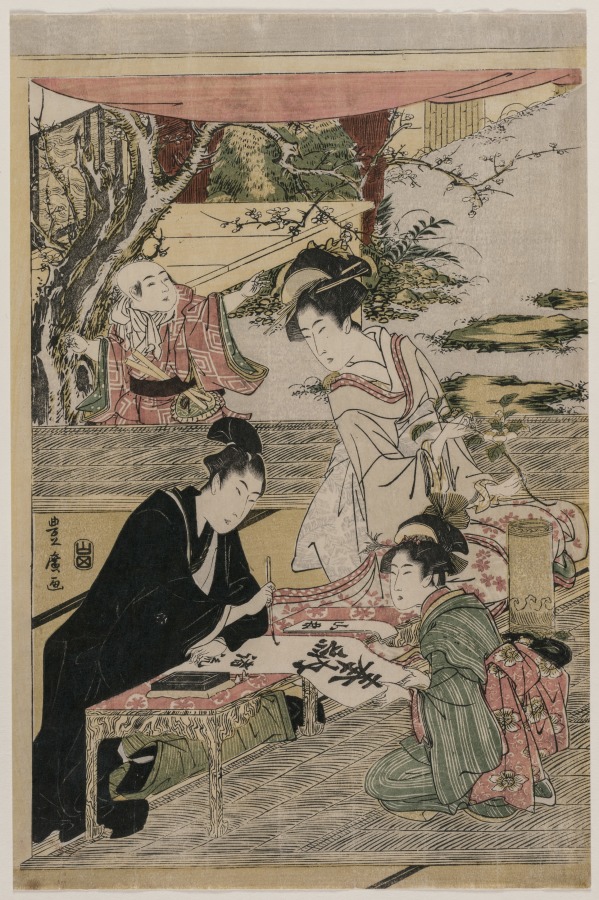
Young Man Writing at a Table
c. 1800
color woodblock print
Frequently Asked Questions
Masaki was created by Utagawa Toyohiro (歌川豊広).