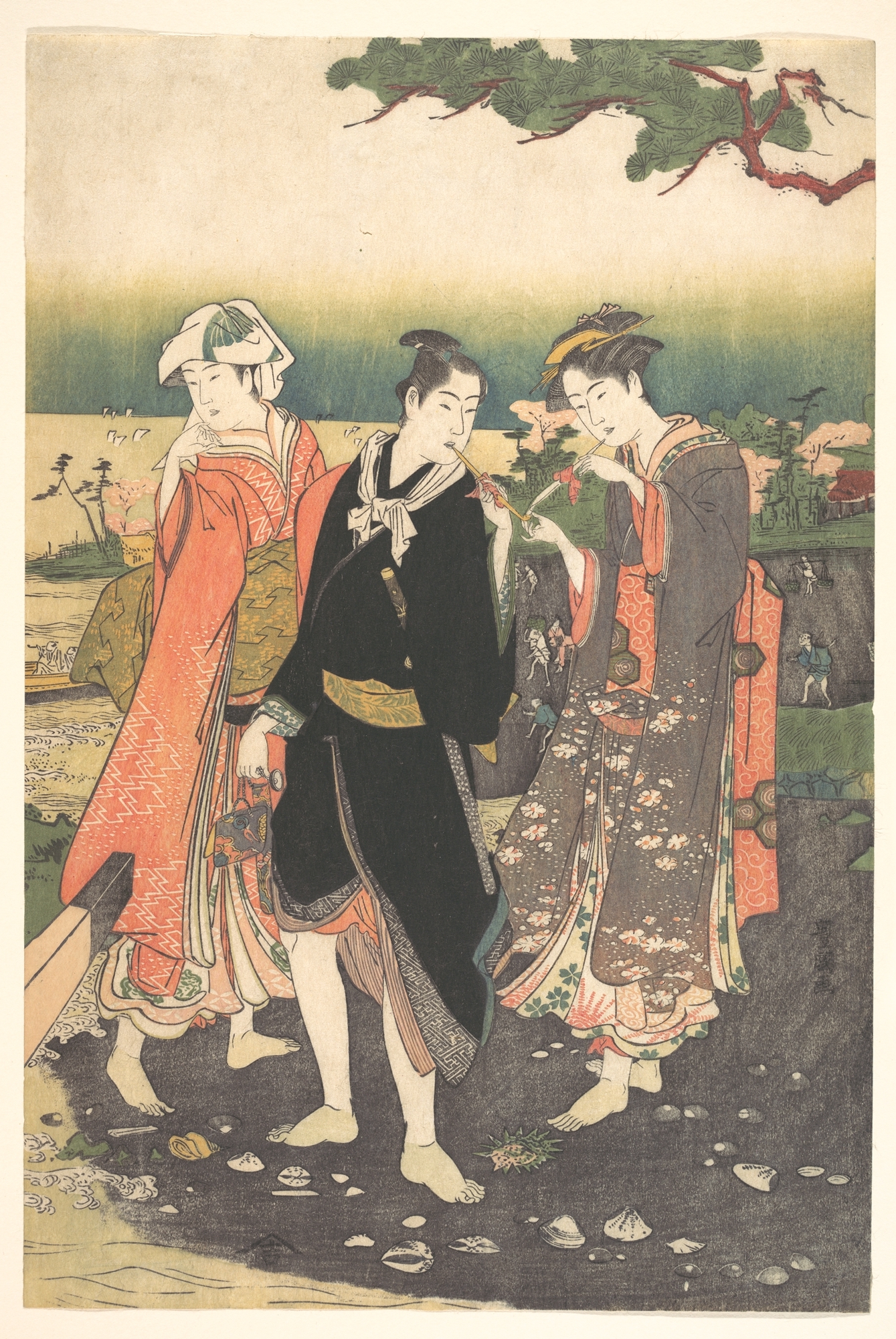
Actor Bando Shuka I as Jujibei's Wife Ohaya (Jujibei nyobo Ohaya)
- Date:
- c. 1848
- Medium:
- Color woodblock print; oban
- Source:
- Art Institute of Chicago
Description
Issued in 1843 and held by the Art Institute of Chicago, this Utagawa Toyokuni print depicts the kabuki actor Bando Shuka I in the role of Jujibei's wife Ohaya (Jujibei nyobo Ohaya). The work belongs to the [yakusha-e](/glossary/yakusha-e) genre at the heart of Edo [ukiyo-e](/glossary/ukiyo-e), where the Utagawa school dominated nineteenth-century production. Bando Shuka I was among the most celebrated onnagata of his generation, and Toyokuni's portrait captures the specific facial conventions and costume choices that signaled the role of a virtuous samurai-class wife caught up in the moral dilemmas typical of late-Edo domestic drama. The sheet's date places it just within the strict Tenpo Reforms (1841-1843), when the shogunal government attempted to curb perceived luxury in popular print culture by restricting the depiction of named actors and limiting color application; printmakers responded by inventing inventive workarounds that often resulted in compositions of even greater refinement. Toyokuni's image registers this regulatory pressure in its sharp focus on costume pattern and disciplined linework, the elements that the reforms could not easily curtail. The figure's textiles communicate occupation, marital status, and emotional register through patterns whose meanings Edo audiences could read at sight. For students of Utagawa Toyokuni's mid-1840s work and of the broader interaction between censorship and creativity in Edo ukiyo-e, this print represents the Utagawa workshop's continued investment in the yakusha-e tradition during one of its most administratively constrained moments.