
Kabuki Actor Iwai Kumesaburo with abacus
- Source:
- ukiyo-e.org
Description
Utagawa Toyokuni I's "Kabuki Actor Iwai Kumesaburō with abacus" turns one of the Edo stage's leading onnagata into the subject of a quiet domestic vignette, the player shown with a soroban as if checking household accounts. Documented through the ukiyo-e.org aggregation, the print belongs to the Utagawa school's broad output of kabuki actor prints, the yakusha-e on which Toyokuni's reputation was built. Iwai Kumesaburō — successive generations of the Iwai line specialized in female roles — appears here without the trappings of a specific play, his identity preserved through the recognizable face that Edo audiences would have known from theatrical fans, playbills, and other Toyokuni designs. The abacus introduces a note of mitate, transposing the actor from the stage into a parlor moment where his role-readiness is replaced by an everyday task. Utagawa Toyokuni used such conceits frequently to break the formal frame of yakusha-e and invite his audience to imagine the actor offstage. The print's visual economy is characteristic: a single figure, a single prop, a carefully patterned robe; nothing distracts from the portrait. As founder of the Utagawa lineage of Edo ukiyo-e, Toyokuni's facility with such isolated figures shaped the conventions his pupils would later inherit. For collectors working from ukiyo-e.org records, the sheet is a small but representative example of how Toyokuni extended the yakusha-e format into casual, almost private observations of theatrical celebrity.
More Prints by Utagawa Toyokuni I

Segawa Kikunojō III as the Shop Boy Chōkichi
1796
Woodblock print (nishiki-e), ink and color on paper
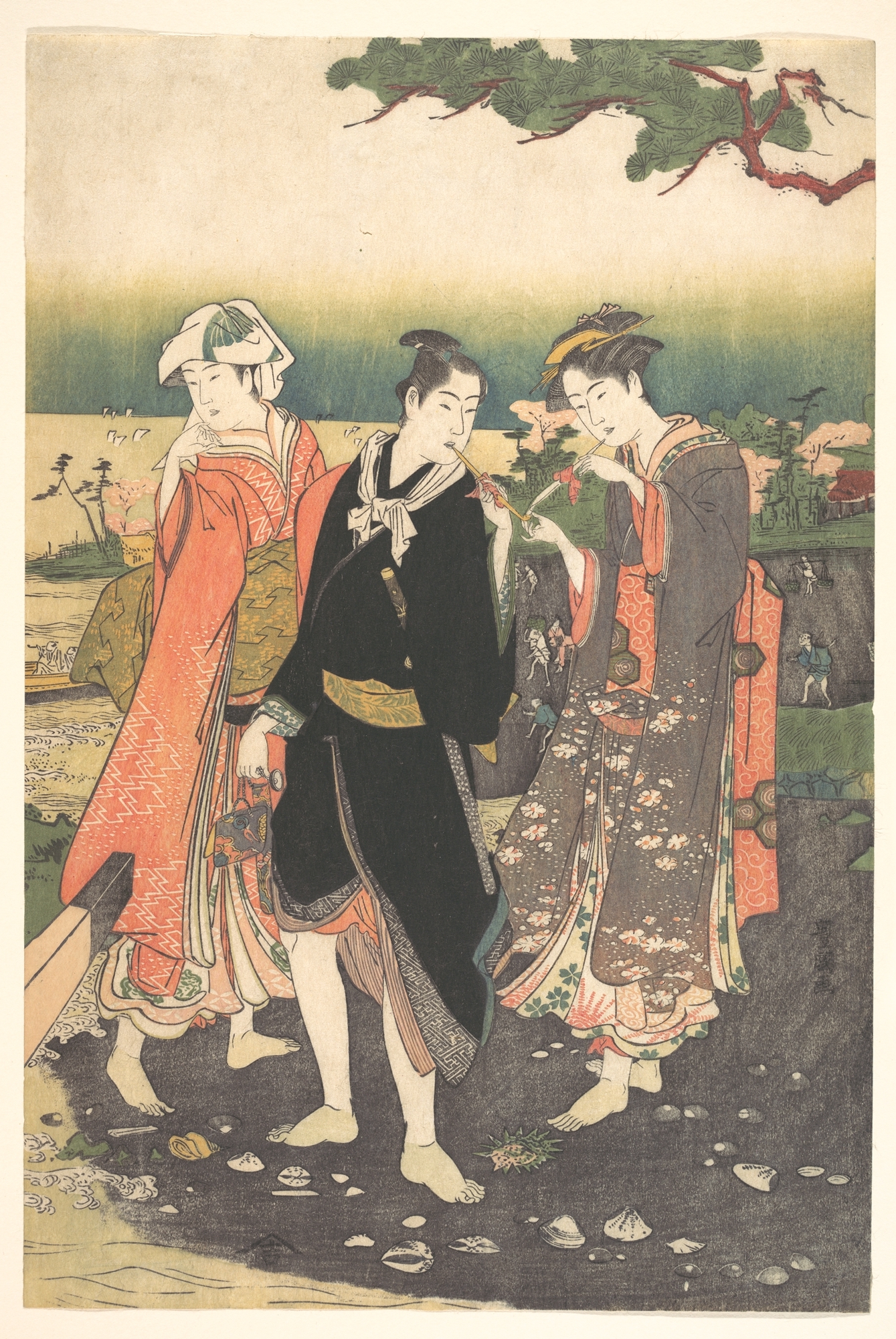
On Shinagawa Beach at Ebb-Tide
1769–1825
Woodblock print; ink and color on paper
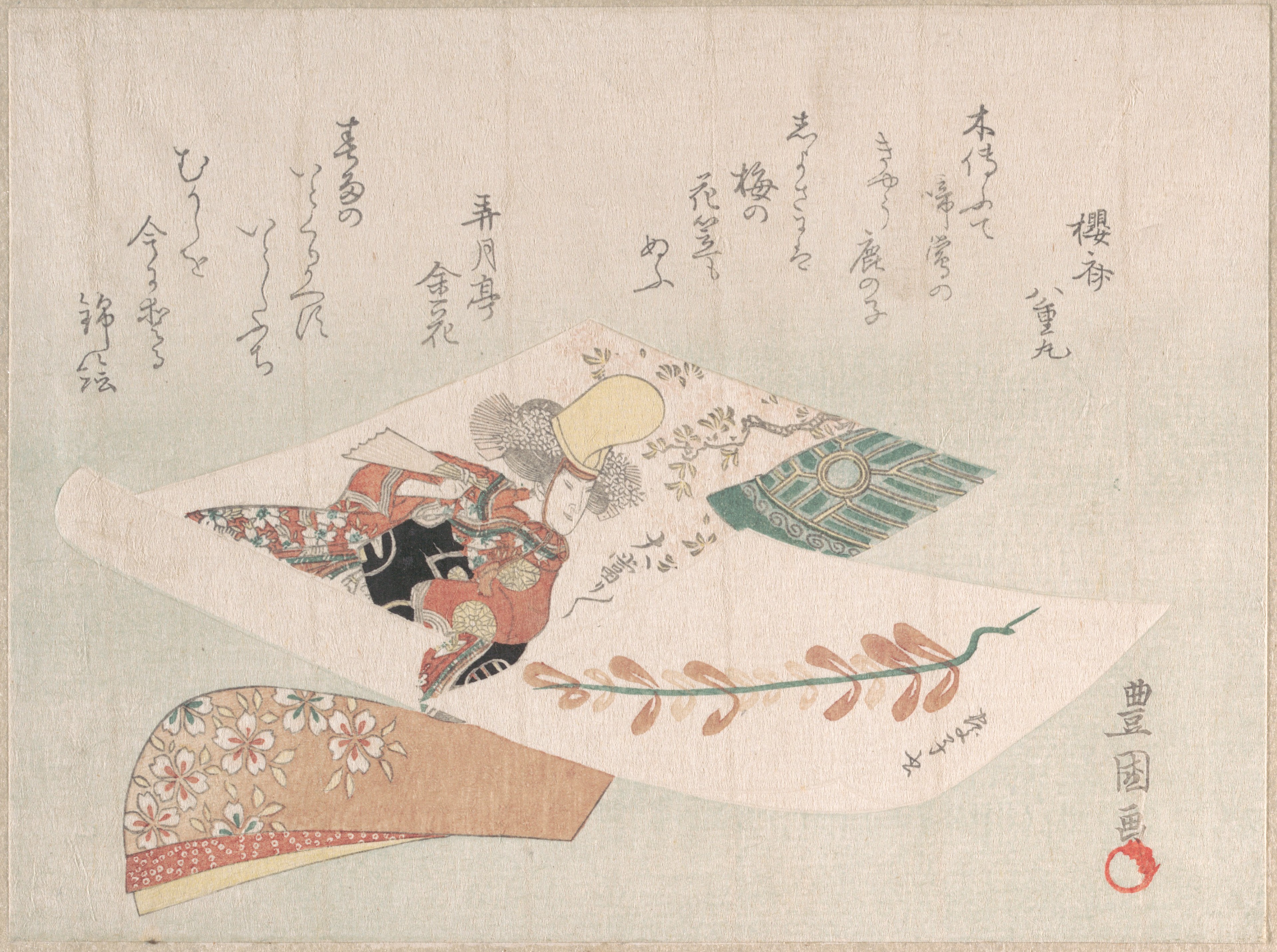
Representation of the Dance-Play "Dōjōji"
Woodblock print (surimono); ink and color on paper

The actors Sawamura Sojuro II as Satsuma Gengobei and Arashi Ryuzo II as Mawashi-otoko Yasuke in the play "Edo Sunago Kichirei Soga," performed at the Miyako Theater on the first month, 1795
c. 1795
Color woodblock print; oban
Frequently Asked Questions
Kabuki Actor Iwai Kumesaburo with abacus was created by Utagawa Toyokuni I (歌川豊国).