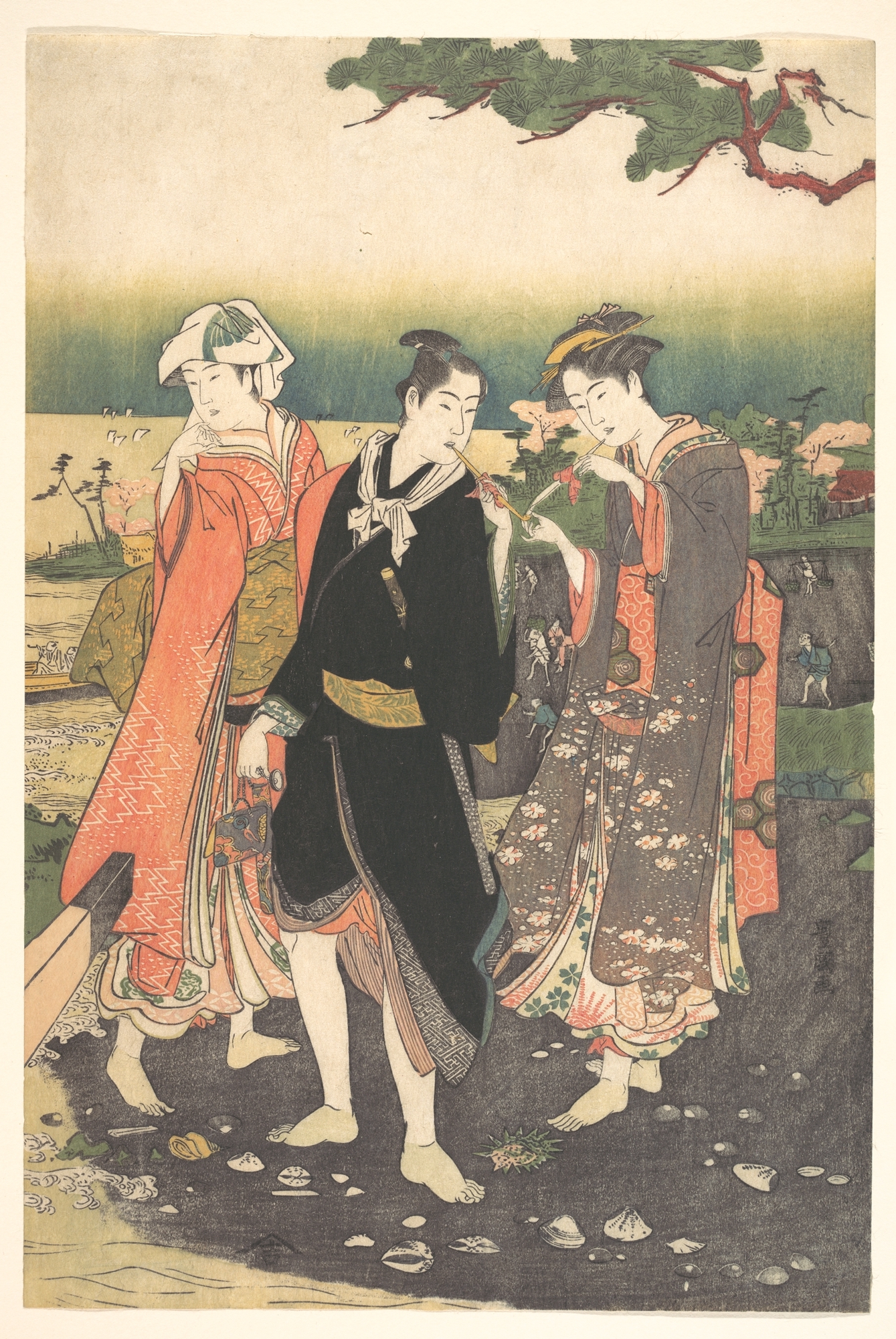
Actor in riding garb
- Date:
- 1834
- Medium:
- Color woodblock print; shikishiban, surimono
- Source:
- Art Institute of Chicago
Description
Actor in riding garb is an 1834 Edo ukiyo-e yakusha-e woodblock print from the Utagawa Toyokuni studio, held by the Art Institute of Chicago and cataloged under that title without further identification of the sitter or role in the public record consulted here. The design presents a kabuki actor in the heavy outer garments and accessories associated with horsemanship - layered robes, breeches, gauntlets, and the recognizable headgear of a mounted character - and the Utagawa workshop's printers carry these elements with the disciplined block work that defined the school's mature output. Equestrian costumes recurred across the kabuki repertoire, attached to warrior, hunter, and messenger characters in different plays, and a single-sheet portrait of an actor in such gear served Edo collectors as both a record of a recent role and a generalized celebrity image that could be appreciated outside any particular performance. Toyokuni's drawing handles the figure with firm outline lines and proportional restraint, and the polychrome layers lay in saturated reds, indigo blues, browns, and small accents of green that lift the costume away from the spare ground without pushing the design toward illustration. The face is given the Utagawa likeness convention: pale skin, thin contour lines, controlled accents around the eyes and mouth. Because the Art Institute's record does not name the actor or the role, this description keeps to what the sheet itself and the workshop's general practice support. The print is most informative as an example of how the Utagawa Toyokuni studio in 1834 framed costume specificity within a stable portrait template.