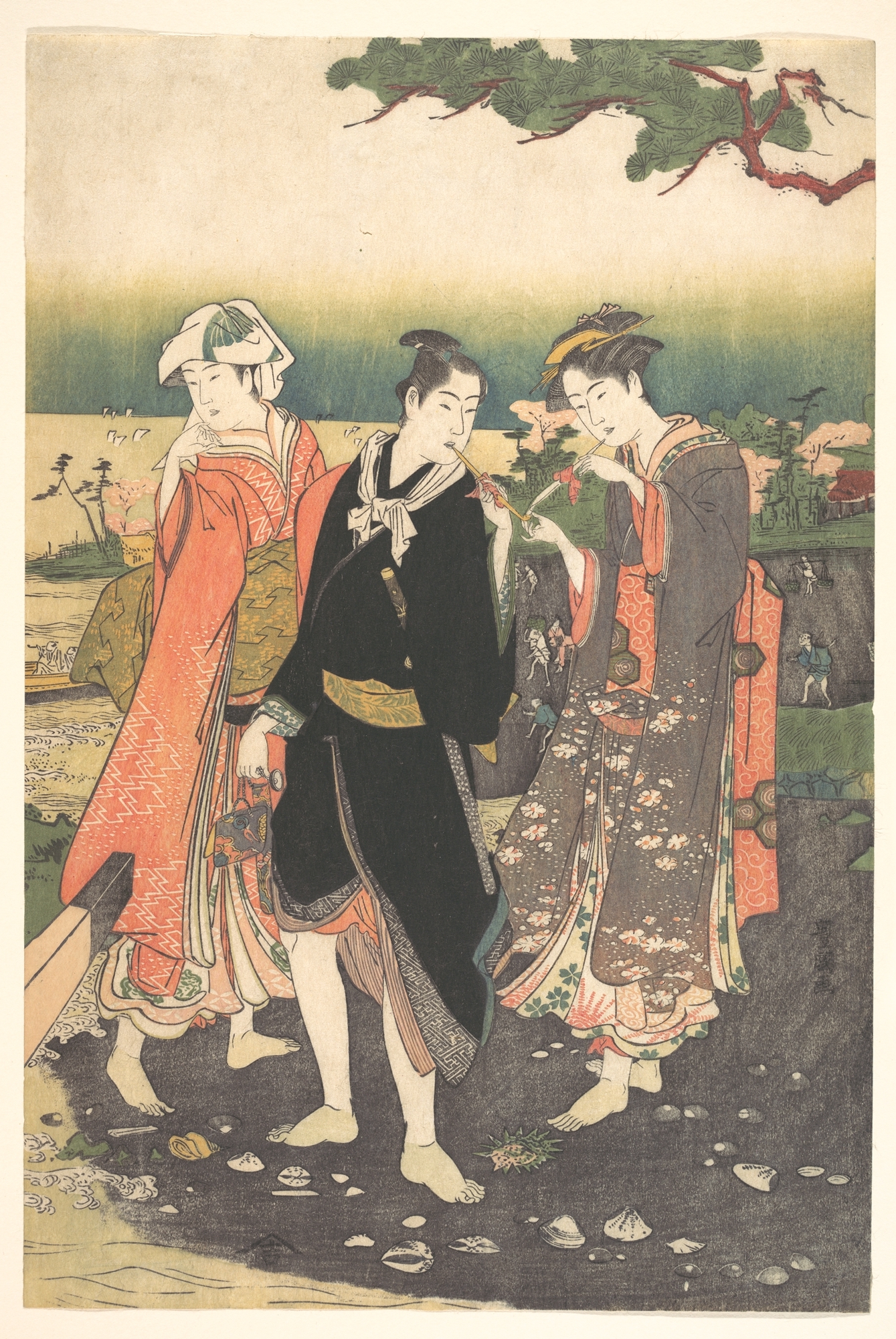
Actors as Fukashichi and Omiwa from the play "Imoseyama," from an untitled series of half-block images of kabuki scenes
- Date:
- 1852
- Medium:
- Color woodblock print; chuban
- Source:
- Art Institute of Chicago
Description
Actors as Fukashichi and Omiwa from the play Imoseyama, from an untitled series of half-block images of kabuki scenes, recorded by the Art Institute of Chicago with a date of 1852, is a late Utagawa Toyokuni [yakusha-e](/glossary/yakusha-e) linked to the immensely popular Imoseyama onna teikin. The play, originally written for the joruri puppet theatre and adapted to kabuki, follows a tangle of love and political intrigue in which the characters Fukashichi and Omiwa play key roles, with Omiwa's tragic devotion to her noble lover among the most celebrated scenes in the repertoire. Toyokuni's design captures a moment of confrontation or intimate encounter between the two characters, with poses, costume, and gesture marked according to the conventions that audiences would recognize from the stage. The format of half-block images allowed the artist to focus closely on the actors' faces and upper bodies, producing portraits that worked both as theatrical reportage and as collectible images of stars. As Edo [ukiyo-e](/glossary/ukiyo-e), the print exemplifies the continued centrality of yakusha-e in the Utagawa school's output even in the 1850s, when other print genres were also flourishing. The Art Institute of Chicago preserves the sheet within its Toyokuni holdings, where it stands as evidence of how the school carried the visual vocabulary established by Utagawa Toyokuni into mid-nineteenth-century kabuki imagery, with Imoseyama as one of its most reliable narrative sources.