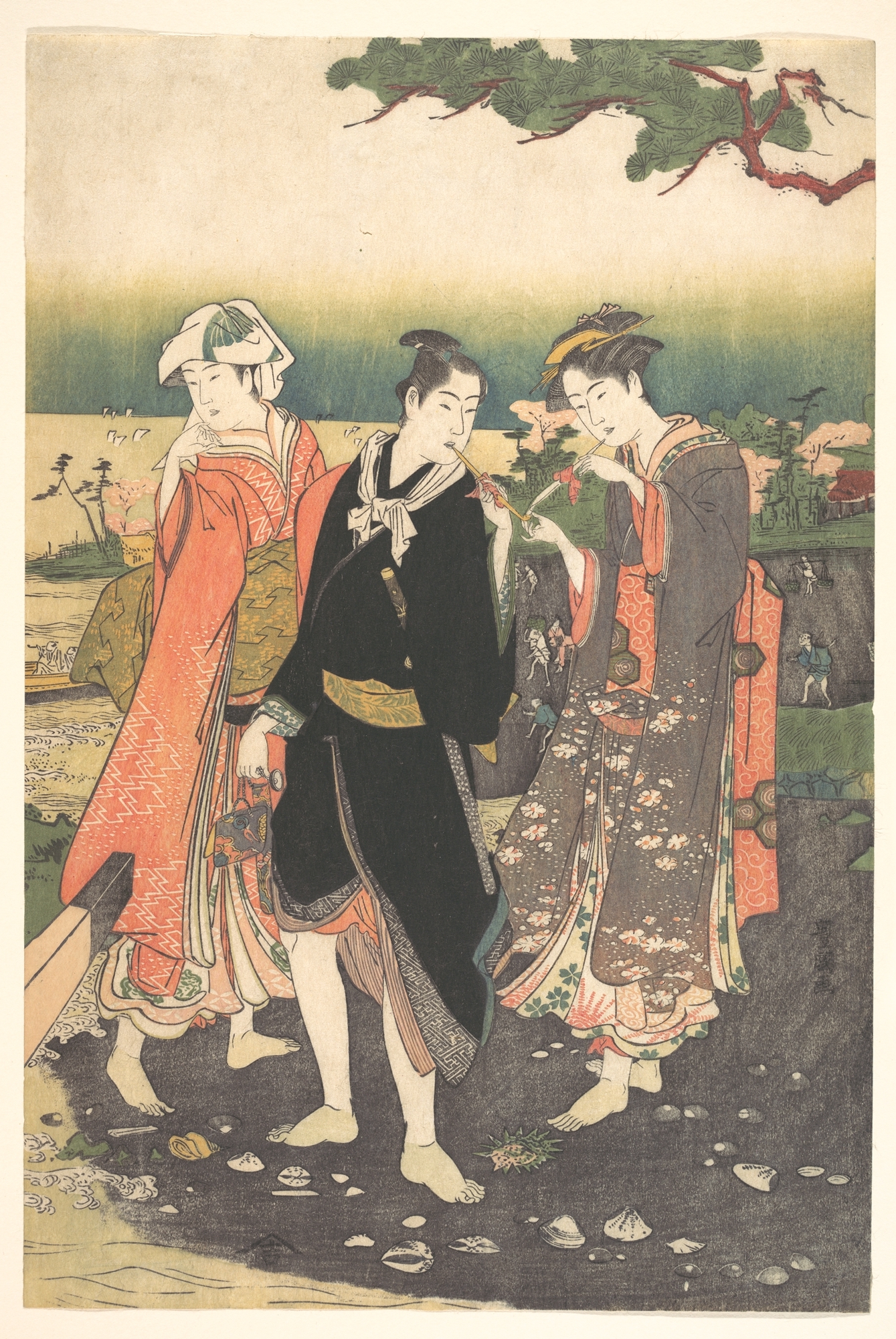
Chikubu Island in Omi Province, No. 30 on the Saikoku Pilgrimage Route (Saikoku junrei sanjuban Omi Chikubujima), from the series "The Miracles of Kannon (Kannon reigenki)"
- Date:
- 1859
- Medium:
- Color woodblock print; oban
- Source:
- Art Institute of Chicago
Description
Chikubu Island in Ōmi Province, No. 30 on the Saikoku Pilgrimage Route, from The Miracles of Kannon (Kannon Reigenki) is a print attributed within the Utagawa Toyokuni lineage and catalogued by the Art Institute of Chicago. The Saikoku junrei was a circuit of thirty-three temples in western Japan, each devoted to the bodhisattva Kannon, and Chikubu Island in Lake Biwa was one of its most striking stops. By the late Edo period, pilgrimage subjects had become popular material for [ukiyo-e](/glossary/ukiyo-e) designers as travel and devotional practice converged in popular culture. The series Kannon Reigenki gathers miracle stories associated with each pilgrimage site, presenting Kannon's compassionate interventions in lives of ordinary believers across the network of temples. Although the present sheet bears the Toyokuni signature within the Utagawa school tradition, the Art Institute assigns it the date 1859, by which point the Toyokuni name had passed through successive generations. The composition links the visual conventions of Edo ukiyo-e—patterned robes, controlled facial expression, narrative density—with the prestige of pilgrimage and the deep iconography of Kannon worship. The Art Institute's record is the source used here for date and attribution. The print stands as an example of how the Utagawa name remained at the center of Edo print production into the Bakumatsu period, extending the school's reach from theater portraits into the literature of sacred travel.