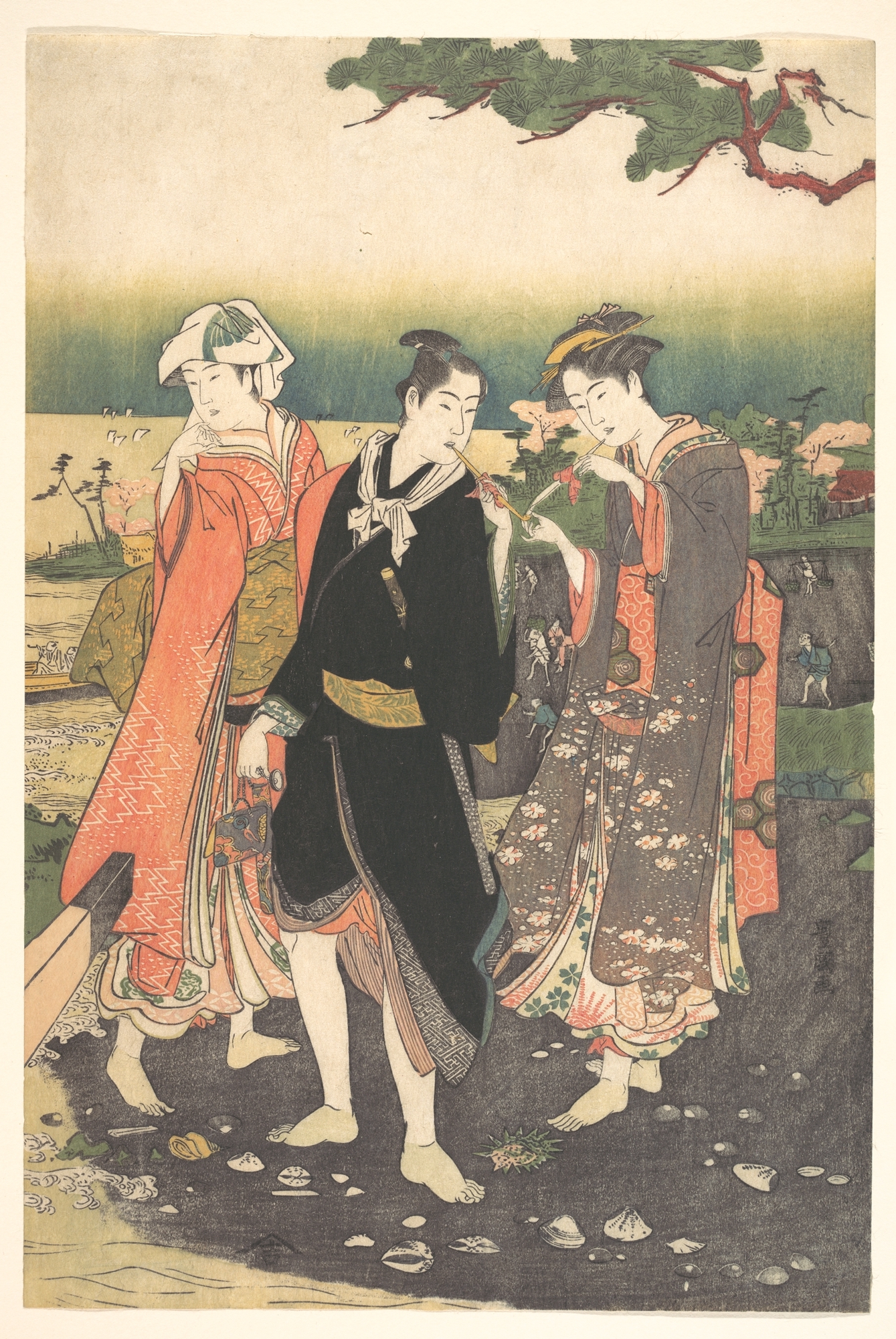
Courtesans with Kamuro
- Date:
- 1820
- Medium:
- Color woodblock print; oban
- Source:
- Art Institute of Chicago
Description
Courtesans with Kamuro is an Edo [ukiyo-e](/glossary/ukiyo-e) woodblock print associated with the Utagawa Toyokuni studio, devoted to the [bijin-ga](/glossary/bijin-ga) theme of high-ranking Yoshiwara courtesans accompanied by their child attendants, or kamuro. Although it belongs to the bijin tradition rather than to [yakusha-e](/glossary/yakusha-e), the sheet shares the Utagawa school's interest in costume as portraiture: the layered kimono, brocaded obi, and elaborate hair ornaments are rendered as carefully as any actor likeness, and they identify the women's rank, house affiliation, and seasonal moment as precisely as a stage program would identify a role. The kamuro at the courtesans' sides, drawn at a smaller scale and dressed in matching but less ornate robes, signal the hierarchy of the pleasure quarter and lend the design the procession-like cadence that Edo viewers associated with the Yoshiwara's most public rituals. Toyokuni's drawing handles the figures with the firm, even contour lines that the Utagawa lineage standardized, allowing the printers to work flat areas of color, fine textile patterns, and crisp hair lines without strain. The image is undated in the Art Institute of Chicago's record, which catalogs the print under Utagawa Toyokuni and notes the courtesan-with-kamuro subject; further specifics about series, publisher, or commissioned occasion are not asserted in that record. The sheet is most useful as an example of how the Utagawa workshop, even when stepping outside of kabuki, applied the same observational discipline to Edo's licensed quarter, turning a recognizable social arrangement into a saleable print.