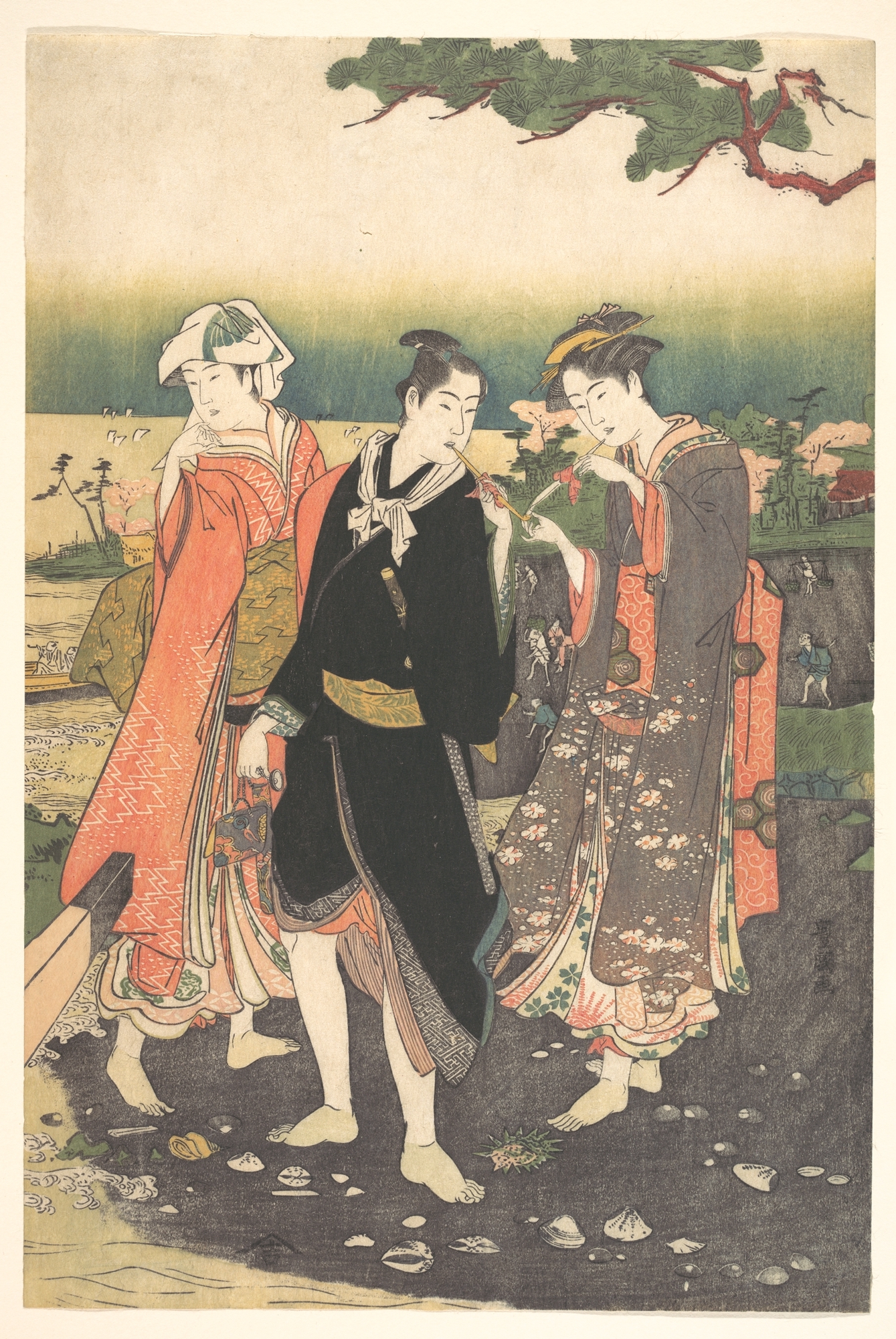
Memorial Portrait of the Actor Suketakaya Kodenji
- Date:
- 1899
- Medium:
- Color woodblock print; oban
- Source:
- Art Institute of Chicago
Description
This memorial portrait of the actor Suketakaya Kodenji, preserved in the Art Institute of Chicago, belongs to the shini-e (death prints) sub-genre of yakusha-e, a category of Edo ukiyo-e dedicated to commemorating beloved kabuki performers immediately after their deaths. Designed by Utagawa Toyokuni and the Utagawa workshop, the print would have been issued for sale to admirers of the deceased actor so they could mourn publicly and privately, often with the sheet displayed on a household shrine alongside incense and offerings. The portrait depicts Kodenji with the carefully observed features that yakusha-e collectors expected, but with the somber visual codes specific to shini-e: muted color palettes, often a hood or shaved head suggesting Buddhist tonsure, posthumous Buddhist names rendered alongside the actor's stage name, and verses commemorating his career. Toyokuni's hand, even within the strict conventions of memorial design, gives the face a particular emotional weight, registering both individual likeness and the gravity of farewell. The print thus serves as both portrait and devotional object, occupying a hybrid role that few other categories of Edo ukiyo-e attempt. As a document of Edo theatrical culture, the sheet records the network of fan loyalty, theater publicity, and Buddhist mourning practice that surrounded kabuki celebrity. Collectors and scholars studying the Utagawa school and the broader history of Japanese print mourning imagery find shini-e by Utagawa Toyokuni especially valuable because they illuminate the cultural infrastructure that allowed a popular performer's death to be registered visually and circulated commercially in the urban marketplace.