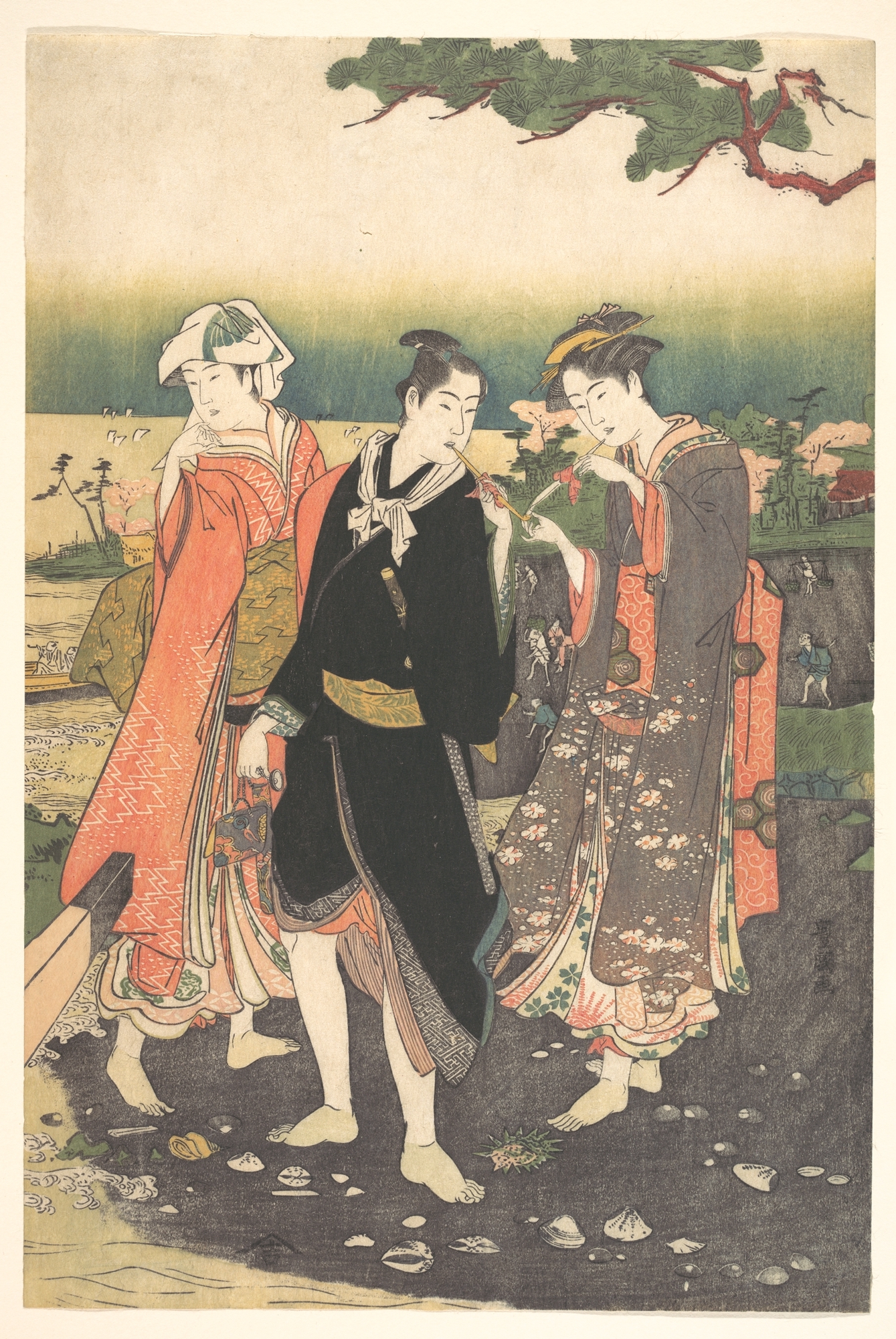
Shibai saiken sanbasō
- Date:
- 1832
- Medium:
- Woodblock- printed book; 2 vols.
- Source:
- Art Institute of Chicago
Description
Shibai Saiken Sanbasō is a [yakusha-e](/glossary/yakusha-e) print by Utagawa Toyokuni preserved in the Art Institute of Chicago. The shibai saiken were a category of detailed playbills issued at major Edo theaters, often accompanied by woodblock illustrations that gave readers a record of the play's cast, scenes, and stage business. Sanbasō refers to a ceremonial Noh- and Kabuki-derived dance performance, typically opening an auspicious program with celebratory movements and the iconic robe, mask, and bells of the Sanbasō figure. In [ukiyo-e](/glossary/ukiyo-e) the subject became a recurring vehicle for showing a celebrated actor in the role's distinctive costume, charged with the religious and theatrical good fortune of a season's beginning. Toyokuni, one of the most prolific Edo ukiyo-e designers of yakusha-e, handled the subject with his characteristic command of stage costume, displaying the Sanbasō robe and its emblematic crests in a clear, legible composition. The work integrates Toyokuni's stage focus with the broader visual ecology of the saiken playbill, in which actor portraiture, theater advertising, and ritual significance all converge. The Art Institute of Chicago provides the catalogue documentation that supports this entry; while the museum record does not affix a year, the work stands within Toyokuni's mature output of Kabuki imagery centered on the recurring Sanbasō dance and the institutional rhythms of the Edo theater season.