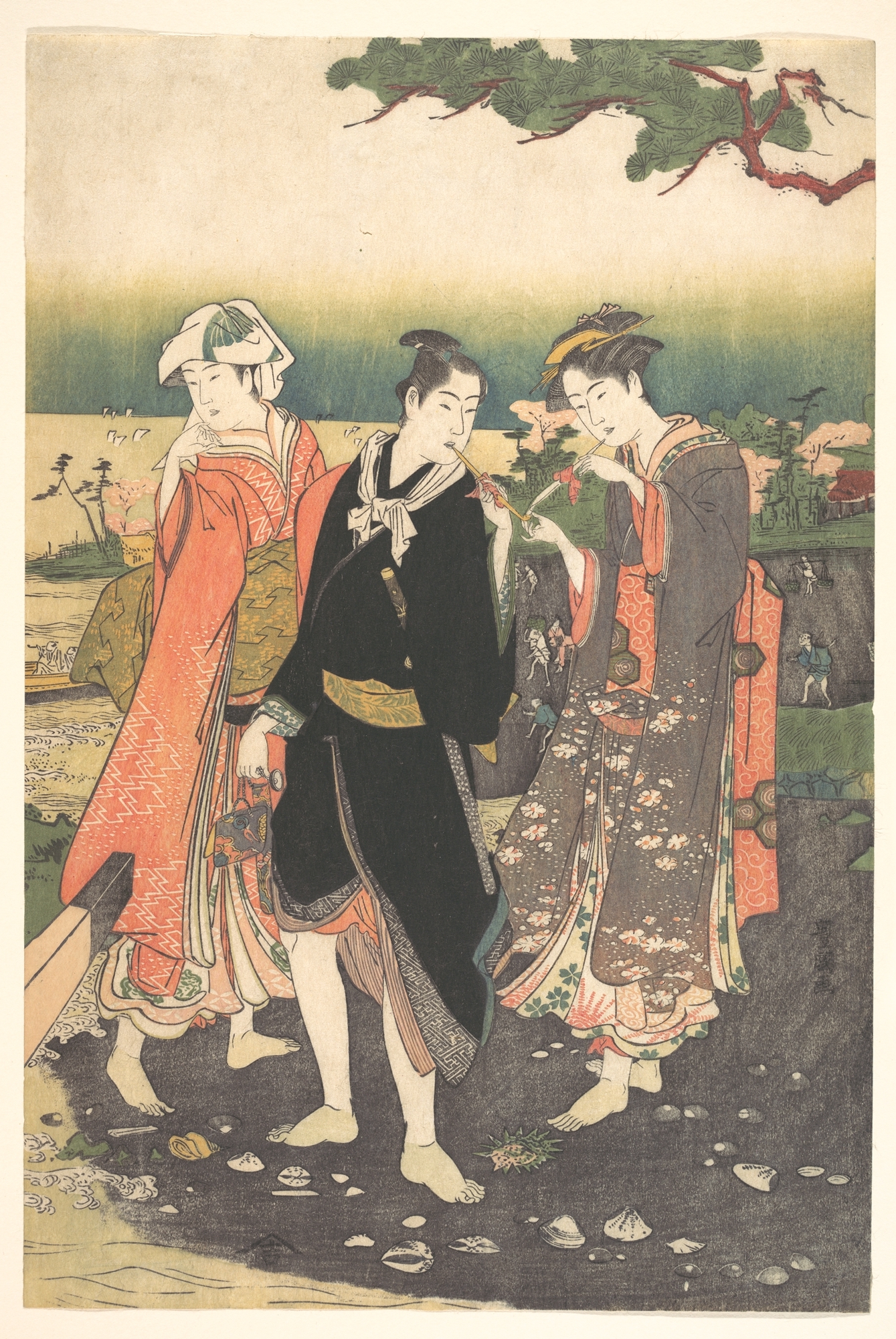
Shunjo gidan mizuage cho
- Date:
- 1836
- Medium:
- Woodblock printed books, three volumes
- Source:
- Art Institute of Chicago
Description
Shunjo gidan mizuage cho, recorded by the Art Institute of Chicago with a date of 1836, is a Utagawa Toyokuni design tied to the printed-book and serial culture of late Edo. The title refers to a story of love and obligation set in the world of the licensed quarters, where the mizuage cho, the register that recorded a courtesan's deflowering ceremony, becomes the symbolic and narrative center of the plot. Toyokuni's image illustrates a moment from this tale, framing the figures with the visual language of Edo [ukiyo-e](/glossary/ukiyo-e): kimono richly patterned, postures controlled, and the small props of the licensed quarters arranged carefully to ground the scene. As an Utagawa school work, the print participates in a network of designs and books that fed off one another. Stories such as Shunjo gidan mizuage cho were dramatized on stage and circulated in illustrated form, so that ukiyo-e designs and woodblock-printed novels (gokan and ninjobon) became part of a single multimedia ecosystem. Although Toyokuni was famous for [yakusha-e](/glossary/yakusha-e), sheets like this remind us that his contribution extended into illustrated literature as well, where his sense of pose and pattern shaped how readers imagined narrative scenes. The Art Institute of Chicago preserves the work as part of its Toyokuni holdings, where it stands at the intersection of theatre, literature, and the visual culture of the pleasure quarters in the 1830s.