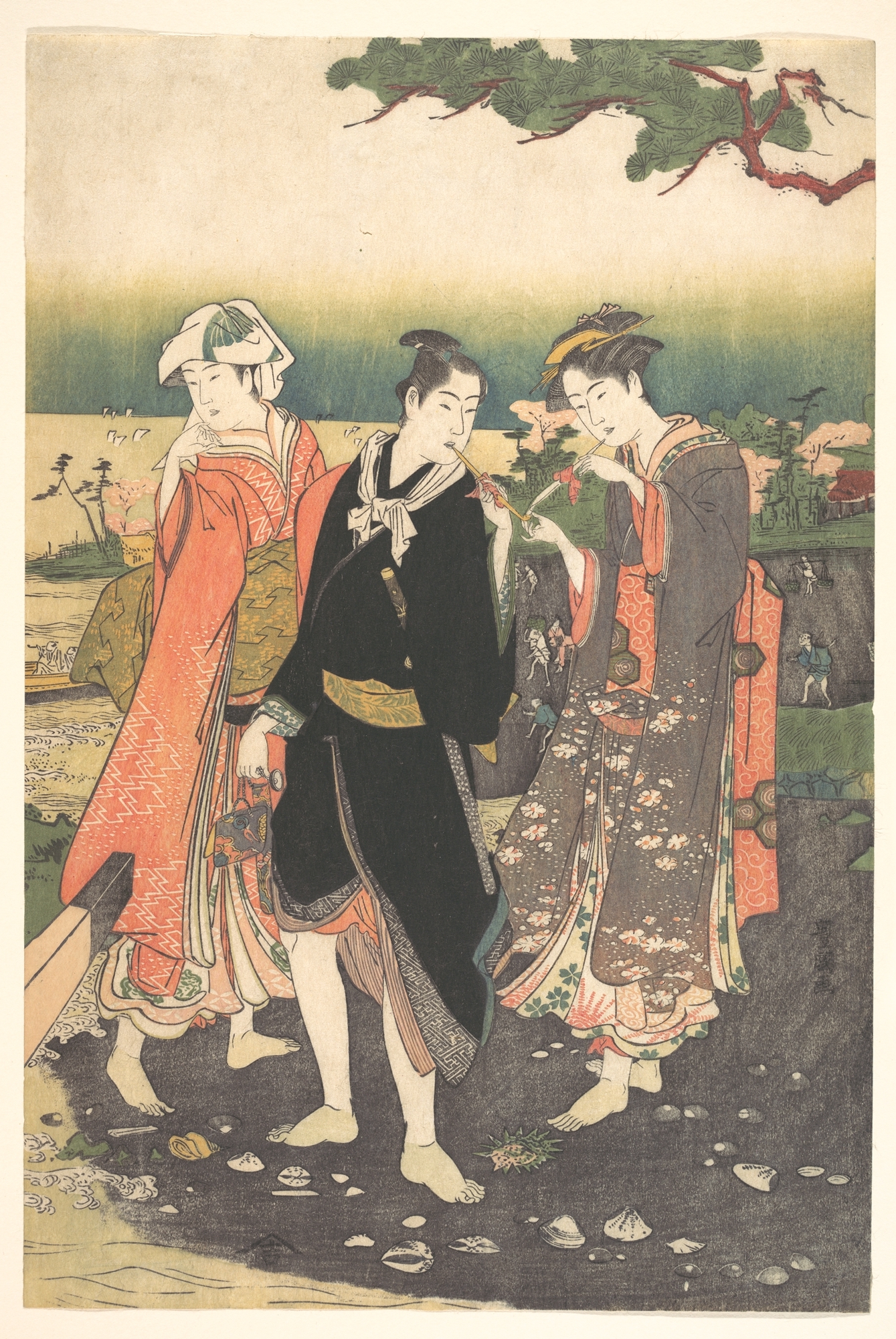
The actor Ichikawa Danjuro VII
- Date:
- 1826
- Medium:
- Color woodblock print; right sheet of oban diptych (left: 1937.251)
- Source:
- Art Institute of Chicago
Description
This 1826 woodblock print by Utagawa Toyokuni, in the collection of the Art Institute of Chicago, presents a solo portrait of the kabuki star Ichikawa Danjuro VII, the dominant male performer of his generation and the central figure in Edo's theatrical celebrity culture. Toyokuni, the leading designer of Edo [ukiyo-e](/glossary/ukiyo-e) [yakusha-e](/glossary/yakusha-e), had been depicting Danjuro VII since the actor's emergence as a major presence, and this late portrait reflects the long collaboration between designer and subject. The composition isolates the actor against a relatively spare ground, allowing Toyokuni's careful nigao-e treatment of the face to anchor the sheet. The Ichikawa line was famous for its dramatic facial expressions, its association with aragoto bravura roles, and the family crest of the three nested squares, all of which Toyokuni invokes here through pose, costume, and inscription. By 1826, Toyokuni's vocabulary for this performer was essentially canonical: his portraits had helped define how audiences saw the actor, and other Utagawa school designers were already extending and modifying his templates. The print is therefore both a document of an individual production and a key piece of evidence for the broader system by which Edo ukiyo-e mediated kabuki fame. Its presence in a major American collection underlines the lasting scholarly and aesthetic importance of Toyokuni's portraits of the Ichikawa family.