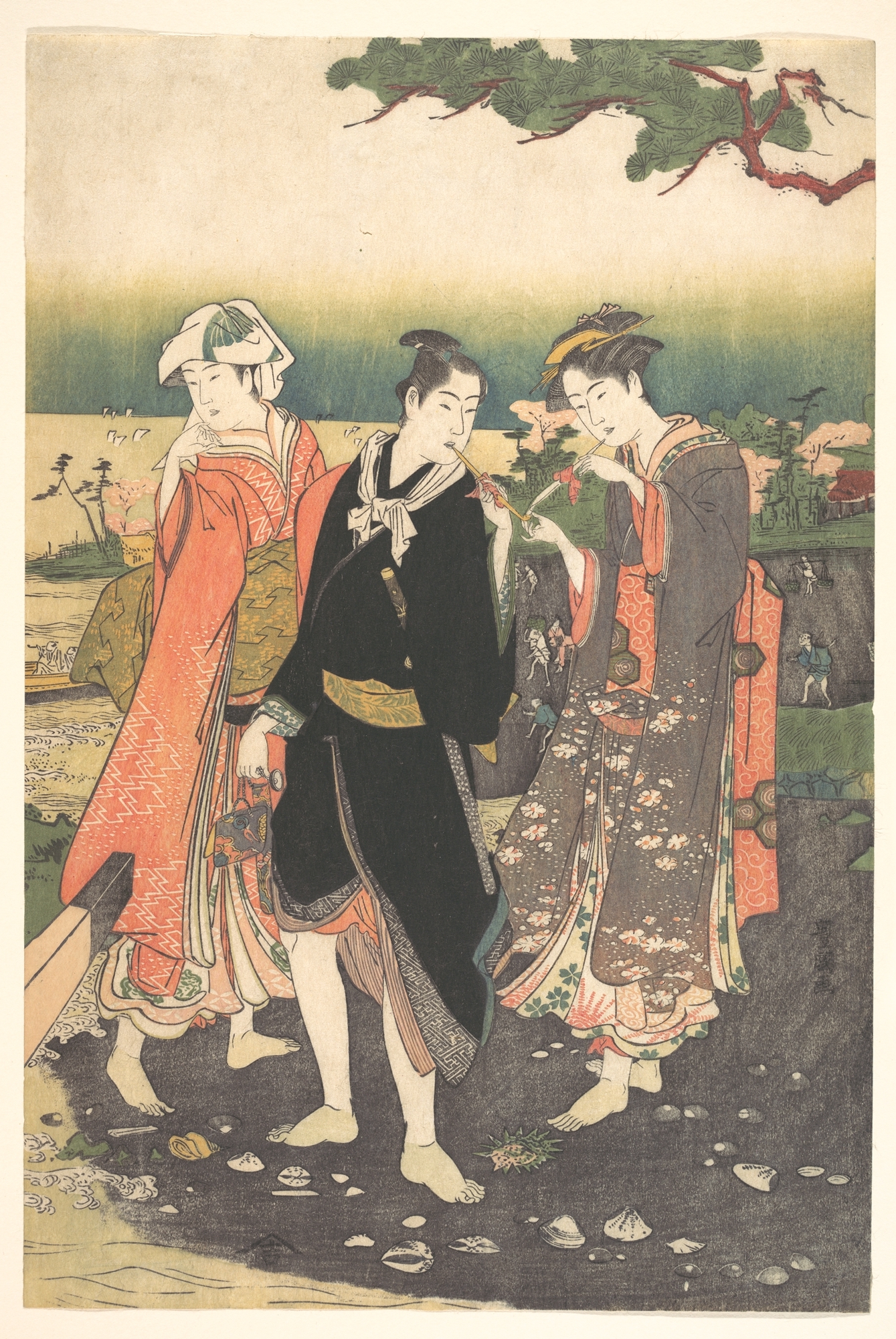
The actor Ichikawa Danjuro VIII
- Date:
- 1849
- Medium:
- Color woodblock print; left sheet of oban diptych (right: 1937.272a)
- Source:
- Art Institute of Chicago
Description
This 1849 Edo [ukiyo-e](/glossary/ukiyo-e) woodblock print from the Utagawa Toyokuni studio is a [yakusha-e](/glossary/yakusha-e) portrait of Ichikawa Danjuro VIII, then one of the most idolized kabuki stars in Edo, who had inherited the Ichikawa house's leading name a few years earlier. The Art Institute of Chicago catalogs the sheet under the actor's name without a role identification in the public record consulted here, and this description stays inside what that record supports. As a single-actor portrait, the print belongs to a genre that the Utagawa workshop had refined throughout the first half of the nineteenth century: the actor occupies the picture field, the costume carries the polychrome design, and the face is treated to the workshop's likeness conventions - pale ground for the skin, thin black outlines for the features, restrained color accents to register expression without disturbing the flat planarity of the printed surface. Danjuro VIII's celebrity in the late 1840s gave such portraits a particular charge for Edo collectors. He was beloved especially by women in the kabuki audience, and prints of him circulated as souvenirs of specific performances, as ongoing celebrity images, and as the visible counterparts of the gossip that filled Edo's theater districts. The Utagawa Toyokuni studio's role in that ecosystem was to provide an authoritative visual record, and the 1849 sheet is best read as one instance of that ongoing production, controlled by Utagawa-school drawing standards and by the technical discipline of the block-cutters and printers who served the workshop.