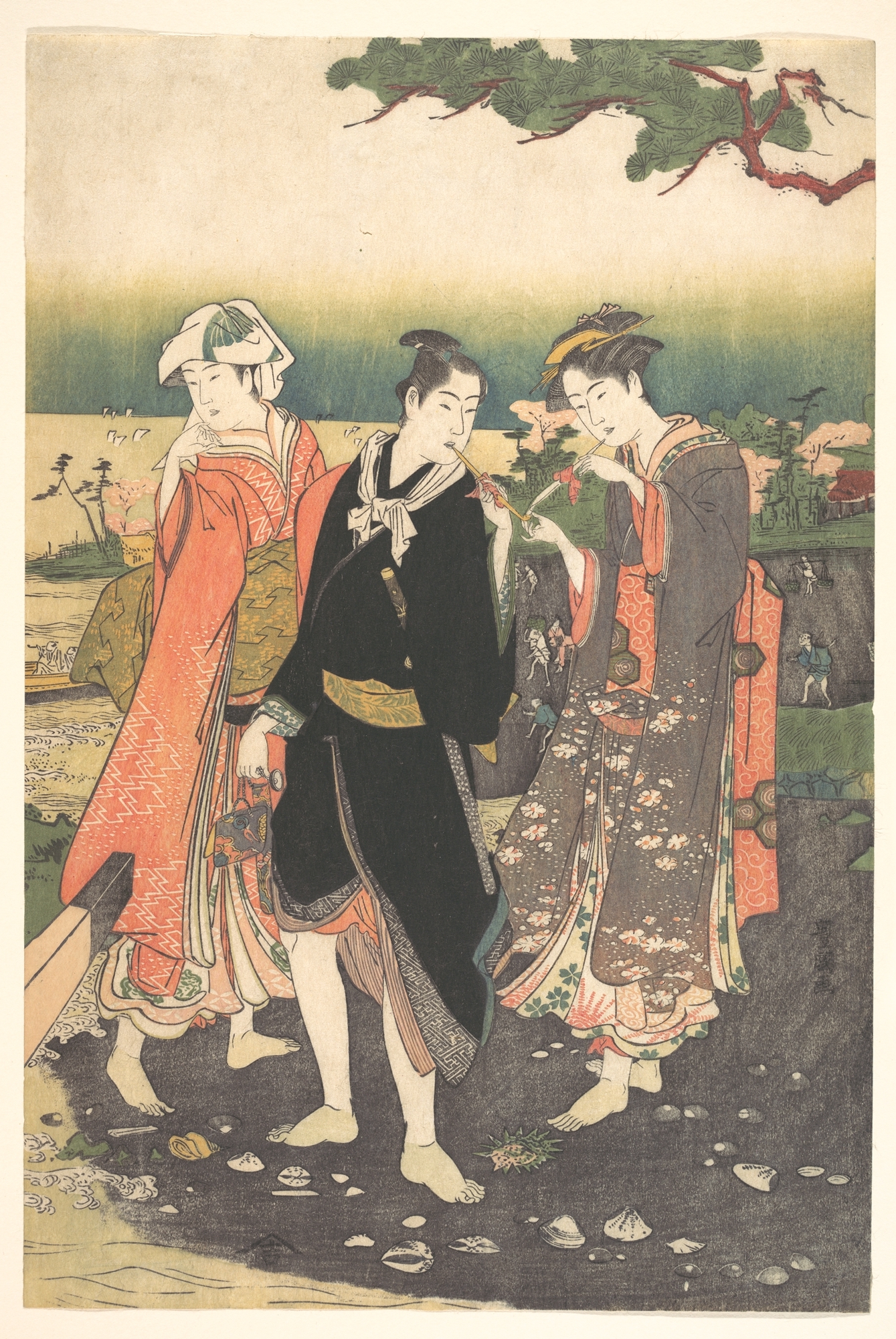
The actor Ichikawa Danjuro VIII as Mashiba Hisatsugu
- Date:
- 1851
- Medium:
- Color woodblock print; left sheet of oban diptych
- Source:
- Art Institute of Chicago
Description
Utagawa Toyokuni I's depiction of the actor Ichikawa Danjuro VIII as Mashiba Hisatsugu epitomizes the late phase of Edo [ukiyo-e](/glossary/ukiyo-e) [yakusha-e](/glossary/yakusha-e) — the kabuki actor prints that made the Utagawa school's name. Ichikawa Danjuro VIII, the matinee idol whose tragically short career was followed obsessively in Edo, plays Mashiba Hisatsugu, a stand-in for the historical Toyotomi Hidetsugu whose name censorship laws required performers to disguise. Toyokuni's design, preserved at the Art Institute of Chicago, presents the actor in formal attire, the face captured with the slightly elongated features and arched brow that fans had learned to recognize as Danjuro VIII's signature. The print rewards the kind of attentive looking Edo audiences brought to kabuki actor prints: the mon, the patterned ground, the small inscription giving role and player, all coordinated to function simultaneously as portrait, advertisement, and souvenir. As a founder of the Utagawa lineage, Utagawa Toyokuni shaped not only the iconography of yakusha-e but the very expectations of the buying public, training his pupils — Kunisada, Kuniyoshi, and others — in a visual vocabulary that would dominate Edo ukiyo-e for decades. The Art Institute of Chicago's holdings of Toyokuni include several Danjuro VIII portraits, and this Mashiba Hisatsugu sheet stands among the more striking. Beyond its art-historical interest, it preserves a fleeting moment of theatrical celebrity: a young star at the height of his powers, captured in a role still controversial enough to require a disguised name.