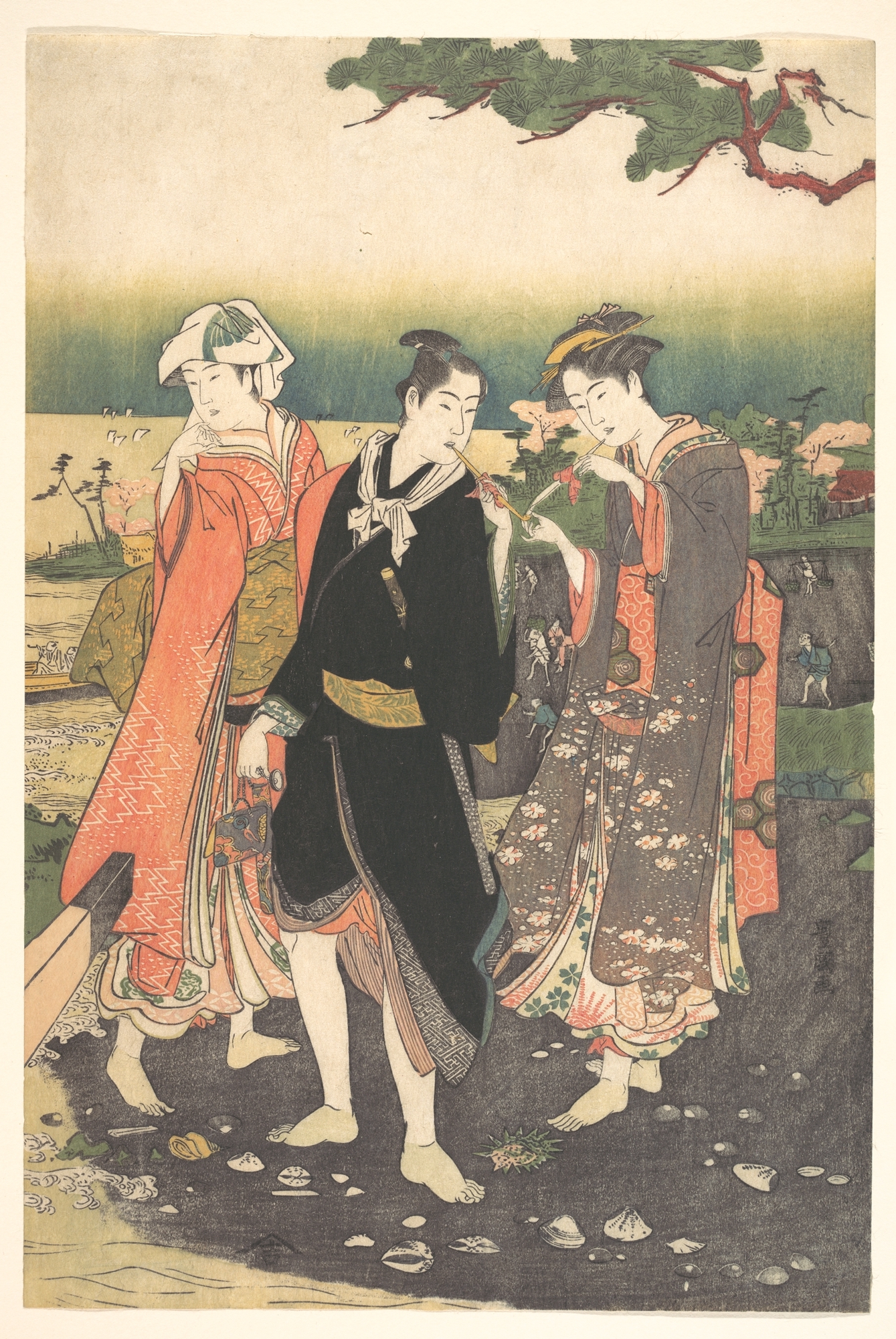
The actor Ichikawa Kuzo II as Tanigoro
- Date:
- c. 1842
- Medium:
- Color woodblock print; oban
- Source:
- Art Institute of Chicago
Description
This 1837 [yakusha-e](/glossary/yakusha-e) woodblock print from the Utagawa Toyokuni studio shows the kabuki actor Ichikawa Kuzo II in the role of Tanigoro, a character drawn from the popular Edo stage repertoire and presented here in a single-sheet portrait of the kind that Edo theatergoers bought on the way home from a performance. The Art Institute of Chicago catalogs the work under actor and role without expanding the play's identification in the public record, so the description here stays close to what the image and that museum entry support. The composition concentrates the design on the actor's upper body, allowing the face, hair, and outer costume to do the work that Edo [ukiyo-e](/glossary/ukiyo-e) collectors expected from a star portrait. The face is built up in the Utagawa-school manner: a pale ground for the skin, thin black contours defining the eyes, brow, and mouth, and accents of red or grey to register expression without over-modeling. The costume is laid in with bold flat color, while finer woodblock cutting carries the patterns of the outer robe and the actor's crest. By 1837 the Utagawa workshop was thoroughly dominant in actor publishing, and prints of this kind functioned both as portraits of a specific evening's casting and as ongoing celebrity images that fans collected across roles and seasons. The sheet illustrates the Toyokuni lineage's mature treatment of yakusha-e: a clear hierarchy of focus on the actor, conservative use of background, and a likeness convention recognizable enough that Ichikawa Kuzo II would have been identifiable to Edo audiences even before they read the cartouche.