
Americans on an Outing (Amerikajin yūkō no zu)
亜墨利加人遊行之図
- Date:
- 1860
- Medium:
- Color woodblock print; oban
- Source:
- Art Institute of Chicago
Description
This 1860 color woodblock print in oban format, held by the Art Institute of Chicago (accession number 1926.1625), bears the Japanese title Amerikajin yūkō no zu — "Picture of Americans on an Outing." The print is one of Yoshikazu's earliest dated Yokohama-e and depicts American men and women out walking together in Western dress, with the bright costumes, parasols, top hats, and bonnets that had become the visual shorthand for American visitors in the early treaty port. The composition treats its foreign subjects with the curious ethnographic attentiveness that characterizes the best of Yoshikazu's Yokohama-e: the figures' dress, posture, and accessories are carefully observed, while their faces carry the slightly exaggerated, almost caricatural features that Japanese designers used to mark foreignness for their viewers. The print belongs to the small group of late-1860 single-sheet Yokohama-e that initiated Yoshikazu's two-year peak of production in the genre and that established the visual conventions on which his later, more elaborate triptychs would build. The print is signed Issen Yoshikazu ga and entered the Art Institute of Chicago's collection through the gift of Emily Crane Chadbourne, whose donation in 1926 placed the museum among the leading American repositories of Yoshikazu's Yokohama-e.
More Prints by Utagawa Yoshikazu

Foreigners Enjoying a Banquet
2nd month, 1862
Triptych of woodblock prints; ink and color on paper

Arrival and Departure of an American Steamship (Amerikakoku jōkisha ōrai)
亜墨利加国蒸気車往来
1861
Color woodblock print; oban triptych
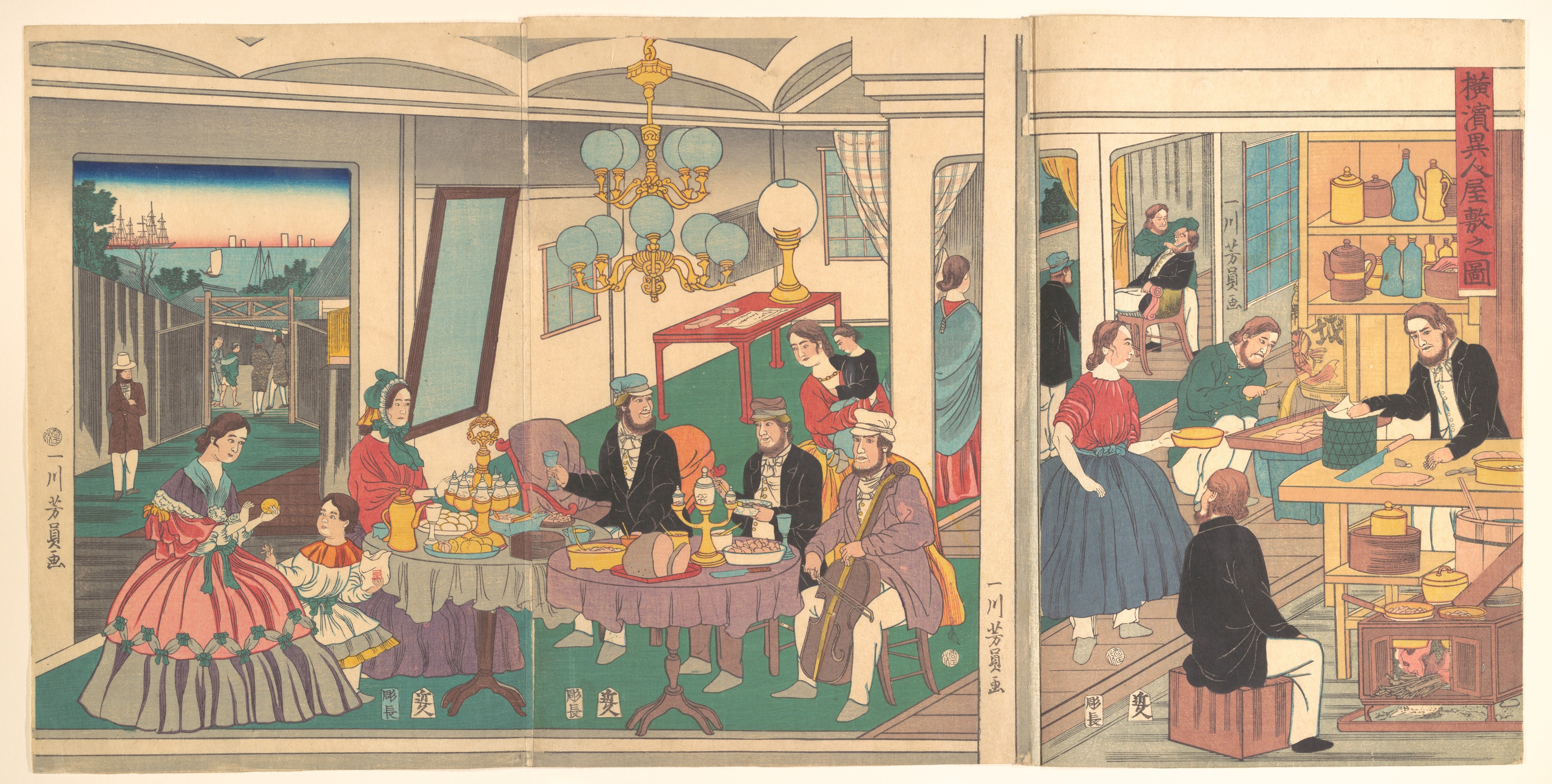
A Foreign Residence in Yokohama
1861
Triptych of woodblock prints (nishiki-e); ink and color on paper
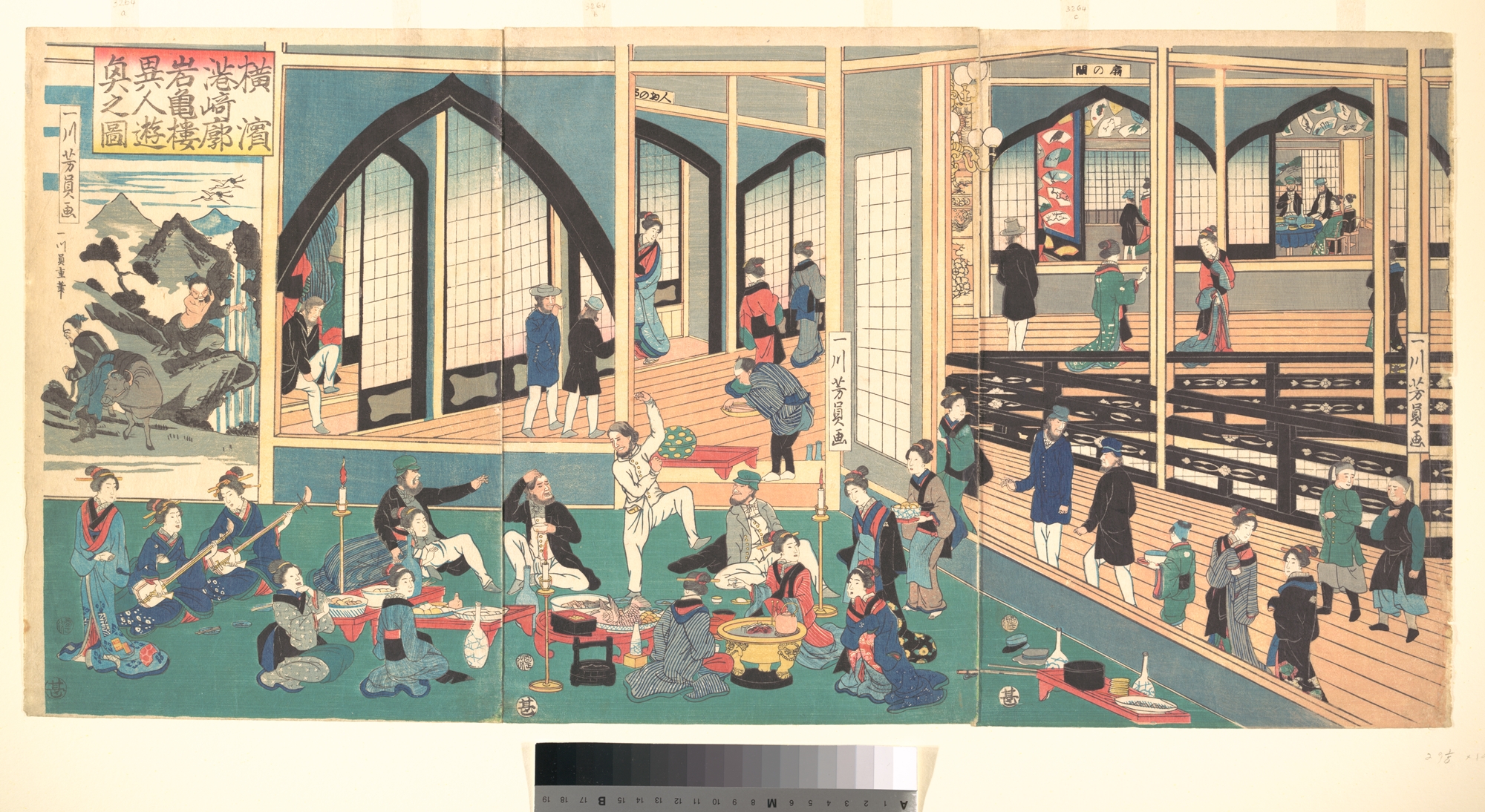
Foreigners Enjoying Themselves in the Gankirō
ca. 1861
Triptych of woodblock prints; ink and color on paper
Frequently Asked Questions
Americans on an Outing (Amerikajin yūkō no zu) (亜墨利加人遊行之図) was created by Utagawa Yoshikazu (歌川芳員) in 1860.