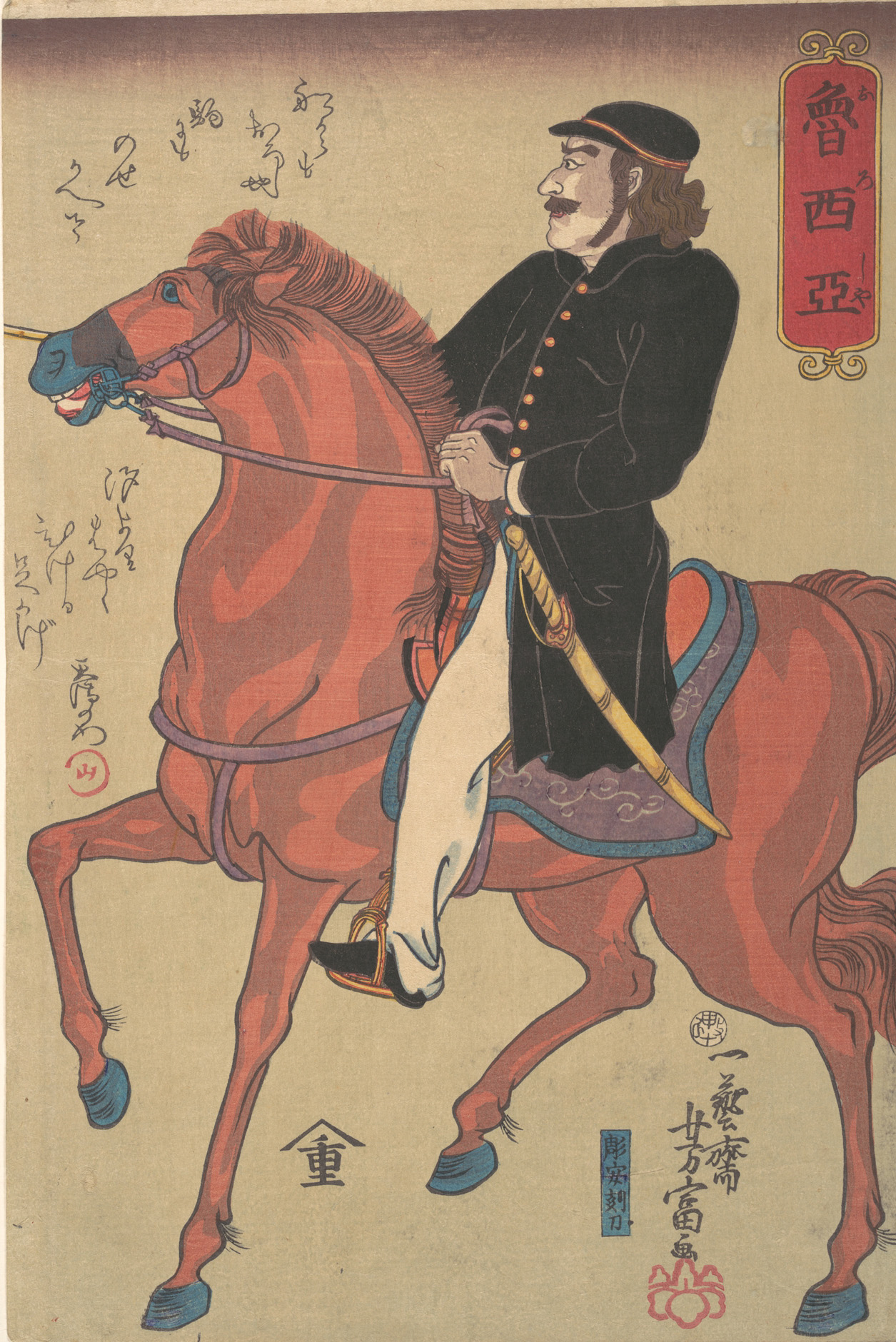
Russian Horseman
- Date:
- 10th month, 1860
- Medium:
- Woodblock print (nishiki-e); ink and color on paper
- Source:
- Metropolitan Museum of Art
Description
This 1860 color woodblock print (nishiki-e), ink and color on paper, held by the Metropolitan Museum of Art (accession number 2007.49.235), is one of Utagawa Yoshitomi's earliest dated Yokohama-e and an example of the equestrian-portrait type that flourished in the genre's first wave. The image measures 37.5 by 26.7 centimeters and depicts a mounted Russian figure rendered with the close attention to foreign costume, horse trappings, and physiognomy that defined the Yokohama-e genre at its inception. The Russian Empire had signed its commercial treaty with Japan in 1858, and Russians were among the earliest foreign residents in the new treaty ports opened in 1859; equestrian subjects, which combined the documentary interest of foreign costume with the established Utagawa-school tradition of depicting horses and riders, were among the most popular early Yokohama-e formats. Yoshitomi's print belongs to the surge of Yokohama-e production that absorbed virtually the entire output of the younger Kuniyoshi pupils in 1860-1862. The print is signed in the Utagawa lineage and dates from the tenth month of Ansei 7 (late 1860), placing it within the very first season of Yokohama-e publishing. Lieberman, the museum's longtime curator and one of the great American collectors of nineteenth-century Japanese prints.
More Prints by Utagawa Yoshitomi
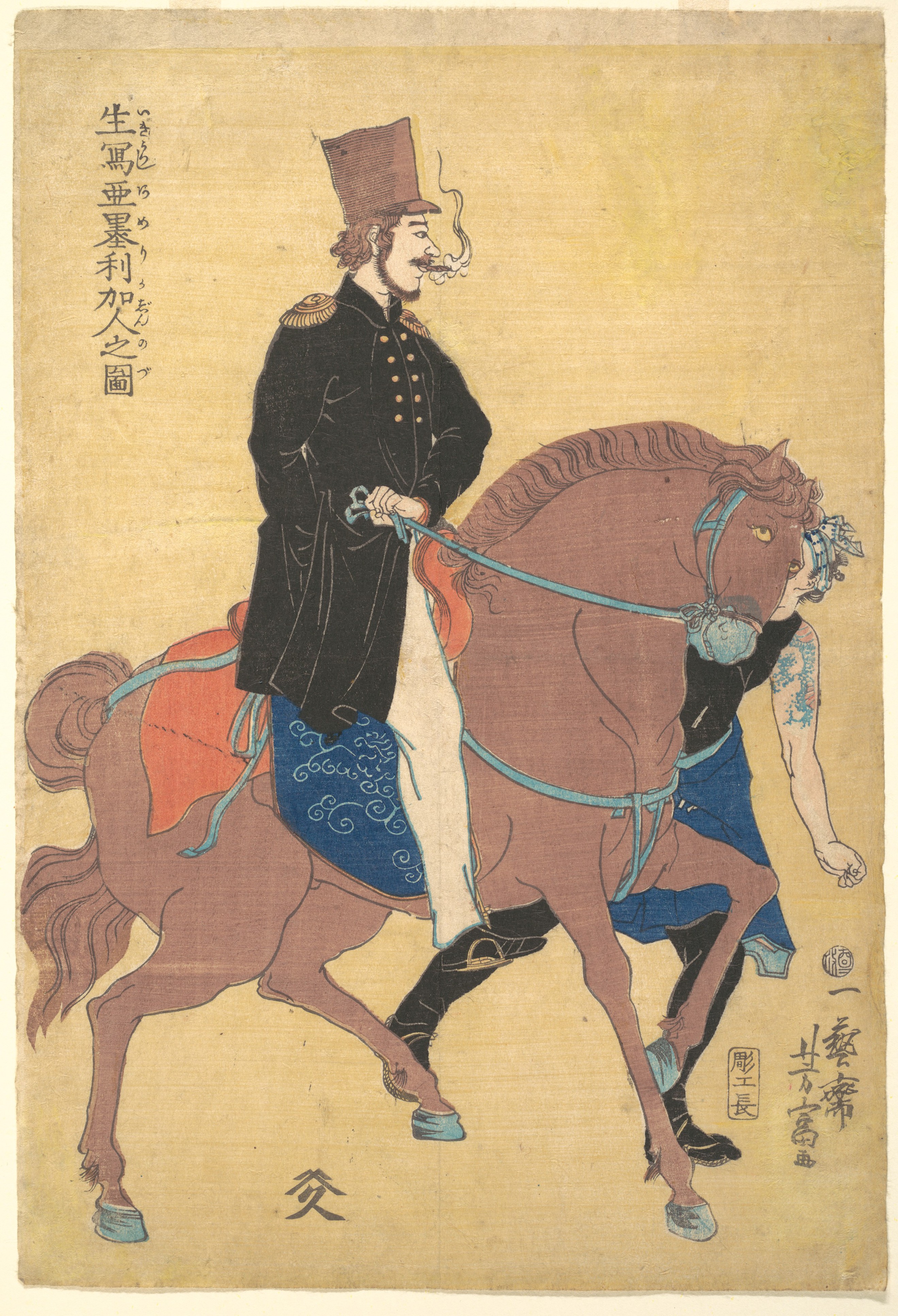
An American Drawn from Life
1861
Woodblock print (nishiki-e); ink and color on paper
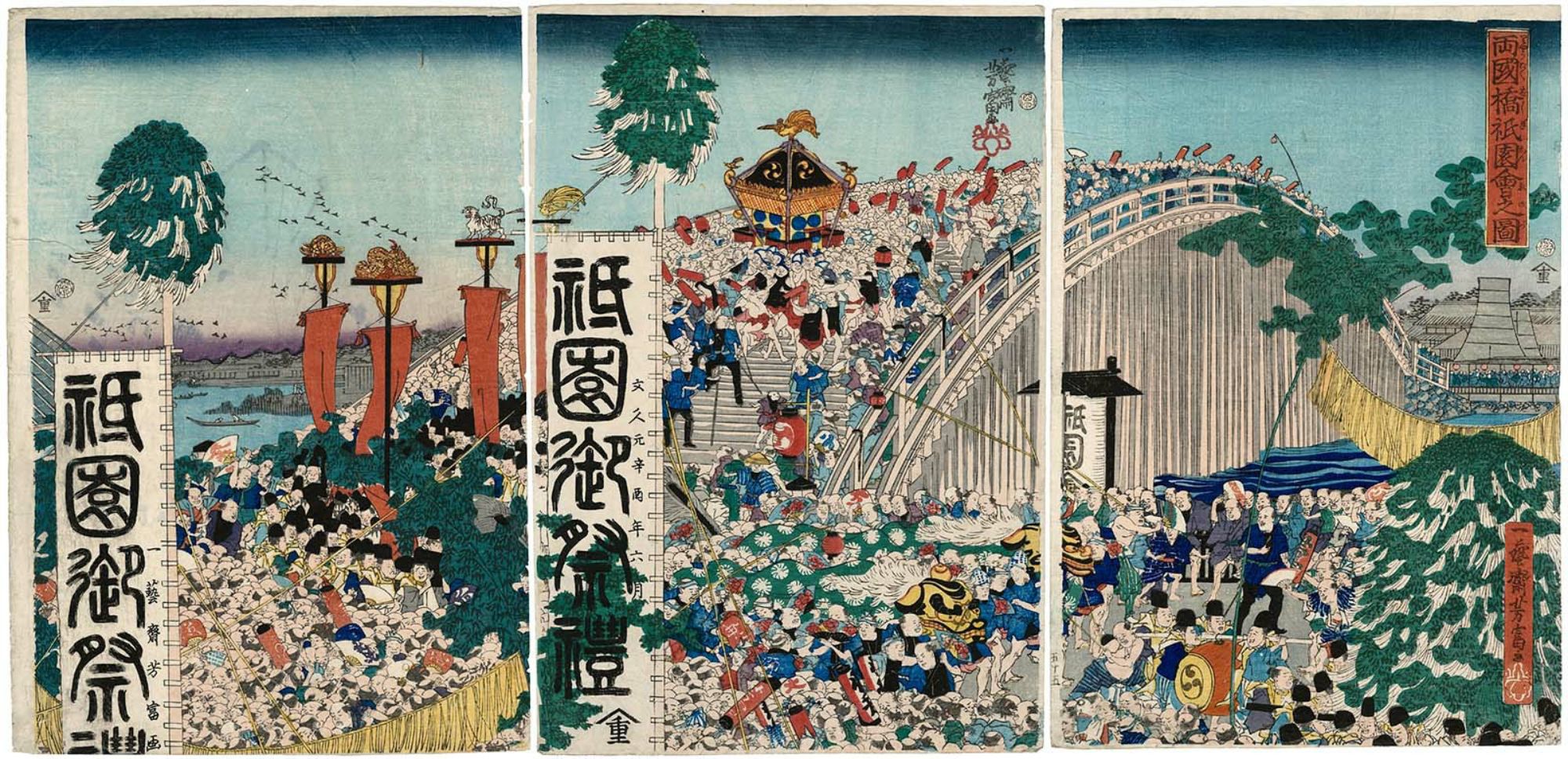
Gion Festival at Ryogoku Bridge (Ryogoku-bashi Gion-e no zu)
両国橋祇園会之図
Edo period
Color woodblock print (nishiki-e); ink and color on paper
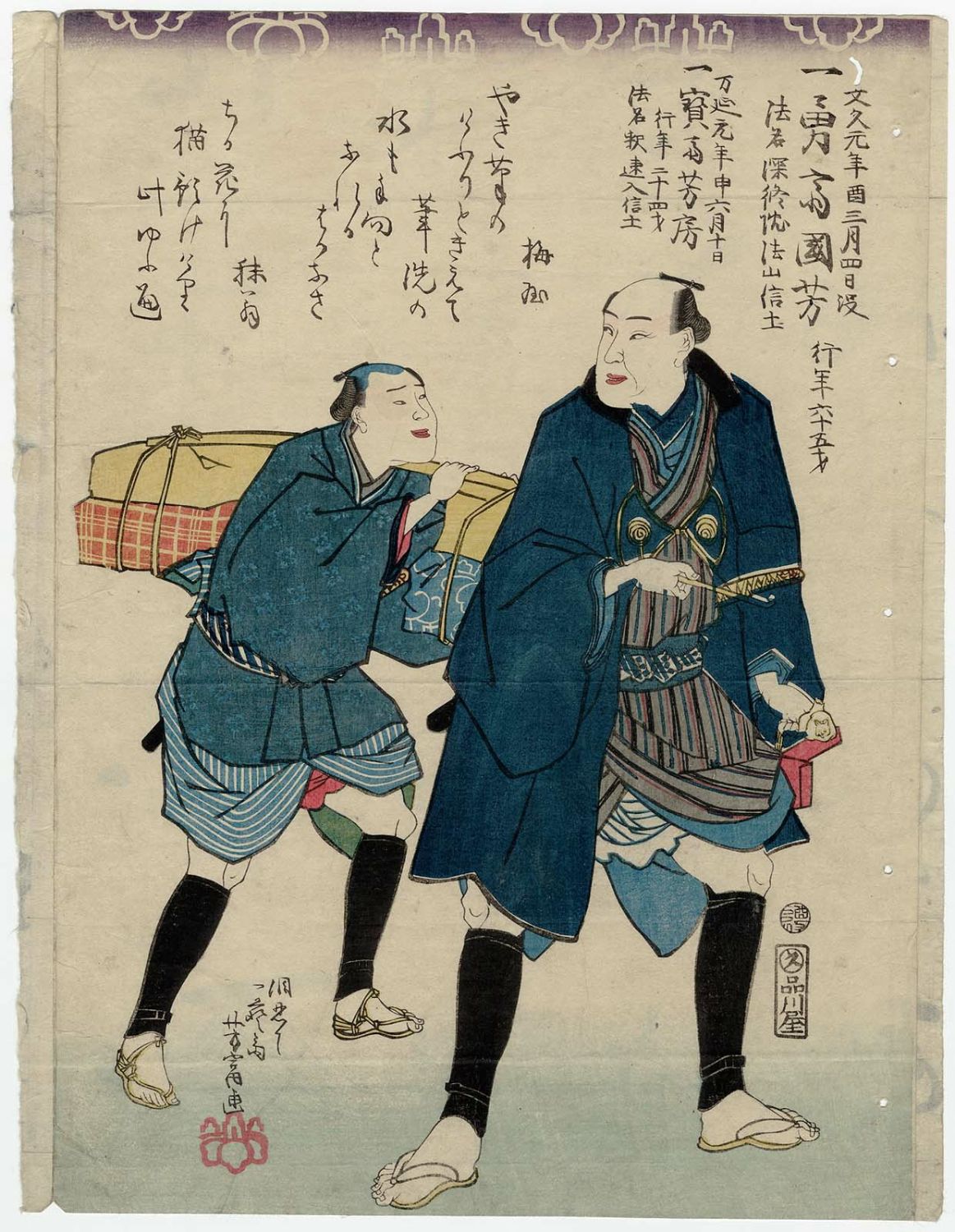
Memorial Portrait of Ichiyusai Kuniyoshi
一勇齋國芳死絵
1861
Color woodblock print (nishiki-e); ink and color on paper
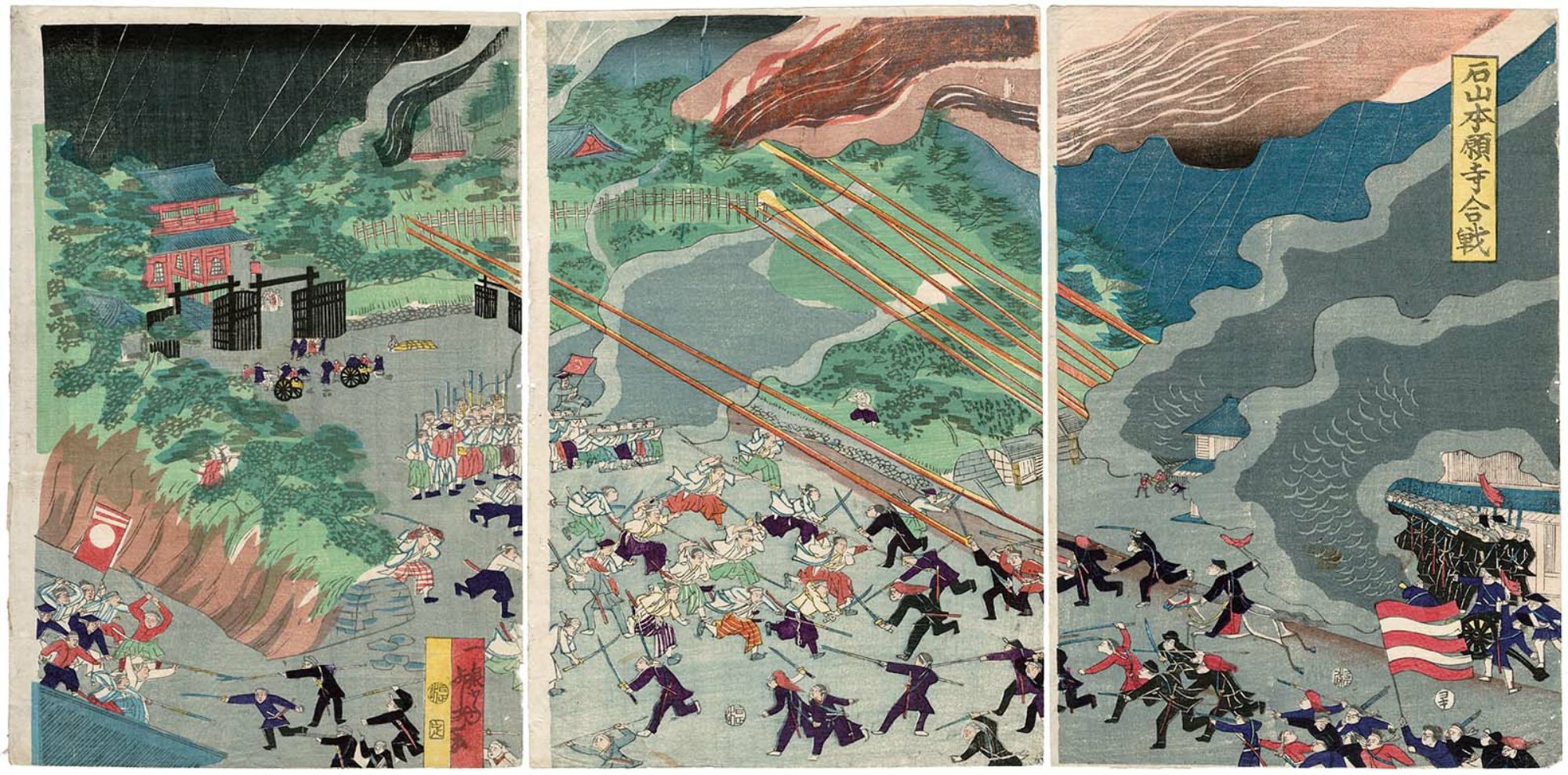
The Battle of Ishiyama Hongan-ji (Ishiyama Hongan-ji kassen)
石山本願寺合戦
1869
Color woodblock print (nishiki-e); ink and color on paper
Frequently Asked Questions
Russian Horseman was created by Utagawa Yoshitomi (歌川芳富) in 10th month, 1860.