Biography
Utagawa Yoshitomi (歌川芳富, active c. 1848-1880) was a Japanese woodblock print designer of the late Edo (Bakumatsu) and early Meiji periods whose career intersected two of the most consequential developments in nineteenth-century Japanese print culture: the rise of the Yokohama-e genre after the opening of the treaty ports in 1859, and the death of his teacher Utagawa Kuniyoshi (1797-1861), the last great patriarch of the Utagawa school. Yoshitomi's small surviving corpus places him within the younger generation of Kuniyoshi pupils whose collective work documented Japan's first sustained encounter with the industrializing West.
Yoshitomi entered Kuniyoshi's studio in the 1850s, joining a remarkable cohort whose given names all began with the Yoshi (芳) character inherited from their master. The senior Kuniyoshi pupils — Yoshitora, Yoshiiku, Yoshifuji, Yoshikazu, and the great Tsukioka Yoshitoshi — would shape the trajectory of late-Utagawa printmaking through the Bakumatsu years and into the early Meiji period. Yoshitomi belonged to the younger wing of this group; he produced fewer prints than his more prolific studio brothers, and the biographical record preserves little of his birth year or formal training. His prints carry the Utagawa lineage signature and demonstrate clear familiarity with the Kuniyoshi idiom of dynamic figural drawing and saturated color.
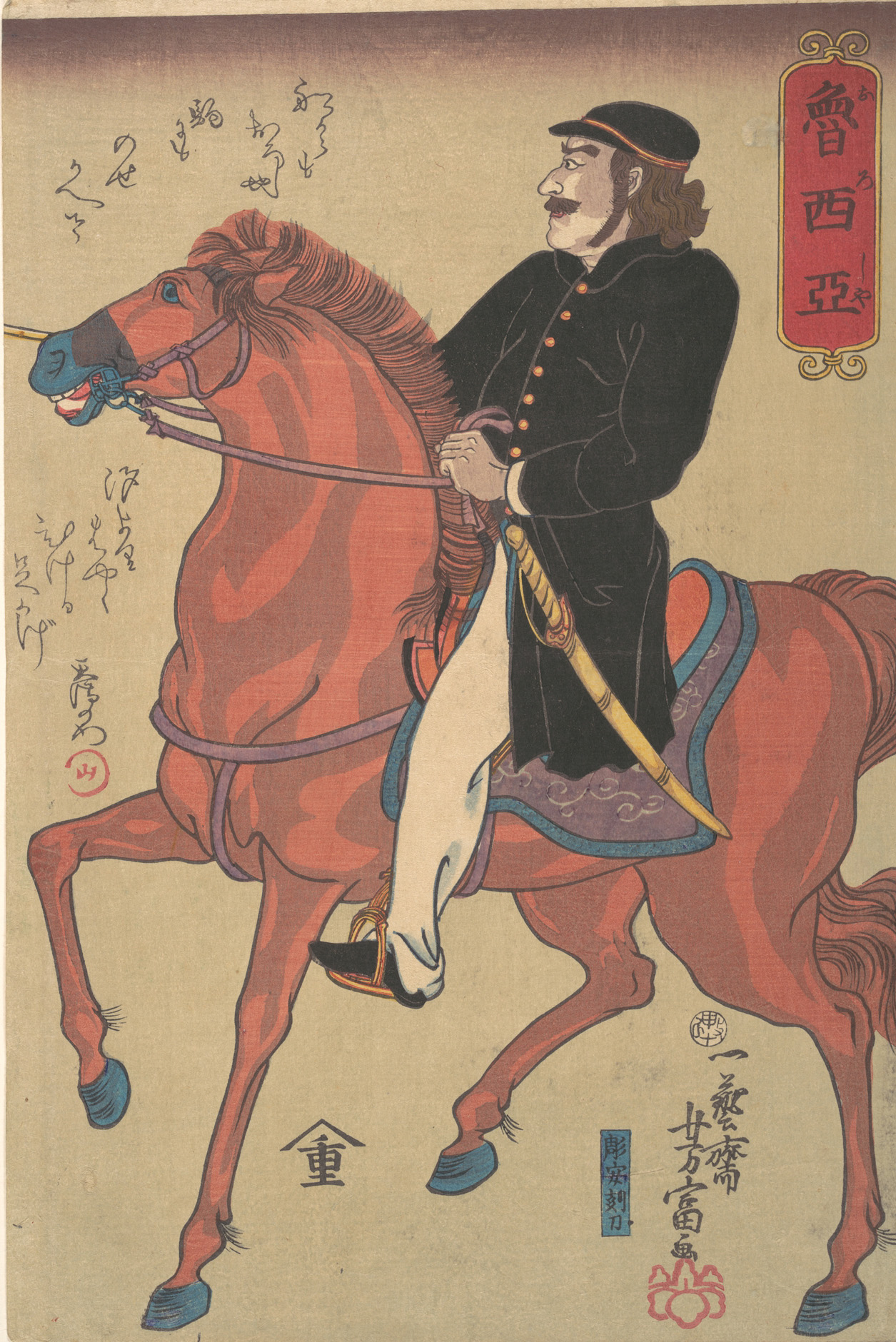
The formative event of Yoshitomi's career was the opening of the Treaty Port of Yokohama in July 1859, which transformed the visual economy of late-Edo print publishing within months. Yokohama, established as a foreign settlement adjacent to Edo following the Harris Treaty of 1858, offered a sustained spectacle of Western merchants, sailors, and diplomats — American, British, Dutch, French, and Russian — living in a purpose-built international quarter. Edo publishers responded with an entirely new genre, Yokohama-e ("Yokohama pictures"), depicting these foreigners and their ships, architecture, and customs. The genre flourished between 1860 and 1862 and absorbed virtually the entire output of the younger Kuniyoshi pupils. Yoshitomi's surviving Yokohama-e include single-sheet portraits of treaty-power nationals and depictions of Western ships and equestrian subjects: his "Russian Horseman" of 1860, "Dutch Ship" of 1861, "Views of Foreigners (Gaikokujin no zu)" of 1861, and "An American Drawn from Life" of 1861 — all preserved at the Metropolitan Museum of Art — exemplify his contribution to the genre at its height.
The death of Kuniyoshi on the fifth day of the third month of Bunkyū 1 (April 1861) prompted Yoshitomi's most personally significant print: a memorial portrait (shini-e, "death picture") of the master, now held at the Museum of Fine Arts Boston. The shini-e genre was a long-established Edo convention by which pupils commemorated recently deceased artists with portrait prints bearing posthumous Buddhist names and elegiac inscriptions. Yoshitomi's portrait of Ichiyūsai Kuniyoshi, produced within weeks of his teacher's death and at the same moment that he was designing Yokohama-e for the broader market, demonstrates the dual identities of late-Bakumatsu print designers — commercial illustrators of the new foreign presence and lineage-bound pupils of an Edo studio whose master had just died. It is a primary document of the moment when the Utagawa school passed from its second great generation to its third.
Yoshitomi continued working into the Meiji period after the political upheavals of 1867-1868. His undated festival print of the Gion celebrations at Ryōgoku Bridge, also held at the Museum of Fine Arts Boston, demonstrates his command of the urban-spectacle subjects that had been a staple of Utagawa-school production for half a century.
Yoshitomi's surviving corpus is small and his date of death is not recorded, though the Museum of Fine Arts Boston describes him as active from roughly 1848 into the 1880s. His prints are valued by historians of Bakumatsu and early Meiji visual culture for extending the corpus of Yokohama-e produced by the younger Kuniyoshi pupils, and for the memorial portrait of his teacher that is among the canonical shini-e of the Utagawa school. His work is held by the Metropolitan Museum of Art and by the Museum of Fine Arts Boston, whose William Sturgis Bigelow Collection includes several Yoshitomi prints assembled during Bigelow's residence in Japan in the 1880s.
Key Facts
Frequently Asked Questions
Utagawa Yoshitomi (歌川芳富, active c. 1848-1880) was a Japanese woodblock print designer of the late Edo (Bakumatsu) and early Meiji periods whose career intersected two of the most consequential developments in nineteenth-century Japanese print culture: the rise of the Yokohama-e genre after the opening of the treaty ports in 1859, and the death of his teacher Utagawa Kuniyoshi (1797-1861), the last great patriarch of the Utagawa school. Yoshitomi's small surviving corpus places him within the younger generation of Kuniyoshi pupils whose collective work documented Japan's first sustained encounter with the industrializing West.
Utagawa Yoshitomi's work was shaped by the Ukiyo-e tradition in Japanese woodblock printmaking. Ukiyo-e: ## What is ukiyo-e? Ukiyo-e ([浮世絵](/glossary/ukiyo-e)) — literally "pictures of the floating world" — is the Edo-period Japanese print and painting tradition that flourished from roughly 1660 to 1868, depicting the pleasures of urban life in Edo (modern Tokyo): courtesans, kabuki actors, sumo wrestlers, famous landscapes, and seasonal beauties.
Utagawa Yoshitomi's prints frequently feature bridges.
Original prints by Utagawa Yoshitomi can be found in collections including Metropolitan Museum of Art, Museum of Fine Arts, Boston.
Woodblock Prints by Utagawa Yoshitomi (7)
Russian Horseman
10th month, 1860
Woodblock print (nishiki-e); ink and color on paper
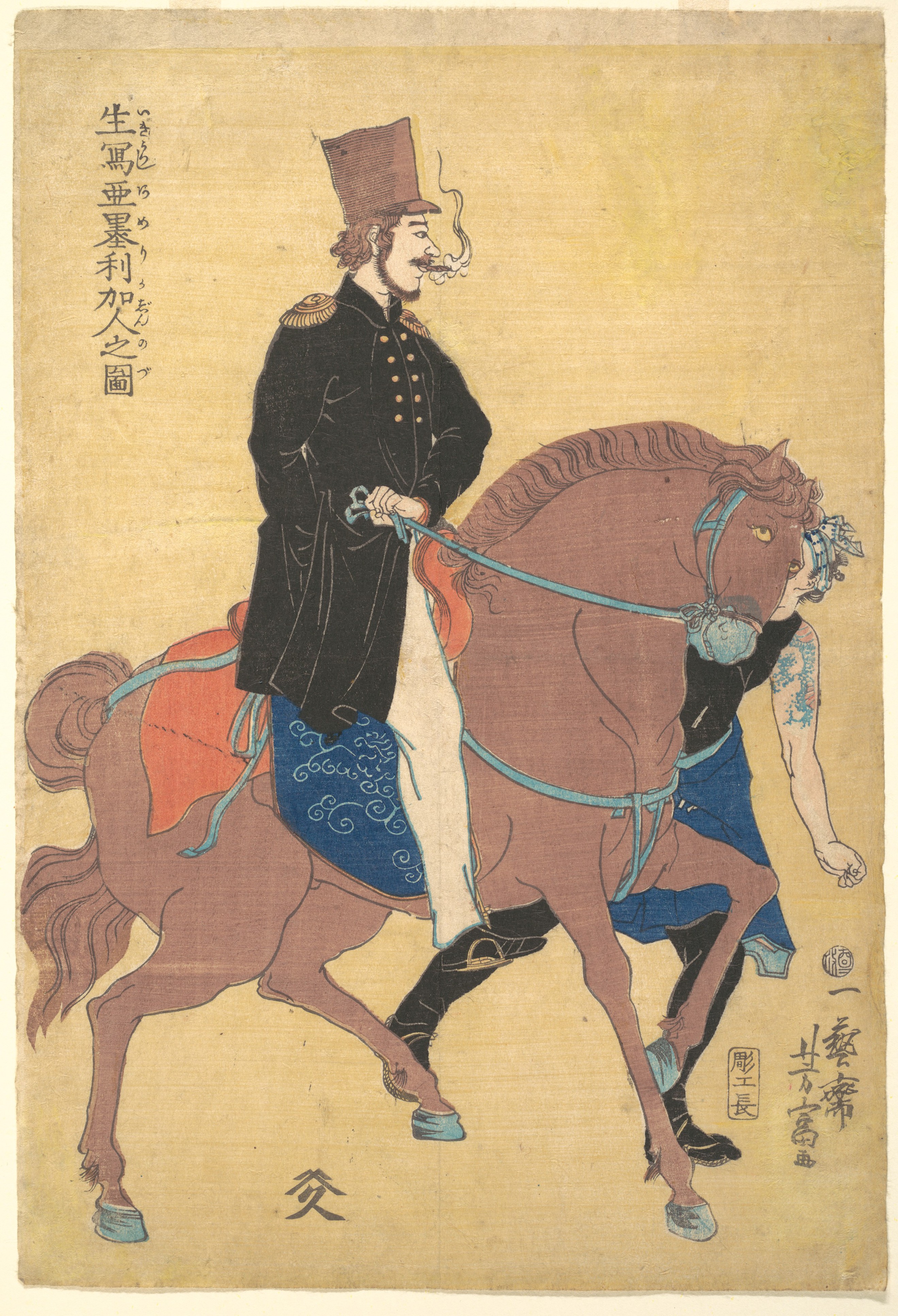
An American Drawn from Life
1861
Woodblock print (nishiki-e); ink and color on paper
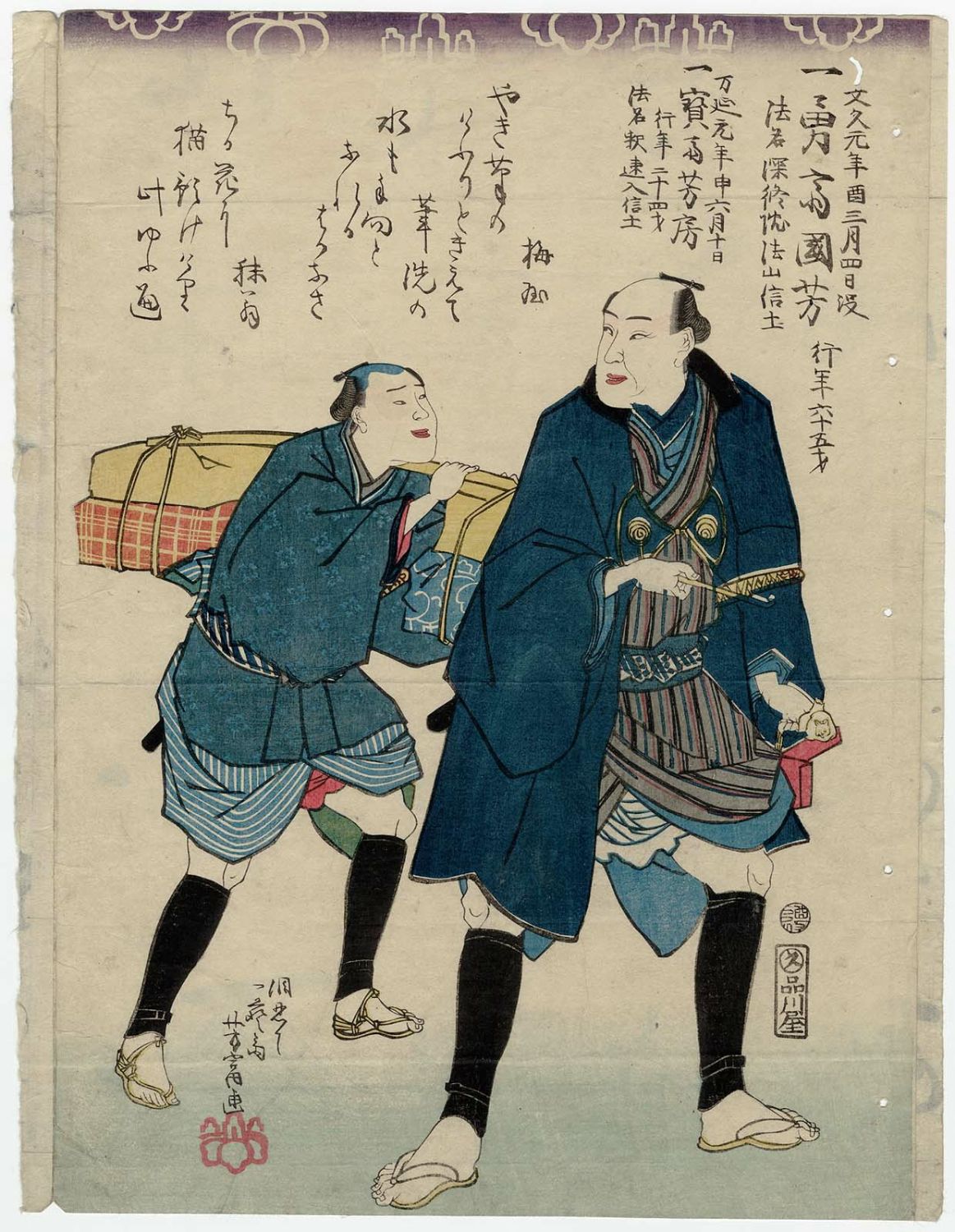
Memorial Portrait of Ichiyusai Kuniyoshi
一勇齋國芳死絵
1861
Color woodblock print (nishiki-e); ink and color on paper
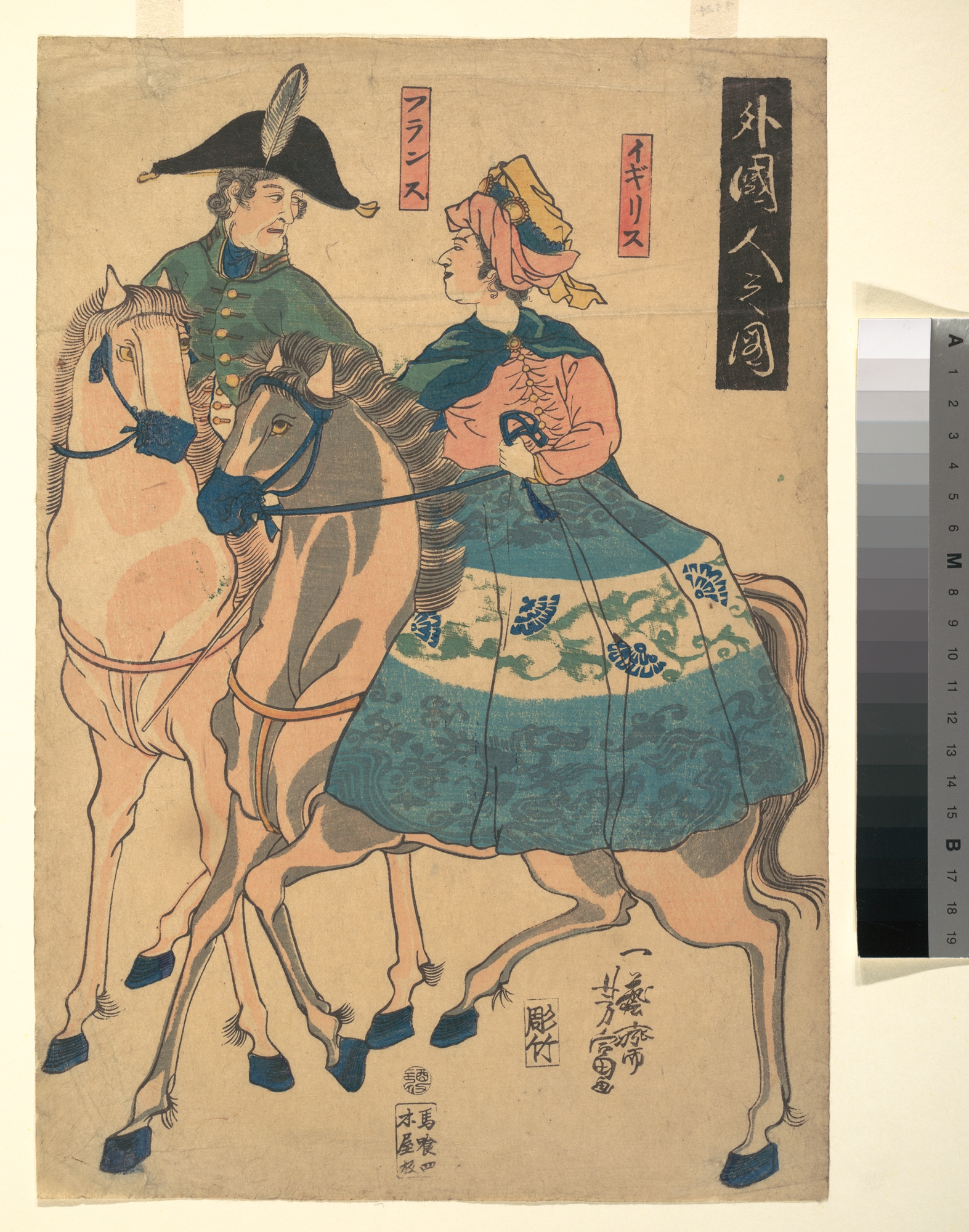
Views of Foreigners (Gaikokujin no zu)
外国人之図
1861
Woodblock print (nishiki-e); ink and color on paper

Dutch Ship
1861
Woodblock print (nishiki-e); ink and color on paper
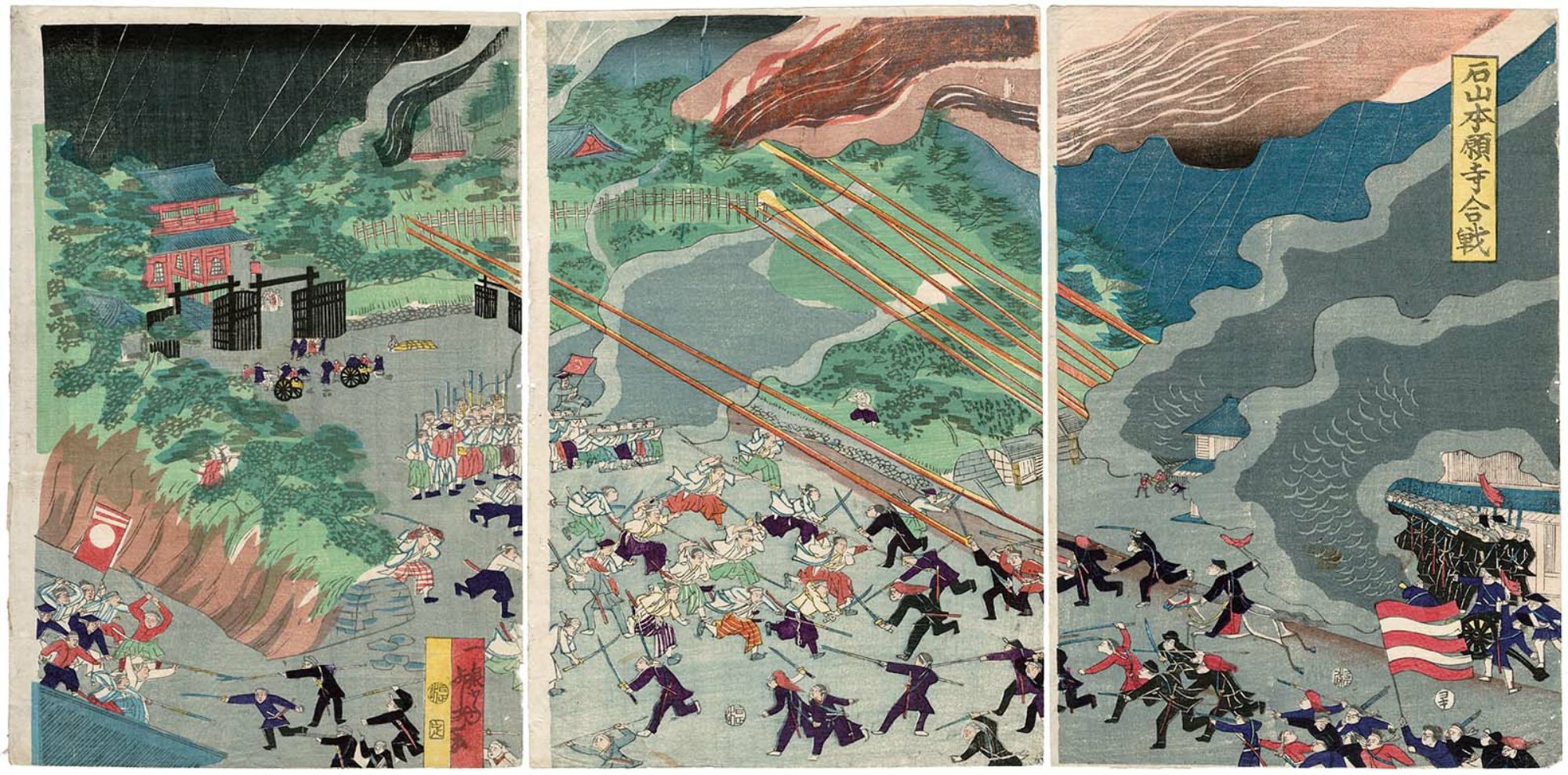
The Battle of Ishiyama Hongan-ji (Ishiyama Hongan-ji kassen)
石山本願寺合戦
1869
Color woodblock print (nishiki-e); ink and color on paper
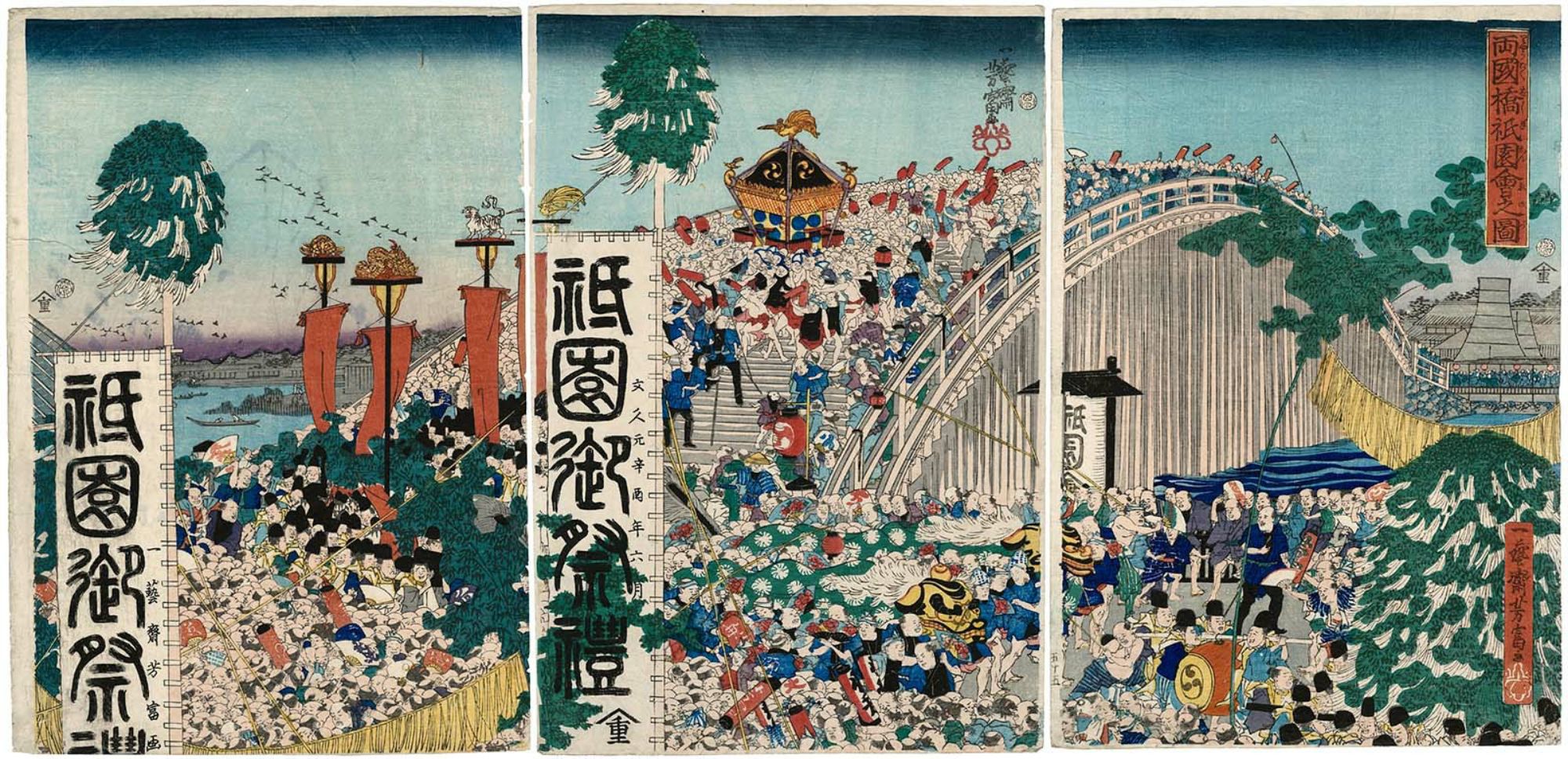
Gion Festival at Ryogoku Bridge (Ryogoku-bashi Gion-e no zu)
両国橋祇園会之図
Edo period
Color woodblock print (nishiki-e); ink and color on paper