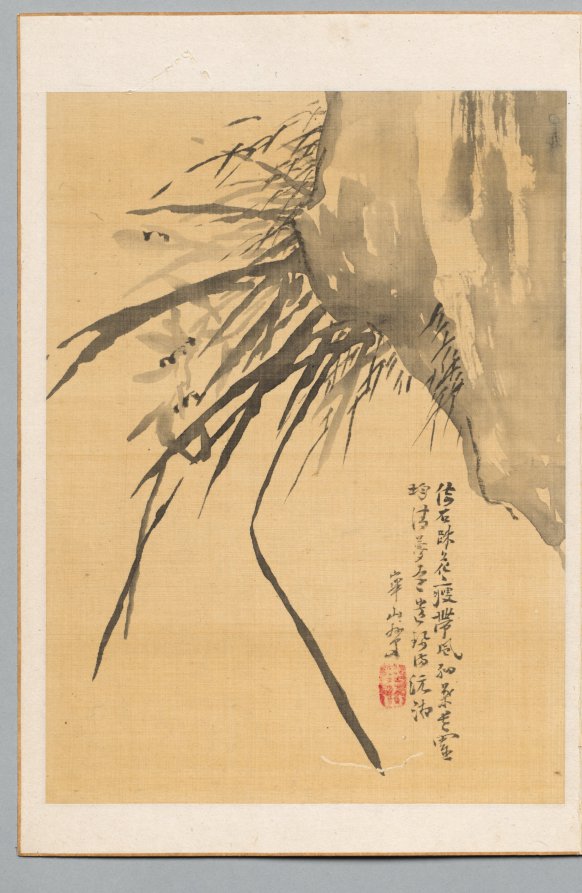
Orchid
- Date:
- early to mid-1800s
- Medium:
- Leaf from folding album; ink and light color on paper
- Source:
- Cleveland Museum of Art
Description
Orchid is a small album leaf of the early-to-mid nineteenth century by Watanabe Kazan (渡辺崋山, 1793-1841), held in the Cleveland Museum of Art (accession 1972.117.1.8). Painted in ink and light color on paper at 26.3 by 19.1 centimeters and originally bound into a folding album, the work belongs to the deeply literati tradition of orchid painting that Kazan inherited from the Chinese Southern School and reworked within the nanga idiom. The orchid, one of the Four Gentlemen of East Asian painting alongside the plum, bamboo, and chrysanthemum, was understood as an emblem of the cultivated Confucian scholar — a fragrant, unassuming plant that flourished in seclusion and stood for the integrity of the recluse. For a painter-scholar such as Kazan, who served as a senior retainer of the Tahara domain while pursuing painting as a literati practice, the orchid was a natural and self-aware subject. The Cleveland leaf, executed with the economical ink and pale-color brushwork that defines mature nanga bird-and-flower work, complements the museum's monumental portrait holdings by documenting the more private, contemplative side of Kazan's pictorial range.
More Prints by Watanabe Kazan
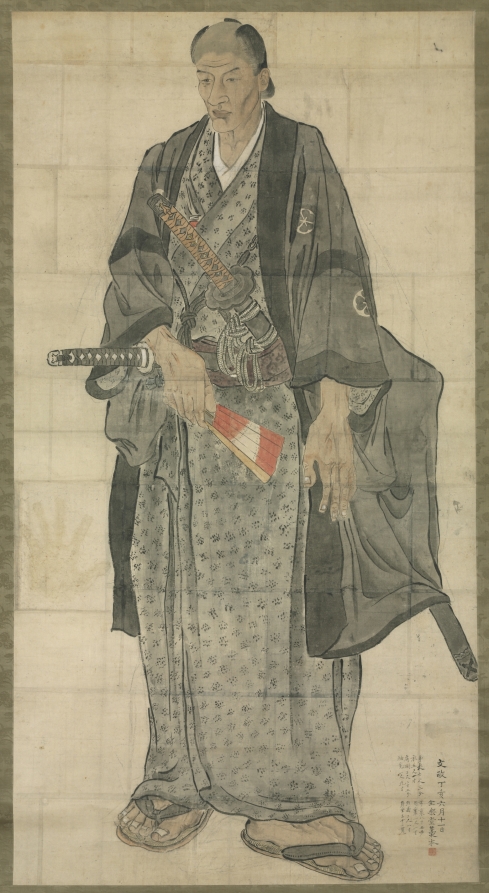
Portrait of Ōzora Buzaemon
1827
Hanging scroll; ink and color on paper
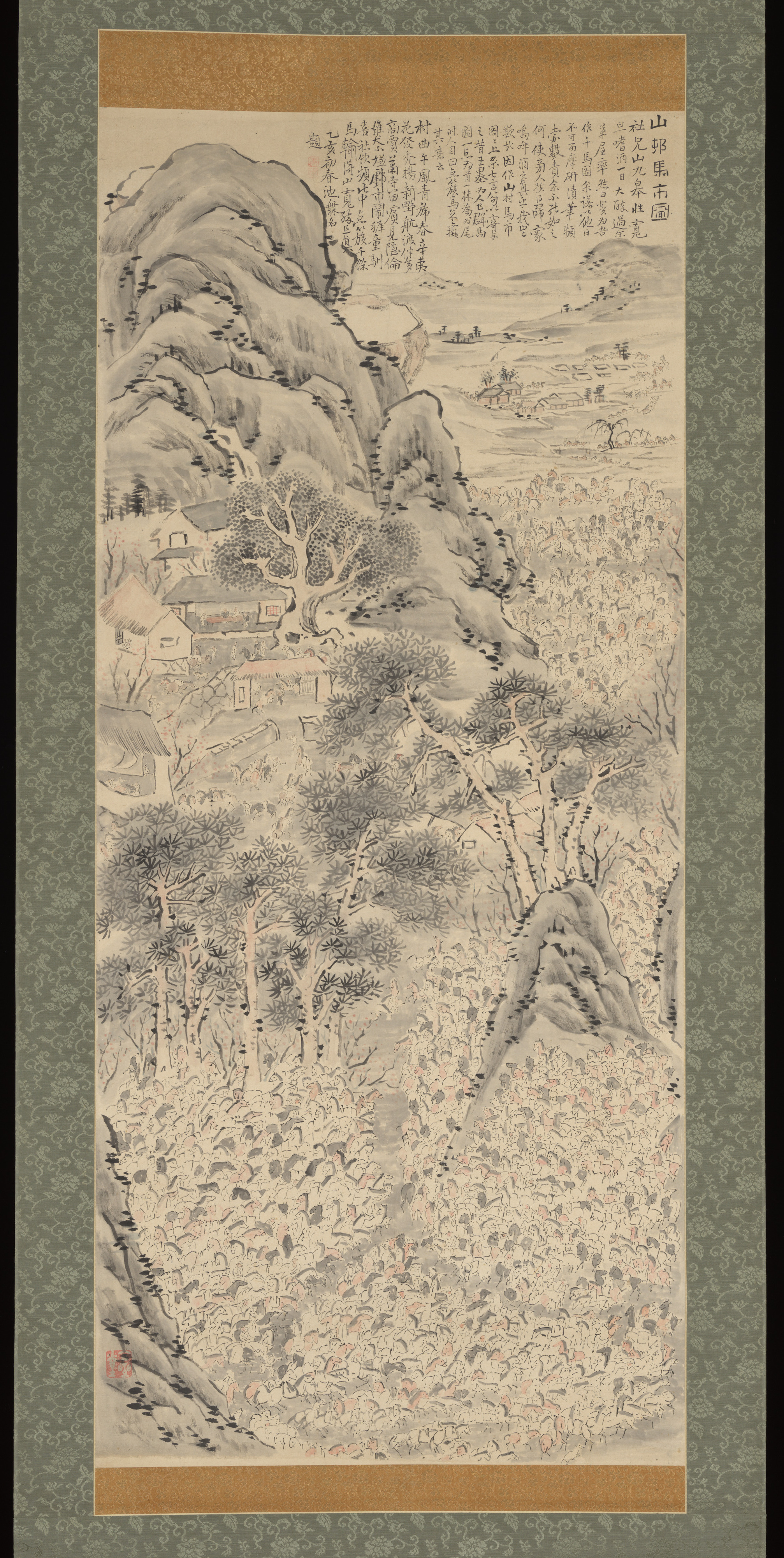
After Ike no Taiga's "Horse Market in a Mountain Village"
1820s
Hanging scroll; ink and color on paper
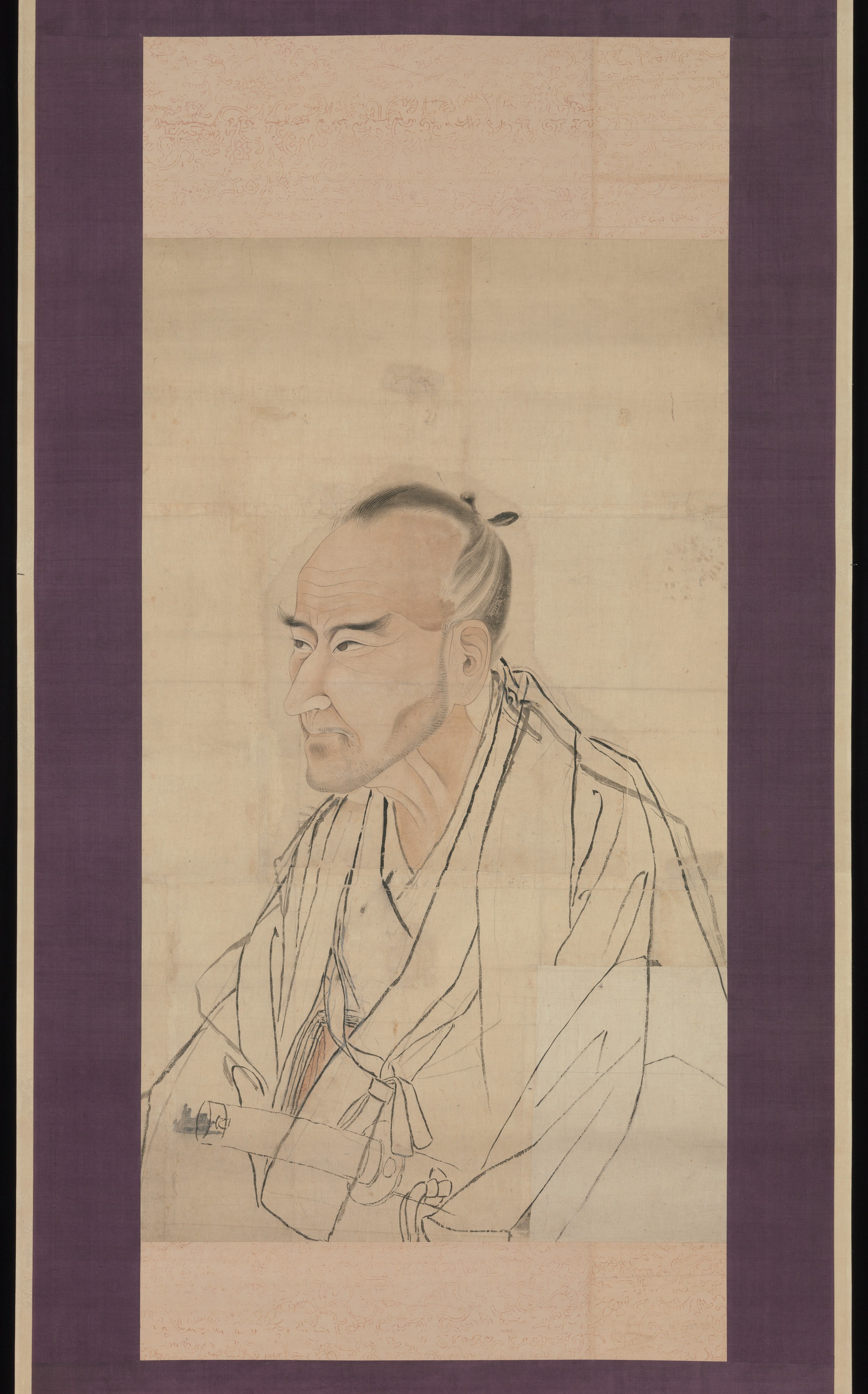
Sketch for the Portrait of Tachihara Suiken
ca. 1823
Hanging scroll; ink and color on paper
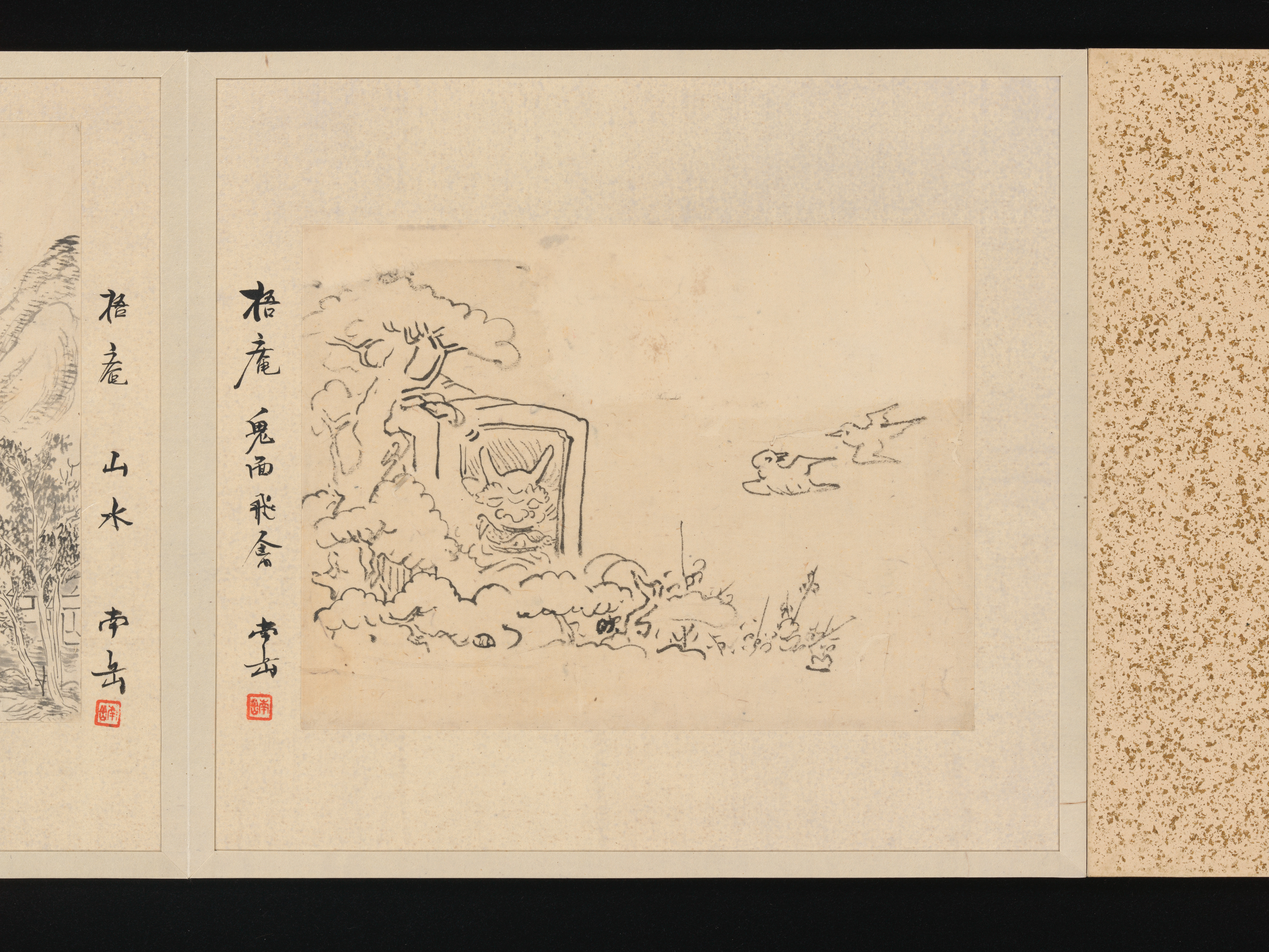
Album of Fifty-four Sketches
19th century
Album of fifty-four sketches; ink and color on paper
Frequently Asked Questions
Orchid was created by Watanabe Kazan (渡辺崋山) in early to mid-1800s.