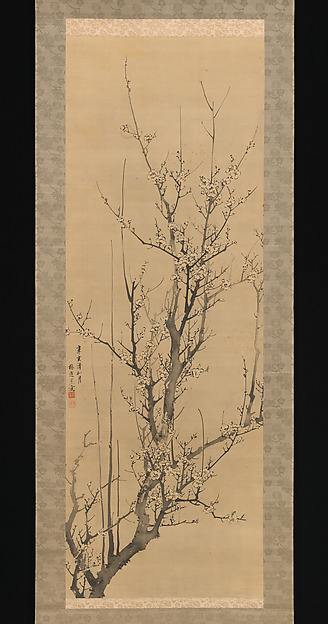
Plum Blossoms
梅花図
- Date:
- dated 1851
- Medium:
- Hanging scroll; ink on silk
- Source:
- Metropolitan Museum of Art
Description
Plum Blossoms is a hanging scroll by Yamamoto Baiitsu in ink on silk, dated 1851 and held by the Metropolitan Museum of Art (accession 2015.500.9.47). The plum (ume) was the signature motif of Baiitsu's career — his very art name, Baiitsu (梅逸, "plum leisure"), was reportedly conferred after he encountered a painting by the great Yuan literati painter and plum specialist Wang Mian — and he returned to the subject repeatedly across decades, producing some of the most admired plum paintings in late-Edo Japan, including the monumental 1834 Blossoming Plum Tree at the Museum of Fine Arts, Boston. In the present scroll, painted in the artist's sixty-eighth year, the plum is rendered in monochrome ink in the Chinese literati manner: gnarled, twisted branches built from dry brush and dark accents, with the blossoms set against the silk ground in pale washes and delicate dotted stamens. The plum, in the Chinese painting tradition that Baiitsu inhabited, was a symbol of moral fortitude, scholarly endurance, and the resilience of cultivated character in adverse conditions; for Japanese viewers it also carried associations with early-spring poetic landscape and with the sacred plum trees of Tenmangū shrines. The painting entered the Met in 2015 as part of the Burke Foundation gift, one of the most important transfers of Japanese painting to a Western museum in the early twenty-first century.
More Prints by Yamamoto Baiitsu
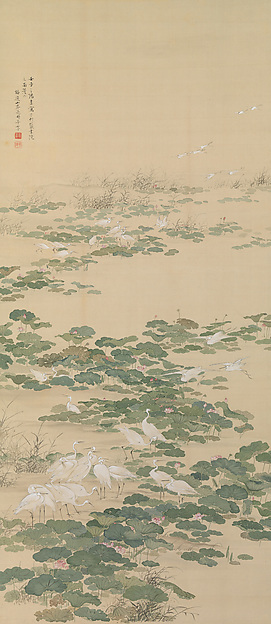
Egrets in a Lotus Pond
蓮池白鷺図
1852
Hanging scroll; ink and color on silk
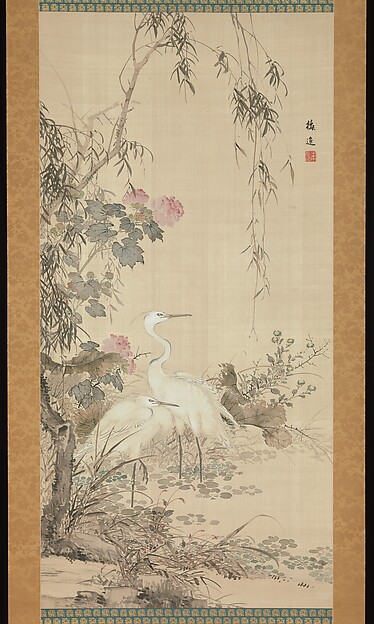
Egrets, Peonies, and Willows
白鷺牡丹柳図
early 19th century
Hanging scroll; color on silk
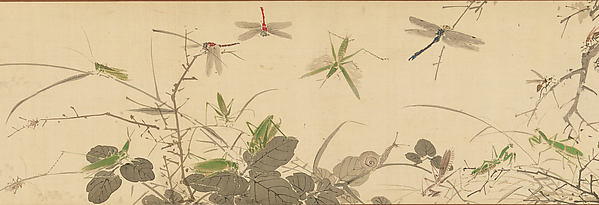
Insects and Grasses
草虫図
dated 1847
Handscroll; ink and color on silk
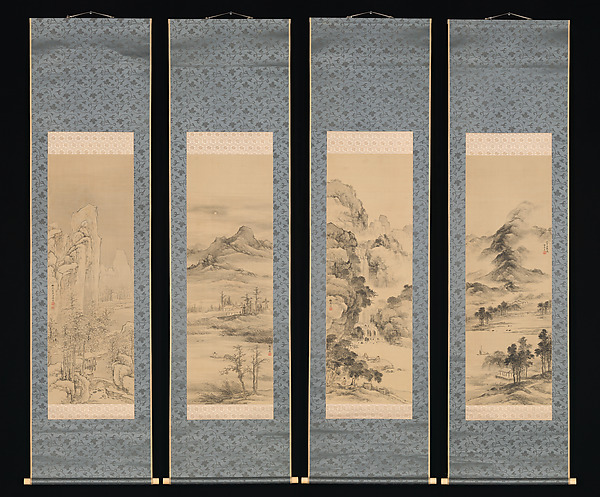
Landscapes of the Four Seasons
四季山水図
1848
Set of four hanging scrolls; ink and color on silk
Frequently Asked Questions
Plum Blossoms (梅花図) was created by Yamamoto Baiitsu (山本梅逸) in dated 1851.