
Dancer in Momijigari, from an untitled series of nerimono festival dancers
- Date:
- c. 1823
- Medium:
- Color woodblock print; shikishiban, surimono
- Source:
- Art Institute of Chicago
Description
A shikishiban surimono of circa 1823 in the Art Institute of Chicago, this print from an untitled series depicts a dancer performing the role of Momijigari (Maple-Viewing) — a noh and later kabuki dance in which a court party is set upon by a maple-leaf-clad demoness during an autumn outing. The role drew on a long literary and dramatic tradition: the original noh play Momijigari and the later kabuki dance variant both staged the moment of transformation when the disguised demoness revealed her true nature, a moment beloved of nineteenth-century stage practice. The series records nerimono (literally 'paraded things') performers, the elaborately costumed dancers and figures who took part in the seasonal processions of the licensed quarters. Such surimono were often commissioned by patrons of specific geisha or by kyōka clubs to commemorate festival appearances. Shigenobu's handling of the dancer's costume — with its trailing maple-leaf-patterned sleeves and the dramatic stance of the role — exploits the surimono format's appetite for elaborate textile pattern and metallic highlights, and the date places the print at the very heart of his most productive period.
More Prints by Yanagawa Shigenobu

Court lady admiring plum blossoms
late 1820s
Color woodblock print; shikishiban, surimono

Courtesan with Flower Cart, from the series "Famous Flowers in Three Capitals (Santo meisho no hana)"
early 19th century
Color woodblock print; surimono
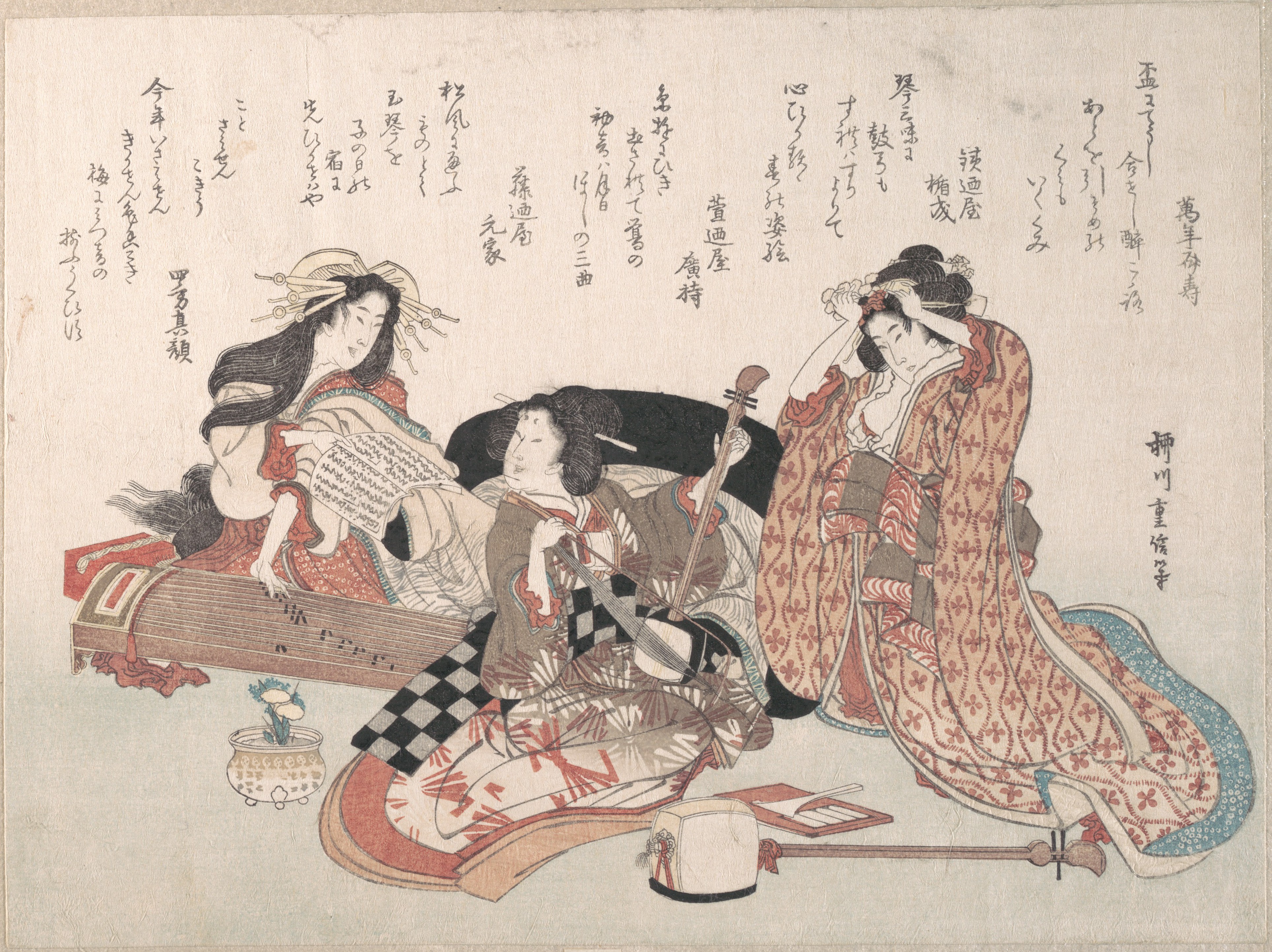
Women Playing Music
19th century
Woodblock print (surimono); ink and color on paper
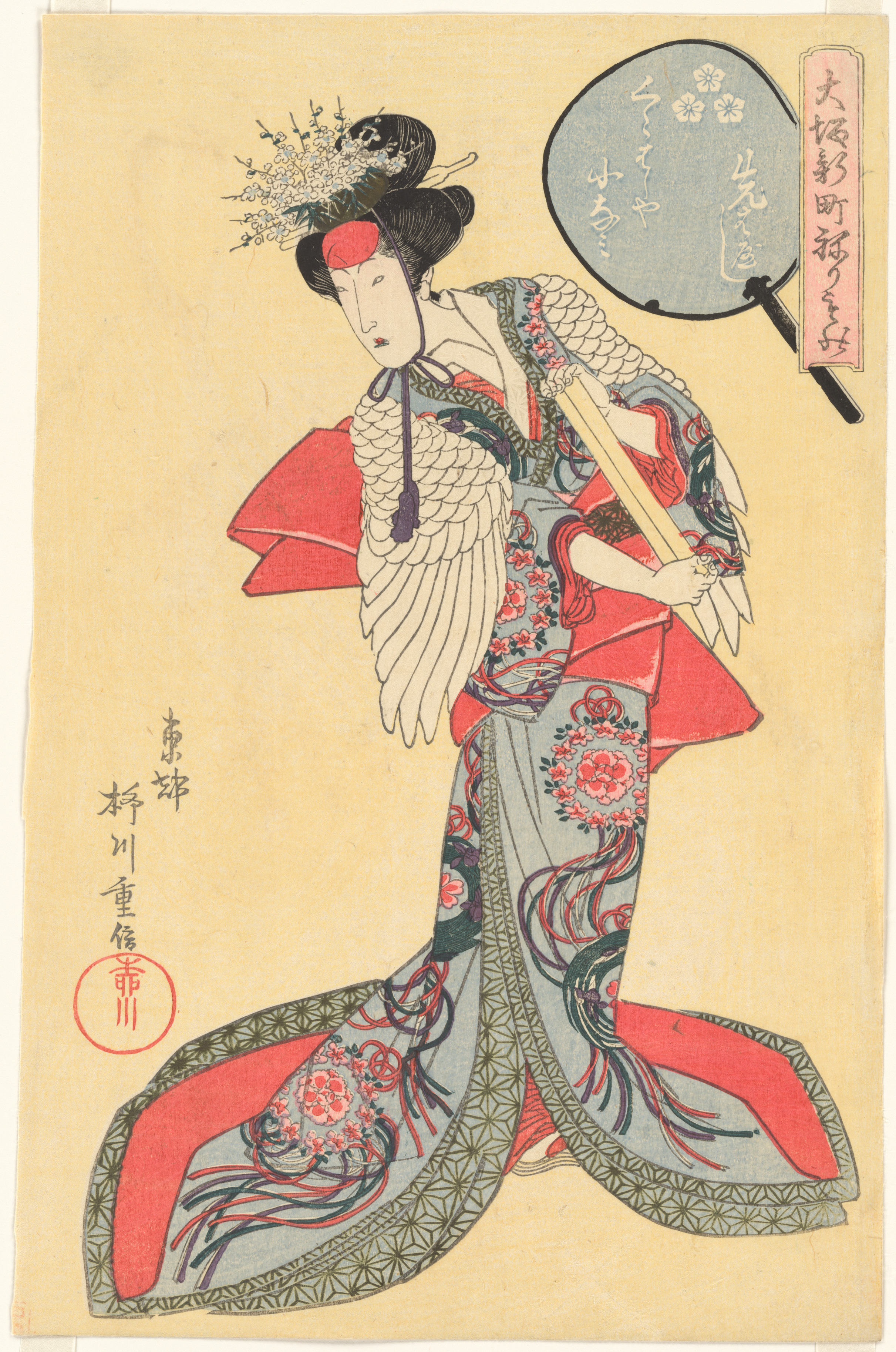
Konami of the Kurahashiya in the Front Group of Musicians (Saki-bayashi), from the series Costume Parade of the Shinmachi Quarter in Osaka (Ōsaka Shinmachi nerimono)
1822
Woodblock print (nishiki-e); ink and color on paper; vertical ōban
Frequently Asked Questions
Dancer in Momijigari, from an untitled series of nerimono festival dancers was created by Yanagawa Shigenobu (柳川重信) in c. 1823.