Biography
Yanagawa Shigenobu (柳川重信, 1787–1832) was a Japanese ukiyo-e printmaker, painter, and book illustrator, best known as a senior pupil and son-in-law of Katsushika Hokusai and as one of the most accomplished designers of surimono — the privately commissioned, lavishly printed poetry-cards that flourished in the first decades of the nineteenth century. He worked within the Hokusai studio during the years when his teacher was producing the Hokusai Manga, and he is regarded today as one of the important non-Hokusai surimono designers of his generation, alongside Kubo Shunman, Totoya Hokkei, and Teisai Hokuba.
He was born in 1787 (Tenmei 7). His original family name was Suzuki — he is recorded in early sources as Suzuki Shigenobu — and he took the surname Yanagawa from the Yanagawa-chō district of Edo with which he was associated. The details of his early training are imperfectly documented, but he entered Hokusai's circle as a young man and progressed through the studio ranks. He used several art names over the course of his career, and museum catalogues list him as Yanagawa Shigenobu I to distinguish him from a later pupil who succeeded to the name and is now usually called Shigenobu II.
Shigenobu married Hokusai's daughter Omiyo, a union that bound him closely to the studio; in time Hokusai also took him as an adopted son. He continued to work within the Hokusai orbit, and his prints of the 1820s remain stylistically continuous with the studio idiom.
The form on which Shigenobu's modern reputation principally rests is the surimono. These were luxury woodblock prints produced not for the commercial market but as private commissions by kyōka (comic poetry) clubs and individual patrons to mark the New Year or to accompany privately circulated verses. They were printed in small editions on fine paper and embellished with karazuri (blind embossing), metallic pigments, and mica, and each carried one or more kyōka poems alongside an image that played pictorially against the poem's theme. The roughly square shikishiban sheet was the standard surimono format during his most productive decade. During a documented period in Osaka between about 1822 and 1825 — where he worked with the block cutter and printer Tani Seikō and with the Tsuru-ren poetry circle — he produced the sequence for which he is best remembered, the Costume Parade of the Shinmachi Quarter (Ōsaka Shinmachi nerimono), a set of identifying portraits of Osaka geisha and courtesans dressed for the quarter's festival.
Beyond surimono, Shigenobu was a prolific illustrator of woodblock-printed books, providing designs for kyōka anthologies and for ehon (illustrated picture books). His bijin-ga, when he turned to fashionable feminine portraiture, are notably refined, rendered with the cooler, more linear handling characteristic of the Hokusai studio.
Shigenobu died in 1832 (Tenpō 3) at the age of forty-five, predeceasing his long-lived father-in-law, who lived until 1849. His art name passed to a pupil now usually identified as Yanagawa Shigenobu II, whose surimono are stylistically close to the first Shigenobu's and have sometimes been confused with them in the older literature; modern museum cataloguing distinguishes the two with the I/II designation. Works attributed to the first Shigenobu are held by the Metropolitan Museum of Art, the Los Angeles County Museum of Art, and other major museum collections. He is remembered today as a key designer of the surimono's golden moment and as an artist whose small-scale works repay the close looking that the format was designed to invite.
Key Facts
- Active Period
- 1787–1832
- Nationality
- 🇯🇵Japan
- Movement
- Ukiyo-e
- Works Indexed
- 13
Frequently Asked Questions
Yanagawa Shigenobu (柳川重信, 1787–1832) was a Japanese ukiyo-e printmaker, painter, and book illustrator, best known as a senior pupil and son-in-law of Katsushika Hokusai and as one of the most accomplished designers of surimono — the privately commissioned, lavishly printed poetry-cards that flourished in the first decades of the nineteenth century. He worked within the Hokusai studio during the years when his teacher was producing the Hokusai Manga, and he is regarded today as one of the important non-Hokusai surimono designers of his generation, alongside Kubo Shunman, Totoya Hokkei, and Teisai Hokuba.
Yanagawa Shigenobu was active from 1787 to 1832. They were associated with the Ukiyo-e movement.
Yanagawa Shigenobu's work was shaped by the Ukiyo-e tradition in Japanese woodblock printmaking. Ukiyo-e: ## What is ukiyo-e? Ukiyo-e ([浮世絵](/glossary/ukiyo-e)) — literally "pictures of the floating world" — is the Edo-period Japanese print and painting tradition that flourished from roughly 1660 to 1868, depicting the pleasures of urban life in Edo (modern Tokyo): courtesans, kabuki actors, sumo wrestlers, famous landscapes, and seasonal beauties.
Yanagawa Shigenobu's prints frequently feature waterfalls, rain, autumn foliage, spring, children, birds & flowers.
Original prints by Yanagawa Shigenobu can be found in collections including Art Institute of Chicago, Metropolitan Museum of Art, Cleveland Museum of Art.
Woodblock Prints by Yanagawa Shigenobu (13)
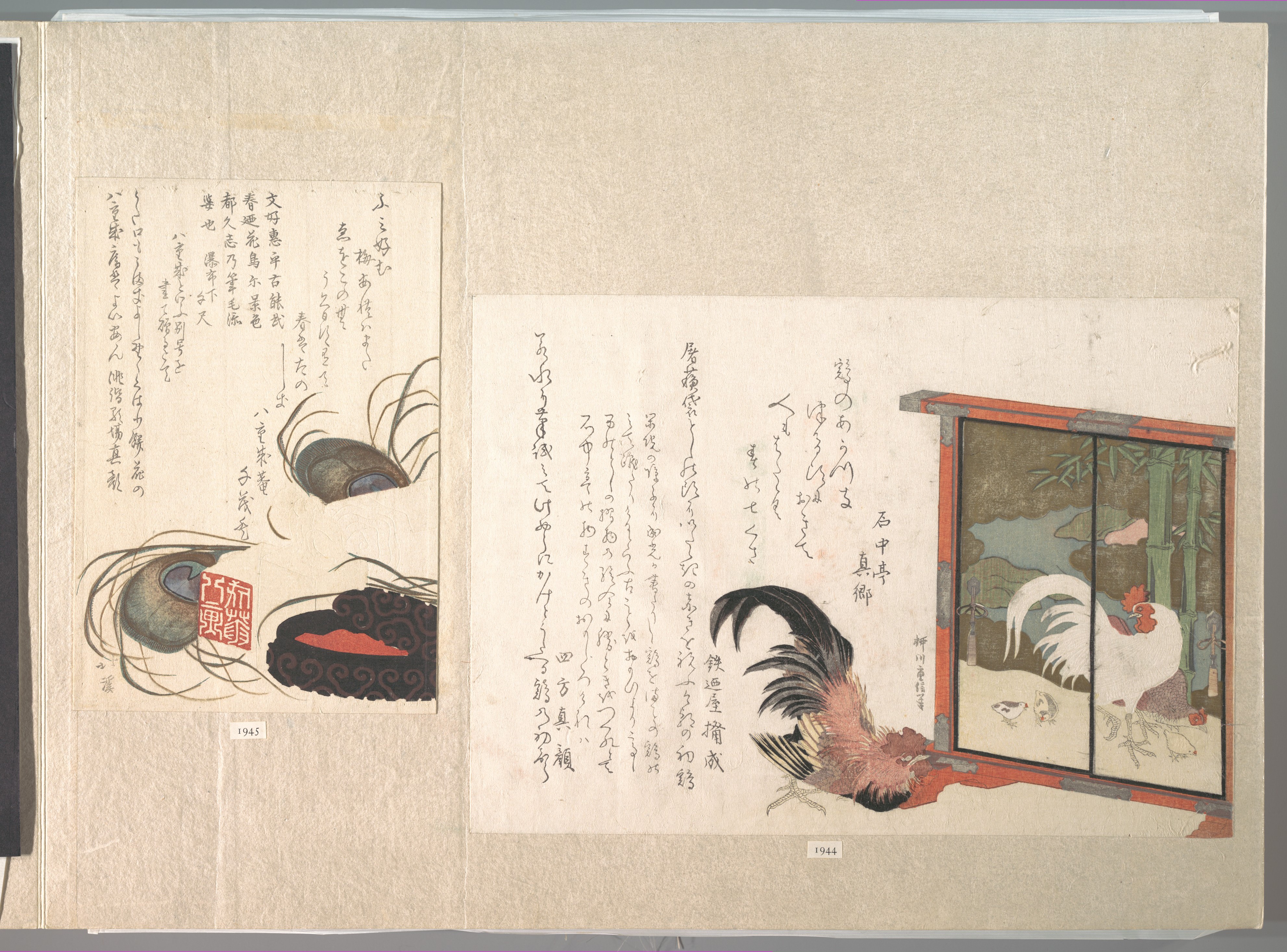
Cock Eyeing a Free-standing Screen Painted with Cock, Hen, and Chicks, from Spring Rain Surimono Album (Harusame surimono-jō), vol. 1
probably 1813
Privately published woodblock prints (surimono) mounted in an album; ink and color on paper
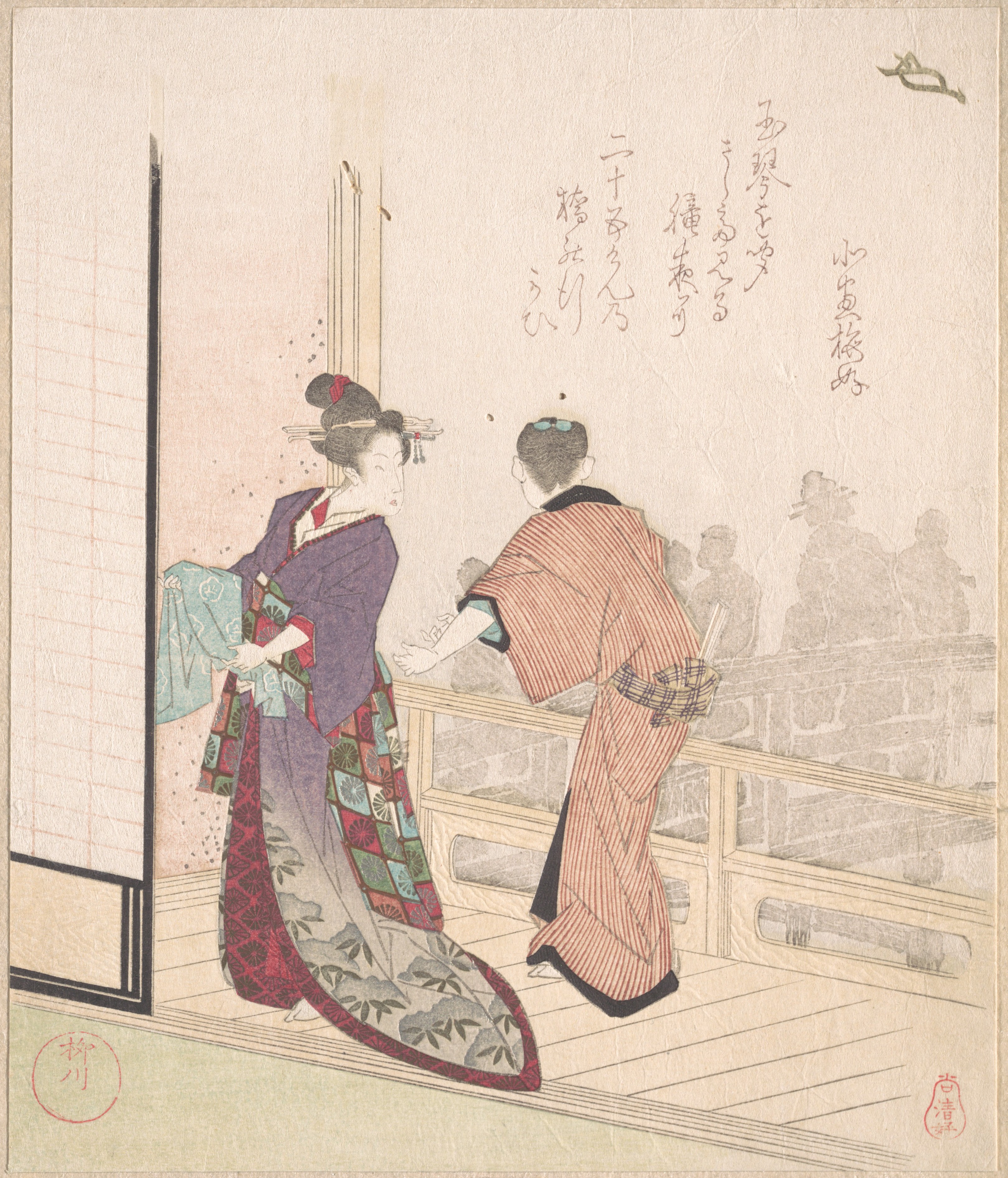
Scene on the Veranda of a Teahouse
18th–19th century
Woodblock print (surimono); ink and color on paper
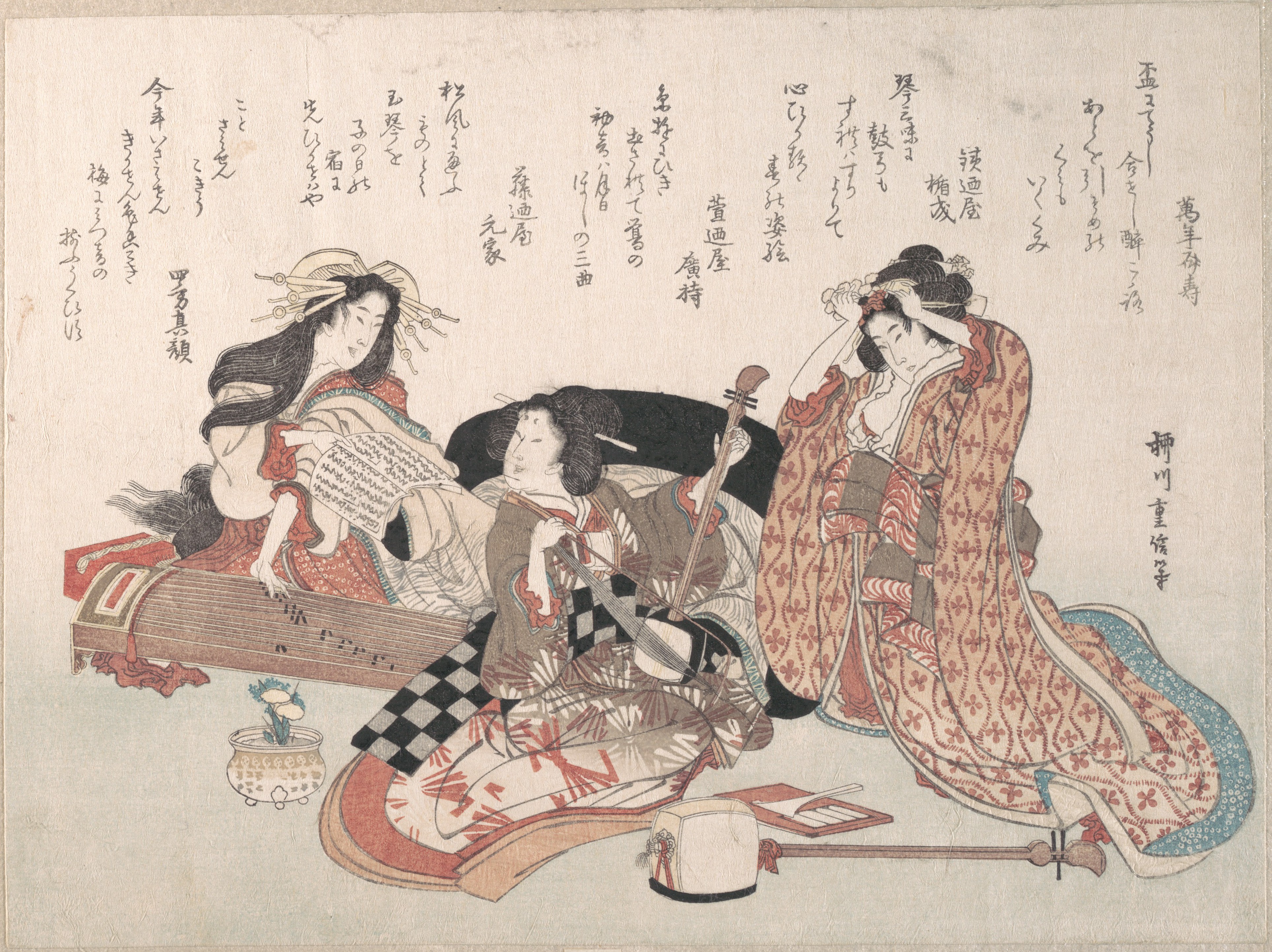
Women Playing Music
19th century
Woodblock print (surimono); ink and color on paper

Courtesan with Flower Cart, from the series "Famous Flowers in Three Capitals (Santo meisho no hana)"
early 19th century
Color woodblock print; surimono
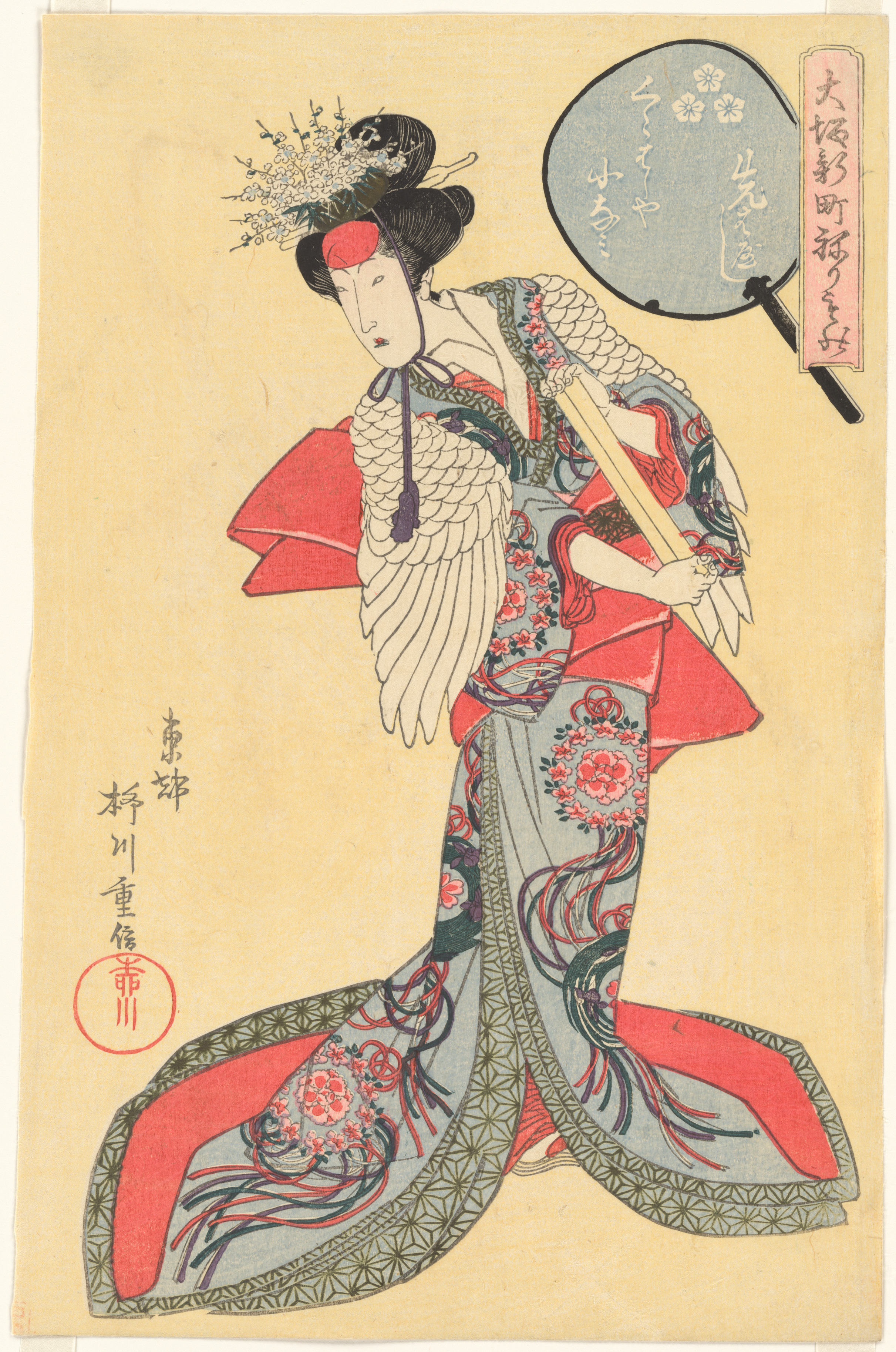
Konami of the Kurahashiya in the Front Group of Musicians (Saki-bayashi), from the series Costume Parade of the Shinmachi Quarter in Osaka (Ōsaka Shinmachi nerimono)
1822
Woodblock print (nishiki-e); ink and color on paper; vertical ōban

Dancer in Momijigari, from an untitled series of nerimono festival dancers
c. 1823
Color woodblock print; shikishiban, surimono
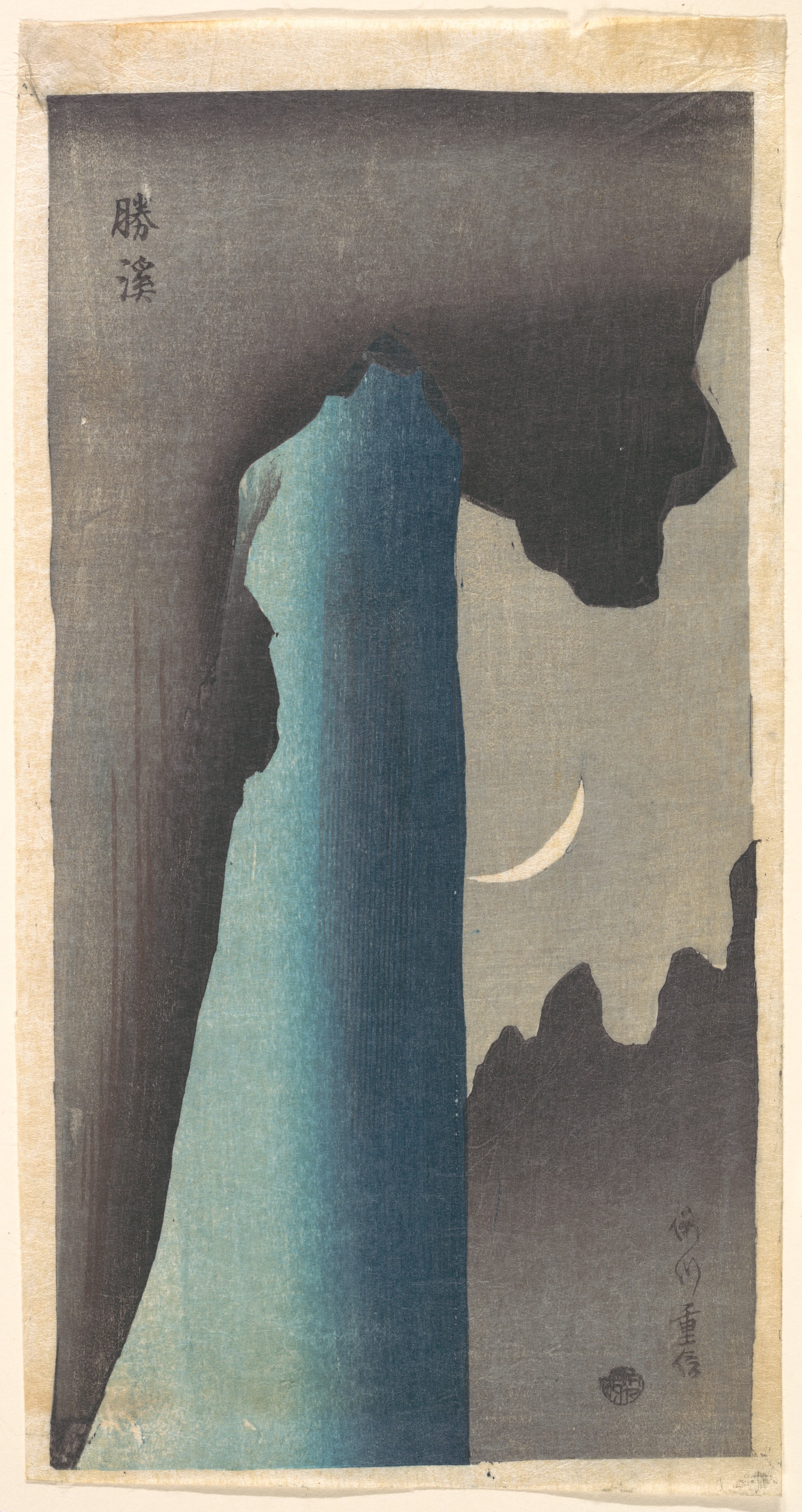
Celebrated Waterfall
1820–1830
Woodblock print; ink and color on paper
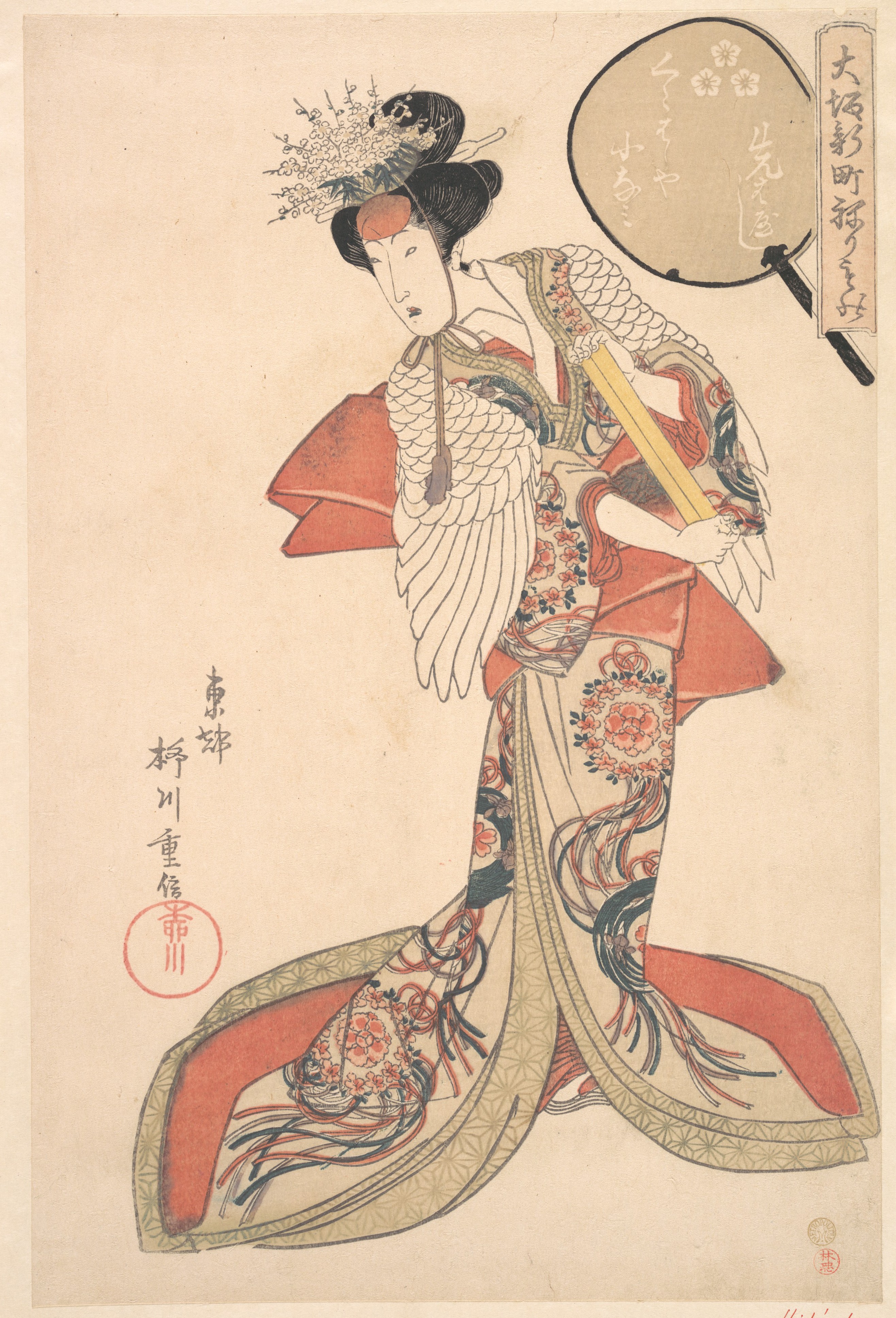
Konami of Kurahashi-ya
ca. 1825
Woodblock print; ink and color on paper

Chrysanthemum Boy leaning on a rock, from the series "Five Prints on Longevity (Kotobuki goban no uchi)"
mid–1820s
Color woodblock print; shikishiban, surimono

Court lady admiring plum blossoms
late 1820s
Color woodblock print; shikishiban, surimono
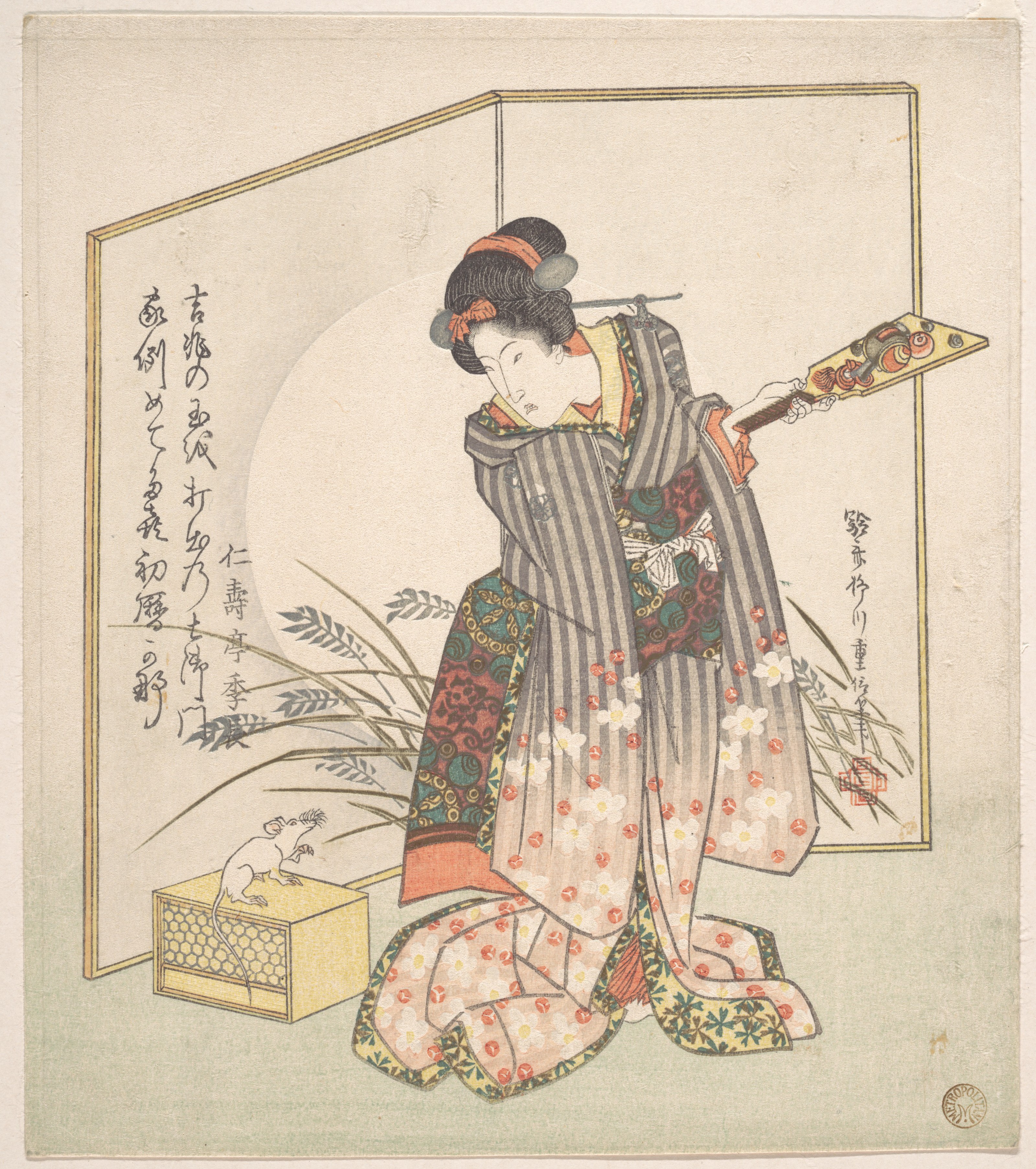
New Year Greeting Card for "Rat" Year
1828
Woodblock print (surimono); ink and color on paper
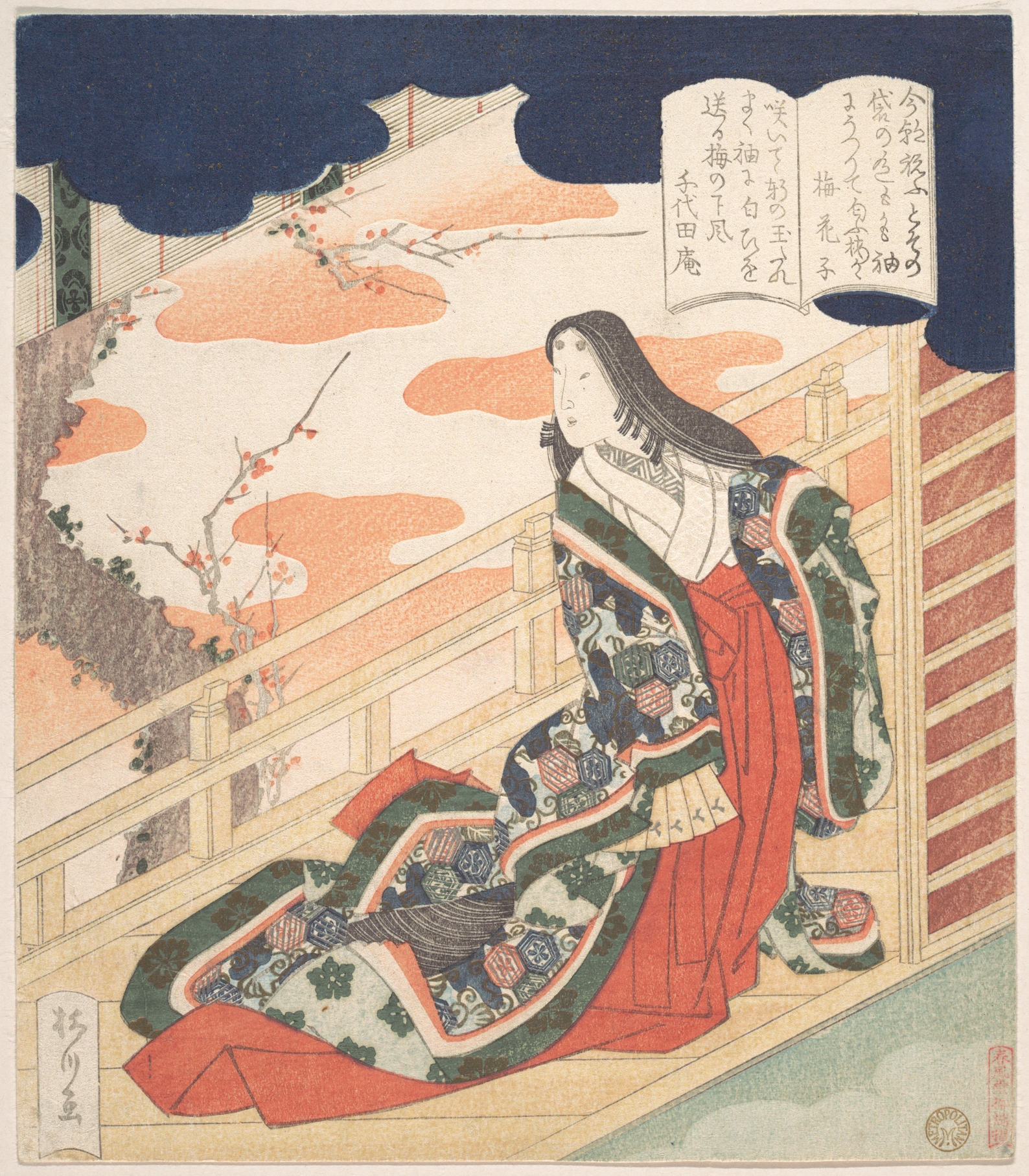
Court Lady Praising the Plum Blossom
1830
Woodblock print (surimono); ink and color on paper
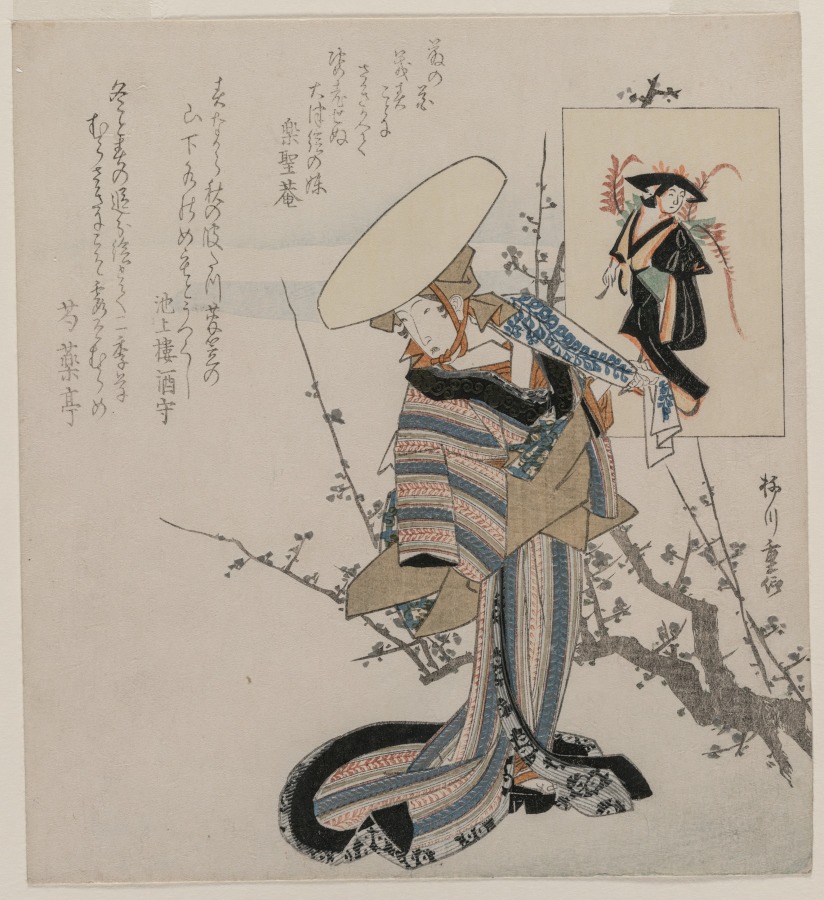
Woman by a Plum Tree Matched with the Wisteria Maiden (from a series of women compared to figures from Otsu paintings)
c. early 1830s
Color woodblock print (surimono)