
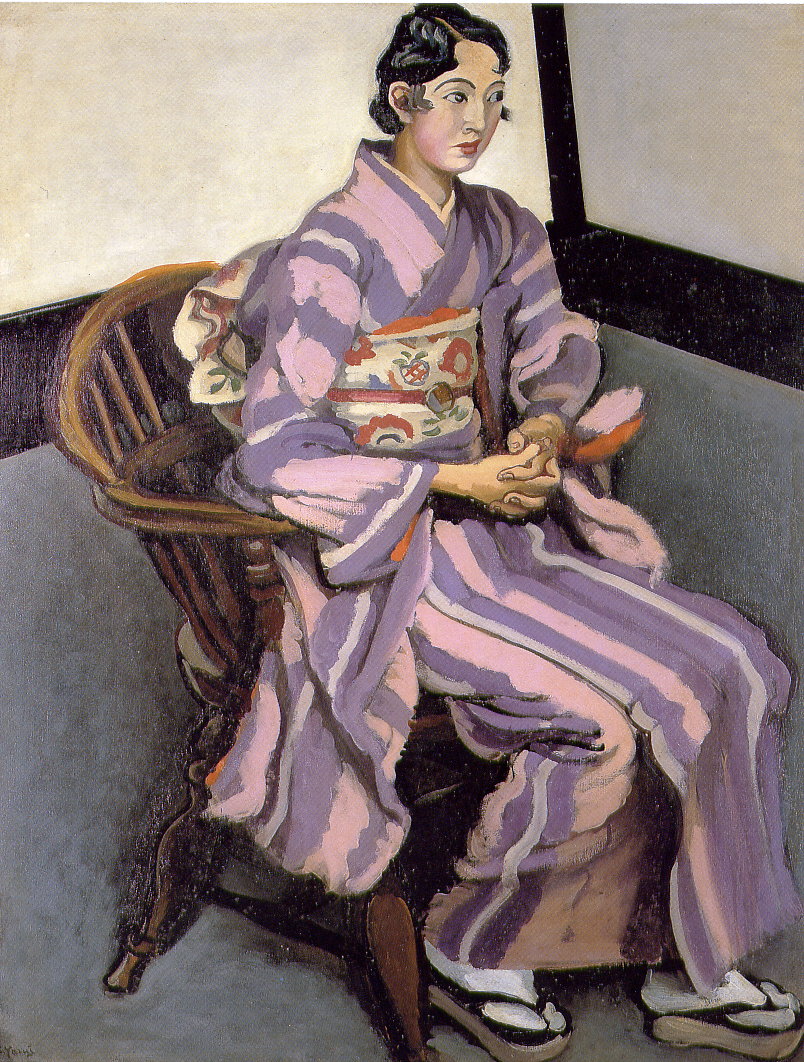
Portrait of Chin-Jung
金蓉
by Yasui Sōtarō
- Date:
- 1934
- Medium:
- Oil on canvas
Description
A woman with dark hair pulled back sits sideways in a wooden chair, her body angled left while her gaze turns further to the side, hands folded in her lap. She wears a dark blue high-collared dress patterned with pale abstract motifs and cinched with a tied sash, along with white socks and dark shoes; a pale blue cloth drapes over her knee. The background is a flat, muted pink-mauve, against which the figure is rendered in broad, simplified planes of color. Yasui Sōtarō painted this oil on canvas portrait, titled *Portrait of Chin-Jung*, in 1934.
More Prints by Yasui Sōtarō


Frequently Asked Questions
Portrait of Chin-Jung (金蓉) was created by Yasui Sōtarō (安井曾太郎) in 1934.