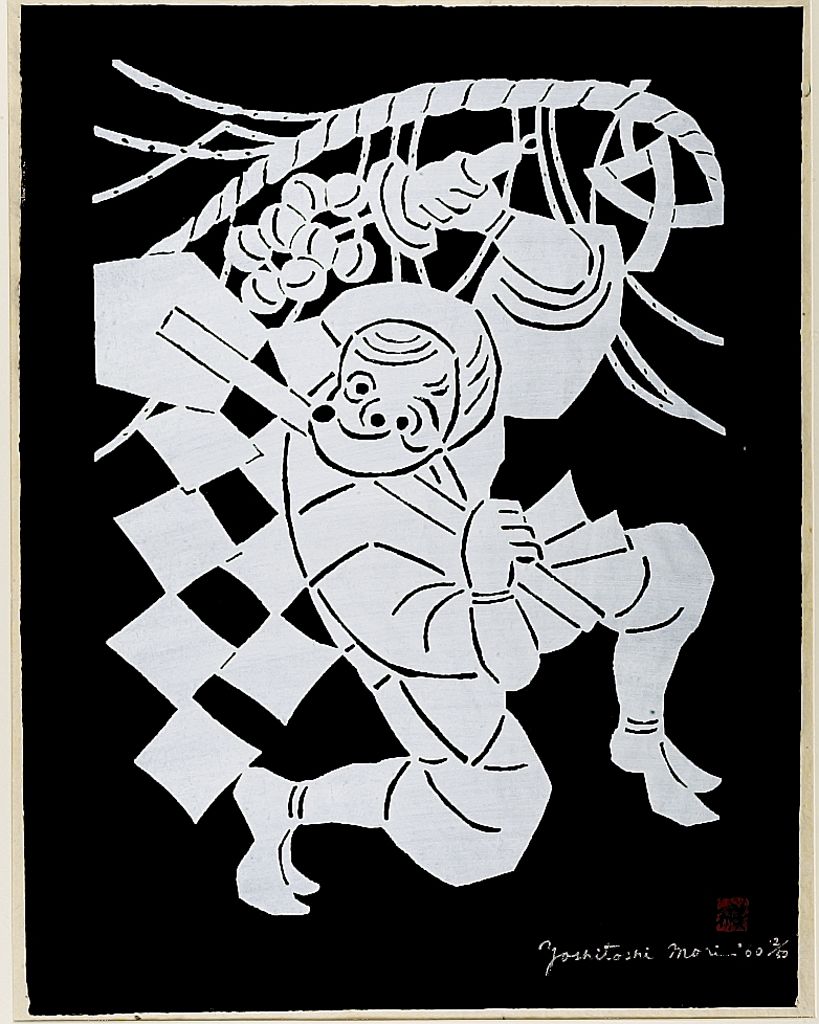
Clown Acrobat, Shôwa period, dated 1960
- Medium:
- Woodblock print
- Edition:
- Self-printed
- Source:
- Harvard Art Museums
Description
Clown Acrobat, Showa period, dated 1960, presents the circus performer or traveling entertainer — a subject deeply embedded in Japanese popular culture from the Edo period through the early 20th century, when street acrobats, clown performers, and traveling troupes were fixtures of urban entertainment. Mori's rendering of the acrobatic clown would have combined the performer's exaggerated costume and makeup with the dynamic posture of physical performance, the bold graphic qualities of his stencil technique well suited to the theatrical excess of the clown's visual vocabulary.
More Prints by Yoshitoshi Mori

More Urban Scenes Prints
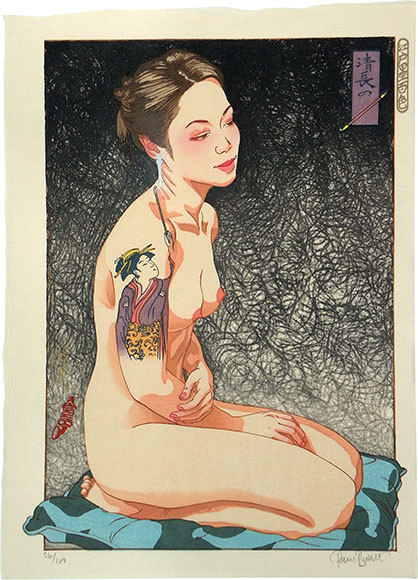
A Hundred Shades of Ink of Edo: Kiyonaga's Pipe (Edo zumi hyaku shoku: Kiyonaga no kiseru)
Woodblock print

View of Kabuki Theater from Matsuya (Ginza Matsuya yori Kabukiza), no. 3 from the series "Pictures of Ginza, First Series (Gashu Ginza dai isshu)"
1928
Color lithograph

Distant View of Mitsukoshi Movie Theater in Shinjuku from the Sixth Floor of Hoteiya (Hoteiya rokkai kara Shinjuku Mitsukoshi Musashi no kan enbo zu), no. 1 from the series "Scenery of Shinjuku (Gashu Shinjuku fukei)"
1930
Color lithograph
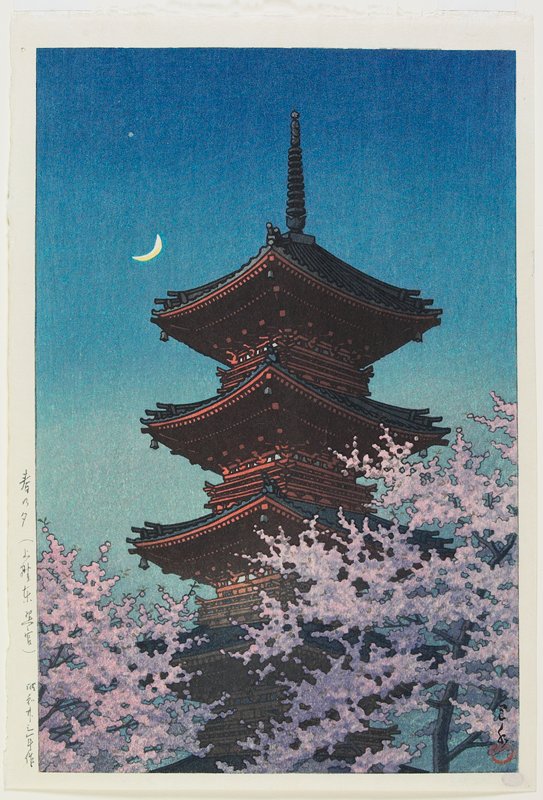
Spring Dusk at the Tōshō Shrine in Ueno
1948
Woodblock print, ink and color on paper
Featured in Collections
Curated cross-cuts that include this print.
Frequently Asked Questions
Clown Acrobat, Shôwa period, dated 1960 was created by Yoshitoshi Mori (森義利).
Clown Acrobat, Shôwa period, dated 1960 depicts urban scenes, figures, and daily life.