
Kabuki Print
- Source:
- ukiyo-e.org
Description
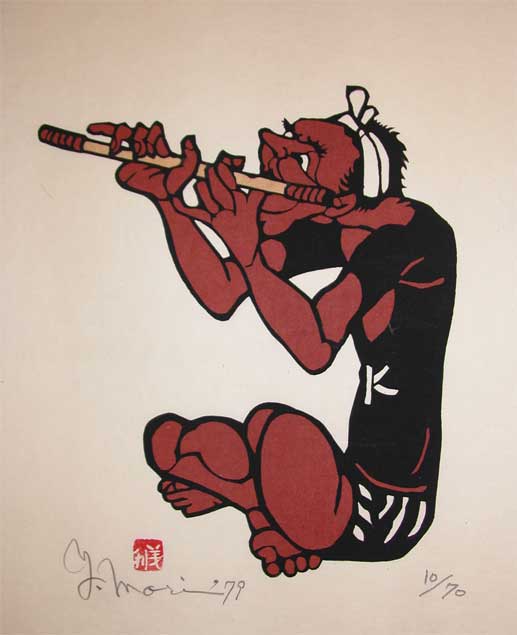
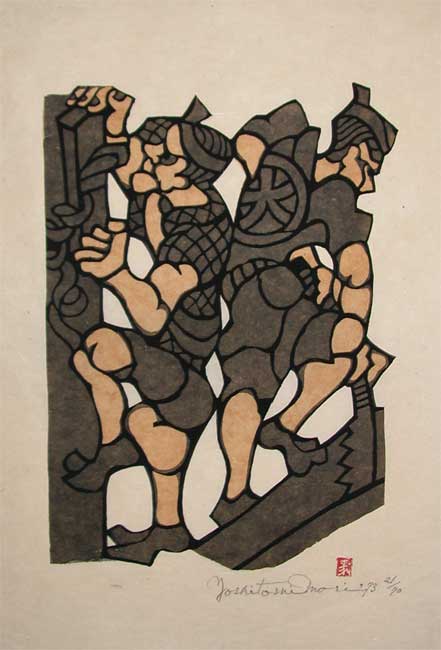
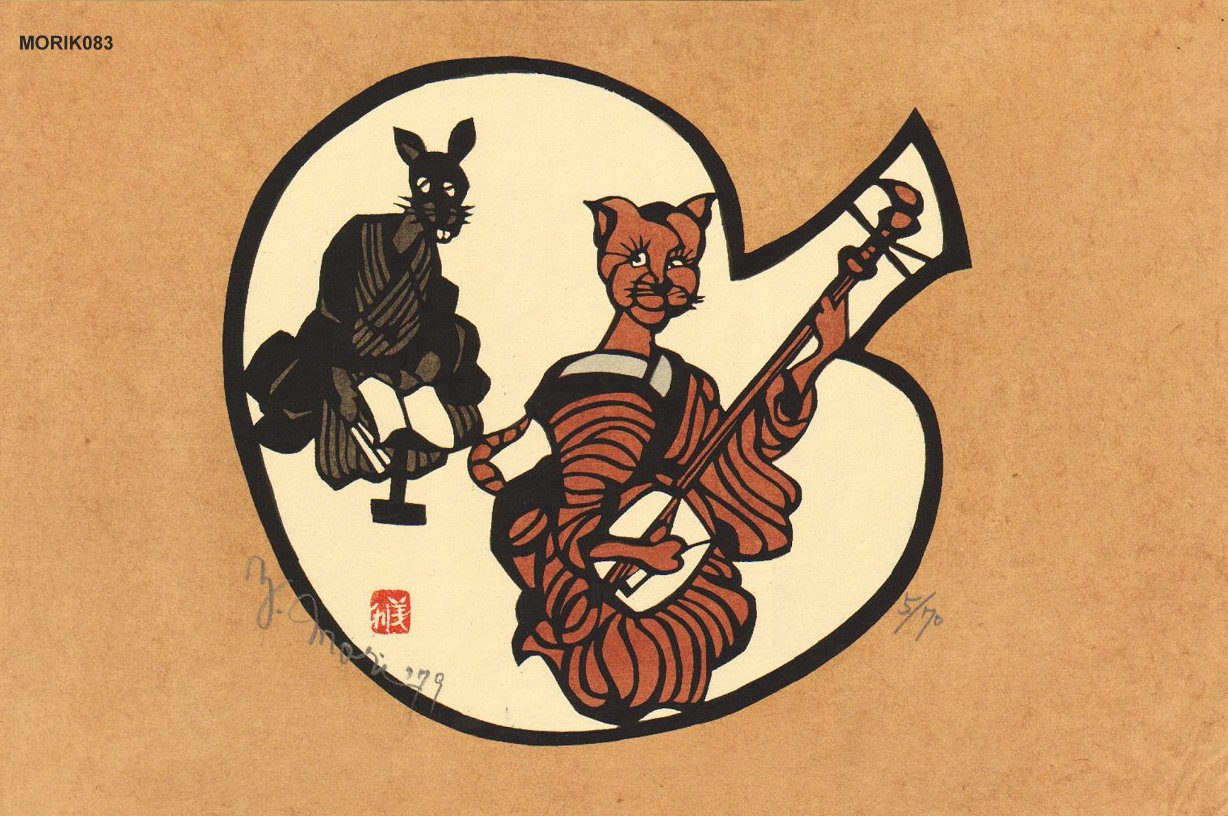
Kabuki Print by Yoshitoshi Mori draws on the artist's lifelong fascination with the dramatic visual world of the Edo-era theater. Mori (1898-1992) was among the most distinctive voices in postwar sosaku-hanga, the creative print movement that insisted artists design, cut, and print their own work without the intervening craftsmen of the classical ukiyo-e workshop. He is most closely identified with kappazuri stencil prints, a technique he learned through his apprenticeship to mingei folk-art leader Serizawa Keisuke. Kappazuri uses hand-cut paper stencils and a rice-paste resist to lay down broad, flat areas of pigment on washi, producing the soft fibrous edges and matte color that distinguish Mori's sheets from the crisper lines of moku-hanga woodblock. Kabuki subjects suited the technique perfectly. The exaggerated mie poses, lacquered wigs, costume crests, and stylized makeup of the classical stage translate readily into the bold silhouettes and saturated reds, blacks, and ochres Mori favored. Here he distills a kabuki figure into a graphic emblem rather than a portrait, prioritizing pattern, gesture, and contour over individual likeness. The approach descends from the otsu-e folk paintings and Edo theater posters Mori collected and studied, yet his composition is unmistakably modern in its rejection of perspective and its embrace of decorative flatness. The print survives in private and public collections aggregated through ukiyo-e.org, sourced from the Robyn Buntin of Honolulu archive, and stands as a representative example of how Mori channeled traditional Japanese subject matter through a stencil-based vocabulary that placed him at the forefront of mid-twentieth-century Japanese printmaking.
More Prints by Yoshitoshi Mori

Featured in Collections
Curated cross-cuts that include this print.
Frequently Asked Questions
Kabuki Print was created by Yoshitoshi Mori (森義利).