Heian Shrine (平安神宮)
3 prints by 2 artists
About Heian Shrine
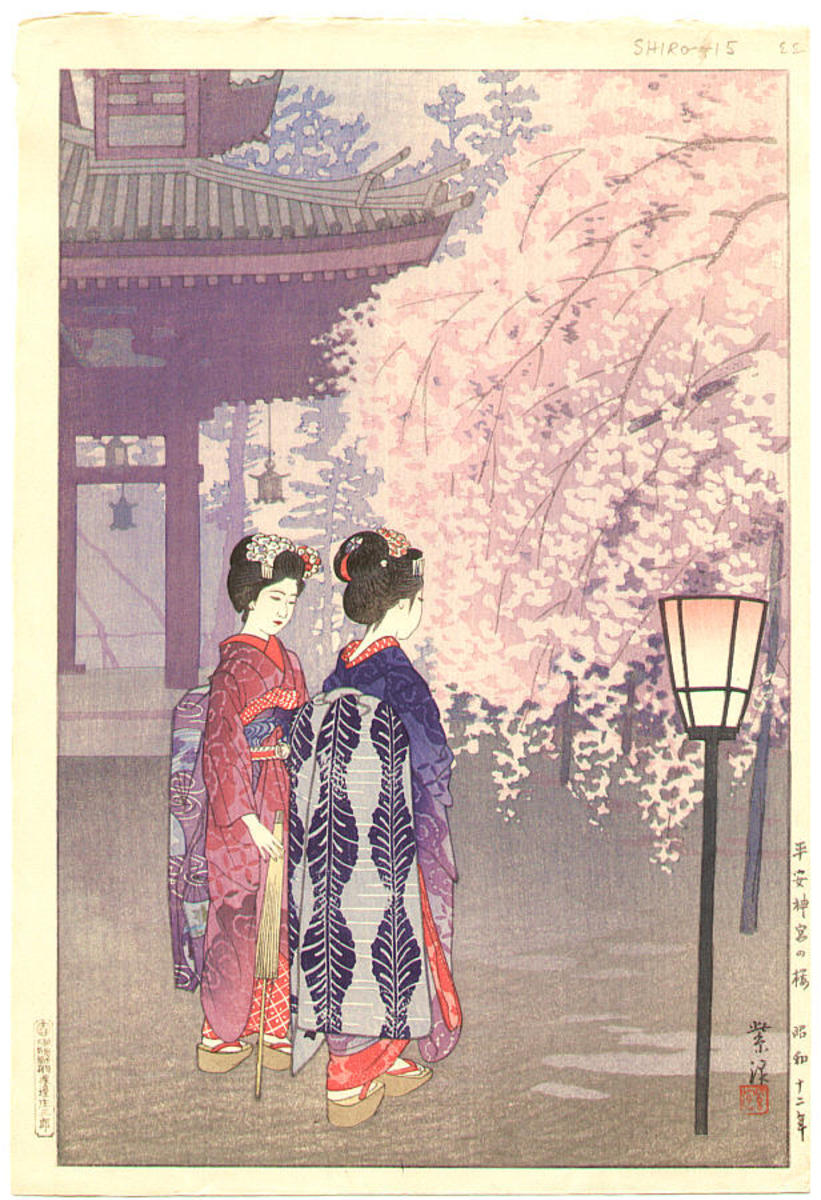
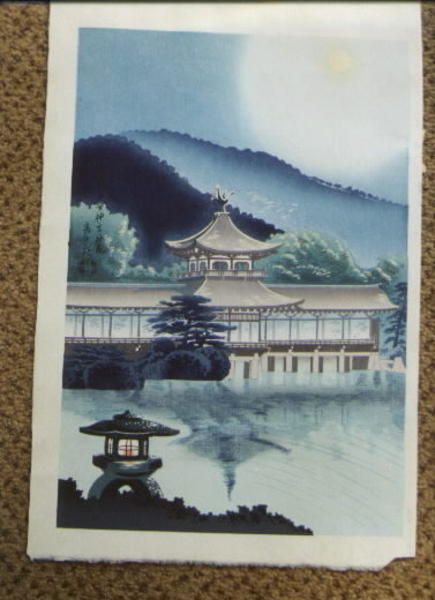
Heian Shrine, in Japanese Heian Jingu, is a Shinto shrine in central Kyoto built in 1895 to commemorate the eleven hundredth anniversary of the founding of Heian-kyo, the ancient name of the city laid out in 794, in present-day Sakyo Ward. The shrine stands in the Okazaki cultural district north of the Sanjo and Niomon avenues and east of the Kamogawa River, with a large open approach and the enormous vermilion otorii gate, standing approximately 24 meters tall and 33 meters wide and constructed of steel-reinforced concrete, dating to 1929 as a celebration of the enthronement of the Showa emperor. The main shrine buildings are a partial scale reconstruction at approximately five-eighths scale of the Daigokuden audience hall of the original Heian-period imperial palace, executed in the Heian palace architectural style of green-tiled roofs, vermilion-and-white painted timbers, and blue-tiled accents, and arrayed in a U-shaped plan with the Daigokuden in the center and the Soryu and Byakko towers flanking. The shrine enshrines Emperor Kammu, who founded the city in 794, and Emperor Komei, the last emperor to reign from Kyoto before the Meiji Restoration and the father of the Meiji emperor; the enshrinement of Komei was added in 1940 on the 2600th anniversary of the founding of the imperial dynasty. The surrounding Shin'en garden, designed by the master gardener Ogawa Jihei VII (also known as Niwashi Ueji, 1860-1933), is one of the major Meiji and Taisho-period garden compositions in Kyoto and is renowned for its weeping cherry trees, water iris (kakitsubata), water lilies, the Garyukyo stepping stones across the central pond, and seasonal phenomena. The garden is among the best surviving examples of the modern stroll garden of the late Meiji period. For Japanese printmaking Heian Shrine is a Meiji and later subject. Although founded after the close of the principal ukiyo-e period, the shrine became a regular subject of the shin-hanga revival within a generation of its construction. Kawase Hasui produced notable rain and snow views of the otorii gate and the approach, treating the dramatic scale of the gate against the surrounding city in compositions that became some of the most reproduced of his Kyoto sheets, and Tsuchiya Koitsu, Asano Takeji, and Tokuriki Tomikichiro contributed further compositions of the shrine, the otorii, and the surrounding Okazaki cultural district. Tokuriki Tomikichiro included the shrine in his Kyoto sosaku-hanga series across multiple decades. The visual character of Heian Shrine in prints is built on the dramatic scale of the otorii against the urban approach, with the vivid vermilion painted steel of the gate set against the surrounding sky and the lights of the avenue beneath, the vermilion architecture of the main precinct against snow or autumn foliage, the weeping cherry trees of the Shin'en garden in spring producing pink masses against the green of the surrounding planting, and the diffused atmospheric conditions of the Kyoto basin. The shrine remains a major Kyoto site, particularly during the cherry blossom season in early to mid April and the Jidai Matsuri festival each October 22, in which a procession of approximately two thousand participants in costumes representing different historical periods of Japan moves from the Kyoto Imperial Palace to Heian Shrine, and the shrine is reached most directly via the Higashiyama subway station of the Tozai Line.
Prints Depicting Heian Shrine (3)
Artists Who Depicted Heian Shrine (2)

Frequently Asked Questions
Heian Shrine, in Japanese Heian Jingu, is a Shinto shrine in central Kyoto built in 1895 to commemorate the eleven hundredth anniversary of the founding of Heian-kyo, the ancient name of the city laid out in 794, in present-day Sakyo Ward. The shrine stands in the Okazaki cultural district north of the Sanjo and Niomon avenues and east of the Kamogawa River, with a large open approach and the enormous vermilion otorii gate, standing approximately 24 meters tall and 33 meters wide and constructed of steel-reinforced concrete, dating to 1929 as a celebration of the enthronement of the Showa emperor. The main shrine buildings are a partial scale reconstruction at approximately five-eighths scale of the Daigokuden audience hall of the original Heian-period imperial palace, executed in the Heian palace architectural style of green-tiled roofs, vermilion-and-white painted timbers, and blue-tiled accents, and arrayed in a U-shaped plan with the Daigokuden in the center and the Soryu and Byakko towers flanking. The shrine enshrines Emperor Kammu, who founded the city in 794, and Emperor Komei, the last emperor to reign from Kyoto before the Meiji Restoration and the father of the Meiji emperor; the enshrinement of Komei was added in 1940 on the 2600th anniversary of the founding of the imperial dynasty. The surrounding Shin'en garden, designed by the master gardener Ogawa Jihei VII (also known as Niwashi Ueji, 1860-1933), is one of the major Meiji and Taisho-period garden compositions in Kyoto and is renowned for its weeping cherry trees, water iris (kakitsubata), water lilies, the Garyukyo stepping stones across the central pond, and seasonal phenomena. The garden is among the best surviving examples of the modern stroll garden of the late Meiji period. For Japanese printmaking Heian Shrine is a Meiji and later subject. Although founded after the close of the principal ukiyo-e period, the shrine became a regular subject of the shin-hanga revival within a generation of its construction. Kawase Hasui produced notable rain and snow views of the otorii gate and the approach, treating the dramatic scale of the gate against the surrounding city in compositions that became some of the most reproduced of his Kyoto sheets, and Tsuchiya Koitsu, Asano Takeji, and Tokuriki Tomikichiro contributed further compositions of the shrine, the otorii, and the surrounding Okazaki cultural district. Tokuriki Tomikichiro included the shrine in his Kyoto sosaku-hanga series across multiple decades. The visual character of Heian Shrine in prints is built on the dramatic scale of the otorii against the urban approach, with the vivid vermilion painted steel of the gate set against the surrounding sky and the lights of the avenue beneath, the vermilion architecture of the main precinct against snow or autumn foliage, the weeping cherry trees of the Shin'en garden in spring producing pink masses against the green of the surrounding planting, and the diffused atmospheric conditions of the Kyoto basin. The shrine remains a major Kyoto site, particularly during the cherry blossom season in early to mid April and the Jidai Matsuri festival each October 22, in which a procession of approximately two thousand participants in costumes representing different historical periods of Japan moves from the Kyoto Imperial Palace to Heian Shrine, and the shrine is reached most directly via the Higashiyama subway station of the Tozai Line.
Hanga catalogues 3 prints depicting Heian Shrine (平安神宮), by 2 different artists.
Shiro Kasamatsu and Tomikichiro Tokuriki are among the 2 artists who depicted Heian Shrine in our collection.
Want to rate prints from Heian Shrine?
Sign up to start rating