Biography
Tomikichiro Tokuriki (1902–1999) was one of the most prolific Japanese woodblock print artists of the twentieth century, producing an estimated several thousand prints during a career that spanned some seventy years. Born into a distinguished Kyoto artisan family whose roots reached back to the Keicho era of the late sixteenth century, Tokuriki worked across both the shin-hanga and sosaku-hanga traditions, becoming best known for his richly colored depictions of Kyoto's temples, shrines, and seasonal landscapes, as well as his celebrated views of Mount Fuji.
Born on March 22, 1902, in Kyoto, Tokuriki belonged to a family that had for generations served as the official print artists for the renowned Honganji Temple. This heritage in the creation of religious prints and Buddhist imagery gave him an intimate connection to traditional Japanese craftsmanship from his earliest years. He first learned artistic techniques from his grandfather before entering the Kyoto City School of Arts and Crafts, where he completed a two-year preparatory course followed by four years of general artistic training; he then studied further at the Kyoto College of Art, graduating in 1923. Among his teachers was Tsuchida Bakusen, one of Kyoto's most prominent nihonga painters.
While still a young artist, Tokuriki joined the Hanga Association, where he encountered sosaku-hanga printmakers including Hiratsuka Un'ichi, Masao Maeda, and Kihachiro Shimozawa. These meetings sparked his passion for creative printmaking. In 1929 he was among the founders of the Kyoto Sosaku-Hangakai (Kyoto Creative Print Society), together with Asano Takeji and Asada Benji. The following year he collaborated with Asano and Asada on Creative Prints of Twelve Months in New Kyoto, one of the first significant publications from the Kyoto sosaku-hanga circle.
Tokuriki's commercial career flourished through his long relationship with the Kyoto publisher Uchida (Uchida Bijutsu Shoten), which became his primary publisher for shin-hanga designs. Among the most important works produced through this partnership is the Thirty-six Views of Mount Fuji, issued around 1939–1941, which presents Japan's iconic mountain from a wide variety of vantage points and seasonal conditions. Other series for Uchida include the Twelve Months of Kyoto and the later New Thirty-six Views of Mount Fuji, along with further sets devoted to famous places and the seasons of Japan's cities.
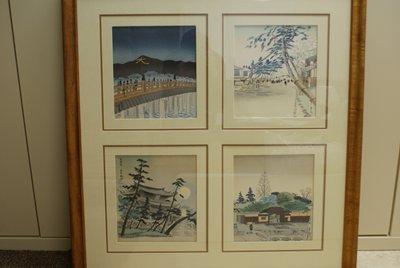
The Twelve Months of Kyoto exemplifies Tokuriki's deep connection to his native city, depicting beloved landmarks through the cycle of the year — among them Byodoin Temple under snow, the plum blossoms of Kitano Shrine, the Gion Festival, Yasaka Pagoda, and Kinkakuji. He extended the same topographic vision to Tokyo, portraying such scenes as the cherry blossoms of Asakusa and the moon over Shinobazu Pond.
After the Second World War, Tokuriki established his own publishing company, Matsukyu, which produced and distributed his prints as well as works by other shin-hanga and sosaku-hanga artists. Matsukyu also served as a teaching studio, offering instruction in block carving to artisans and artists, including foreign students in later decades. This dual role as publisher and educator gave Tokuriki an unusually broad influence on the development of woodblock printmaking in the postwar period.
Tokuriki's artistic production encompassed two distinct streams. His shin-hanga prints, created through the traditional collaborative process with professional carvers and printers, are characterized by soft, pastel-like colors and meticulous renderings of famous Japanese landmarks. His sosaku-hanga works, which he considered his true artistic passion, were self-designed, self-carved, and self-printed, reflecting a more personal and experimental aesthetic. This dual practice placed him at the intersection of Japanese printmaking's two major twentieth-century currents, and he moved freely between them throughout his career.
Tokuriki's style is marked by vibrant color, thoughtful composition, and a deep affection for Japan's architectural and natural heritage. His subjects range from the intimate scale of temple gardens to the grand sweep of Mount Fuji, always rendered with the technical precision that his family's long artisan tradition had instilled. His shin-hanga prints appealed to international collectors with their accessible beauty and sense of place, while his sosaku-hanga works demonstrated the more personal and expressive possibilities of the medium.
During the 1960s, Tokuriki brought his work to international audiences through exhibitions in Chicago, New York, Pittsburgh, and Cleveland. Among his notable students were the artists Daniel Kelly and David Stones, both of whom gained international recognition.
Tokuriki remained active into his nineties, spending his life in Kyoto in a two-hundred-year-old family house, and died in 1999. His works are held in major collections, including the Art Institute of Chicago, the Museum of Fine Arts in Boston, and the British Museum in London. His extraordinary output and his role in bridging the shin-hanga and sosaku-hanga traditions make him one of the most significant figures in the history of twentieth-century Japanese printmaking.
Key Facts
- Active Period
- 1902–1999
- Nationality
- 🇯🇵Japan
- Movements
- Shin-hangaSōsaku-hanga
- Works Indexed
- 153
Frequently Asked Questions
Tomikichiro Tokuriki (1902–1999) was one of the most prolific Japanese woodblock print artists of the twentieth century, producing an estimated several thousand prints during a career that spanned some seventy years. Born into a distinguished Kyoto artisan family whose roots reached back to the Keicho era of the late sixteenth century, Tokuriki worked across both the shin-hanga and sosaku-hanga traditions, becoming best known for his richly colored depictions of Kyoto's temples, shrines, and seasonal landscapes, as well as his celebrated views of Mount Fuji.
Tomikichiro Tokuriki was active from 1902 to 1999. They were associated with the Shin-hanga and Sōsaku-hanga movements.
Tomikichiro Tokuriki's work was shaped by the Shin-hanga and Sōsaku-hanga traditions in Japanese woodblock printmaking. Shin-hanga: ## What is Shin-hanga? Shin-hanga (新版画), literally "new prints," is the early twentieth-century revival of the collaborative Japanese woodblock workshop, organized between roughly 1915 and 1960 by the Tokyo publisher Watanabe Shōzaburō (1885–1962) and a handful of competing houses. Sōsaku-hanga: ## What is sōsaku-hanga? Sōsaku-hanga (創作版画, "creative prints") was a twentieth-century Japanese print movement defined by a single commitment: the artist must design, carve, and print every work alone.
Tomikichiro Tokuriki's prints frequently feature temples & shrines, mount fuji, landscapes, castles, snow scenes, bridges.
Original prints by Tomikichiro Tokuriki can be found in collections including ukiyo-e.org, Minneapolis Institute of Art, Art Institute of Chicago.
Based on 870 recorded auction sales from 2015–2025, most Tomikichiro Tokuriki prints sold in the $60–$150 range, with a median around $100. Top results exceeded $190. Actual prices vary widely with edition, condition, and subject.
External Resources
Series by Tomikichiro Tokuriki
Woodblock Prints by Tomikichiro Tokuriki (153)
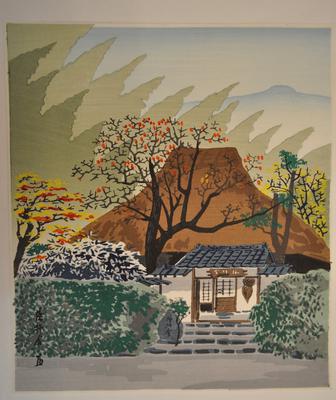
Untitled
20th century
Woodblock print, ink and color on paper
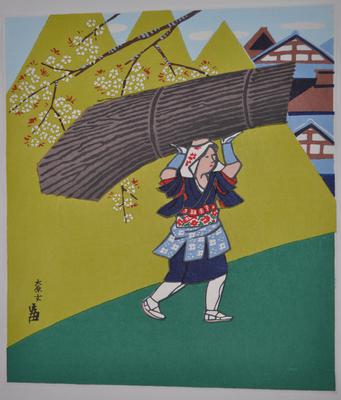
An Oharame Girl Carrying Firewood on Her Head
20th century
Woodblock print, ink and color on paper
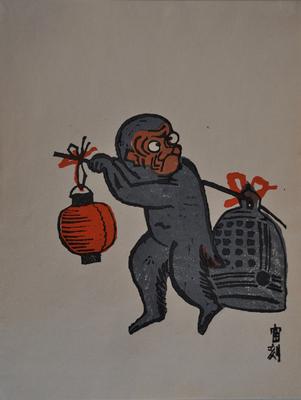
Monkey with Bell and Lantern
20th century
Woodblock print, ink and color on paper

Kamogawa Spring Evening
鴨川春の夕
1955
Color woodblock print

April (Arashiyama Park, a Famous Scenic Resort)
四月 (嵐山)
second half 20th century
Woodblock print, ink and color on paper

November (The Willow Tree at the Gate of the Shimabara)
十一月 (島原大門柳)
second half 20th century
Woodblock print, ink and color on paper

May (The Pagoda of Yasaka near Gion)
五月 (祇園八坂の塔)
second half 20th century
Woodblock print, ink and color on paper

September (The Old Imperial Palace)
九月 (京都御所)
second half 20th century
Woodblock print, ink and color on paper

August (The Bonfire Festival of the Daimonji Hill Viewed from the Sanjo Bridge)
八月 (三条大橋より大文字)
second half 20th century
Woodblock print, ink and color on paper

June (Rainy Scene of the Sen-ke, Japanese Tea Ceremony Founder's House)
六月 (千家雨景)
second half 20th century
Woodblock print, ink and color on paper
February (The Annual Festival of the Fushimi Inari)
二月 (伏見稲荷大社祭)
second half 20th century
Woodblock print, ink and color on paper

October (The Full-Moon Night at the Gate of the Chionin Monastery)
十月 (知恩院山門月夜)
second half 20th century
Woodblock print, ink and color on paper
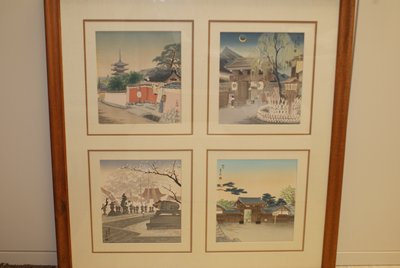
March (Plum Blossoms at the Kitano Shrine)
三月 (北野天満宮梅花)
second half 20th century
Woodblock print, ink and color on paper

July (Gorgeous Procession of Yama-hoko or the Floats at the Gion Festival)
七月 (祇園祭山鉾巡行)
second half 20th century
Woodblock print, ink and color on paper
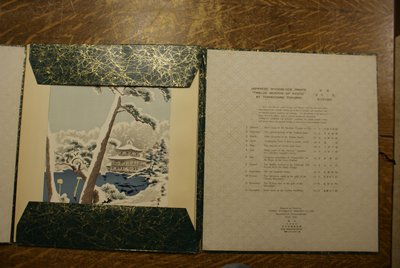
January (Snow Scene at the Byodoin Temple in Uji)
一月 (宇治平等院雪景)
second half 20th century
Woodblock print, ink and color on paper

December (Snow Scene at the Golden Pavilion)
十二月 (金閣寺雪景)
second half 20th century
Woodblock print, ink and color on paper
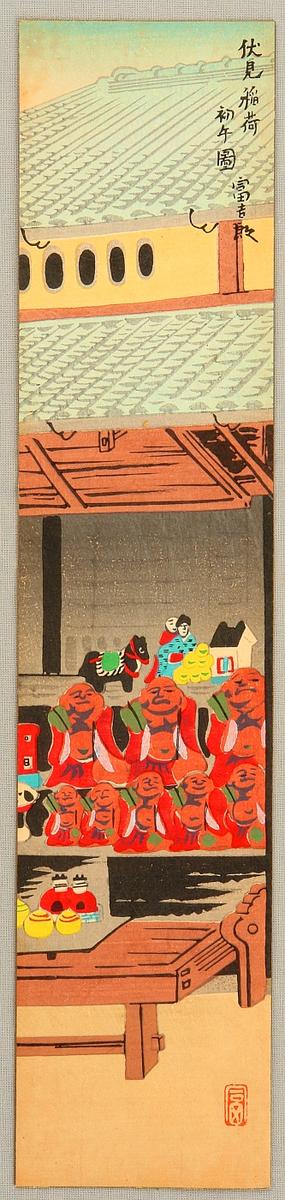
Fushimi Dolls
Woodblock print

Fujimi Bridge - Thirty-six Views of Mt. Fuji
Woodblock print
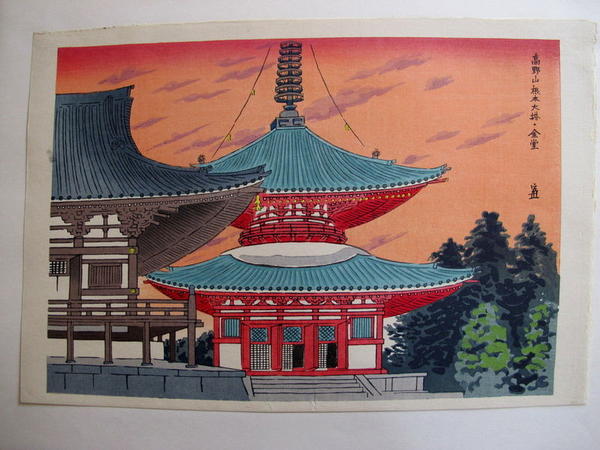
Koyasan - Famous, Sacred and Historical Places
Woodblock print
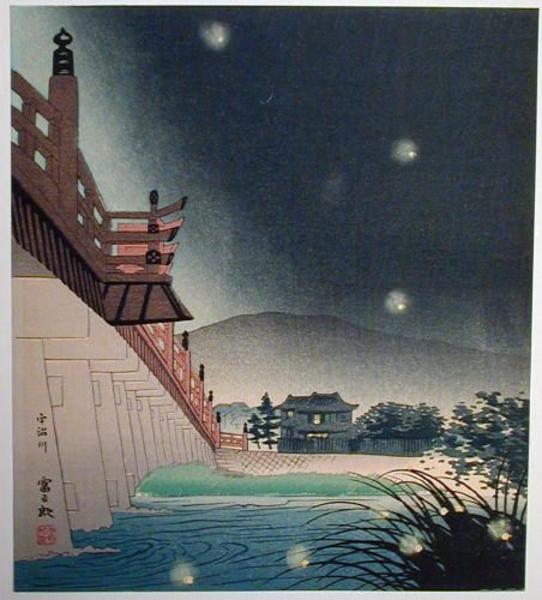
Fireflies at Uji River
Woodblock print
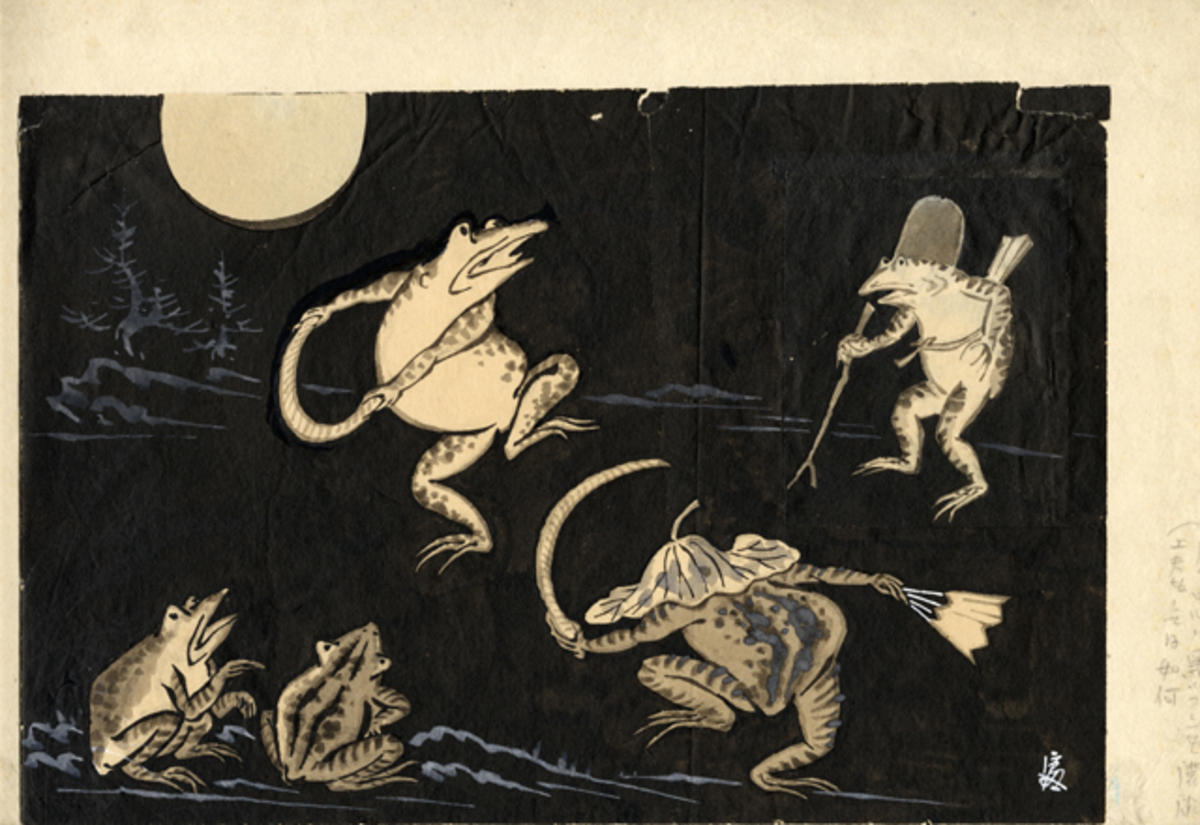
Dance of Shimazu
Woodblock print
Kiyomizu Temple in the Snow
Woodblock print
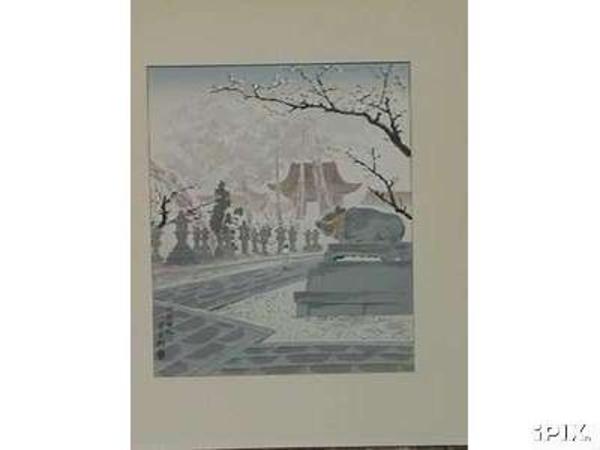
Kitano Shrine in the Early Spring
Woodblock print
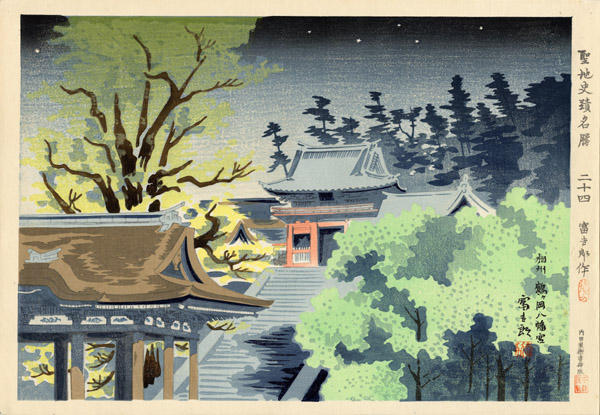
Kamakura Shrine - Famous, Sacred and Historical Places
Woodblock print


