Kobe (神戸)
8 prints by 4 artists
About Kobe
Kobe is a city on the northwestern shore of Osaka Bay, the principal city of Hyogo Prefecture in the Kansai region, situated on a narrow coastal strip beneath the Rokko mountain range and opening south to the Inland Sea. The harbor of Hyogo, the historical name for the western portion of the modern city, was one of the principal medieval trading ports of Japan, with traffic to Korea and China documented from the eighth century, and it served across the Edo period as a coastal commercial port. Hyogo was the historical capital of the brief Fukuhara-kyo project of Taira no Kiyomori, who relocated the imperial capital to Hyogo in 1180 in an effort to consolidate Taira power before the project was abandoned within six months and the court returned to Kyoto. The defining transformation came after the opening of the port to foreign trade in January 1868 under the treaties of the Bakumatsu and early Meiji period, when Kobe became one of the principal foreign settlements in Japan, with a distinct Western-style district of consulates, churches, banks, and residences developing in the area between the harbor and the foothills, called the Kobe Foreign Settlement (Kobe Kyoryuchi). The city grew rapidly across the late nineteenth and early twentieth centuries as the principal commercial port serving the Kansai region, with the development of major shipyards including the Mitsubishi Kobe Shipyard, the establishment of foreign trading houses, and the development of the Kitano-cho district of foreign residences (ijinkan) on the slopes north of the harbor. The Kobe Beef brand of Tajima cattle, developed in the late nineteenth century for the foreign settlement market, became one of the most internationally recognized Japanese culinary products. Significant portions of the city were destroyed in the air raids of 1945 and again in the Great Hanshin Earthquake of 17 January 1995, which killed more than 6,400 people and destroyed substantial portions of the city center and the harbor infrastructure. For Japanese printmaking Kobe appears most prominently in the Meiji-period kaika-e of the late nineteenth century and in the shin-hanga revival of the early twentieth. The kaika-e of Utagawa Hiroshige III, Inoue Yasuji, Kobayashi Kiyochika, and other Tokyo-trained Meiji artists treated the Kobe foreign settlement and the harbor as exemplary subjects of the modernizing nation, with brick architecture, ships, gas lamps, and foreign costume figuring as motifs of the new period. Kawase Hasui produced harbor and city views of Kobe in his extensive travel-based shin-hanga practice, including evening views of the harbor and treatments of the surrounding Hyogo coast, and Yoshida Hiroshi, Tsuchiya Koitsu, and Asano Takeji contributed further compositions of the port and the surrounding region. The sosaku-hanga artist Hide Kawanishi (1894-1965), working in and around Kobe through the mid-twentieth century, produced extensive series treating the city's harbor, foreign quarters, and surrounding Hyogo subjects, becoming the principal creative-print interpreter of Kobe and one of the most identifiably regional sosaku-hanga artists of his generation. The visual character of Kobe in prints is built on harbor cranes, ships at anchor, lit windows of the Western-style buildings on Kitano hill, the silhouette of the Rokko mountains behind the city, the foreign and Japanese pedestrians in the central district, and the seasonal phenomena of the maritime climate. Contemporary Kobe preserves a substantial portion of the Kitano-cho ijinkan foreign-residence district as a heritage area, with several of the historic Western-style buildings open as museums, and the port and surrounding harbor remain working facilities along with the Meriken Park and Harborland leisure districts.
Prints Depicting Kobe (8)
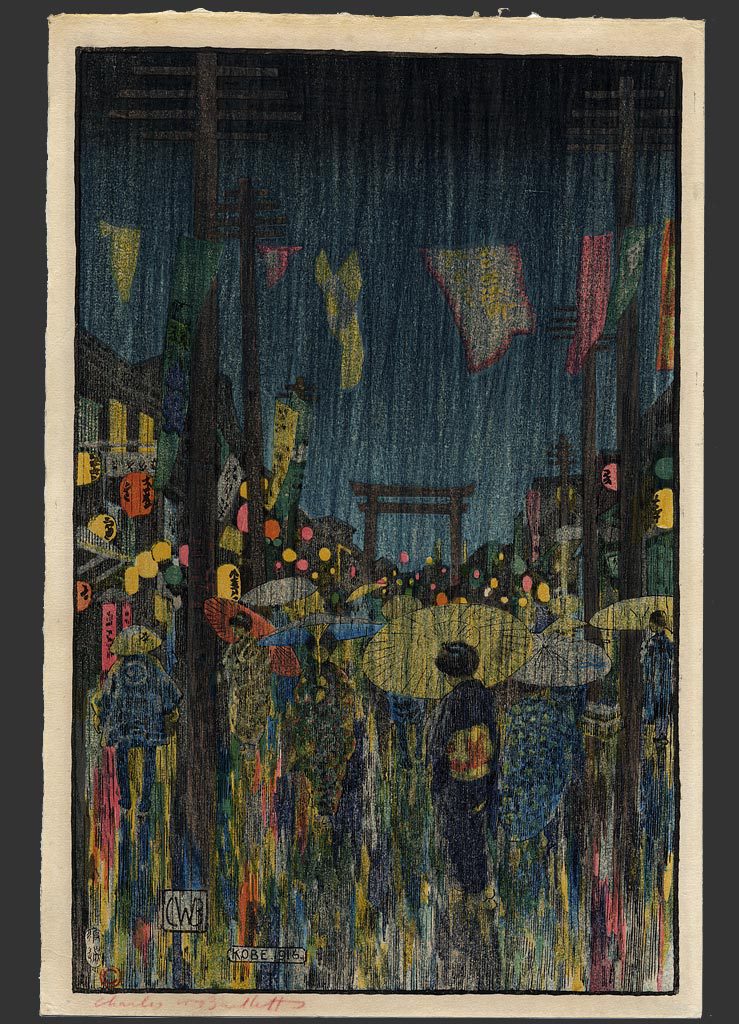
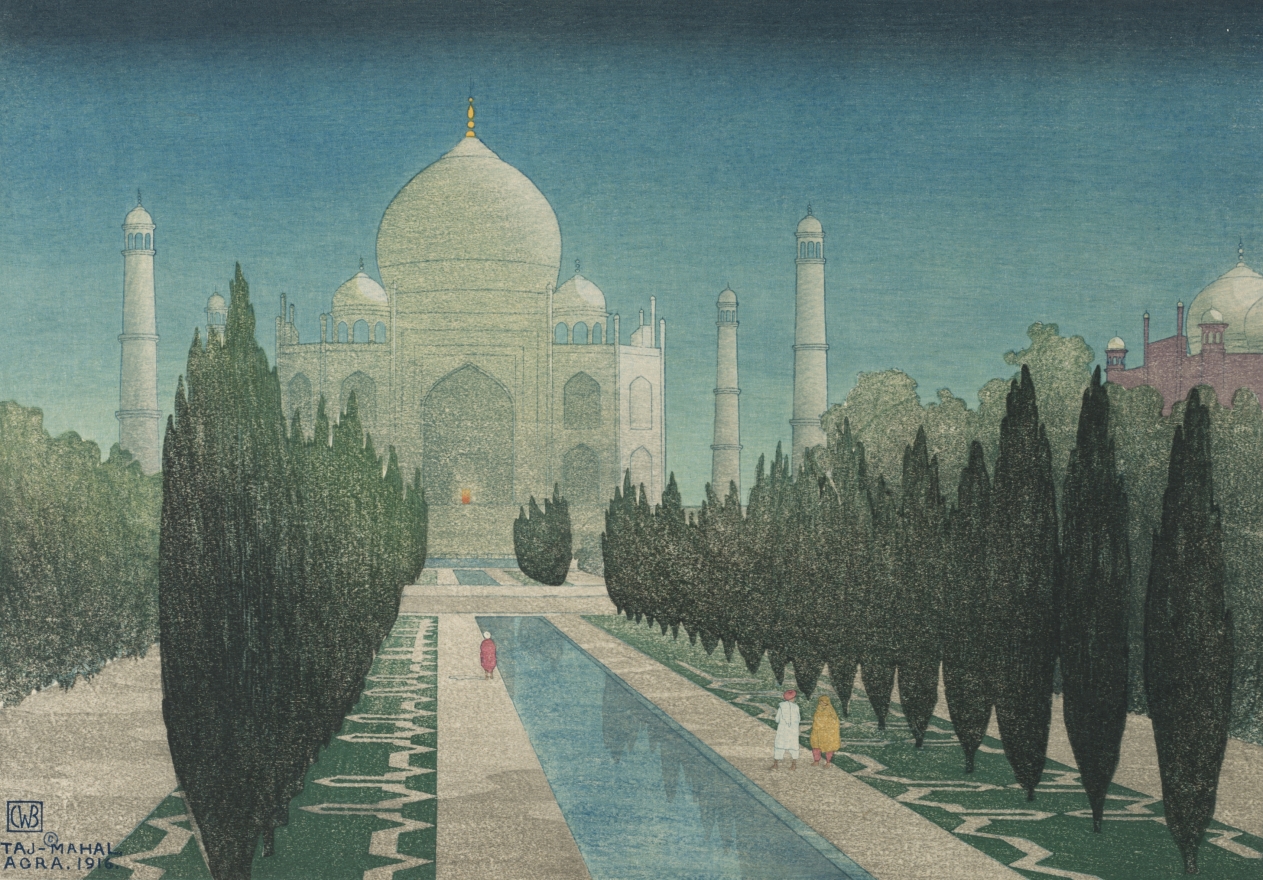
Kobe
1916
Woodblock print

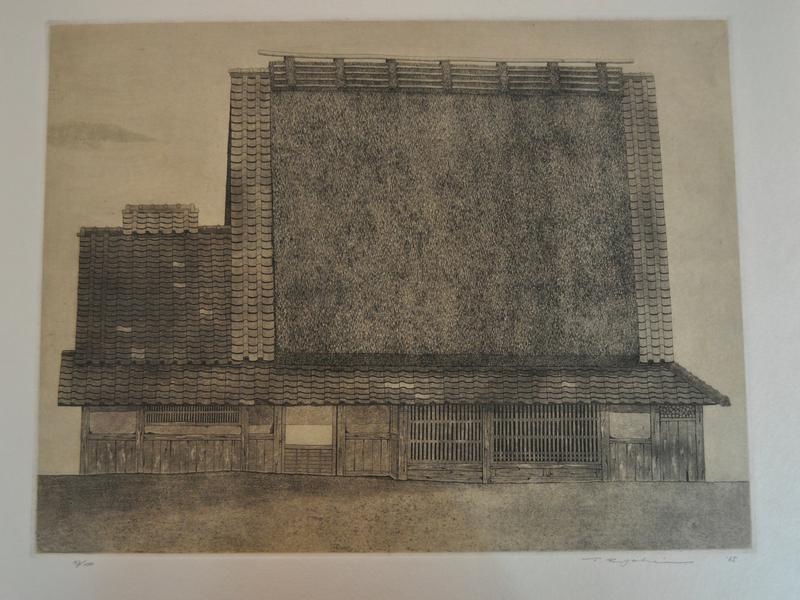
Kobe No. 2
1971
Etching and aquatint, ink and color on paper

Rokko Mountains, Kobe
20th century
Color woodblock print
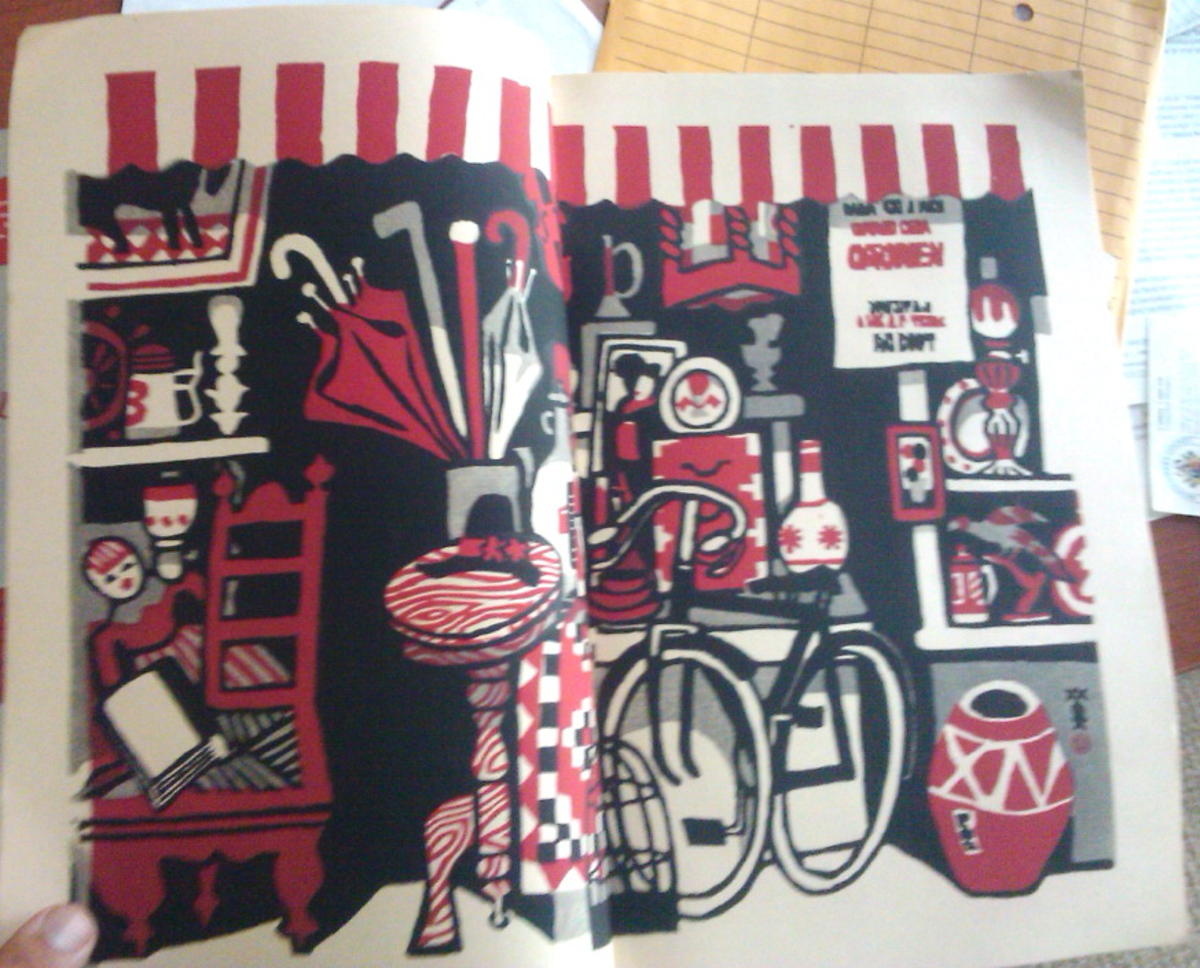
Second-Hand Goods Store, Kobe
Woodblock print
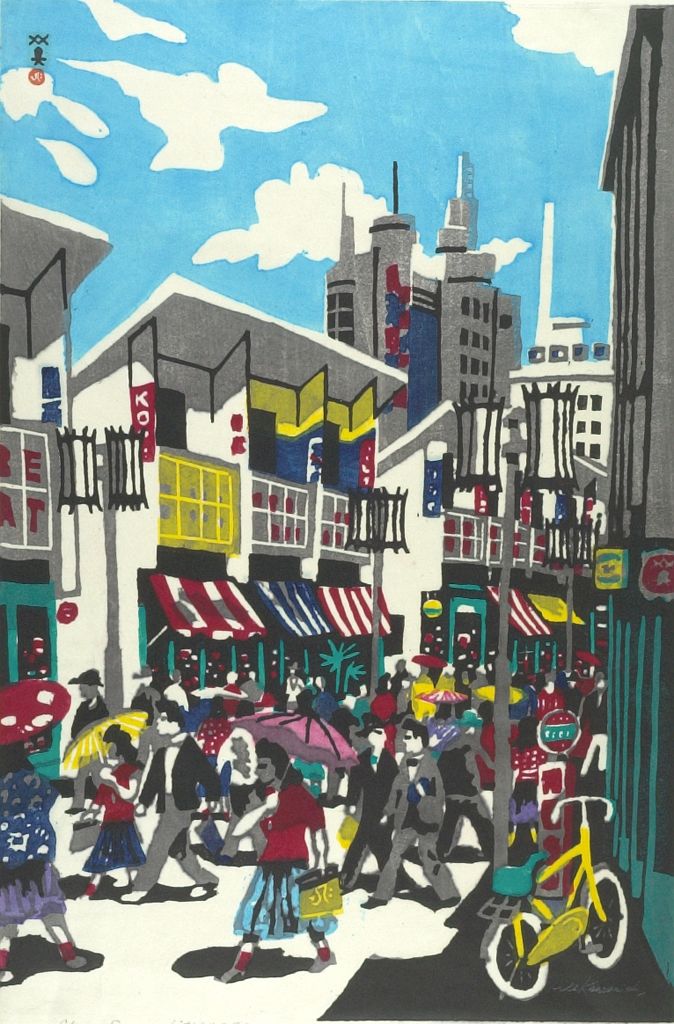
Street Scene, Motomachi, Kobe
Woodblock print
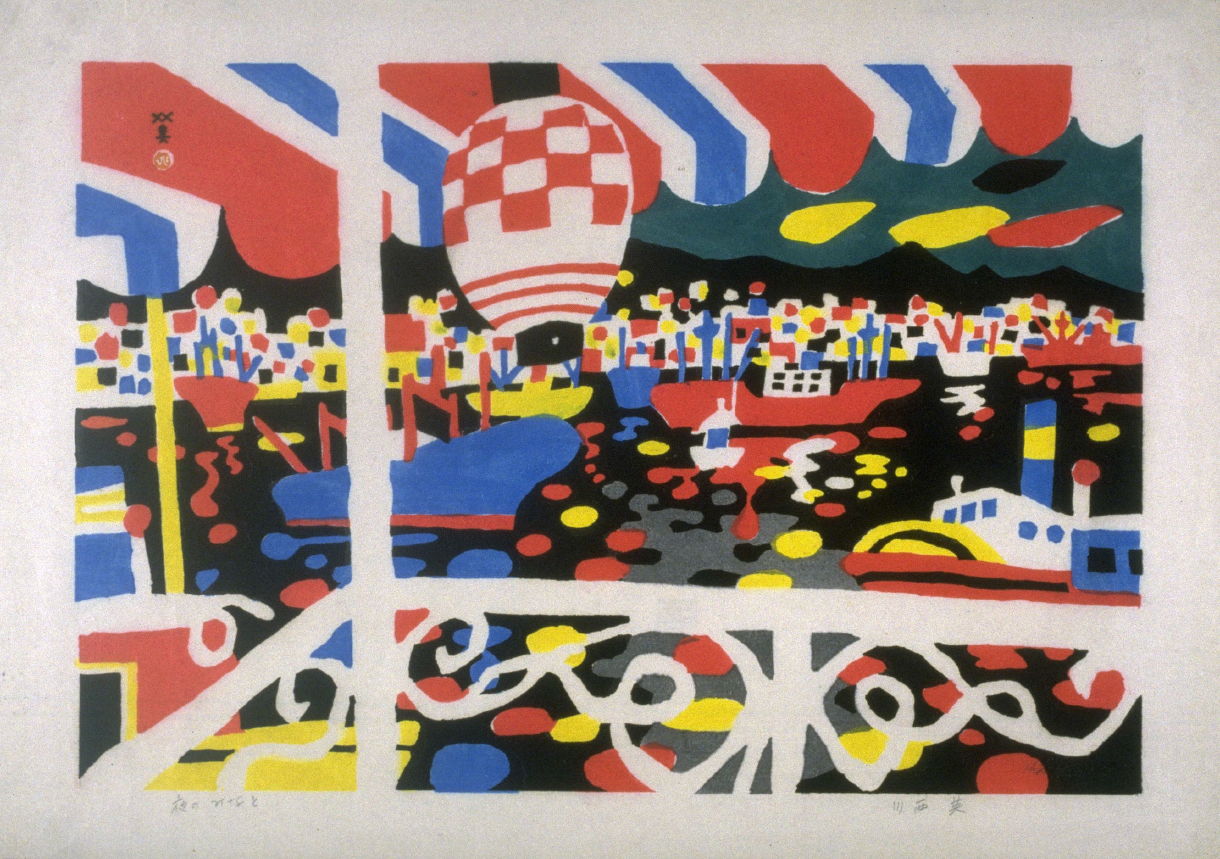
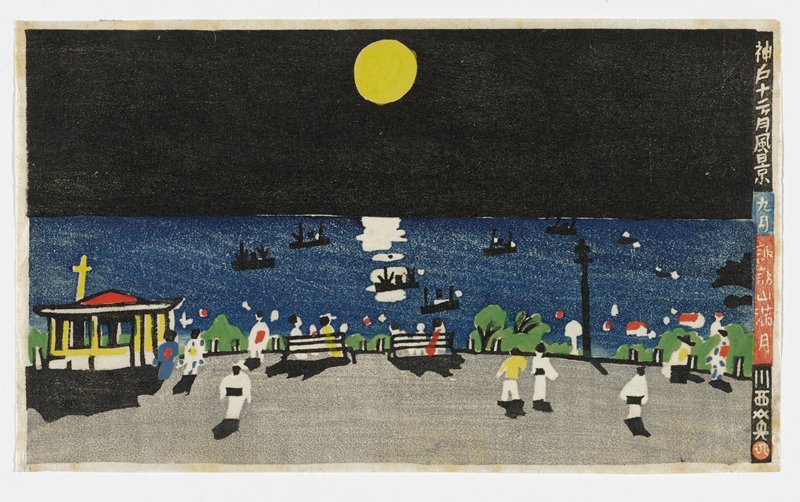
View of Kobe Harbor
Woodblock print

Yakumo Bridge at Nagata Shrine in Kobe (Kobe Nagata-jinja Yakumobashi), from the series "Collection of Views of Japan II, Kansai Edition (Nihon fukei shu II Kansai hen)"
1930
Color woodblock print; oban

Yakumo Bridge at the Nagata Shrine, Kobe, from the series "Collection of Scenic Views of Japan II, Kainsai Edition" (Nihon fukei shu II Kansai hen, Kobe Nagata jinja Yakumobashi)
October 1934
Color woodblock print
Artists Who Depicted Kobe (4)

Frequently Asked Questions
Kobe is a city on the northwestern shore of Osaka Bay, the principal city of Hyogo Prefecture in the Kansai region, situated on a narrow coastal strip beneath the Rokko mountain range and opening south to the Inland Sea. The harbor of Hyogo, the historical name for the western portion of the modern city, was one of the principal medieval trading ports of Japan, with traffic to Korea and China documented from the eighth century, and it served across the Edo period as a coastal commercial port. Hyogo was the historical capital of the brief Fukuhara-kyo project of Taira no Kiyomori, who relocated the imperial capital to Hyogo in 1180 in an effort to consolidate Taira power before the project was abandoned within six months and the court returned to Kyoto. The defining transformation came after the opening of the port to foreign trade in January 1868 under the treaties of the Bakumatsu and early Meiji period, when Kobe became one of the principal foreign settlements in Japan, with a distinct Western-style district of consulates, churches, banks, and residences developing in the area between the harbor and the foothills, called the Kobe Foreign Settlement (Kobe Kyoryuchi). The city grew rapidly across the late nineteenth and early twentieth centuries as the principal commercial port serving the Kansai region, with the development of major shipyards including the Mitsubishi Kobe Shipyard, the establishment of foreign trading houses, and the development of the Kitano-cho district of foreign residences (ijinkan) on the slopes north of the harbor. The Kobe Beef brand of Tajima cattle, developed in the late nineteenth century for the foreign settlement market, became one of the most internationally recognized Japanese culinary products. Significant portions of the city were destroyed in the air raids of 1945 and again in the Great Hanshin Earthquake of 17 January 1995, which killed more than 6,400 people and destroyed substantial portions of the city center and the harbor infrastructure. For Japanese printmaking Kobe appears most prominently in the Meiji-period kaika-e of the late nineteenth century and in the shin-hanga revival of the early twentieth. The kaika-e of Utagawa Hiroshige III, Inoue Yasuji, Kobayashi Kiyochika, and other Tokyo-trained Meiji artists treated the Kobe foreign settlement and the harbor as exemplary subjects of the modernizing nation, with brick architecture, ships, gas lamps, and foreign costume figuring as motifs of the new period. Kawase Hasui produced harbor and city views of Kobe in his extensive travel-based shin-hanga practice, including evening views of the harbor and treatments of the surrounding Hyogo coast, and Yoshida Hiroshi, Tsuchiya Koitsu, and Asano Takeji contributed further compositions of the port and the surrounding region. The sosaku-hanga artist Hide Kawanishi (1894-1965), working in and around Kobe through the mid-twentieth century, produced extensive series treating the city's harbor, foreign quarters, and surrounding Hyogo subjects, becoming the principal creative-print interpreter of Kobe and one of the most identifiably regional sosaku-hanga artists of his generation. The visual character of Kobe in prints is built on harbor cranes, ships at anchor, lit windows of the Western-style buildings on Kitano hill, the silhouette of the Rokko mountains behind the city, the foreign and Japanese pedestrians in the central district, and the seasonal phenomena of the maritime climate. Contemporary Kobe preserves a substantial portion of the Kitano-cho ijinkan foreign-residence district as a heritage area, with several of the historic Western-style buildings open as museums, and the port and surrounding harbor remain working facilities along with the Meriken Park and Harborland leisure districts.
Hanga catalogues 8 prints depicting Kobe (神戸), by 4 different artists.
Charles W. Bartlett, Hide Kawanishi, and Kawase Hasui are among the 4 artists who depicted Kobe in our collection.
Want to rate prints from Kobe?
Sign up to start rating