Biography
Ansei Uchima (内間安瑆, 1921–2000) was a Japanese-American woodblock print artist whose serene, luminous abstract landscapes bridged the traditions of Japanese printmaking and Western modernist abstraction. Born in Stockton, California, to Japanese immigrant parents, Uchima drew upon his dual cultural heritage to create prints of quiet, contemplative beauty that evoke vast natural spaces — open skies, distant horizons, and the subtle gradations of light at dawn and dusk.
Born on May 1, 1921, in Stockton, California, Uchima was the eldest of four sons of Japanese immigrant parents and was raised in Los Angeles. After graduating from high school in 1940, he left the United States for Japan, enrolling at Waseda University in Tokyo, where he studied architecture. Caught in Japan by the outbreak of the Second World War, he set aside his architectural studies and ultimately remained in Tokyo for some nineteen years, turning toward a life in painting and printmaking.
It was in postwar Tokyo that Uchima found his medium. Working for a time as a translator for the American writer and collector Oliver Statler, who was researching modern Japanese woodblock printmaking, he gained first-hand exposure to the sōsaku-hanga ('creative print') movement and became personally acquainted with several of its leading figures, among them Kōshirō Onchi and Shikō Munakata. Inspired by these encounters, he took up the carving and printing of woodblocks himself, and by the mid-1950s had begun the printmaking career for which he is remembered. He embraced the sōsaku-hanga philosophy of the artist as sole creator, while also absorbing the aesthetic currents of postwar American abstraction; his mature work is most often discussed in relation to the Abstract Expressionist movement.
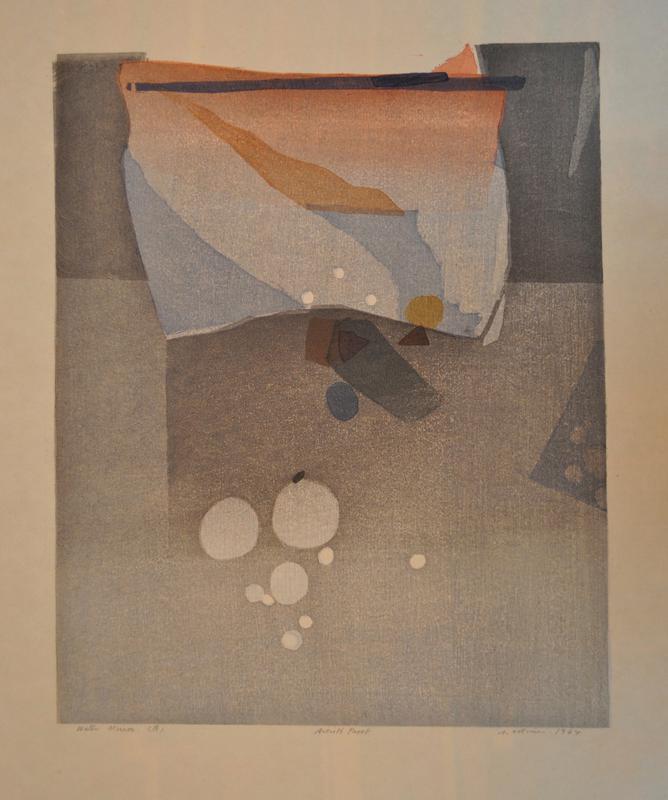
The mature prints for which he is best known are large, simplified compositions of horizontal bands of color suggesting sky, land, and water, developed over the decades that followed. Working with multiple woodblocks and careful color mixing, he achieved subtle, luminous gradations — soft transitions from pale dawn gold to deep twilight blue, or from misty gray to warm amber — that evoke the feeling of looking across a vast, empty landscape at a specific moment of light. The prints have a meditative stillness that invites prolonged contemplation, each one a distillation of a particular quality of light and atmosphere.
Technically, Uchima was a master of the woodblock medium, carving his own blocks and printing each impression by hand using traditional Japanese water-based pigments on fine Japanese paper. His printing technique emphasized the beautiful, slightly irregular qualities that distinguish hand-printing from mechanical reproduction — the soft edges where one color field meets another, the subtle variations in ink density across a large area, and the warmth of natural pigments absorbed into handmade paper.
After nearly two decades in Japan, Uchima returned to the United States around 1960 and settled in New York, where he taught at the Pratt Graphic Art Center and then, for some twenty years, at Sarah Lawrence College and Columbia University. He exhibited widely in the United States, Japan, and Europe, and was twice awarded a John Simon Guggenheim Memorial Fellowship, in 1962 and 1970. He belonged to the Society of American Graphic Artists and took part in major international print exhibitions, and his work was praised by critics for its successful synthesis of Eastern and Western aesthetic traditions.
Throughout his life, Uchima maintained connections to both American and Japanese artistic communities. Having spent his formative years as an artist in Tokyo, he retained close ties to Japanese printmaking even after settling in New York, yet his mature sensibility drew equally on his American experience — the quality of light over open land and water, and the experience of standing at the intersection of two great cultural traditions.
Uchima died in 2000 at the age of seventy-nine. His prints are held in major museum collections, including the Metropolitan Museum of Art, the Museum of Modern Art, the Whitney Museum of American Art, the Smithsonian American Art Museum, the Art Institute of Chicago, and the British Museum. His work stands as a testament to the creative possibilities that emerge when different artistic traditions meet in a single, sensitive artistic consciousness.
Key Facts
- Active Period
- 1921–2000
- Nationality
- 🇺🇸United States
- Movement
- Sōsaku-hanga
- Works Indexed
- 49
Frequently Asked Questions
Ansei Uchima (内間安瑆, 1921–2000) was a Japanese-American woodblock print artist whose serene, luminous abstract landscapes bridged the traditions of Japanese printmaking and Western modernist abstraction. Born in Stockton, California, to Japanese immigrant parents, Uchima drew upon his dual cultural heritage to create prints of quiet, contemplative beauty that evoke vast natural spaces — open skies, distant horizons, and the subtle gradations of light at dawn and dusk.
Ansei Uchima was active from 1921 to 2000. They were associated with the Sōsaku-hanga movement.
Ansei Uchima's work was shaped by the Sōsaku-hanga tradition in Japanese woodblock printmaking. Sōsaku-hanga: ## What is sōsaku-hanga? Sōsaku-hanga (創作版画, "creative prints") was a twentieth-century Japanese print movement defined by a single commitment: the artist must design, carve, and print every work alone.
Ansei Uchima's prints frequently feature abstract, landscapes, night scenes, rivers & lakes, snow scenes, religious.
Original prints by Ansei Uchima can be found in collections including robynbuntin, Minneapolis Institute of Art, Harvard Art Museum, Art Institute of Chicago.
Woodblock Prints by Ansei Uchima (49)

White Mountains
1963
Color woodblock print

A Clear Day
1963
Color woodblock print

Spring Brook
1963
Color woodblock print

Tranquil Rain
1963
Color woodblock print

Aerial: Night
1964
Color woodblock print
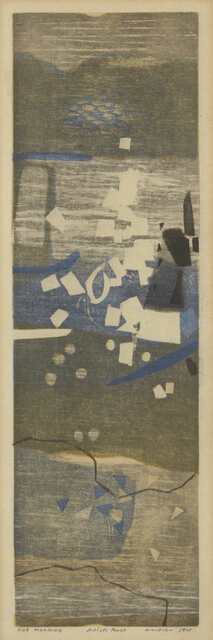
One Morning
1965
Woodcut in colours on wove
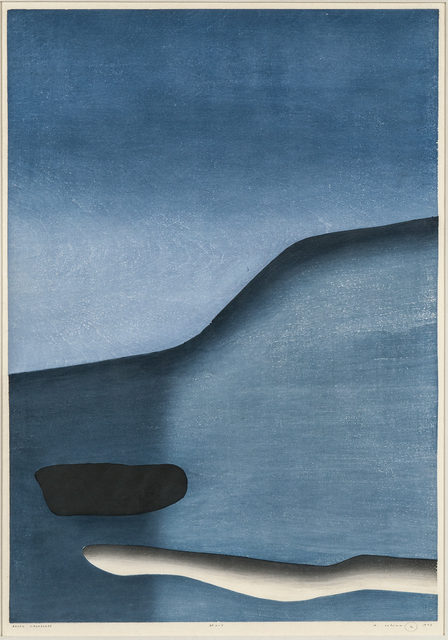
Arctic Landscape
1973
Color woodcut on paper
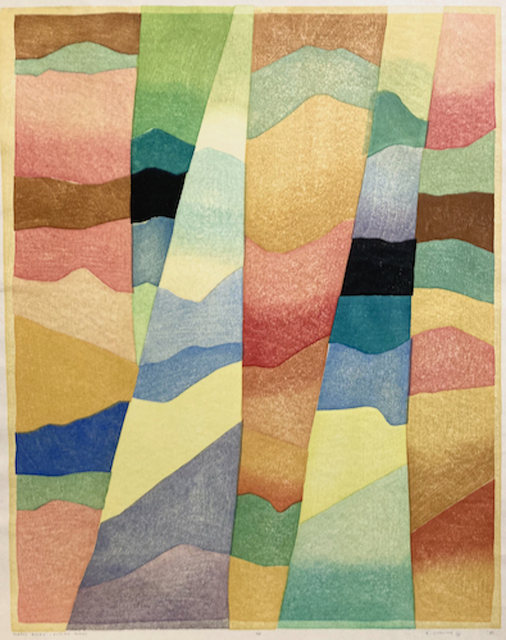
Forest Byobu (Autumn Echo)
1980
Woodcut
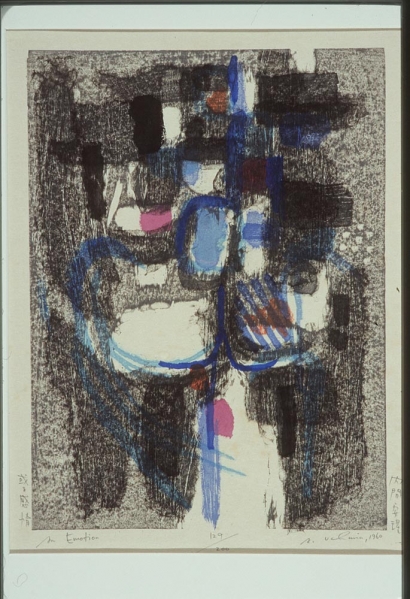
An Emotion
Woodblock print
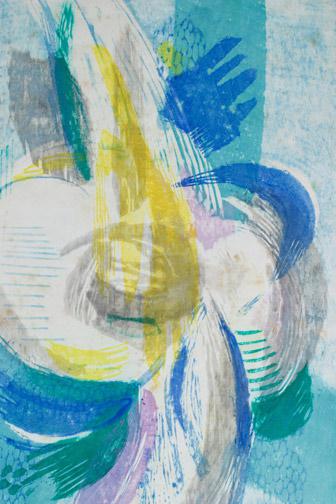
Untitled (ansei-uchima)
Woodblock print
![[Abstract design] by Ansei Uchima](https://1.api.artsmia.org/800/122761.jpg)
[Abstract design]
20th century
Color on paper
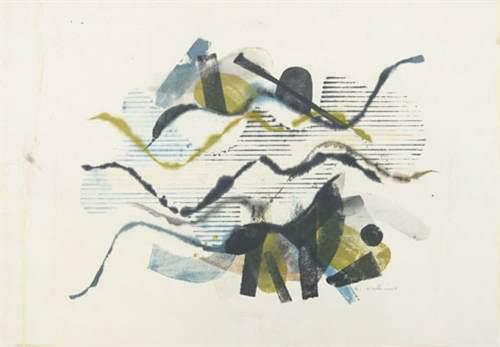
Hymns
Woodblock print
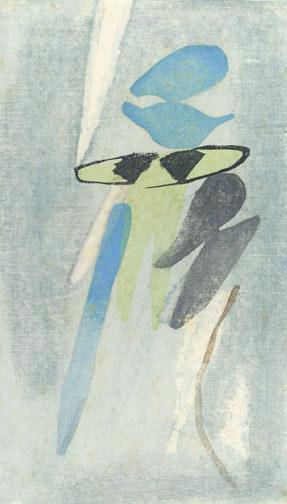
Rumor
Woodblock print
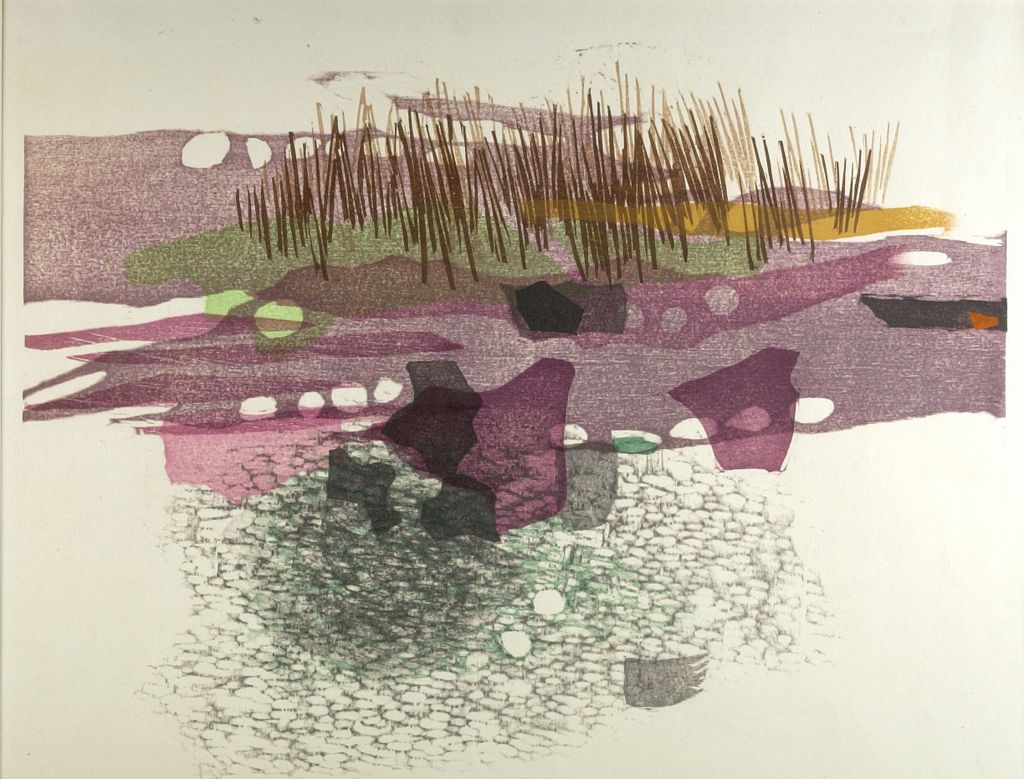
Autumn Stream (Aki no mizu), Shôwa period, 1963
Woodblock print
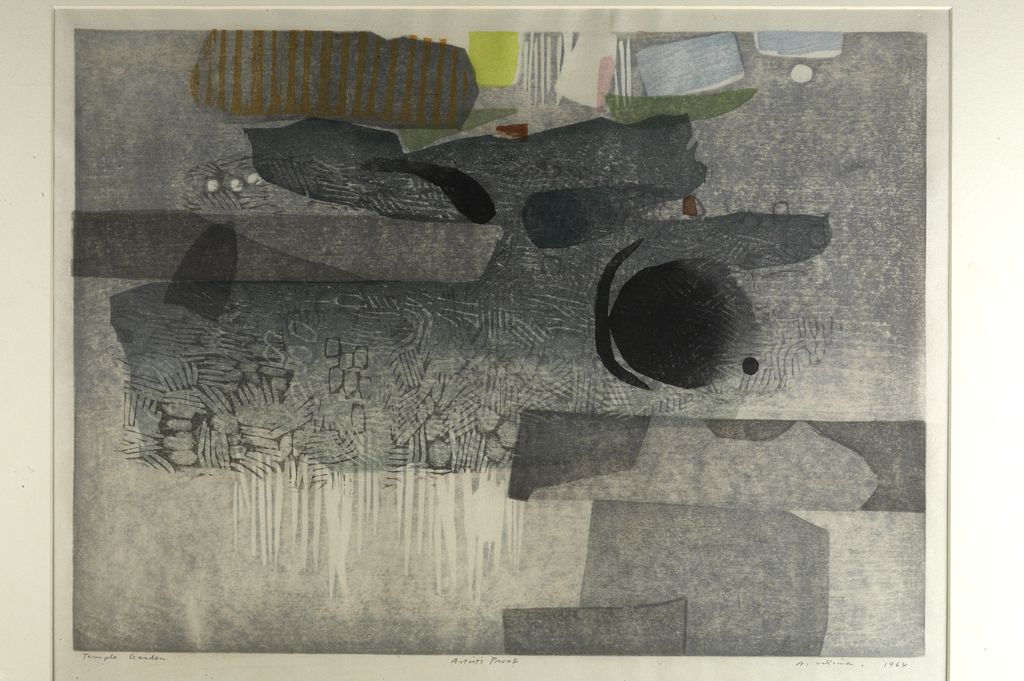
Temple Garden (Artist's Proof), Shôwa period, 1964
Woodblock print
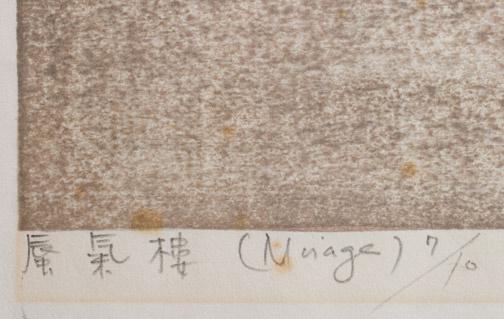
Mirage
Woodblock print
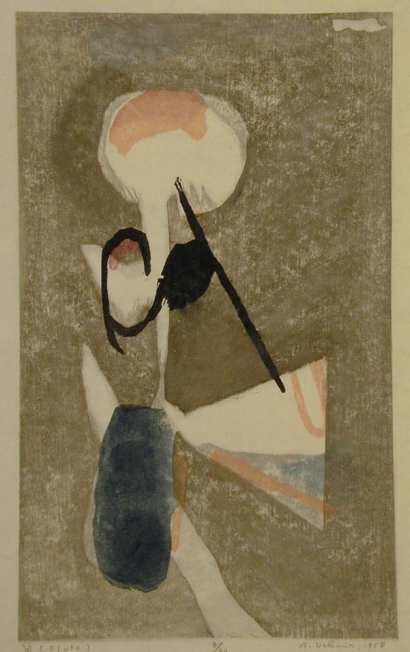
Fuye (Flute)
Woodblock print
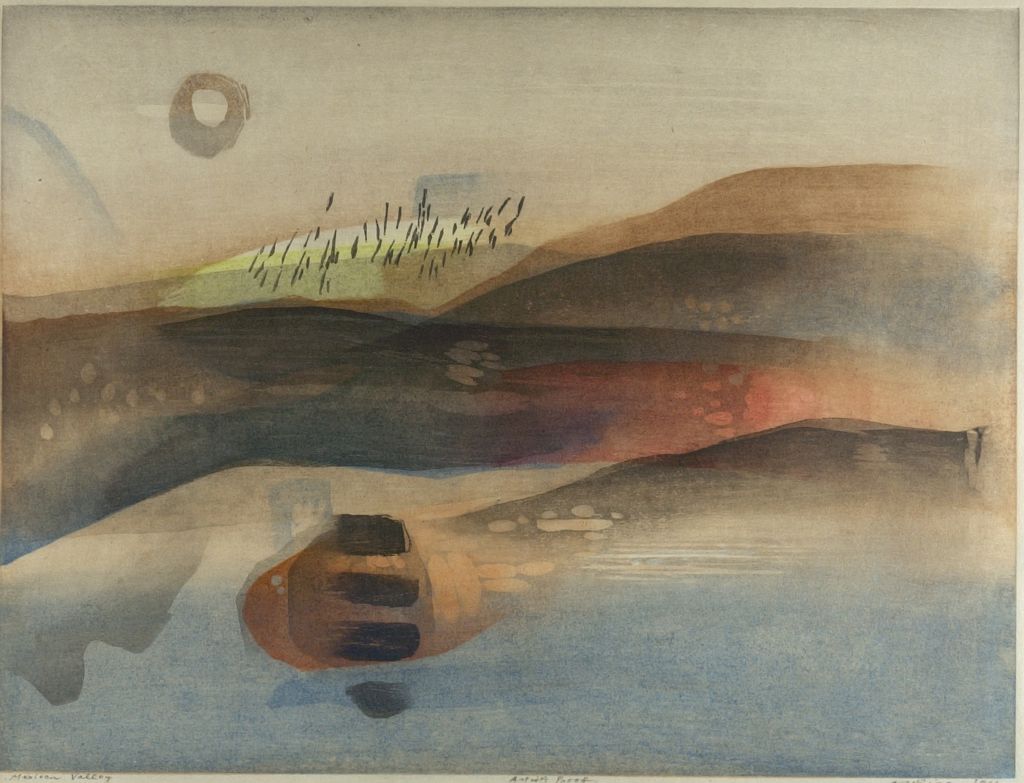
Mexican Valley (Artist's Proof), Shôwa period, 1966
Woodblock print
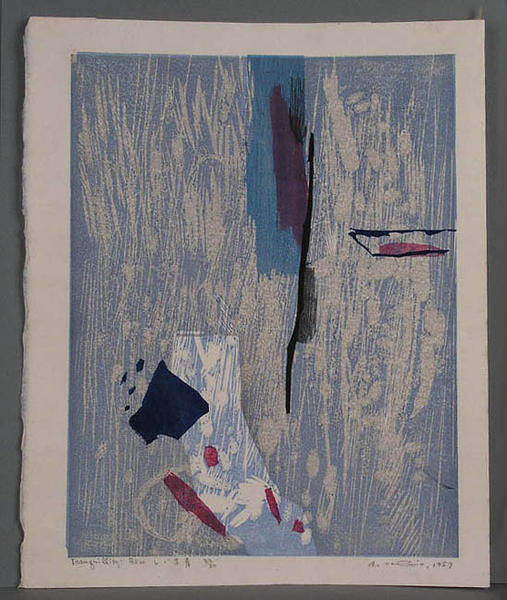
Tranquillity- Blue
Woodblock print

Temple Garden (Artist's Proof), Shôwa period, 1964
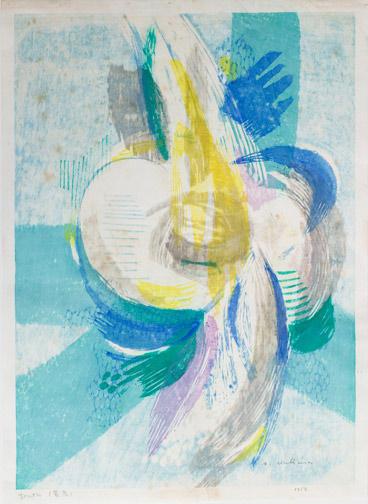
Youth
Woodblock print
Mexican Valley (Artist's Proof), Shôwa period, 1966
Woodblock print
Temple Garden (Artist's Proof), Shôwa period, 1964
Woodblock print
