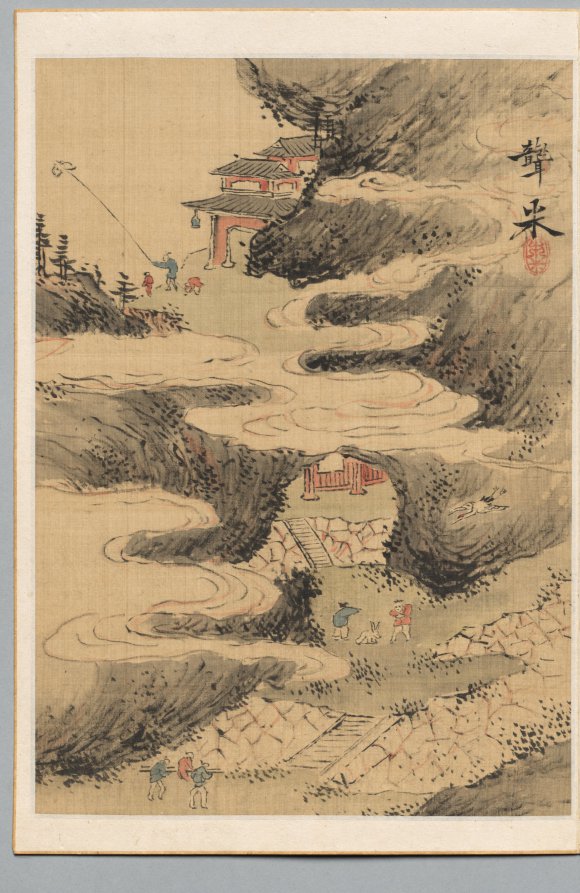
Aoki Mokubei
青木木米
1767–1833
Japan
Biography
Aoki Mokubei (1767-1833) was a Kyoto literati painter and potter whose work bridged the worlds of bunjinga ink painting and refined sencha tea ceramics in the late Edo period. Remembered chiefly as one of the three great Kyoto potters of his generation, alongside Ninnami Dohachi and Eiraku Hozen, Mokubei was equally serious as a nanga painter, producing landscape hanging scrolls, fan paintings, and album leaves in the literati tradition that drew its imaginative geography from the painted and printed manuals of late Ming and Qing China.
Mokubei was born in Kyoto, where his family ran a teahouse in the Gion district, an environment that gave him early exposure to the refined sensibilities of merchant and scholarly clientele. As a young man he studied calligraphy and antiquarian Chinese learning under the seal carver and scholar Ko Fuyo, an apprenticeship that gave him an unusually deep grounding in classical Chinese material culture. Reading the Qing-dynasty Chinese ceramic treatise Tosetsu (Tao shuo), a history of porcelain, is said to have inspired him to take up ceramics himself, a pursuit that placed him squarely within the Kyoto literati circle of Rai Sanyo, Tanomura Chikuden, the scholar-collector Kimura Kenkado, and other nanga figures who looked to Chinese precedents for both art and personal cultivation.
Mokubei established his kiln at Awataguchi, in the eastern hills of Kyoto, around 1796 and rapidly built a reputation as the most learned potter of his generation, producing porcelains in underglaze blue and overglaze enamels that explicitly referenced Ming and early Qing Chinese models, as well as stonewares for the sencha steeped-tea ceremony that was then displacing the older chanoyu whisked-tea tradition among literati. His teapots, water jars, sake cups, and incense burners drew on Yixing purple-clay precedents and on Chinese auspicious motifs of dragons, sages, plum blossoms, and antique poetic inscriptions. Among his most celebrated forms are sencha teapots with jewel-chasing dragons in underglaze blue, foliated bowls with Chinese figural scenes in overglaze enamels, and the whimsical animal-form fire boxes and water droppers that he produced in small numbers throughout his career.
Alongside his ceramic production, Mokubei painted constantly in the nanga literati manner, with surviving works including hanging scrolls, fan paintings, and album leaves on subjects such as mountain landscapes, scholars preparing tea, and Chinese sages in pavilions. His Brewing Tea in the Shade of Trees and Preparing Tea by a Mountain Gorge, both at the Metropolitan Museum of Art, demonstrate the way he wove together his interests in tea culture and Chinese landscape conventions, treating the act of brewing sencha as a meditative literati pastime worthy of pictorial elevation. Though he was invited to Kaga, in present-day Ishikawa, by the Maeda family to help revive the local Kutani ware, he spent the bulk of his career in Kyoto, where he died in 1833 at the age of sixty-seven.
His legacy survives chiefly in major Japanese museum collections, including the Tokyo National Museum, but American collections such as the Metropolitan Museum of Art and the Cleveland Museum of Art also hold important examples of both his paintings and his ceramics, documenting the way his bunjinga painting and his refined sencha-tradition ceramics together expressed a single coherent literati sensibility unique to late Edo Kyoto.
Key Facts
- Active Period
- 1767–1833
- Nationality
- 🇯🇵Japan
- Subjects
- Children
- Works Indexed
- 4
Frequently Asked Questions
Aoki Mokubei (1767-1833) was a Kyoto literati painter and potter whose work bridged the worlds of bunjinga ink painting and refined sencha tea ceramics in the late Edo period. Remembered chiefly as one of the three great Kyoto potters of his generation, alongside Ninnami Dohachi and Eiraku Hozen, Mokubei was equally serious as a nanga painter, producing landscape hanging scrolls, fan paintings, and album leaves in the literati tradition that drew its imaginative geography from the painted and printed manuals of late Ming and Qing China.
Aoki Mokubei was active from 1767 to 1833.
Aoki Mokubei's prints frequently feature children.
Original prints by Aoki Mokubei can be found in collections including Metropolitan Museum of Art, Cleveland Museum of Art.
Woodblock Prints by Aoki Mokubei (4)
Children
late 1700s–early 1800s
Leaf from a pair of folding albums; ink and light color on paper
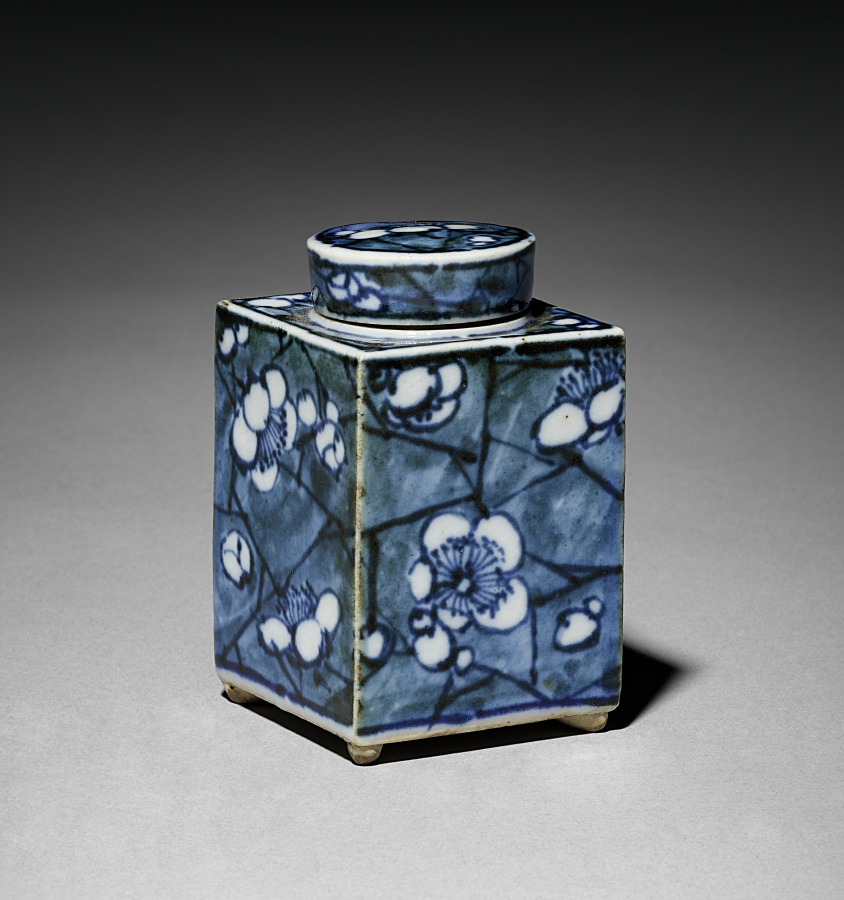
Tea Container with Plum Blossom
early 1800s
Porcelain with underglaze blue
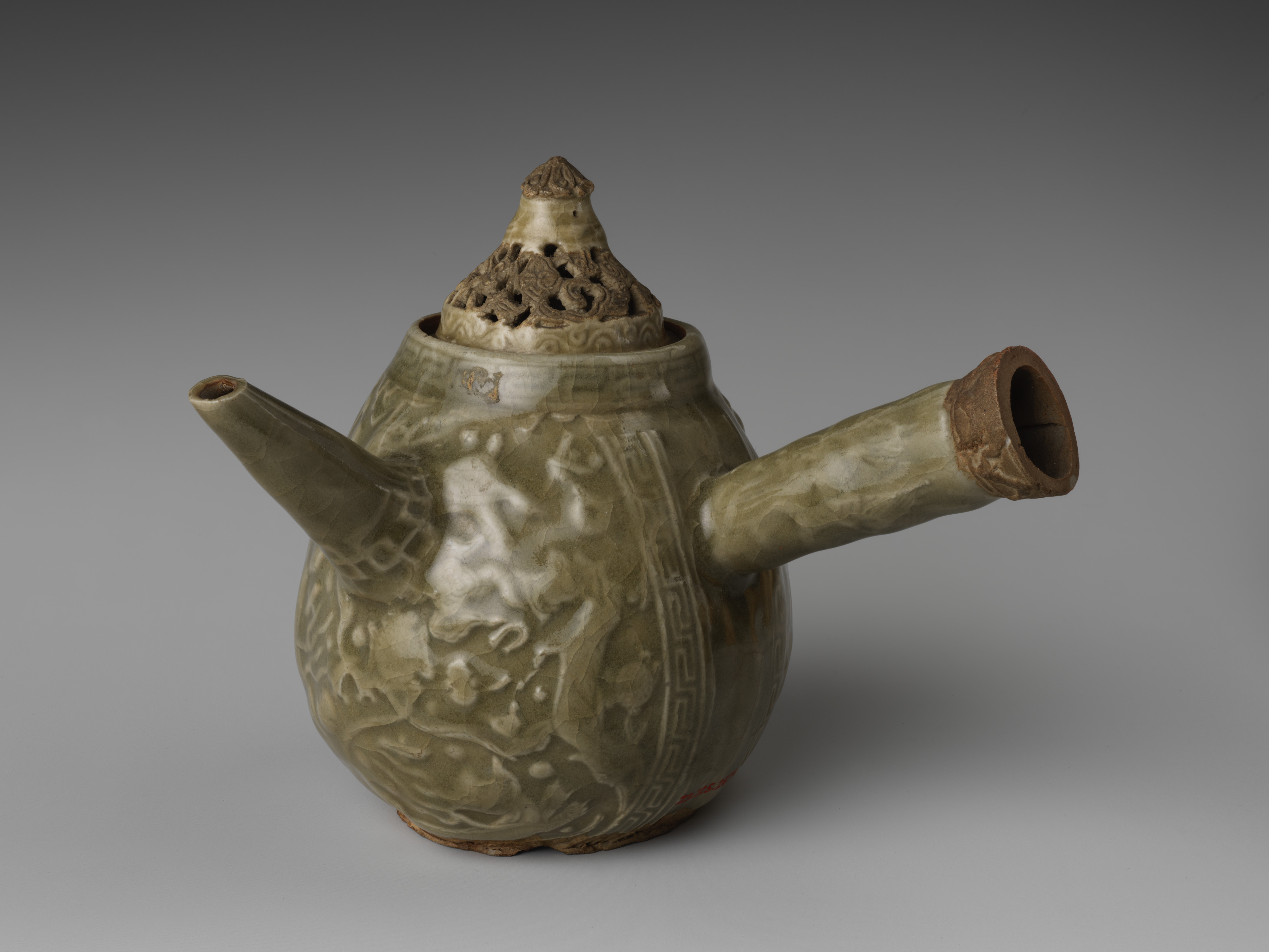
Sencha Teapot (Kyūsu) with Jewel-Chasing Dragons
early 19th century
Stoneware with underglaze blue and red enamel decoration
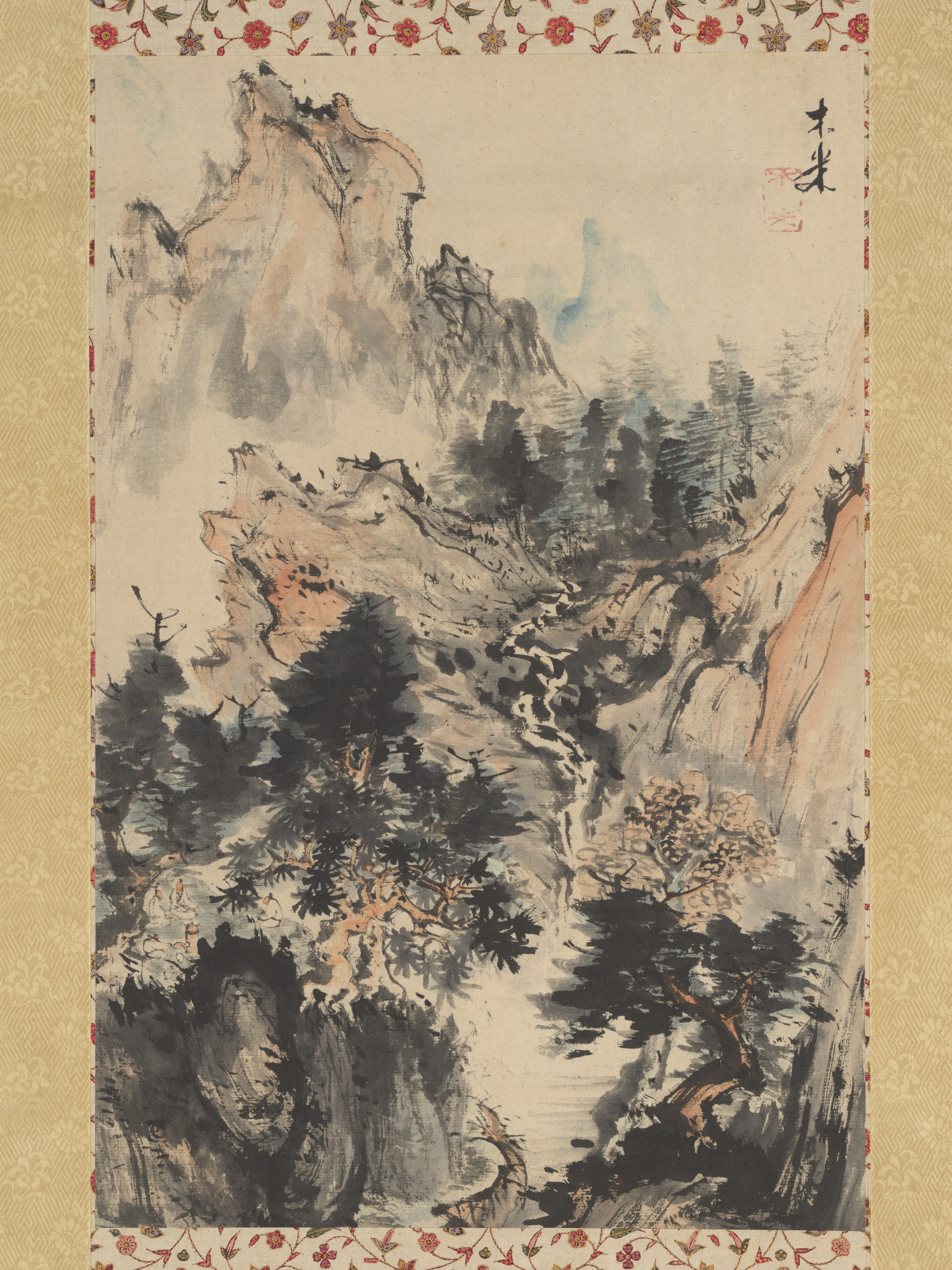
Brewing Tea in the Shade of Trees
1820s
Hanging scroll; ink and color on paper