Biography
Bertha Boynton Lum (1869–1954) was an American artist and printmaker who became one of the earliest and most accomplished Western practitioners of the Japanese woodblock printing technique, producing a distinctive body of work that blended Asian subjects and methods with Western artistic training. Her pioneering efforts helped introduce Japanese and Chinese woodblock printmaking to American artists and audiences in the early twentieth century, and her prints remain prized by collectors for their delicate beauty and historical significance.
Born Bertha Boynton Bull in May 1869 in Tipton, Iowa, she came from a family in which both parents were amateur artists. By 1890 she was living in Duluth, Minnesota, listing her occupation as artist, and in 1895 she enrolled in the design department of the Art Institute of Chicago. She returned to the Art Institute for figure drawing in 1901–1902 and also studied at the Frank Holme School of Illustration in Chicago. Her turn toward Japanese aesthetics owed much to Arthur Wesley Dow's influential 1899 treatise "Composition," whose principles drew on Japanese design.
Lum first traveled to Japan in 1903, spending her seven-week honeymoon there after marrying Burt F. Lum and searching, even then, for a craftsman who could teach her the traditional woodblock method. She returned in 1907 for a fourteen-week stay, during which she studied block cutting with the carver Igami Bonkutsu (1875–1933) in Yokohama and printing with Nishimura Kamakichi. Among the first Western artists to study the technique in Japan, she learned both to cut blocks and to print, and produced much of her work herself. A further six-month visit in 1911 led her to establish a winter home in Tokyo, and in 1912 she was the only female artist to exhibit at the Tokyo International Exhibition.
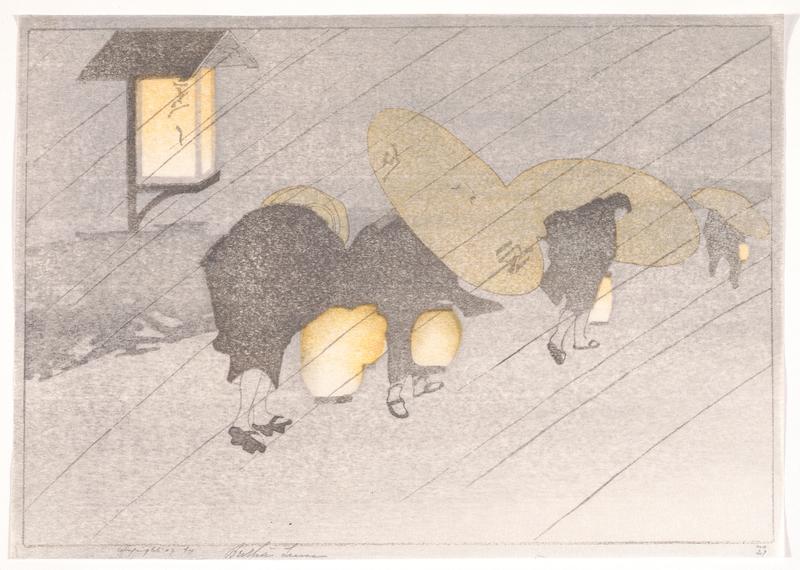
Her prints depict primarily Japanese subjects — figures, landscapes, and scenes drawn from myth and legend — rendered in a style that combines Art Nouveau design sensibilities with Japanese compositional principles. Works such as "The Fox Woman," with its silhouetted fox spirit and drifting foxfires, demonstrate her fascination with Asian folklore and her ability to synthesize Eastern and Western aesthetics. The influence of Art Nouveau is evident in her decorative use of line and her flattened, pattern-oriented compositions, while her Japanese training shows in her printing technique, color palette, and subject matter.
In 1922 Lum moved to China, settling for a time in Peking (Beijing), where she learned Chinese woodcut methods and expanded her subject matter to include Chinese scenes — street vendors, festivals, theatrical performances, and domestic life. For roughly the next thirty years she divided her time between California, China, and Japan. Her Chinese-subject prints are notable for their vivid observation of daily life and their sympathetic portrayal of Chinese culture and customs, and she continued making prints into the mid-1930s.
Lum earned recognition throughout her career. In 1908 the Society of Arts and Crafts in Boston named her a master craftsman, and in 1915 she was awarded a silver medal for her color woodcuts at the Panama-Pacific International Exposition in San Francisco. She exhibited at the Art Institute of Chicago and other venues, and she recorded her Asian travels and artistic experiences in two books: "Gods, Goblins, and Ghosts" (1922) and "Gangplanks to the East" (1936).
Lum left China in 1953 and moved to Genoa, Italy, with her daughter, and she died there in February 1954. Her prints are held in major collections including the Library of Congress, the Fine Arts Museums of San Francisco, the Smithsonian American Art Museum, the Brooklyn Museum, and the Amon Carter Museum of American Art.
Key Facts
- Active Period
- 1869–1954
- Nationality
- 🇺🇸United States
- Movement
- Shin-hanga
- Works Indexed
- 48
Frequently Asked Questions
Bertha Boynton Lum (1869–1954) was an American artist and printmaker who became one of the earliest and most accomplished Western practitioners of the Japanese woodblock printing technique, producing a distinctive body of work that blended Asian subjects and methods with Western artistic training. Her pioneering efforts helped introduce Japanese and Chinese woodblock printmaking to American artists and audiences in the early twentieth century, and her prints remain prized by collectors for their delicate beauty and historical significance.
Bertha Lum was active from 1869 to 1954. They were associated with the Shin-hanga movement.
Bertha Lum's work was shaped by the Shin-hanga tradition in Japanese woodblock printmaking. Shin-hanga: ## What is Shin-hanga? Shin-hanga (新版画), literally "new prints," is the early twentieth-century revival of the collaborative Japanese woodblock workshop, organized between roughly 1915 and 1960 by the Tokyo publisher Watanabe Shōzaburō (1885–1962) and a handful of competing houses.
Bertha Lum's prints frequently feature figures, landscapes, mythology, daily life, seascapes, children.
Original prints by Bertha Lum can be found in collections including Minneapolis Institute of Art, Art Institute of Chicago, Art of Japan, Japanese Art Open Database.
Woodblock Prints by Bertha Lum (48)
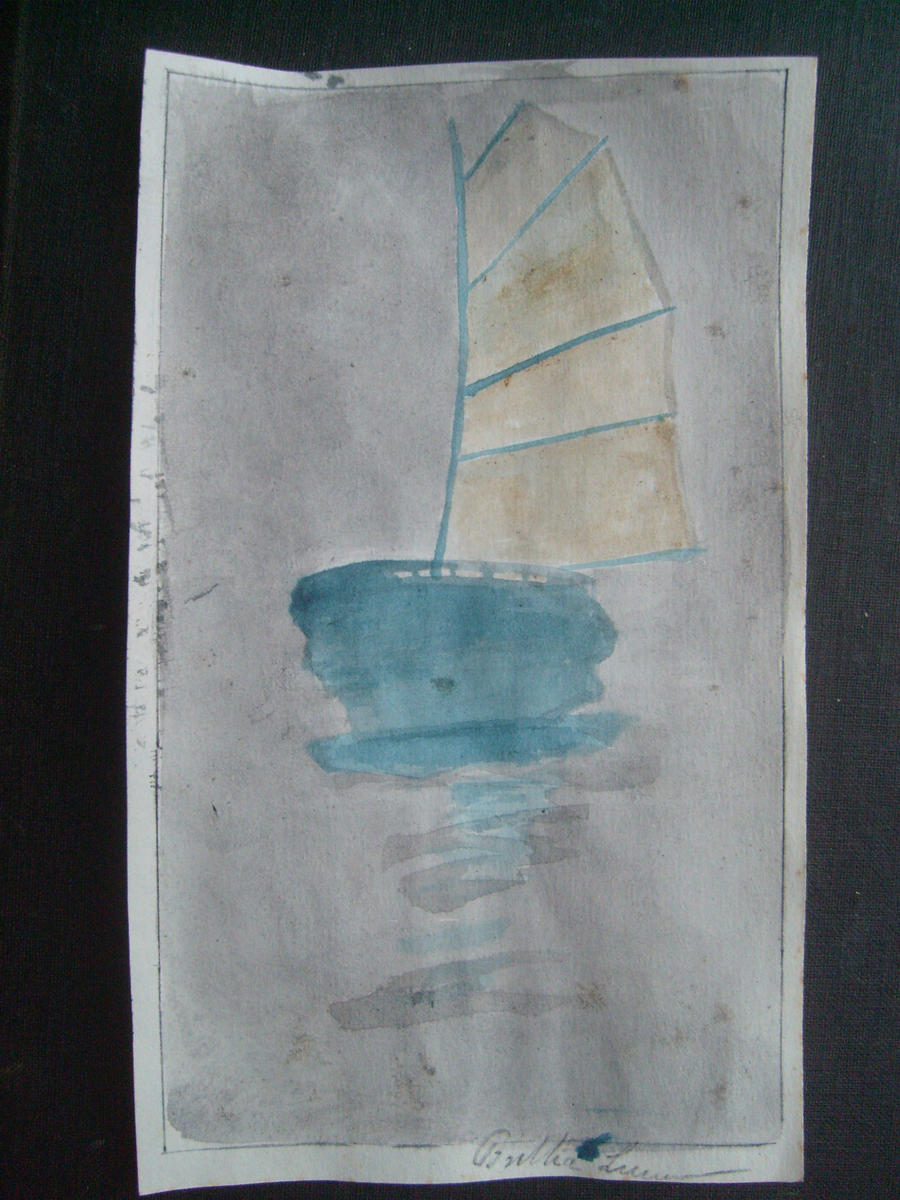
Sailboat
1900
Drawing

The Home Coming
1905
Color woodcut on Japan paper, impression from yellow block
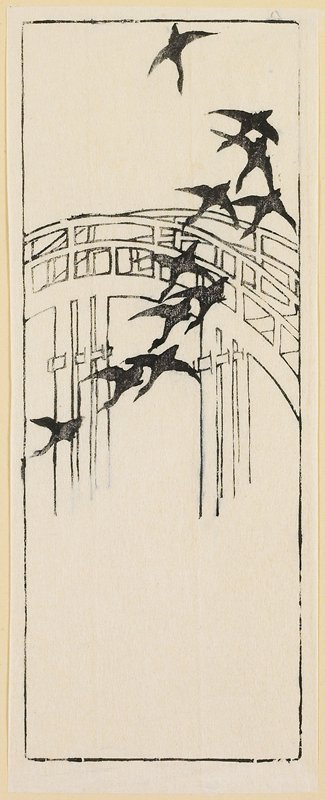
The Homecoming
1905
Color woodcut on Japan paper, impression from key block

O Yuki
1905
Color woodcut
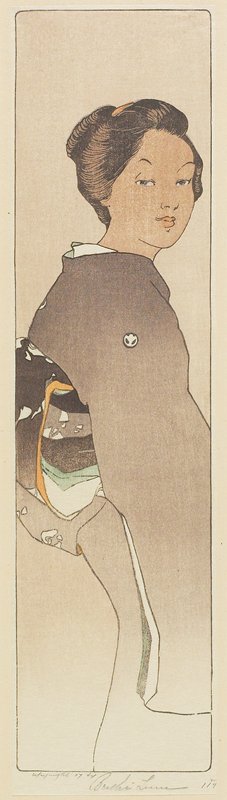
O Fuji San
1907
Color woodcut
Rainy Twilight
1907
Color woodcut
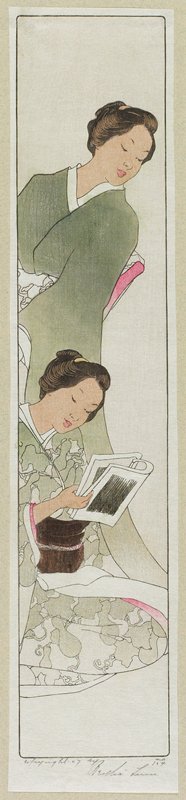
Sisters
1907
Color woodcut
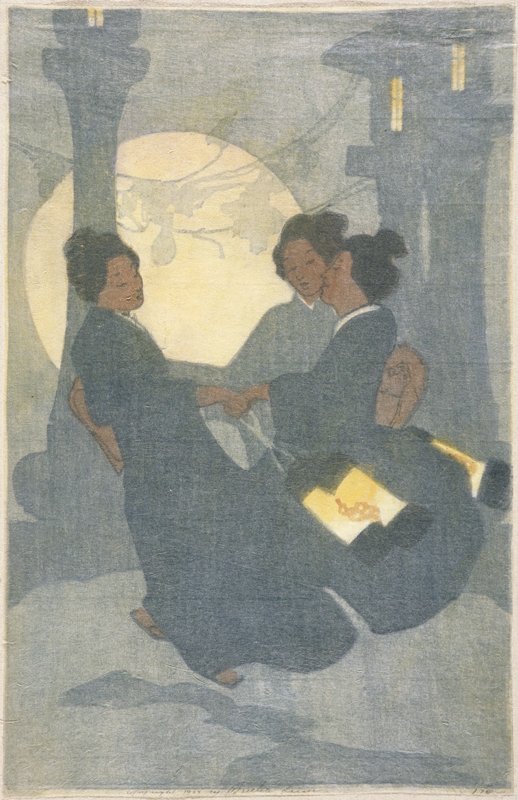
Fox Women
1907
Color woodcut
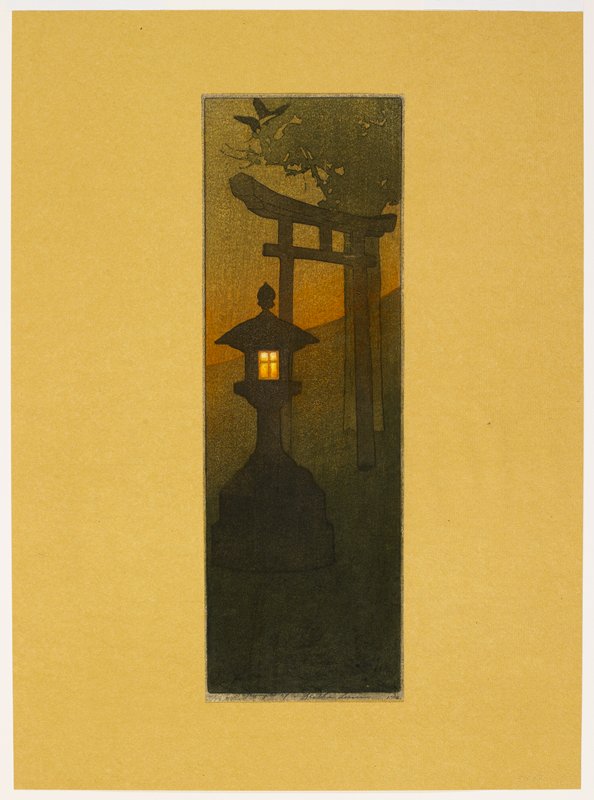
Evening
1907
Color woodcut
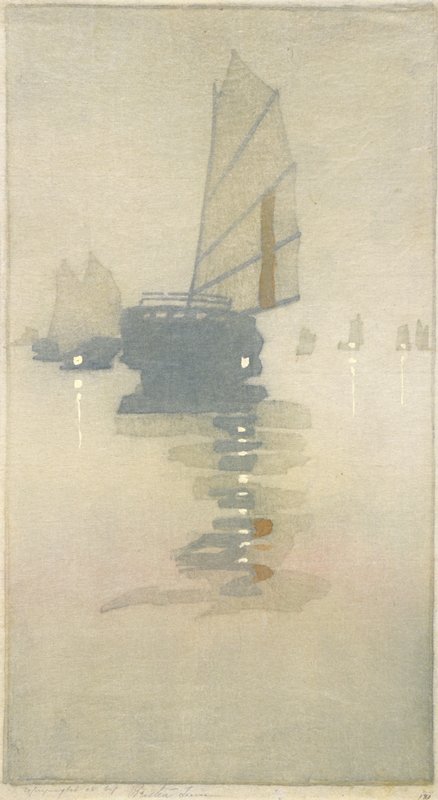
Junks on the Inland Sea
1908
Color woodcut
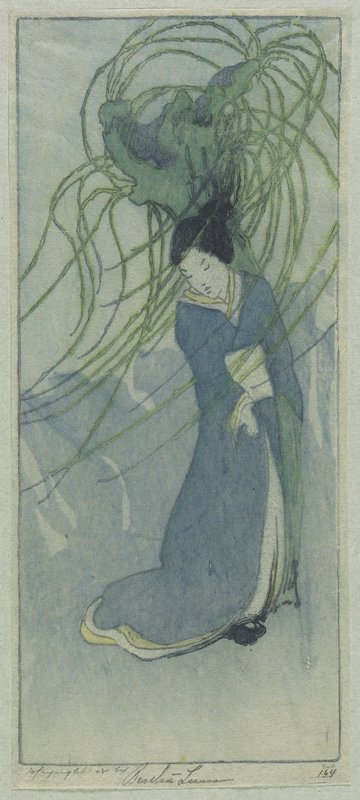
Aoyagi (Green Willow)
1908
Color woodcut

Bertha Lum
1909
Woodblock print
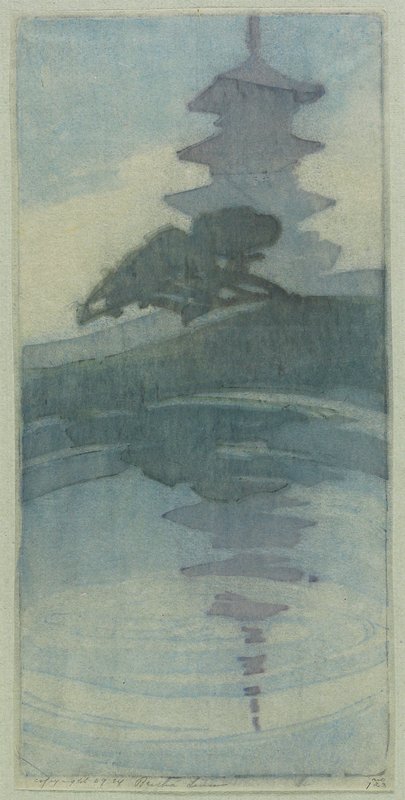
The Pagoda
1909
Color woodcut
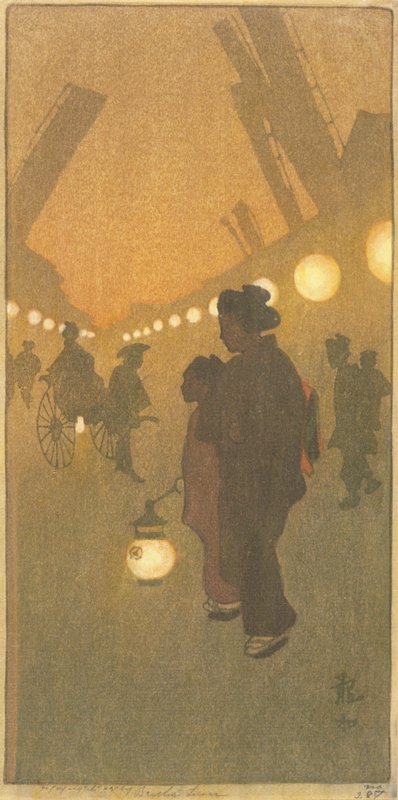
Theatre Street, Yokohama
1909
Color woodcut
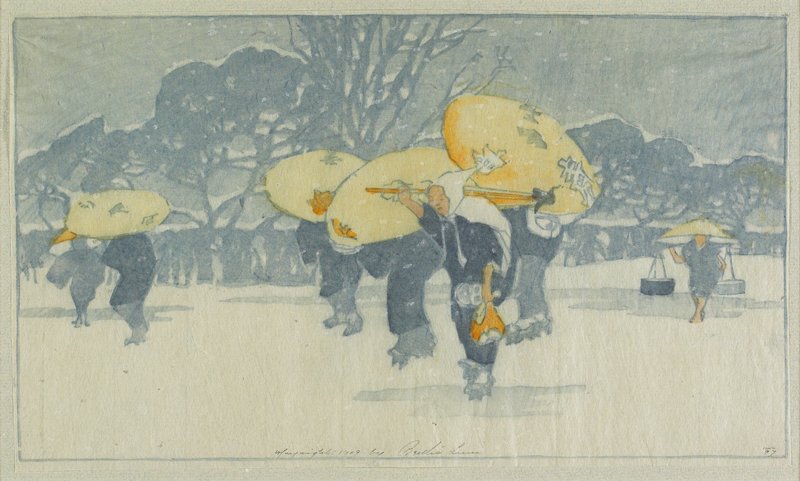
Winter
1909
Color woodcut
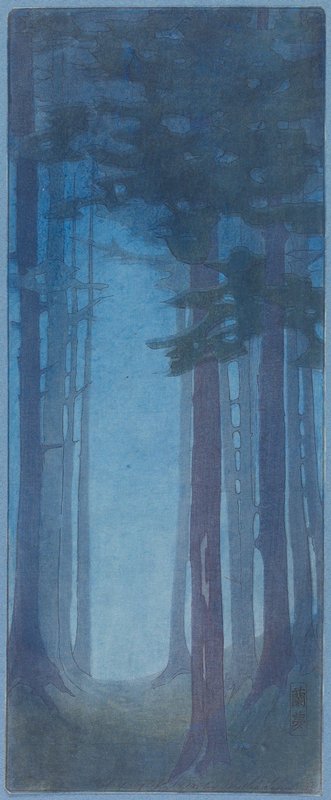
Pines
1912
Color woodcut
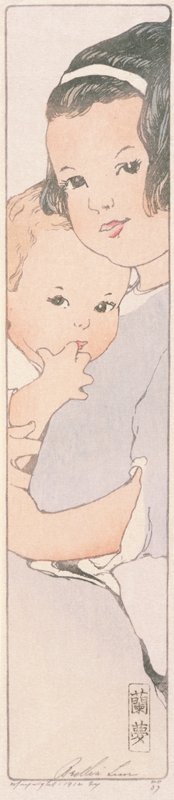
Children
1912
Color woodcut

Fishermen
1912
Color woodcut
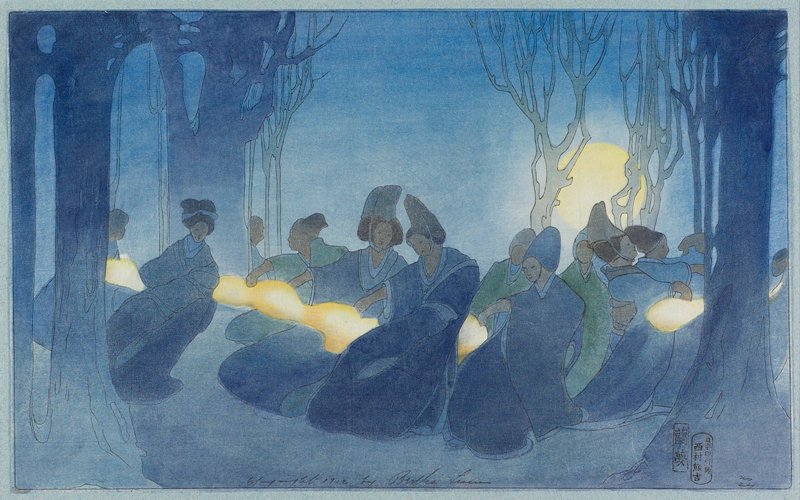
Goblin Dance
1912
Color woodcut
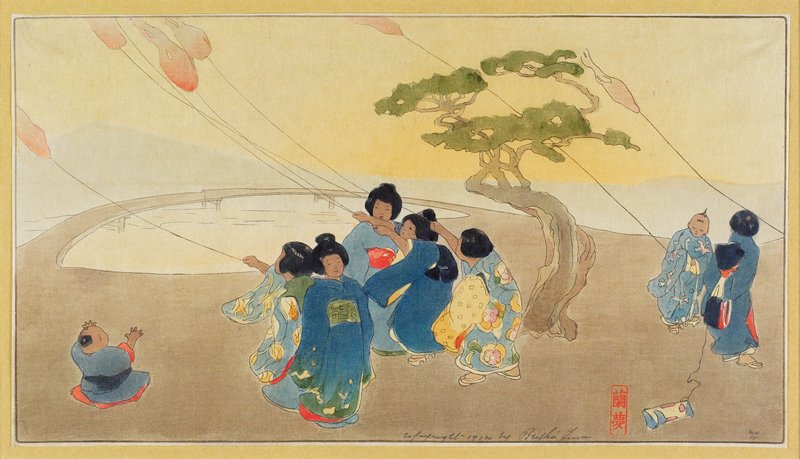
Kites
1912
Color woodcut

On the River
1912
Color woodcut

Peter
1912
Color woodcut
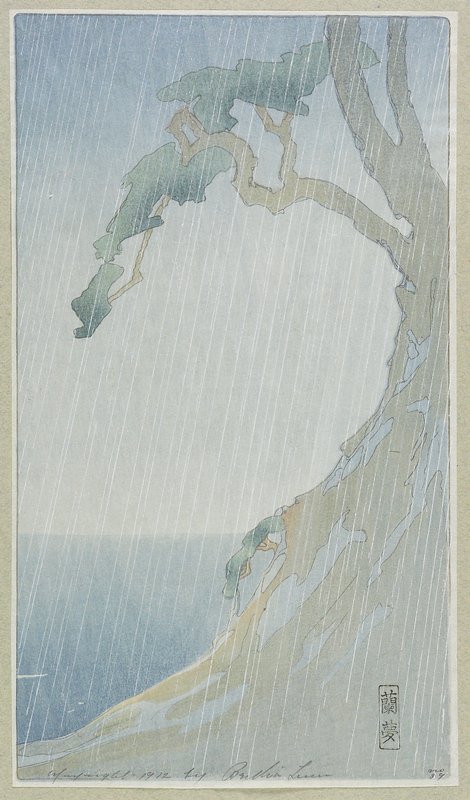
Rain
1912
Color woodcut
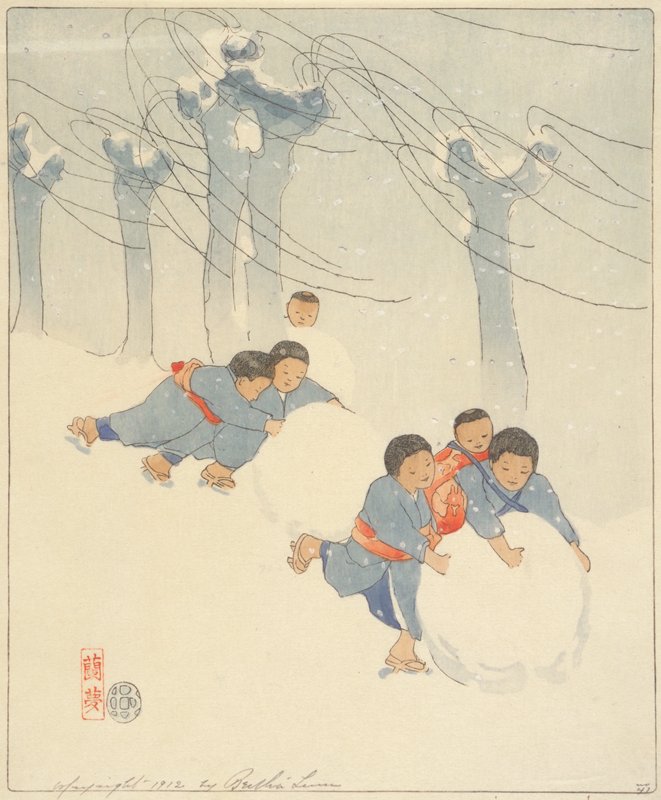
Snowballs
1912
Color woodcut on Japan paper