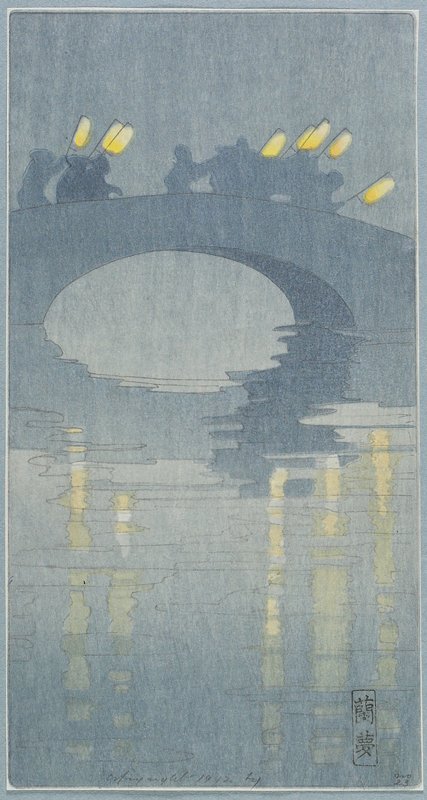
The Bridge
by Bertha Lum
- Date:
- 1912
- Medium:
- Color woodcut
- Dimensions:
- 23.8 × 12.5 cm
- Source:
- Minneapolis Institute of Art
Description
A bridge spans water in this 1912 color woodcut, one of the fundamental structural and symbolic elements of the Japanese landscape. Bridges in Japanese art carry meanings beyond their practical function — they represent connection, transition, and the human imposition of order upon natural terrain. Famous bridges like the Shinkyo at Nikko or the many arched bridges of shrine complexes have been depicted countless times by Japanese printmakers. Lum's version focuses on the bridge as a compositional element, its arc or horizontal line creating a visual anchor within the surrounding landscape. Her Western training in perspective may inflect the spatial treatment differently from a purely Japanese approach, creating a subtle hybrid quality that characterized much of her printmaking.
More Prints by Bertha Lum


More Landscapes Prints

Lake Kugushi in Wakasa Province (Wakasa Kugushiko), from the series Souvenirs of Travel I (Tabi miyage dai isshu)"
Wakasa Kugushiko
1920
Color woodblock print; oban
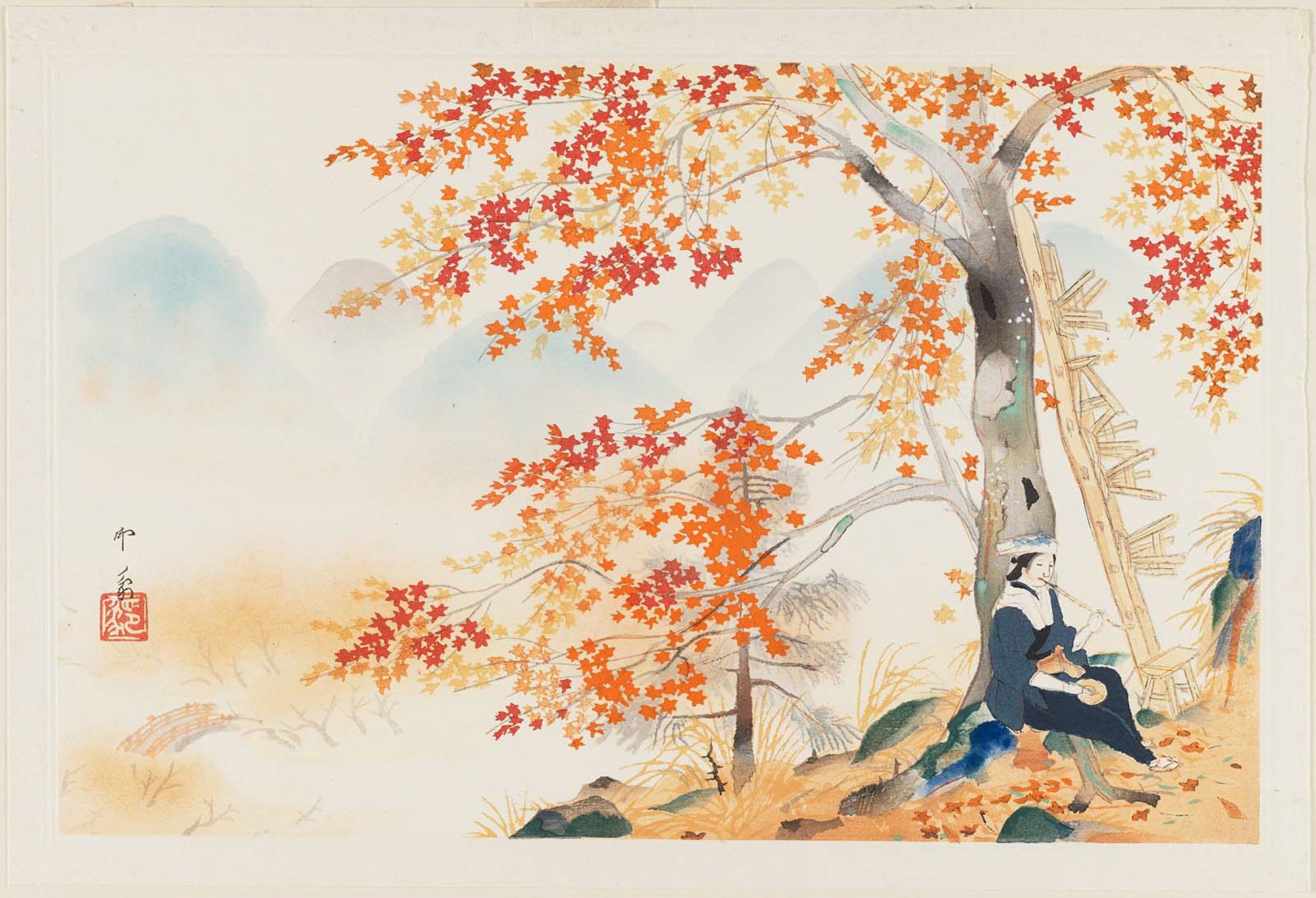
Autumn Maple Leaves at Takao, from the album Eight Views of Kyoto (Kyôto hakkei)
Woodblock print

The Beach at Kaiganji in Sanuki Province (Sanuki Kaiganji no hama), from the series "Collection of Views of Japan II, Kansai Edition (Nihon fukei shu II Kansai hen)"
1934
Color woodblock print; oban

Tea Kettle, section of a sheet from the series "Mirror of Stone Rubbings of Views of the Provinces" (Kohon meihitsu ishizuri kagami)
n.d.
Woodblock print; ishizuri-e, section of harimaze sheet
Featured in Collections
Curated cross-cuts that include this print.
Frequently Asked Questions
The Bridge was created by Bertha Lum in 1912.
The Bridge depicts landscapes and bridges.
The Bridge measures 23.8 × 12.5 cm.