Biography
Fritz Capelari was an Austrian painter and printmaker who holds a distinctive and important place in the history of Japanese woodblock prints as one of the very first Western artists to produce shin-hanga. Born Friedrich Capelari in 1884 in Bleiburg, in the Austro-Hungarian Empire, he was a cosmopolitan artist whose fascination with Asia led him to create a body of woodblock prints that represent some of the earliest publications in the shin-hanga movement. They were produced by the pioneering publisher Watanabe Shozaburo, who around the same period also began publishing the work of another Western pioneer of the medium, the English artist Charles W. Bartlett.
Capelari received his artistic training in Vienna, one of the great cultural capitals of Europe, during a period of extraordinary creative ferment. The early twentieth century in Vienna was the era of the Secession movement, Gustav Klimt, Egon Schiele, and a broader cultural atmosphere that valued experimentation, cross-cultural exchange, and the synthesis of decorative and fine arts. This environment, with its openness to non-Western aesthetic traditions and its emphasis on the unity of art and craft, provided an ideal background for an artist who would later engage deeply with the Japanese printmaking tradition. Capelari enrolled at the Academy of Fine Arts in Vienna in 1906, where he developed his skills in painting, drawing, and graphic arts, and he left the academy with the Griepenkerl award in recognition of his academic and artistic merits.
Capelari's life took a transformative turn in 1911, when he left Europe for Asia — reportedly on a commission for the London insurer Lloyd's — and spent the next several years traveling and painting across the region, including Shanghai, Java, and Japan. His European eye found endless fascination in the landscapes, culture, and people he encountered, and he brought to his observations a sophisticated understanding of composition, color, and light that reflected his European training. By the spring of 1915 he was in Tokyo, where he held an exhibition of his watercolors.
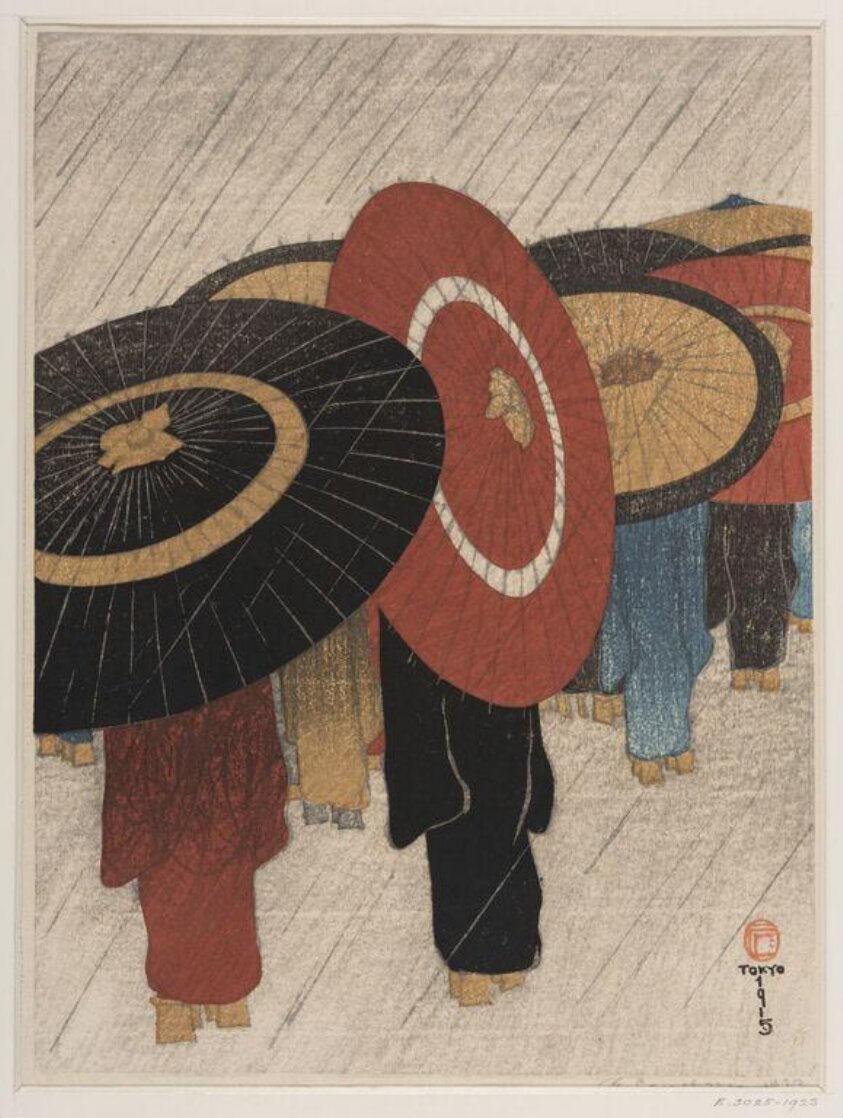
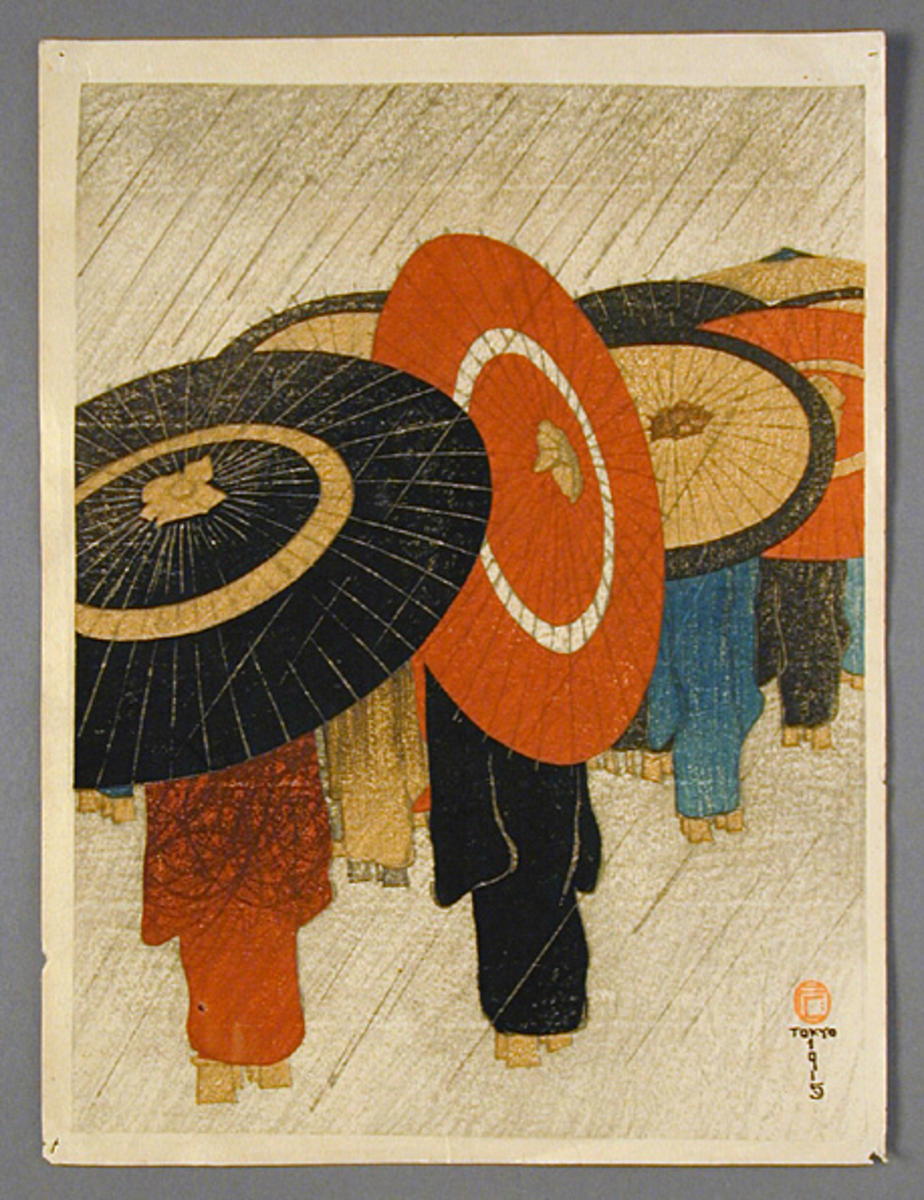
It was there that Capelari's work came to the attention of Watanabe Shozaburo, the visionary publisher who was in the process of launching what would become the shin-hanga movement. Watanabe had been seeking an artist trained in the Western manner of painting, and he recognized in Capelari someone whose European sensibility could bring a fresh perspective to the traditional Japanese woodblock print medium. In 1915 Watanabe began issuing Capelari's designs as woodblock prints — beginning with Returning Home in the Rain — employing skilled carvers and printers to translate the Austrian artist's watercolor designs into the traditional medium, and completing roughly a dozen designs within the year. These prints were among the very earliest publications in Watanabe's shin-hanga program, predating or coinciding with the publisher's work with Japanese artists who would later become the stars of the movement, such as Hashiguchi Goyo and Ito Shinsui.
Capelari's shin-hanga prints depict a range of Japanese subjects, including portraits of women, landscapes, temple and shrine scenes, and views of daily life. His approach to these subjects reflects his European training in ways that distinguish his prints from those of his Japanese contemporaries. His use of light and shadow tends to be more dramatic and atmospheric than is typical of traditional Japanese printmaking, creating a sense of depth and three-dimensionality that gives his images a distinctive quality. His compositional sense, while clearly influenced by Japanese aesthetics, also shows the influence of European painting traditions, particularly in his handling of perspective and spatial relationships.
Among his most admired prints are his portraits of Japanese women, which combine a Western approach to portraiture with the elegance and refinement of the bijin-ga tradition. These prints show women in kimono, often in interior settings or against simple backgrounds, rendered with a combination of European naturalism and Japanese decorative sensitivity that creates images of remarkable beauty and sophistication. His landscape prints are equally accomplished, capturing the misty mountains, serene waterways, and architectural beauties of Japan with a painter's eye for atmospheric effects and color harmonies.
The technical quality of Capelari's shin-hanga prints is high, reflecting the skill of Watanabe's craftsmen and the publisher's insistence on the finest materials and production methods. The prints use traditional Japanese materials — handmade washi paper, mineral and vegetable pigments — and traditional techniques including multiple blocks for different colors, careful registration, and the use of bokashi (gradated printing) to create subtle tonal effects. The result is prints that combine the visual richness and technical virtuosity of Japanese printmaking with the artistic vision of a skilled European painter.
As the first Westerner to design prints for Watanabe, Capelari helped demonstrate that the traditional Japanese woodblock medium could accommodate Western artistic perspectives while retaining its distinctive aesthetic qualities, and his prints played a part in the international market for shin-hanga that Watanabe was actively cultivating. Beyond his shin-hanga work, Capelari remained active as a painter, producing oils and watercolors that reflected his travels and interests. He left Japan in 1922 and spent much of the following decade traveling in Europe before returning to Asia in 1932; in his later years he settled in his hometown of Bleiburg and became associated with the Carinthia Art Society. It is nonetheless his Japanese woodblock prints that have most secured his place in art history, both for their intrinsic artistic quality and for their historical significance as pioneering works in the shin-hanga movement.
Fritz Capelari died in 1950. His legacy in the world of Japanese prints is that of a pioneering figure who helped bridge Eastern and Western artistic traditions at a crucial moment in the development of modern Japanese printmaking. His prints are held in public and private collections internationally. As one of the first Western artists to produce shin-hanga, Capelari occupies a unique position in the history of Japanese art, demonstrating that the traditional woodblock print medium could serve as a meeting point for different artistic cultures and perspectives. His work remains an important testament to the international dimensions of the shin-hanga movement and to the enduring appeal of cross-cultural artistic exchange. The prints he created with Watanabe Shozaburo beginning in 1915 stand among the founding works of the shin-hanga revival, and his contribution to this transformative moment in Japanese art history deserves wider recognition than it has sometimes received.
Key Facts
- Active Period
- 1884–1950
- Nationality
- 🇦🇹Austria
- Movement
- Shin-hanga
- Works Indexed
- 21
Frequently Asked Questions
Fritz Capelari was an Austrian painter and printmaker who holds a distinctive and important place in the history of Japanese woodblock prints as one of the very first Western artists to produce shin-hanga. Born Friedrich Capelari in 1884 in Bleiburg, in the Austro-Hungarian Empire, he was a cosmopolitan artist whose fascination with Asia led him to create a body of woodblock prints that represent some of the earliest publications in the shin-hanga movement. They were produced by the pioneering publisher Watanabe Shozaburo, who around the same period also began publishing the work of another Western pioneer of the medium, the English artist Charles W. Bartlett.
Fritz Capelari was active from 1884 to 1950. They were associated with the Shin-hanga movement.
Fritz Capelari's work was shaped by the Shin-hanga tradition in Japanese woodblock printmaking. Shin-hanga: ## What is Shin-hanga? Shin-hanga (新版画), literally "new prints," is the early twentieth-century revival of the collaborative Japanese woodblock workshop, organized between roughly 1915 and 1960 by the Tokyo publisher Watanabe Shōzaburō (1885–1962) and a handful of competing houses.
Fritz Capelari's prints frequently feature bijin-ga, seascapes, landscapes, rain, boats & ships, daily life.
Original prints by Fritz Capelari can be found in collections including Art of Japan, ukiyo-e.org, Victoria and Albert Museum, Japanese Art Open Database.
External Resources
Woodblock Prints by Fritz Capelari (21)
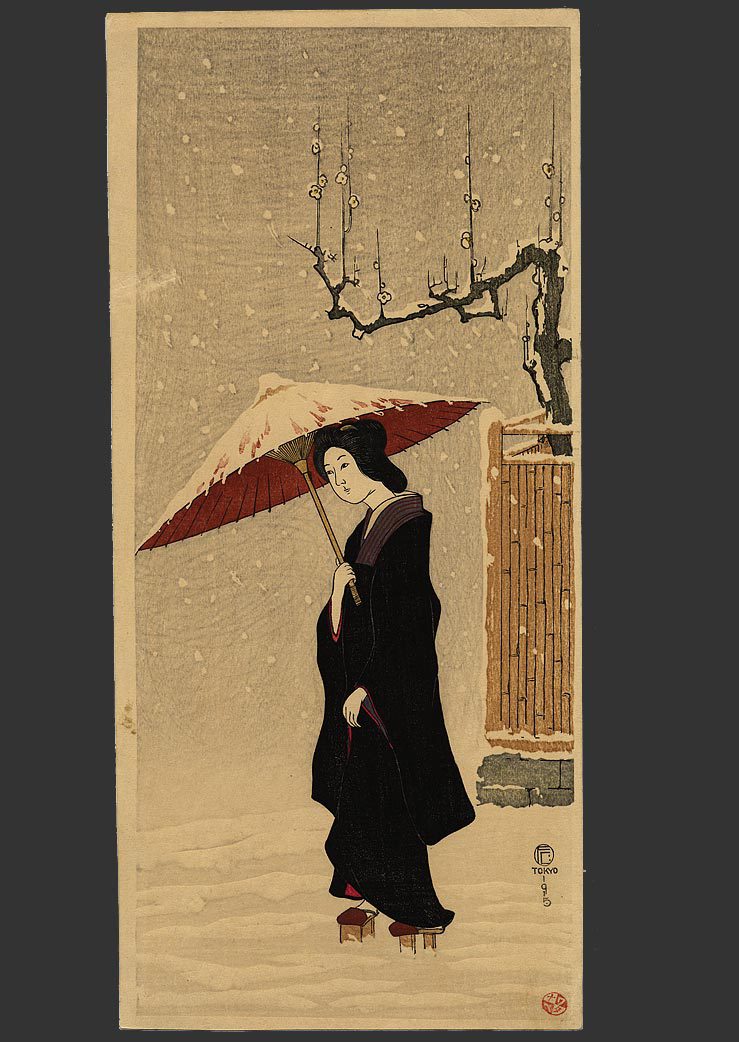
Woman in Blue Kimono
1915
Color woodblock print
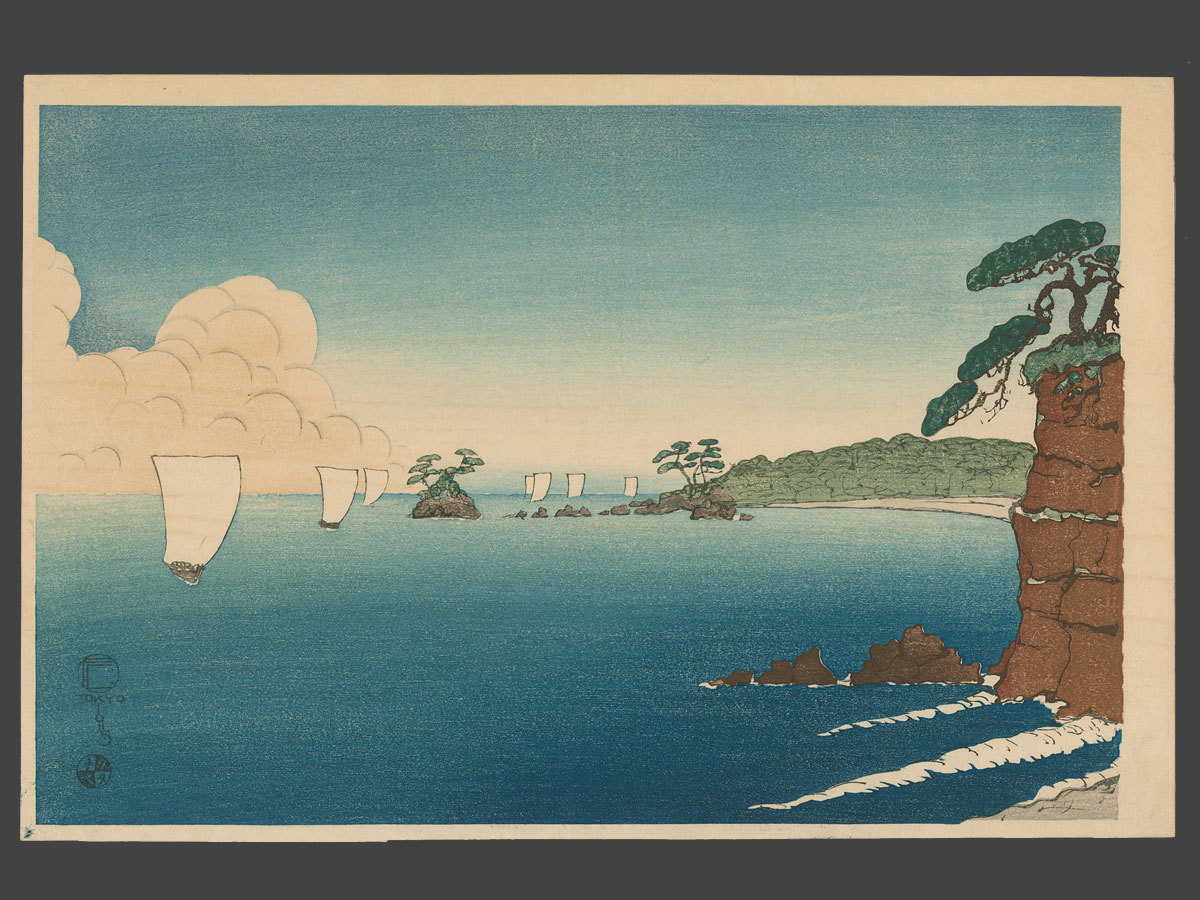
Islands at Matsushima
1915
Woodblock print
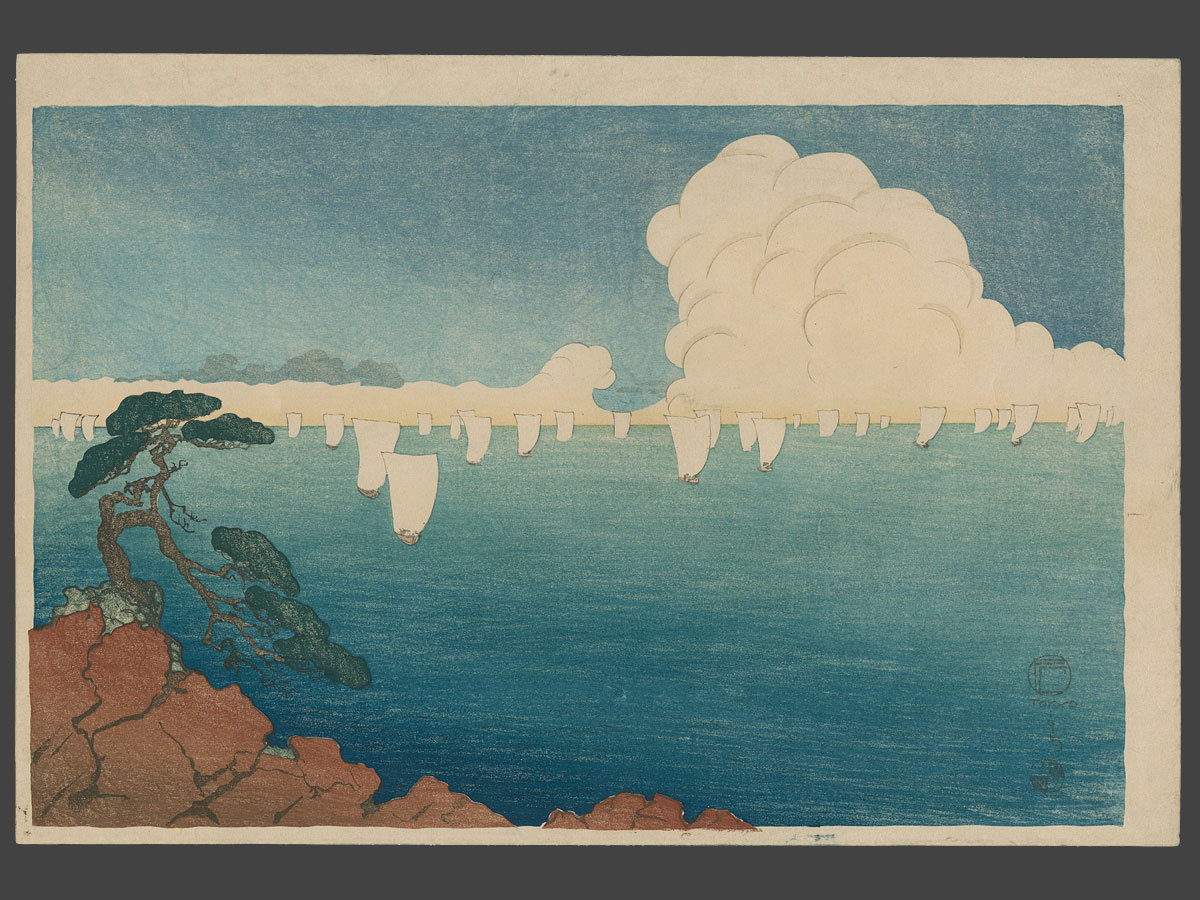
Sailboats at Matsushima
1915
Woodblock print

SAILING BOATS
1915
Woodblock print

Umbrellas
1915
Woodblock print, ink and color on paper
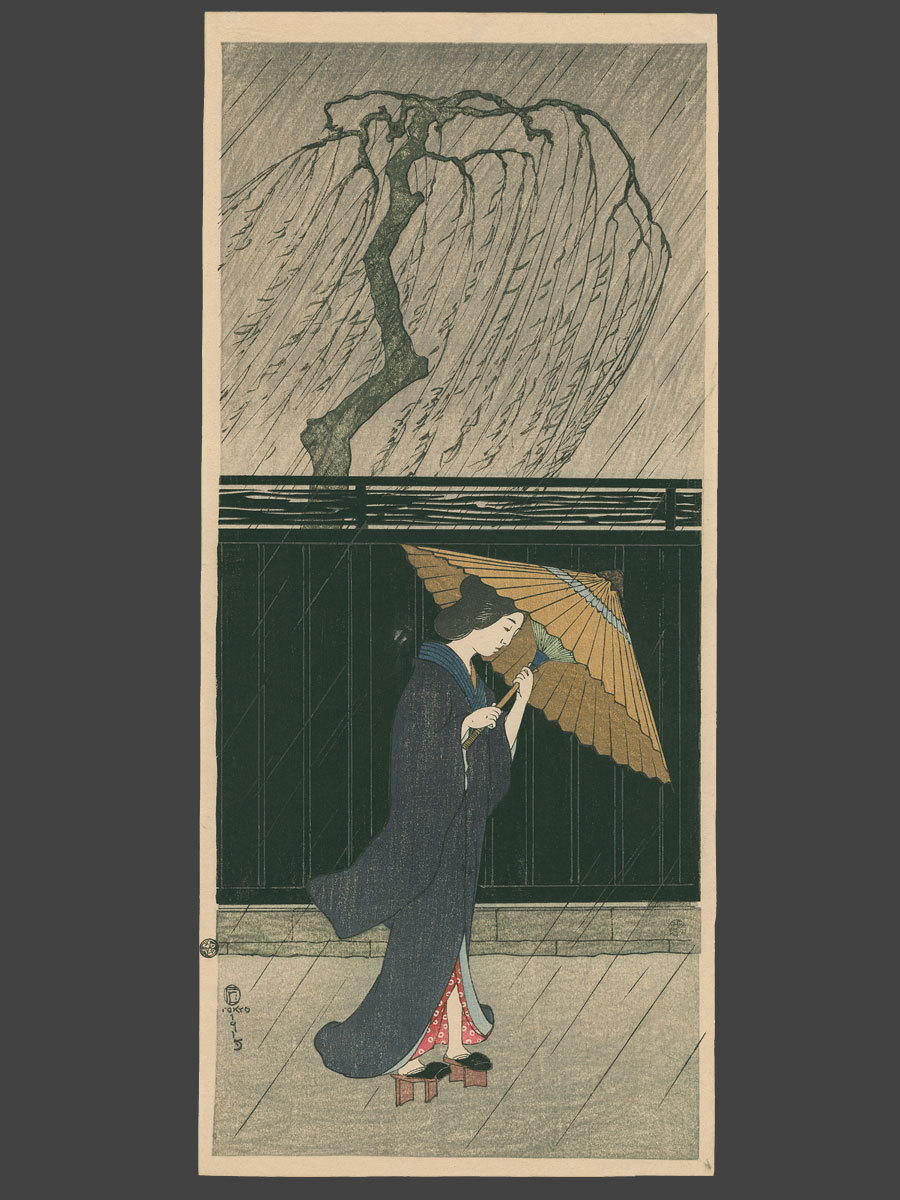
Woman in the Rain
1915
Woodblock print
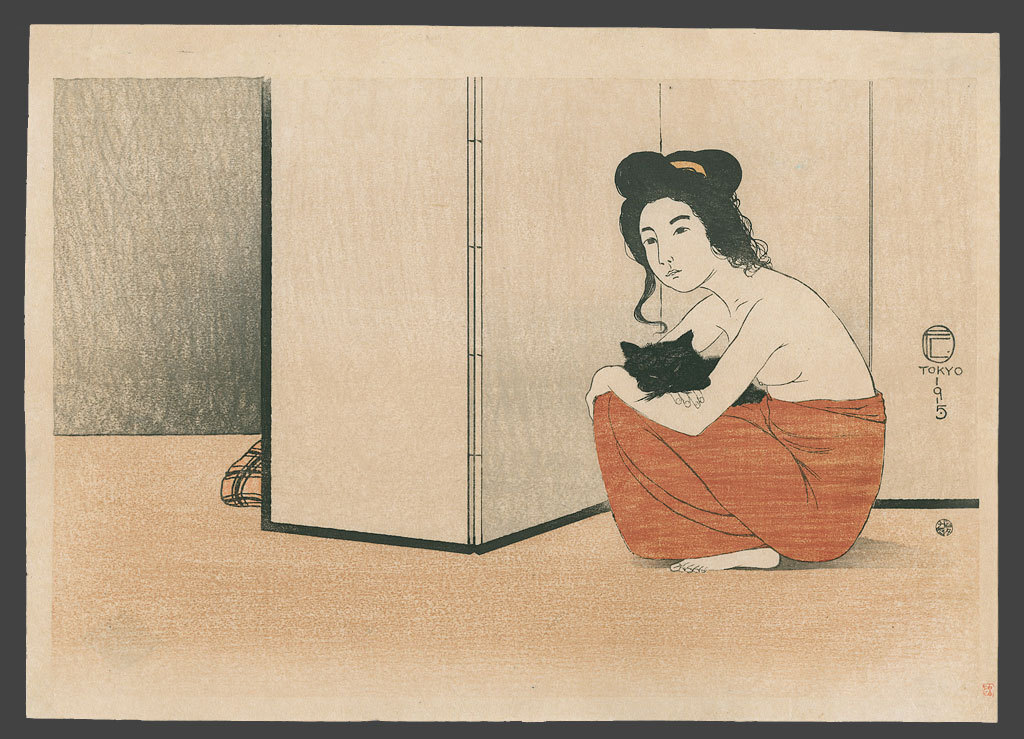
Nude Woman Holding a Black Cat
1915
Woodblock print
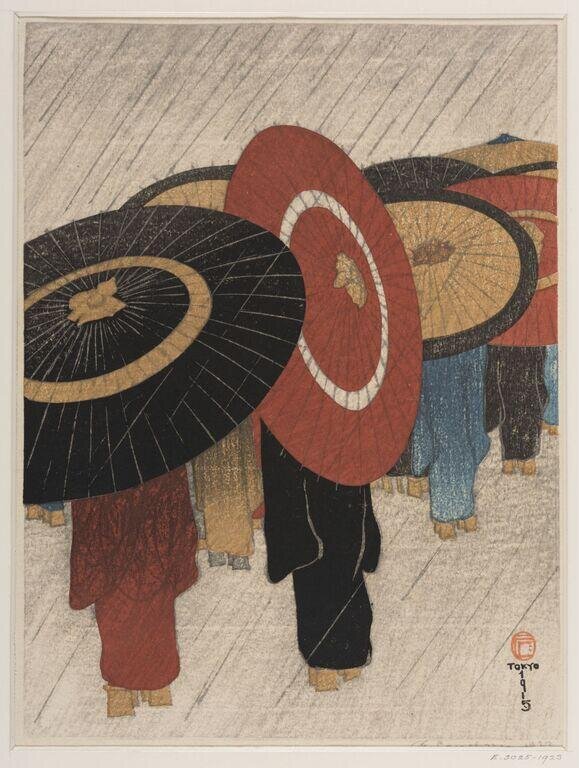
Rain Time
1915
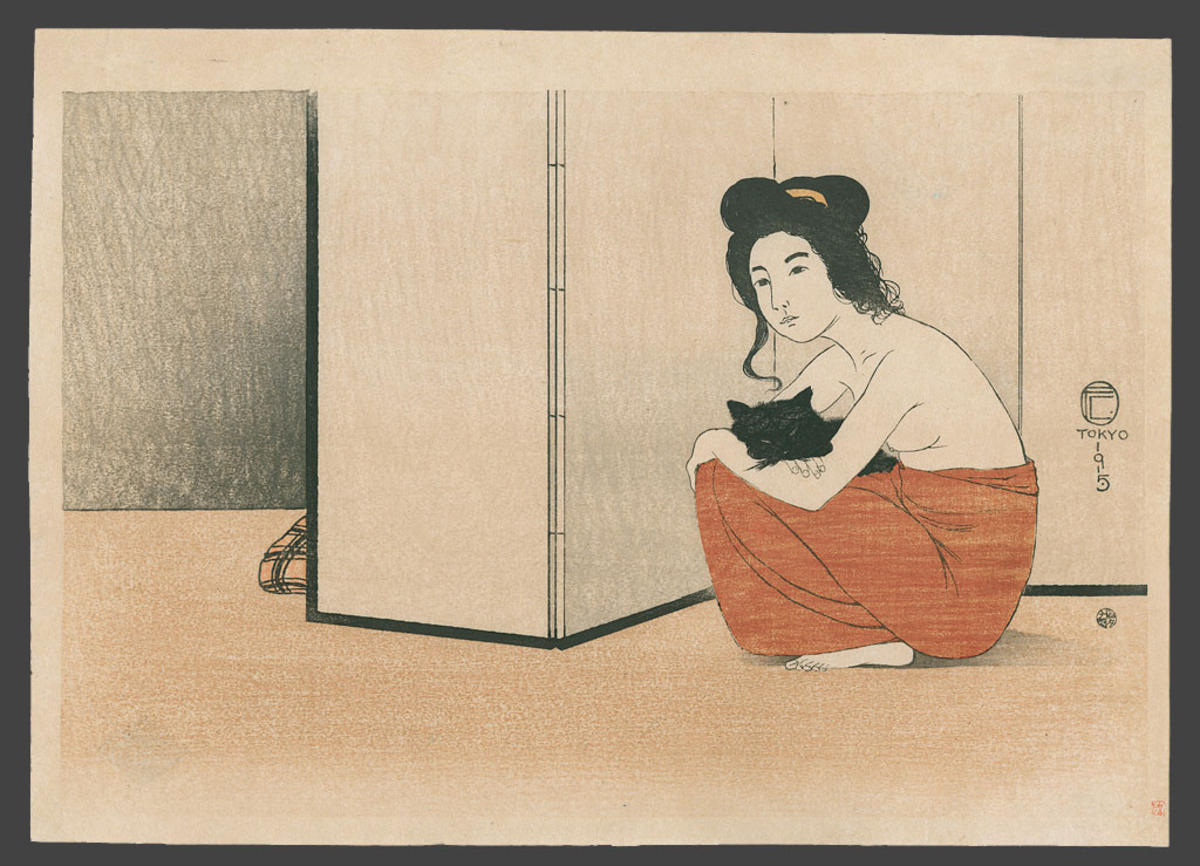
TotalCount
1915
Woodblock print
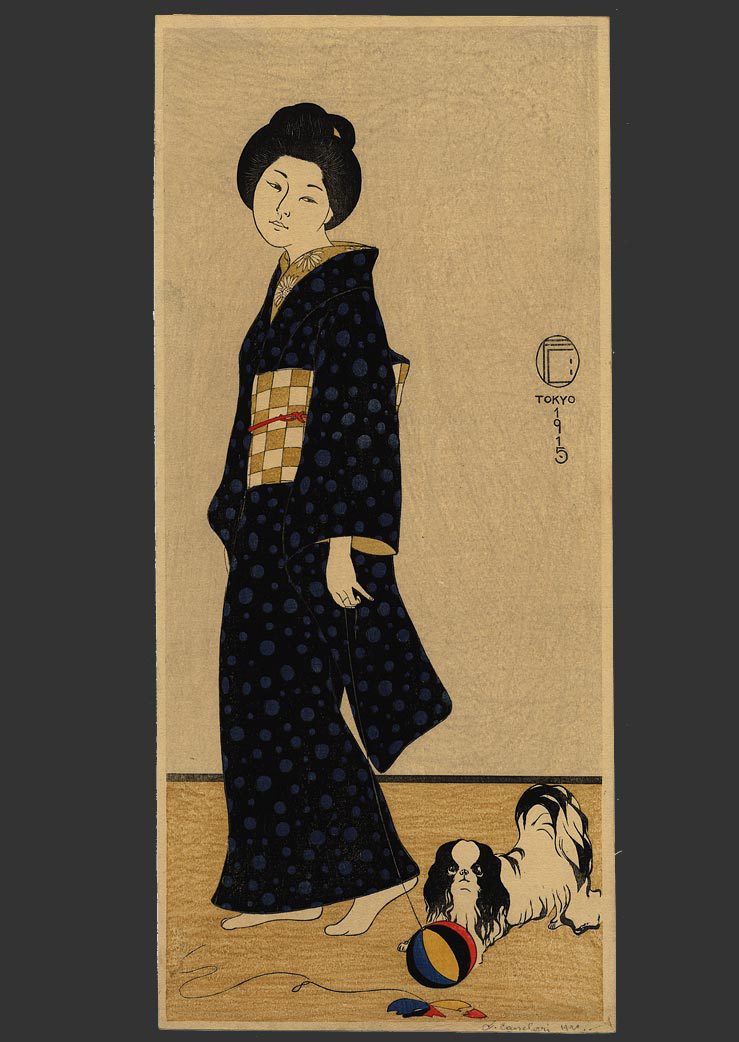
Woman with Parasol
1915
Color woodblock print
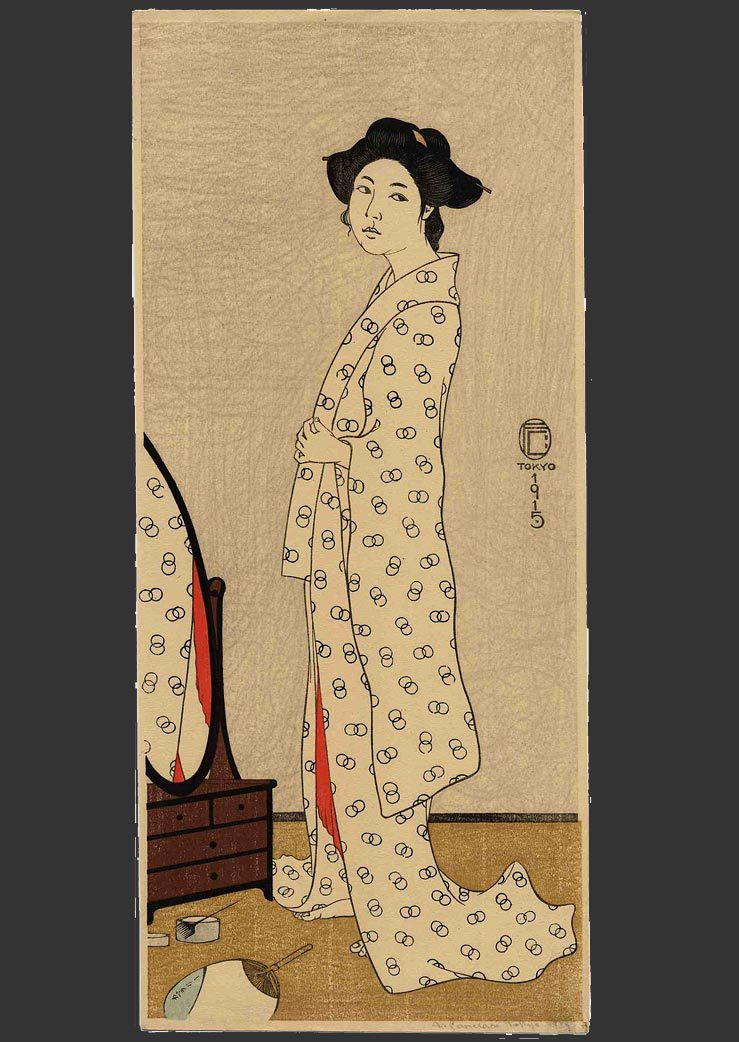
Woman standing before a mirror
1915
Woodblock print
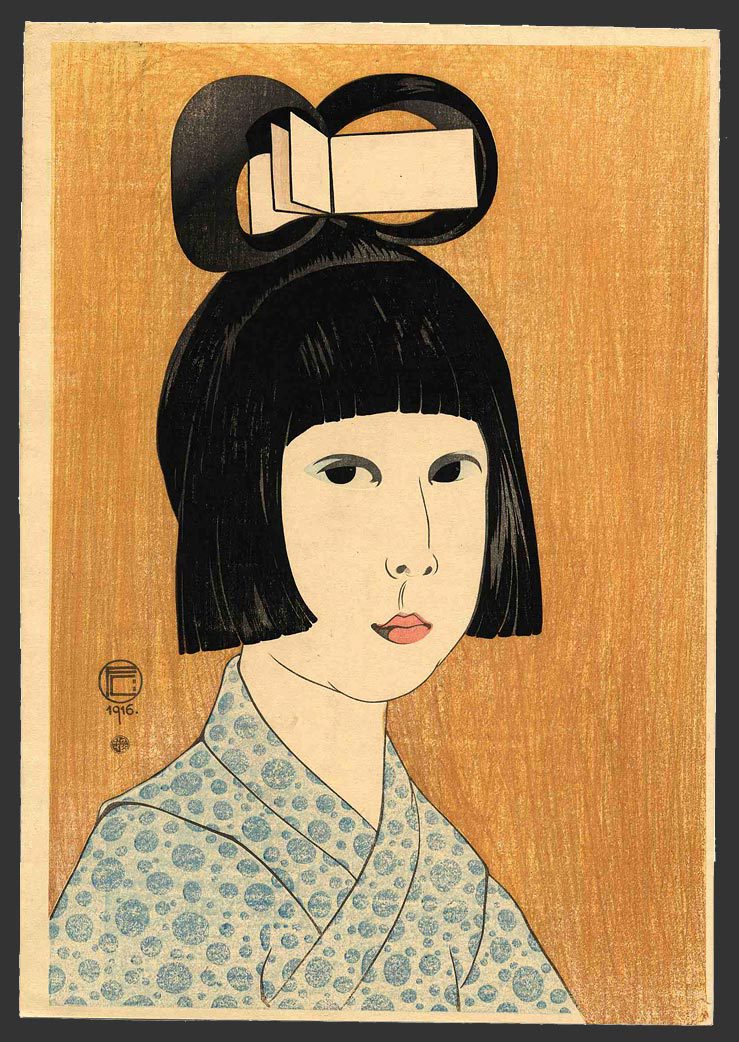
(Title unknown) Portrait of a Girl
1916
Woodblock print

A Japanese Beauty
1920
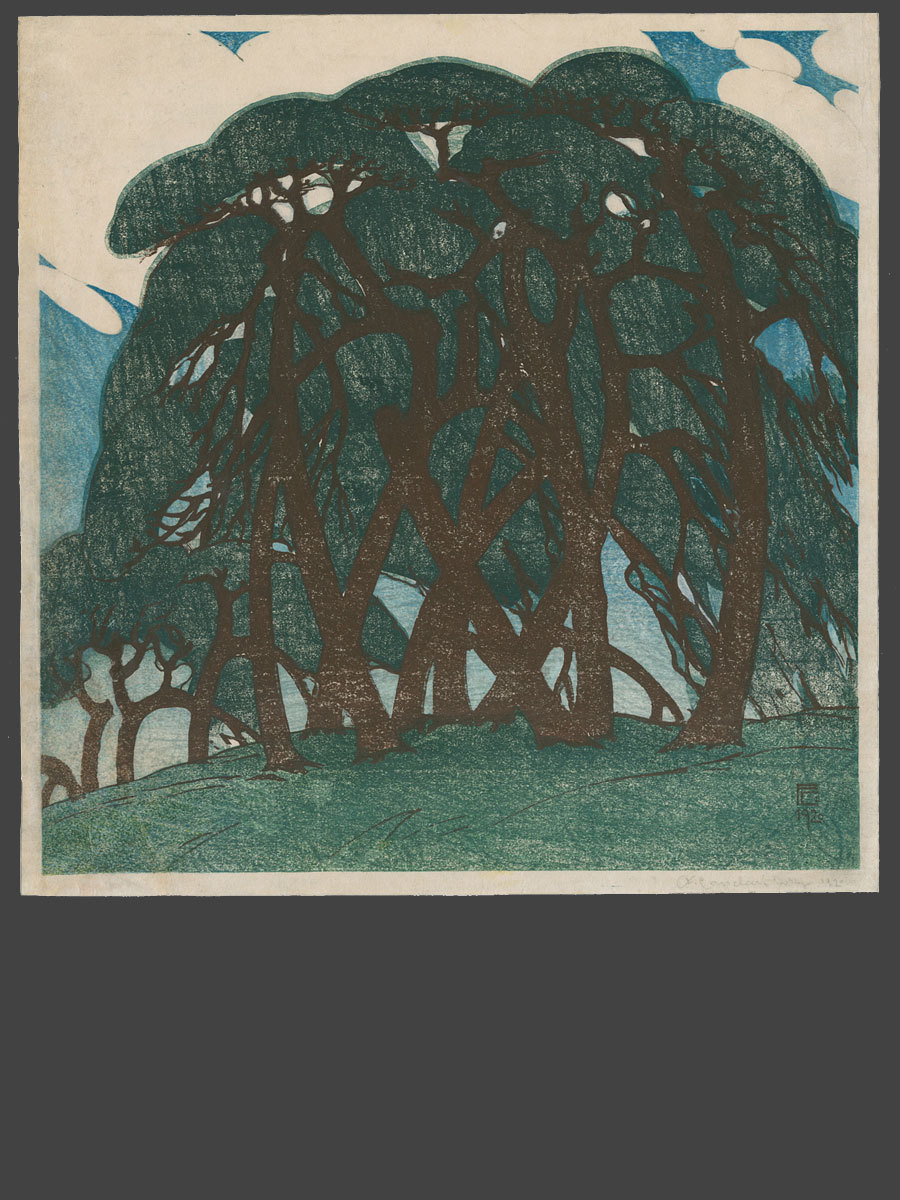
Pines near Yotsuya Mitsuke
1920
Woodblock print

woman with pekingese

Matsushima Sailboats
Woman in Snow (Fence and Plum Tree)
Woodblock print
Woman with a Pekinese
Woodblock print
RETURNING HOME
Woodblock print

Woman Before a Mirror
