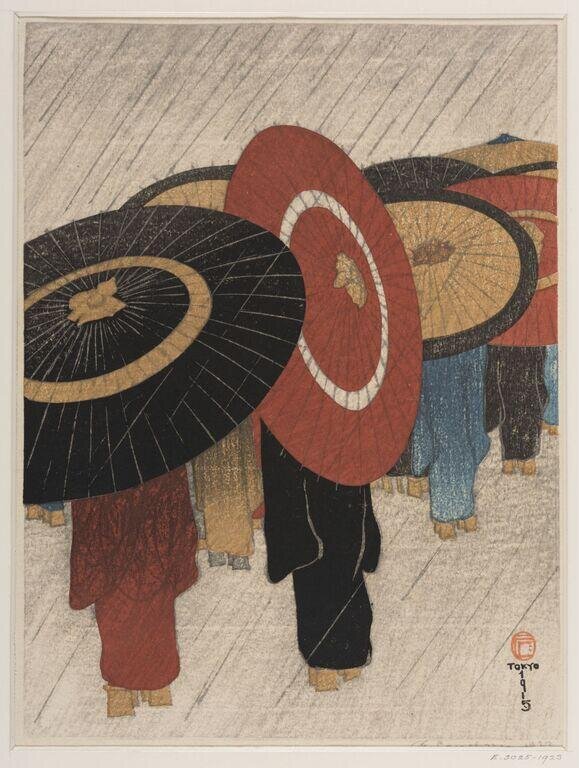
Rain Time
- Date:
- 1915
- Medium:
- Format:
- Oban
- Source:
- Victoria and Albert Museum
Description
This 1915 print in the oban format captures a moment of rainfall, a subject that has inspired Japanese artists from Hiroshige's famous views of sudden showers to Hasui's rain-soaked temple scenes. Fritz Capelari's European eye interpreted the subject differently from his Japanese contemporaries, likely emphasizing the atmospheric effects of rain on visibility rather than the graphic pattern of falling lines that Hiroshige made iconic. The title "Rain Time" suggests a sustained downpour rather than a passing shower, an extended period during which the entire landscape is transformed by water. As an Austrian working with Watanabe's artisans, Capelari could rely on printers who had generations of expertise in producing the grey, wet tones that rain scenes demand, using multiple passes of diluted pigment to build up the misty quality of a rain-saturated atmosphere.
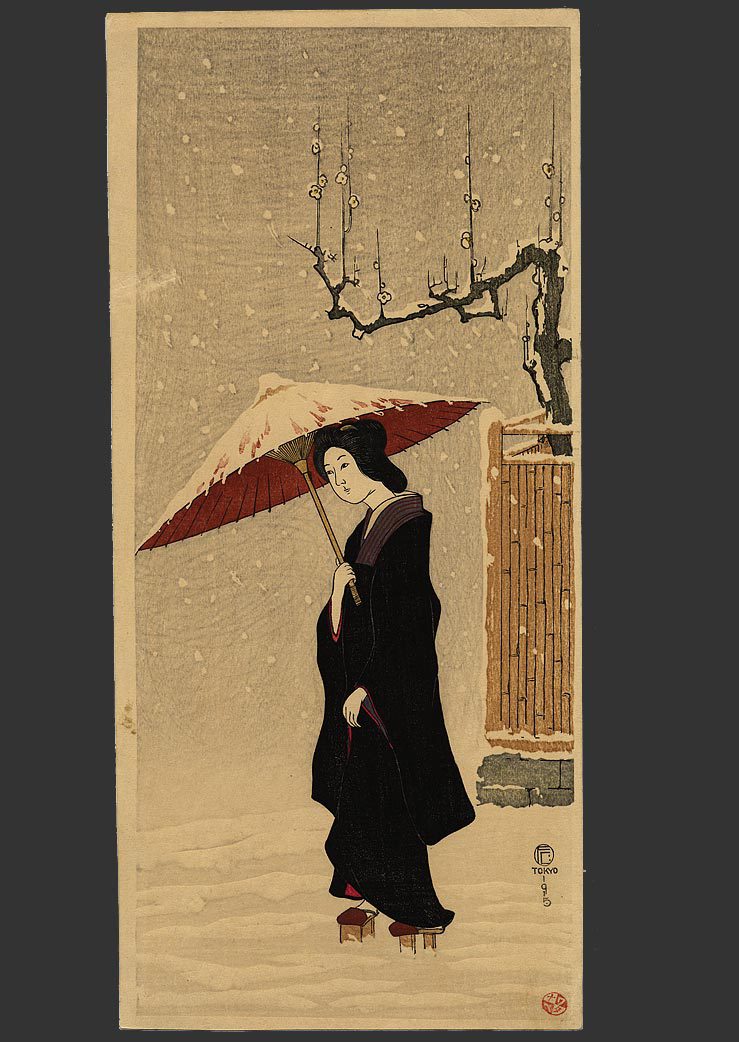
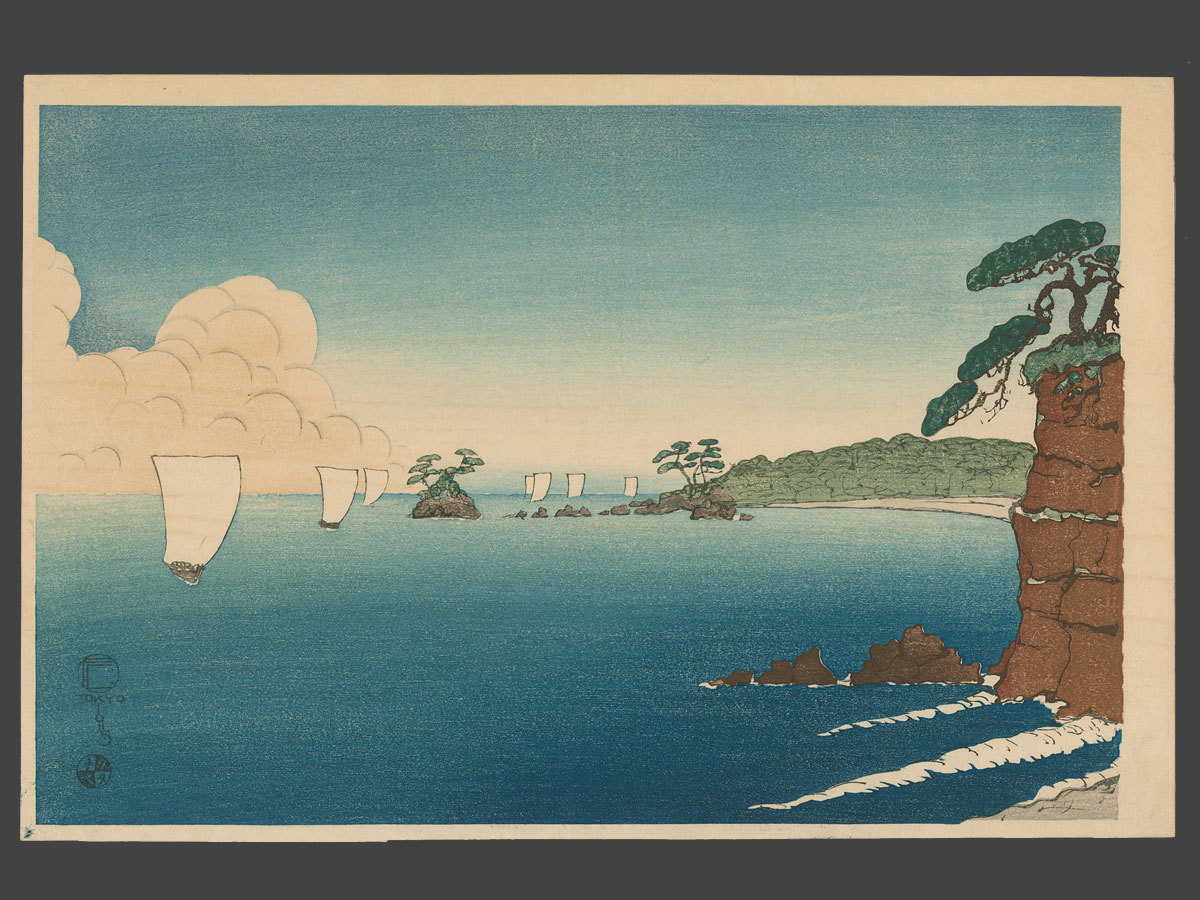
More Prints by Fritz Capelari


More Rain Prints

Rain Shower at Shо̄no, from the series Fifty-three Stations of the Tо̄kaidо̄ (Tо̄kaidо̄ gojusan tsugi)
1962
Woodblock print, ink and color on paper

Shōno: Driving Rain (Shōno hakuu), from the series Fifty-three Stations of the Tōkaidō (Tōkaidō gojūsan tsugi no uchi), also known as the First Tōkaidō or Great Tōkaidō
c. 1833-36
Woodblock print (nishiki-e); ink and color on paper

Omiya in Rain (Ame no Omiya)
Ame no Omiya
1930
Color woodblock print; oban

Evening Shower at Teradomari (Teradomari no yau), from the series "Souvenirs of Travel, Second Series (Tabi miyage dai nishu)"
Teradomari no yau
1921
Color woodblock print; oban
Featured in Collections
Curated cross-cuts that include this print.
Frequently Asked Questions
Rain Time was created by Fritz Capelari (フリッツ・カペラリ) in 1915.
Rain Time depicts rain.