Biography
Hasegawa Sadanobu I (長谷川貞信, 1809–1879) was the founding designer of the Hasegawa line of Osaka woodblock-print artists and one of the most versatile and prolific kamigata-e artists of the mid-nineteenth century. Across a career running from the 1830s into the Meiji era, he produced kabuki actor portraits, landscape views of Kyoto and Osaka, bird-and-flower compositions, and miniature prints, and he established a family workshop whose name remained active in Japanese printmaking across several generations.
Sadanobu I was born in Osaka in 1809, the great mercantile and theatrical city of western Japan whose distinctive print culture — kamigata-e — had developed as a regional counterpart to the better-known Edo school of ukiyo-e. He received his initial training in the Shijo school of painting under Ueda Kocho, gaining a foundation in the literati-inflected naturalism that distinguished Kyoto painting from the more theatrical Edo idiom. He then turned to woodblock design through study under Sadamasu (later known as Kunimasu), a leading Osaka pupil of the Edo master Utagawa Kunisada. His first prints appeared in the mid-1830s, by which time he was signing his own designs as Sadanobu.
During his most productive decades, the 1840s and 1850s, Sadanobu I focused heavily on yakusha-e (actor portraits) drawn from the Osaka kabuki stage, often working in the chuban (mid-size) format characteristic of Osaka prints. He documented the leading actors of the period, portraying them in roles drawn from the historical and contemporary kabuki repertoires that defined late-Edo theatrical taste. His actor prints navigated the restrictions imposed by the Tempo Reforms of the early 1840s, which briefly banned the publication of yakusha-e, and resumed once Osaka publishers and designers developed workarounds — framing actors as historical wrestlers, warriors, or moralizing figures whose identities remained legible to audiences. He worked amid contemporaries such as Konishi Hirosada and Shunbaisai Hokuei, sharing in the visual language of Osaka actor portraiture: tightly framed compositions, emphasis on the actor's mie pose and facial expression, and rich color printing with metallic pigments and embossing.
What distinguishes Sadanobu I from his more narrowly focused contemporaries is the breadth of his subject range. Alongside actor prints he produced major topographical series documenting Kyoto and Osaka, including Miyako meisho no uchi (Famous Places in the Capital) and Naniwa hyakkei no uchi (One Hundred Views of Osaka). These series followed the model of Hiroshige's famous-places views and gave western-Japanese audiences comparable visual chronicles of their own urban landscapes. He also produced miniature prints — small-format sheets adapting popular designs at reduced scale — and made copies of works by Hiroshige that circulated as affordable alternatives to the originals. His bird, flower, and animal studies demonstrate the Shijo-school naturalism that anchored his pictorial training.
The Hasegawa workshop that Sadanobu I founded carried his name across several generations. His son succeeded him as Hasegawa Sadanobu II (1848–1940), continuing the production of Osaka prints into the Meiji and Taisho eras. The name passed in turn to Hasegawa Sadanobu III (1881–1963), Sadanobu II's son, who carried the family tradition into the twentieth century and the postwar era of Japanese printmaking, and then to Hasegawa Sadanobu IV (1914–1999). This multi-generation continuity is unusual in the history of Japanese printmaking and reflects the institutional success that Sadanobu I established in Osaka's commercial print economy.
Sadanobu I's work entered Western museum collections through the early-twentieth-century waves of Japanese print acquisition. The Metropolitan Museum of Art holds examples of his prints, and the Museum of Fine Arts, Boston — home to one of the largest collections of Japanese prints outside Japan — holds an extensive body of his work, including sheets from his Osaka landscape series such as the One Hundred Views of Osaka. His prints are represented in other major public collections of Japanese art as well.
Key Facts
- Active Period
- 1809–1879
- Nationality
- 🇯🇵Japan
- Movement
- Ukiyo-e
- Works Indexed
- 12
Frequently Asked Questions
Hasegawa Sadanobu I (長谷川貞信, 1809–1879) was the founding designer of the Hasegawa line of Osaka woodblock-print artists and one of the most versatile and prolific kamigata-e artists of the mid-nineteenth century. Across a career running from the 1830s into the Meiji era, he produced kabuki actor portraits, landscape views of Kyoto and Osaka, bird-and-flower compositions, and miniature prints, and he established a family workshop whose name remained active in Japanese printmaking across several generations.
Hasegawa Sadanobu I was active from 1809 to 1879. They were associated with the Ukiyo-e movement.
Hasegawa Sadanobu I's work was shaped by the Ukiyo-e tradition in Japanese woodblock printmaking. Ukiyo-e: ## What is ukiyo-e? Ukiyo-e ([浮世絵](/glossary/ukiyo-e)) — literally "pictures of the floating world" — is the Edo-period Japanese print and painting tradition that flourished from roughly 1660 to 1868, depicting the pleasures of urban life in Edo (modern Tokyo): courtesans, kabuki actors, sumo wrestlers, famous landscapes, and seasonal beauties.
Original prints by Hasegawa Sadanobu I can be found in collections including Cleveland Museum of Art, Metropolitan Museum of Art, Museum of Fine Arts, Boston, Art Institute of Chicago.
Woodblock Prints by Hasegawa Sadanobu I (12)
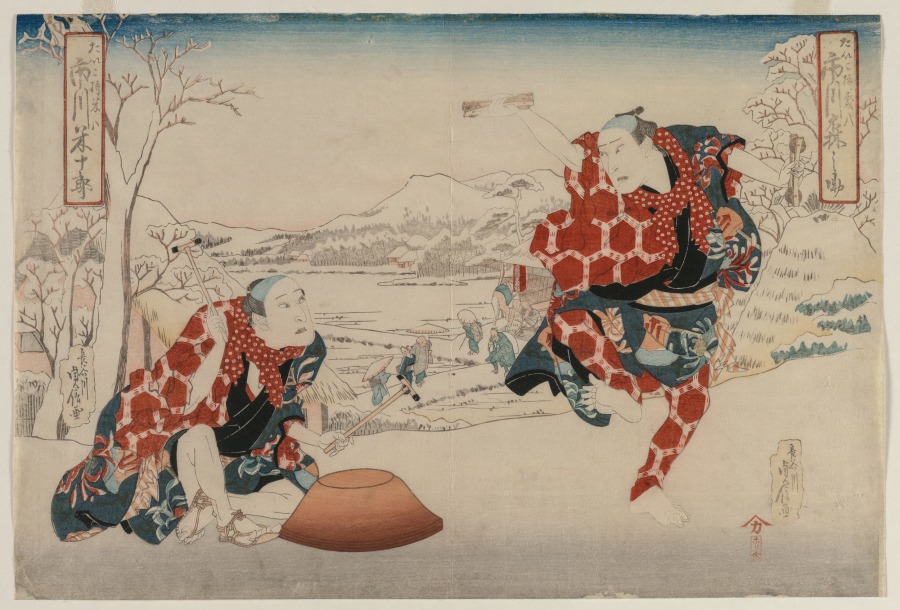
Ichikawa Norinosuke and Ichikawa Yonejuro as Morihachi and Yonehachi, Two Comedians
Late 1830s or early 1840s
Color woodblock print
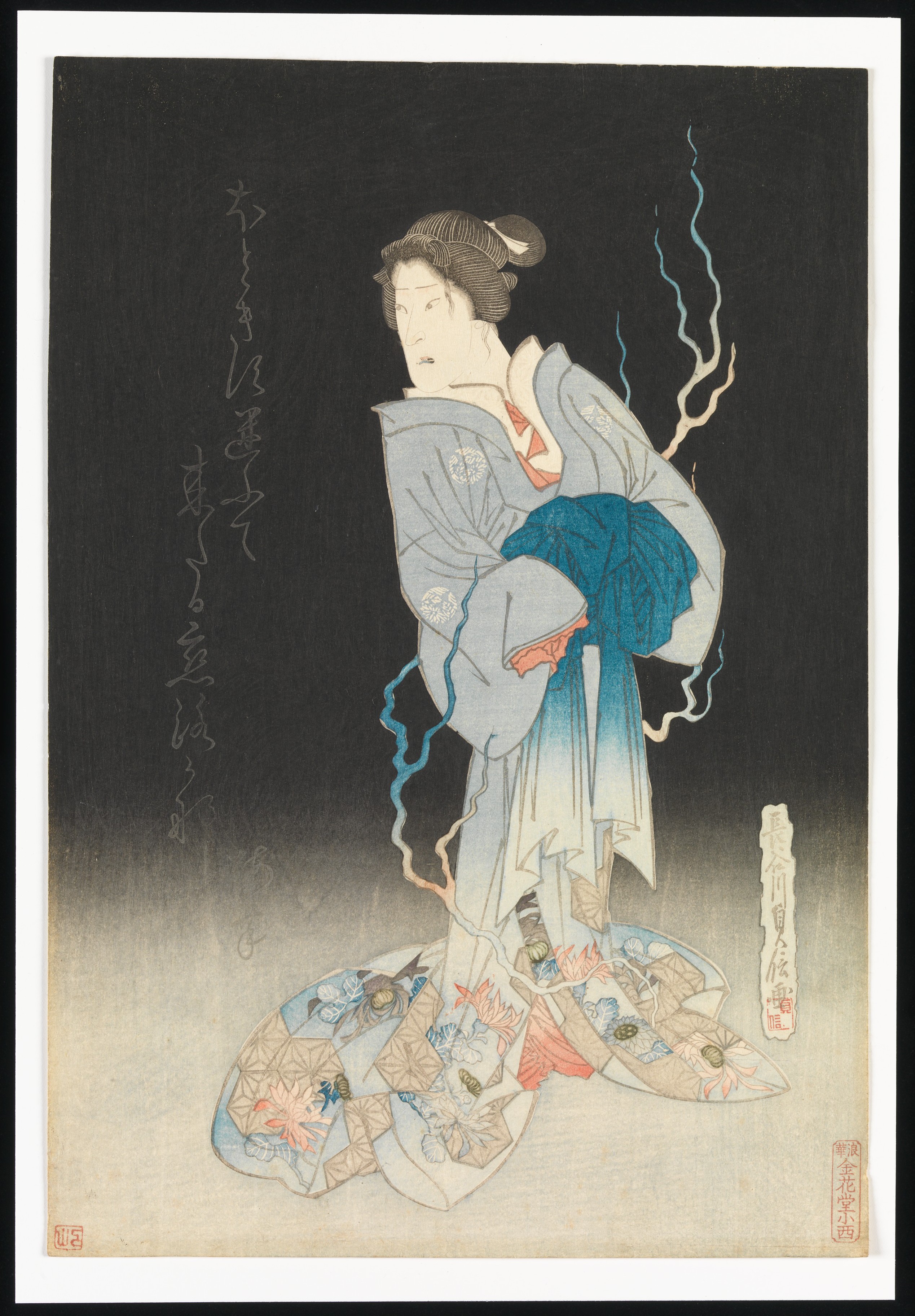
Kabuki Actor Onoe Kikugorō III as the Spirit of the Courtesan Yonakishii
1841
Woodblock print; ink and color on paper; vertical ōban
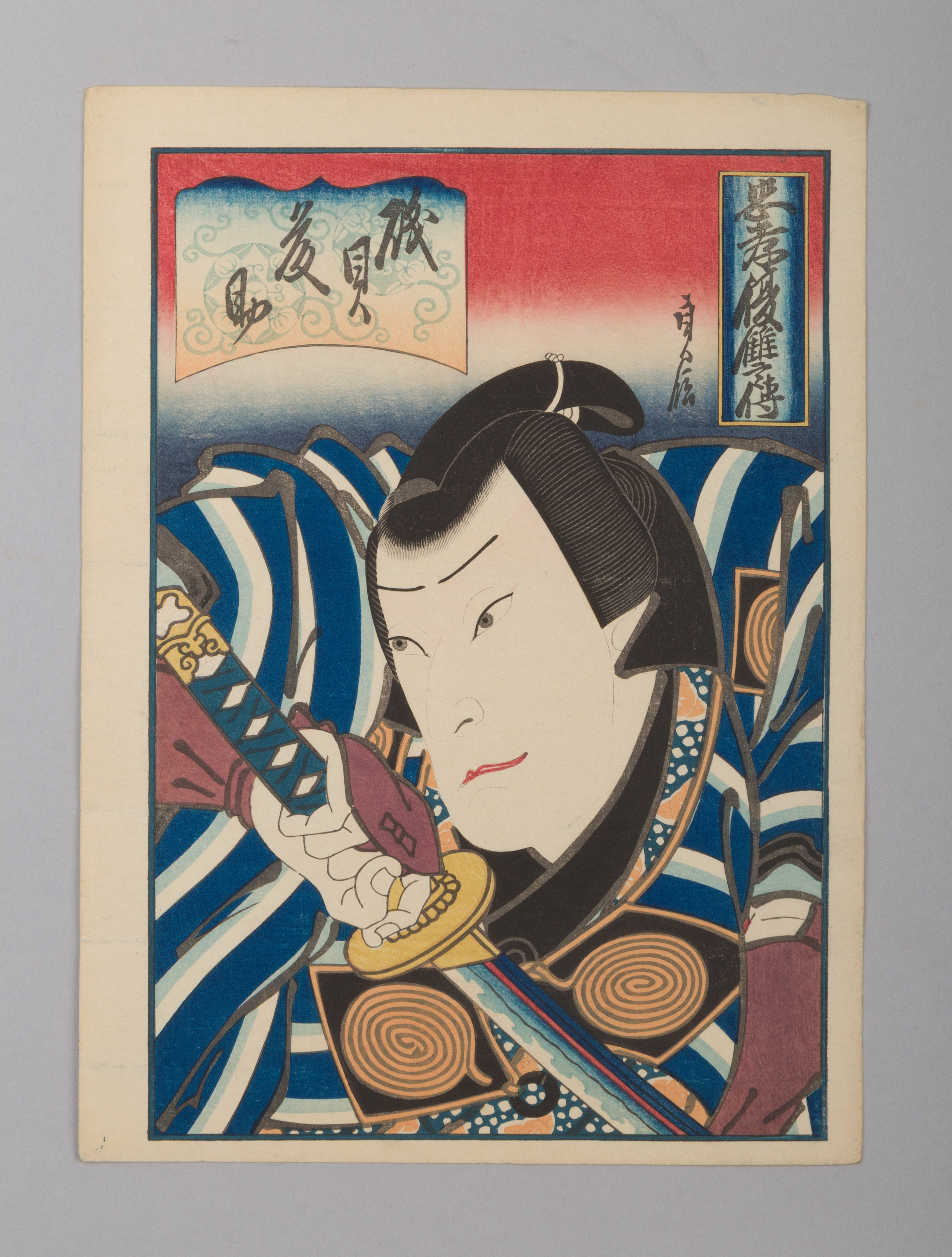
The Actor Arashi Rikaku II as Isogai Tōsuke, from the series Lives of Men who Carried Out Revenge for Loyalty or Filial Piety
1848
Woodblock print (nishiki-e); ink and color on paper; vertical chūban
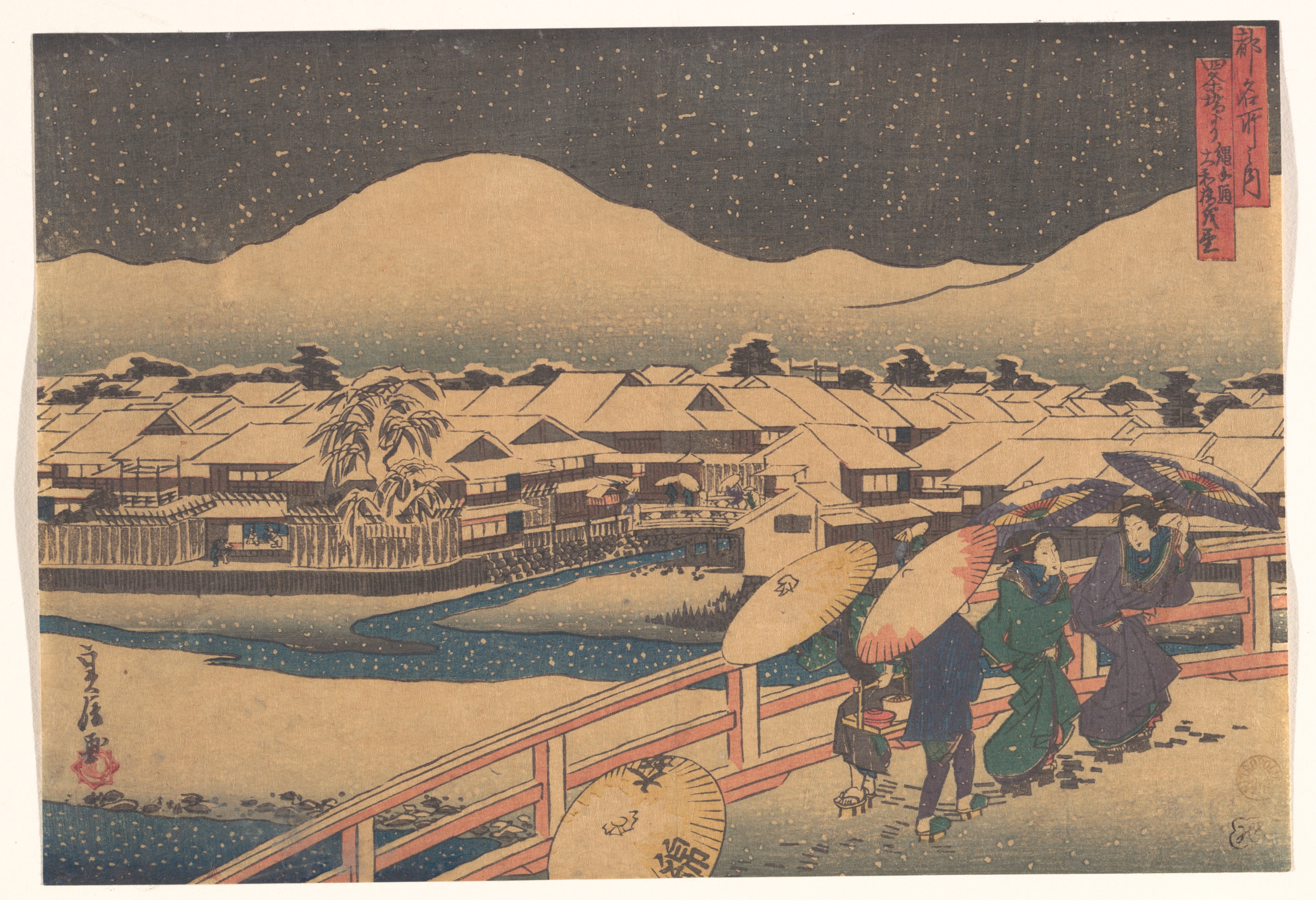
Night View of the Yamato Tea-house in Nawate Dori Seen from Shijo Bridge
1836-1870
Woodblock print; ink and color on paper
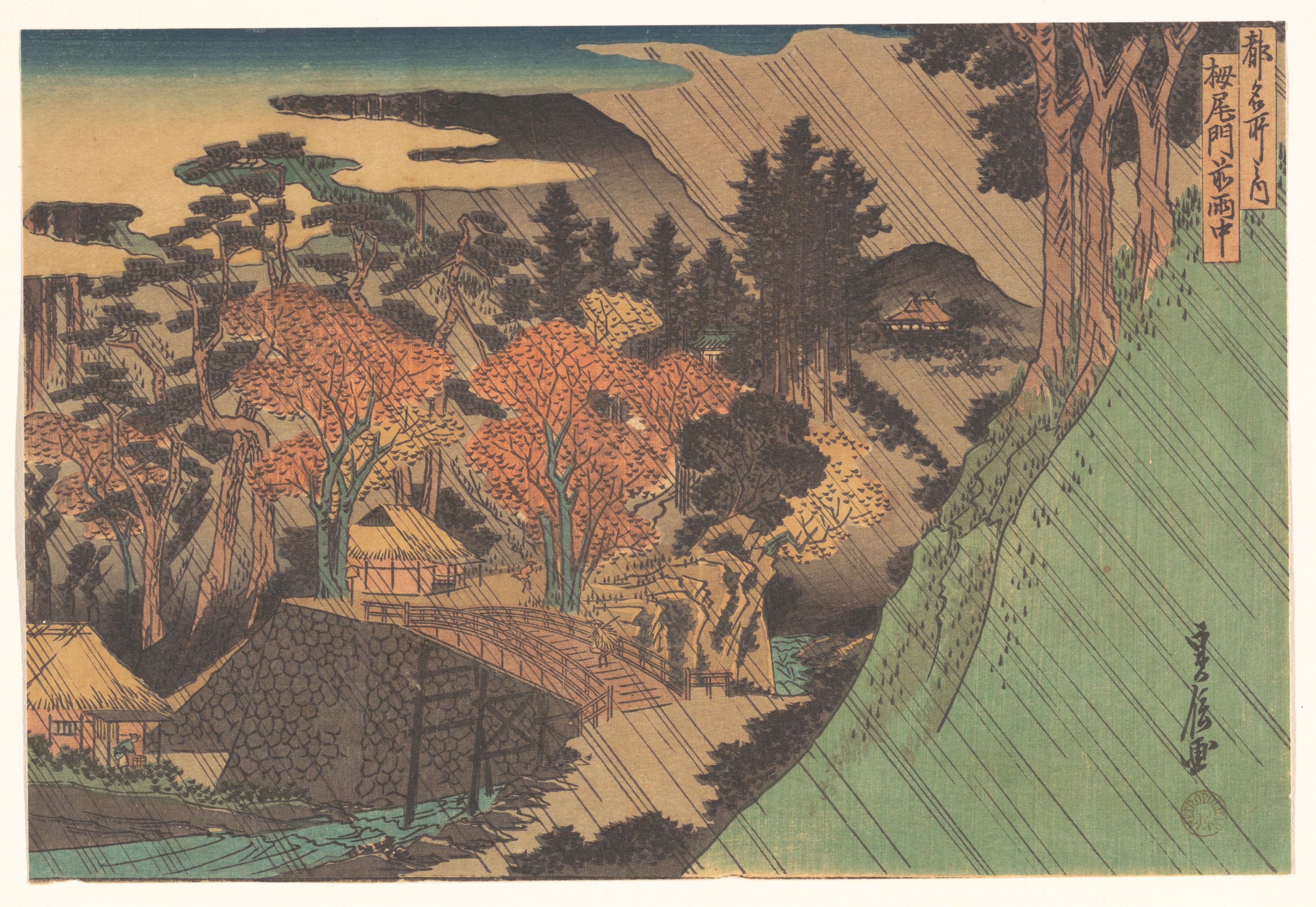
Rain at the Togano Gate
1836-1870
Woodblock print; ink and color on paper
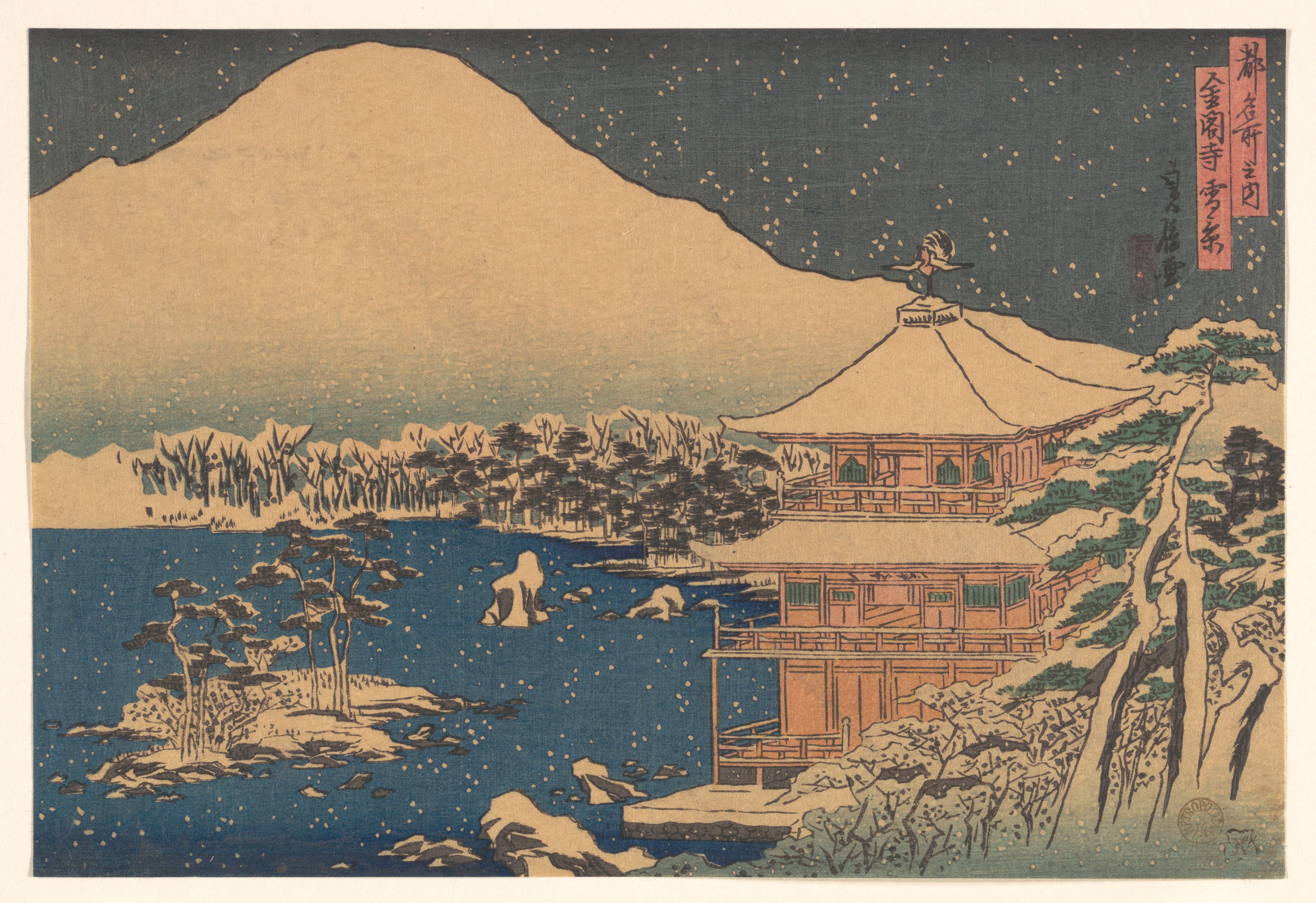
Kinkakuji seen in Falling Snow
1836-1870
Woodblock print; ink and color on paper
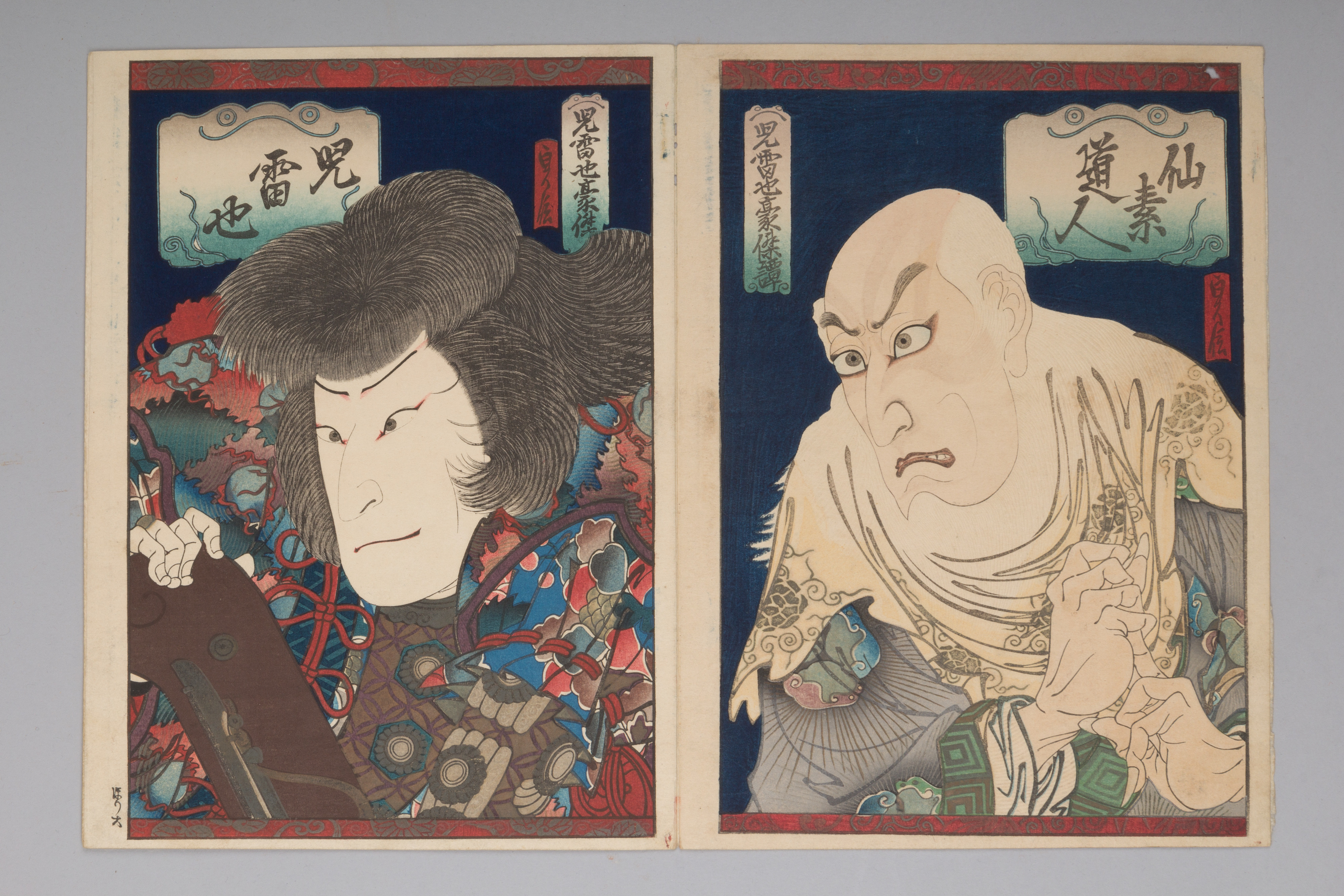
Ichikawa Ebizō V as Senso Dōjin (right); Jitsukawa Ensaburō as Jiraiya (left)
1854
Pair of woodblock prints; ink and color on paper; vertical chūban
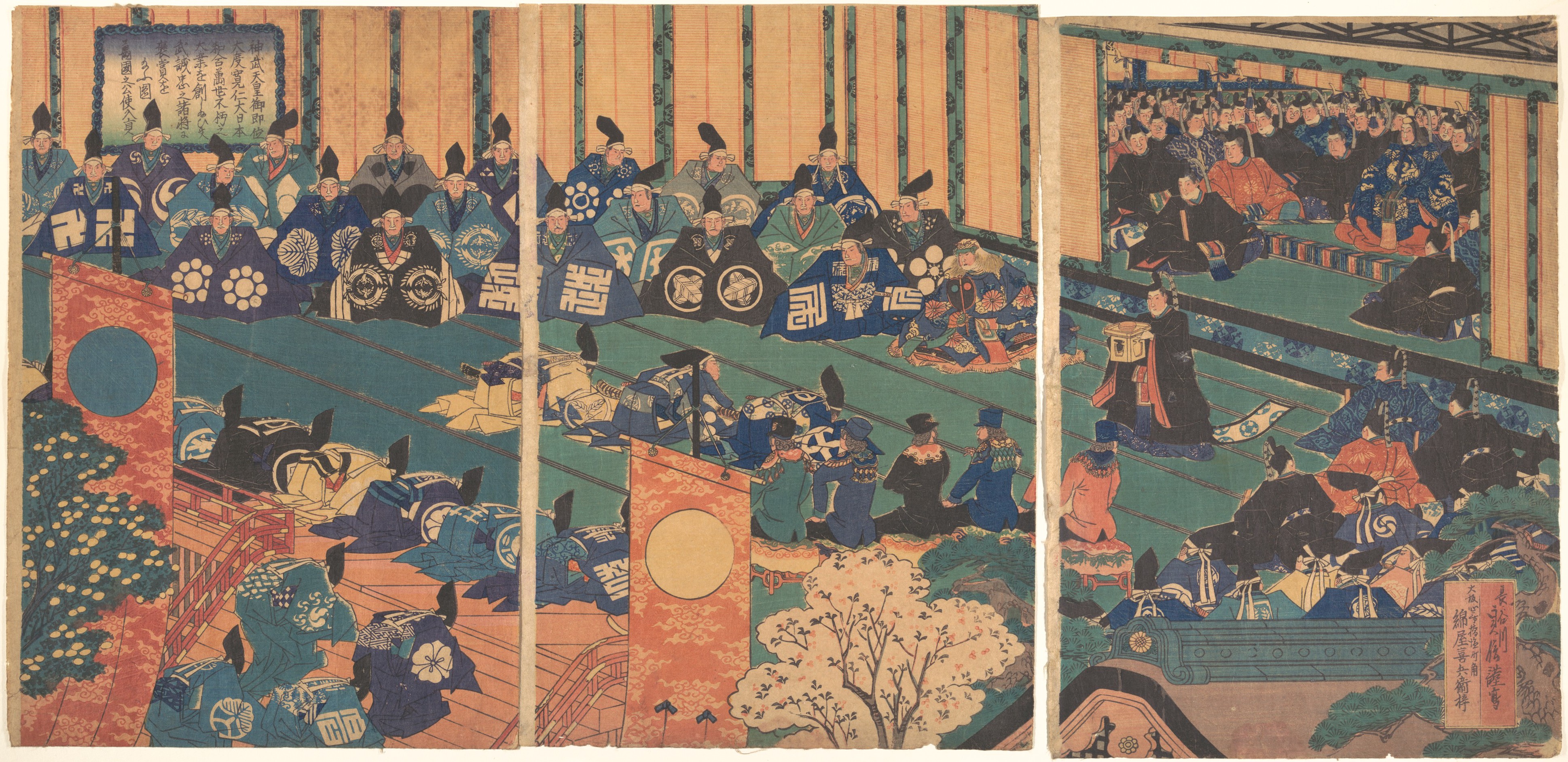
1867 (Meiji 1)
Triptych of woodblock prints; ink and color on paper

Emperor Nintoku Visits His Palace in the City of Naniwa (Nintoku tennō Naniwa-to gosho e miyuki no zu)
1868
Color woodblock print

Yotsubashi Bridge, from the series One Hundred Views of Osaka (Naniwa hyakkei no uchi)
1869-70
Color woodblock print
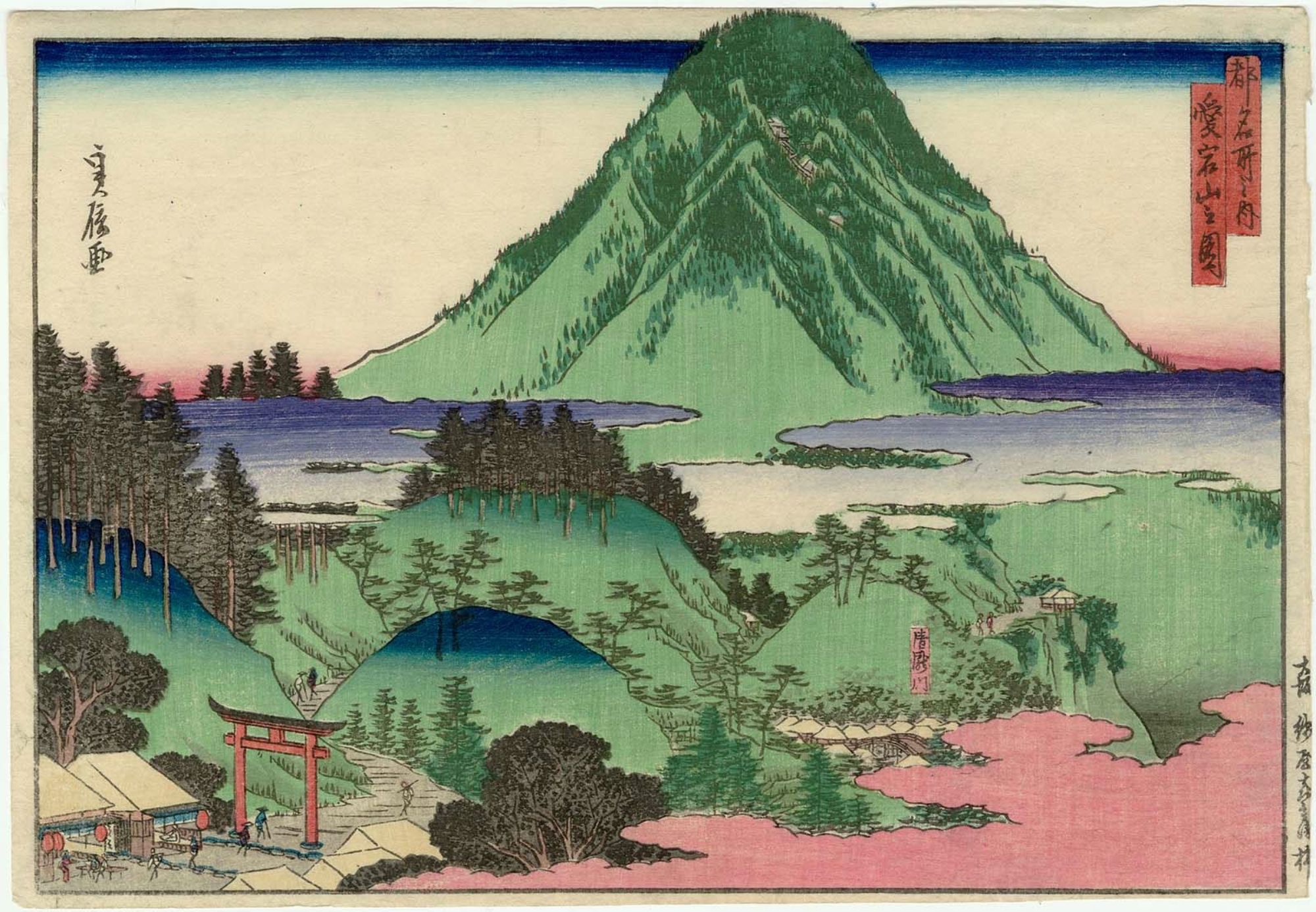
View of Mount Atago (Atago-yama no zu), from the series Famous Places in the Capital (Miyako meisho no uchi)
1870-71
Color woodblock print

Carp Ascending Waterfall
19th century
Color woodblock print