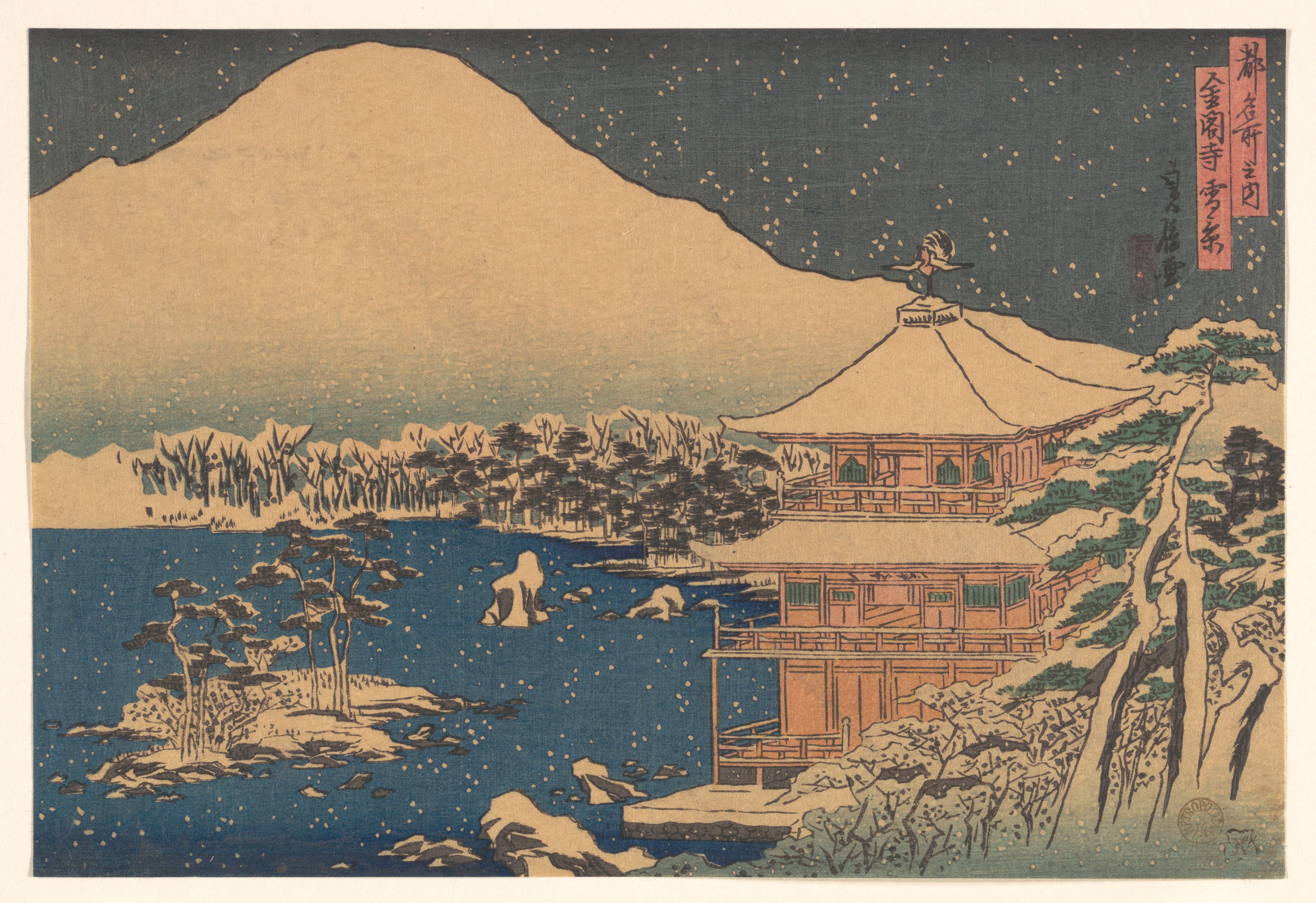
Kinkakuji seen in Falling Snow
- Date:
- 1836-1870
- Medium:
- Woodblock print; ink and color on paper
- Source:
- Metropolitan Museum of Art
Description
This Metropolitan Museum of Art miniature print by Hasegawa Sadanobu I portrays Kyoto's celebrated Kinkakuji — the Temple of the Golden Pavilion — under a soft snowfall, one of the most iconic seasonal pairings in Japanese visual culture. The Golden Pavilion, a fourteenth-century Ashikaga-era retirement villa converted into a Zen temple, had been a tourist destination and pilgrimage site for centuries when Sadanobu produced this miniature view in the 1840s or 1850s. The composition deploys the conventions of Kyoto landscape printing — the rooflines of the multi-tiered pavilion reflected in the surrounding pond, the surrounding garden enclosed by snow-laden pines — while the small format compresses the image into the size of a souvenir or postcard suitable for travelers returning from the old capital. Sadanobu's printers employed precise color registration to maintain the architectural detail at miniature scale, and the snow effect uses karazuri (blind embossing) and white pigment to give tactile relief to the falling flakes. JP1405 in the Met collection preserves an example of Sadanobu's mature miniature production.
More Prints by Hasegawa Sadanobu I
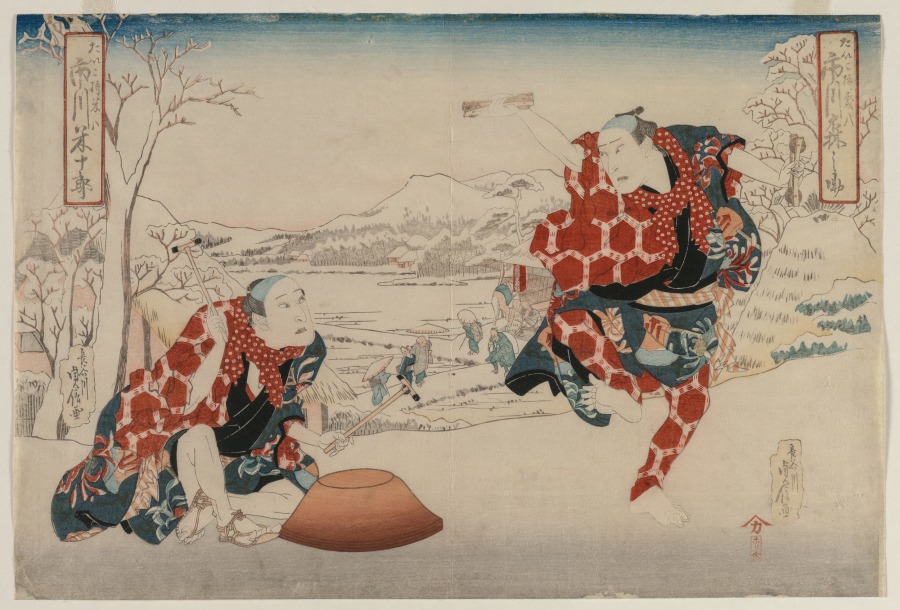
Ichikawa Norinosuke and Ichikawa Yonejuro as Morihachi and Yonehachi, Two Comedians
Late 1830s or early 1840s
Color woodblock print
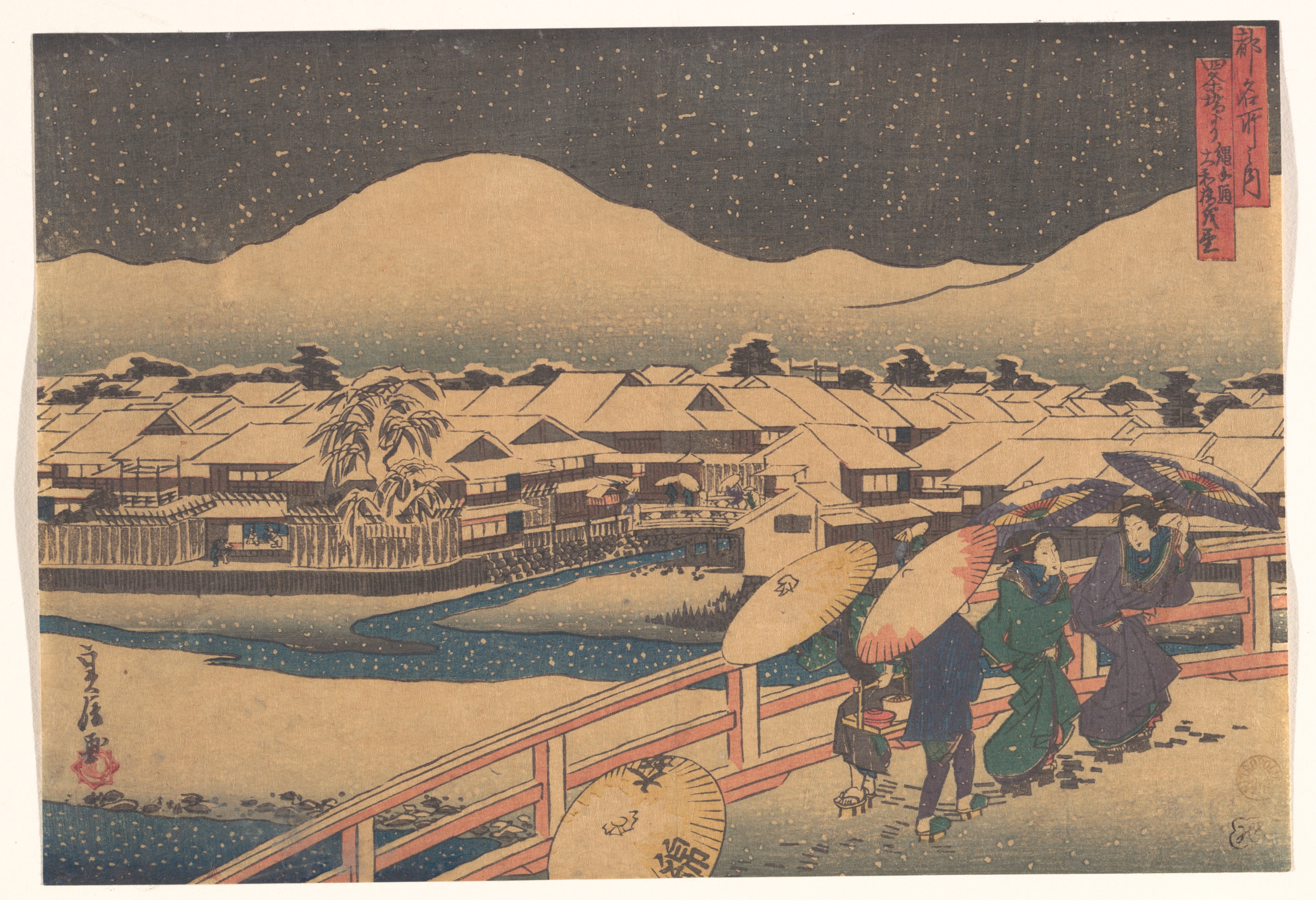
Night View of the Yamato Tea-house in Nawate Dori Seen from Shijo Bridge
1836-1870
Woodblock print; ink and color on paper
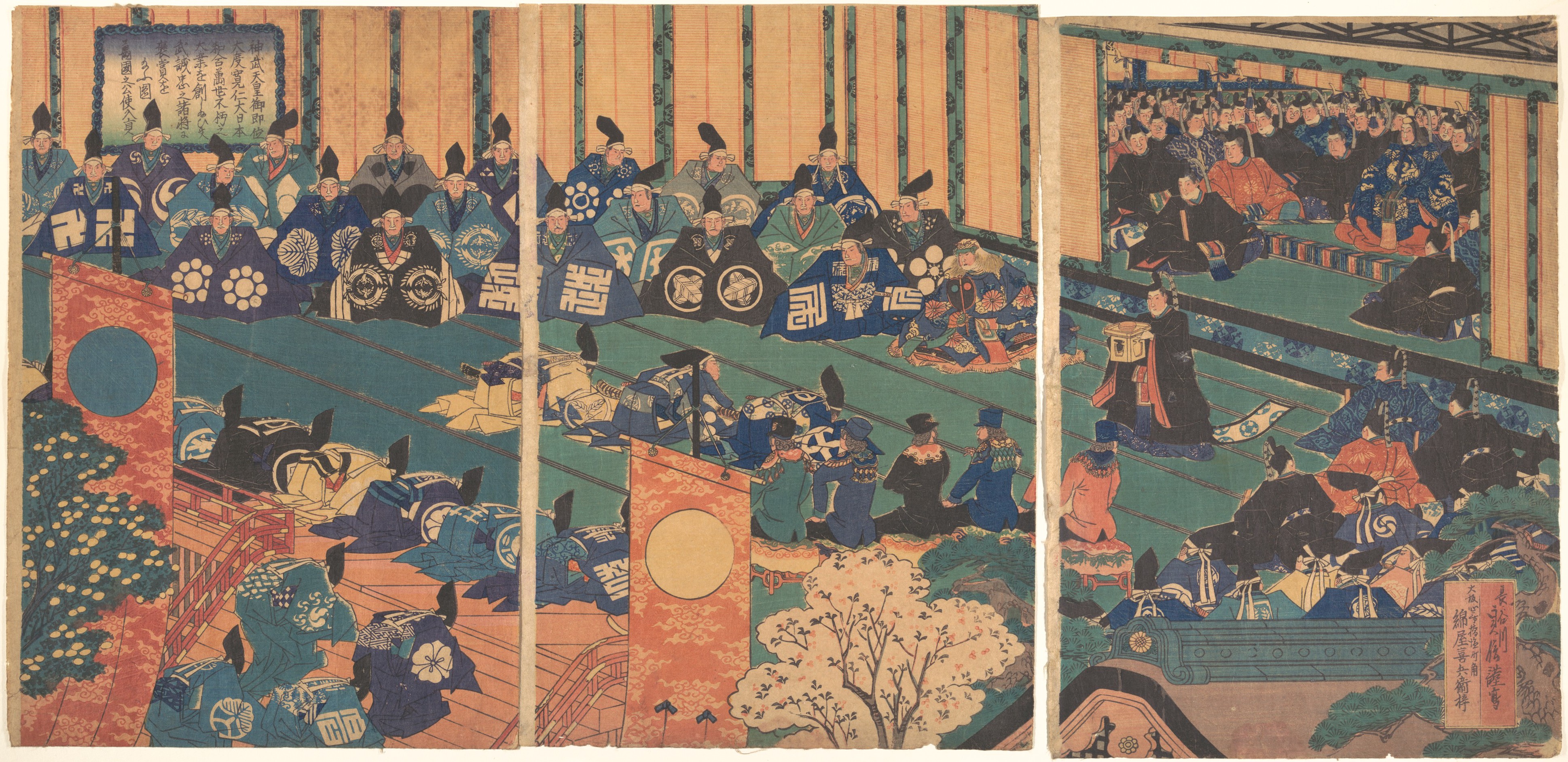
1867 (Meiji 1)
Triptych of woodblock prints; ink and color on paper
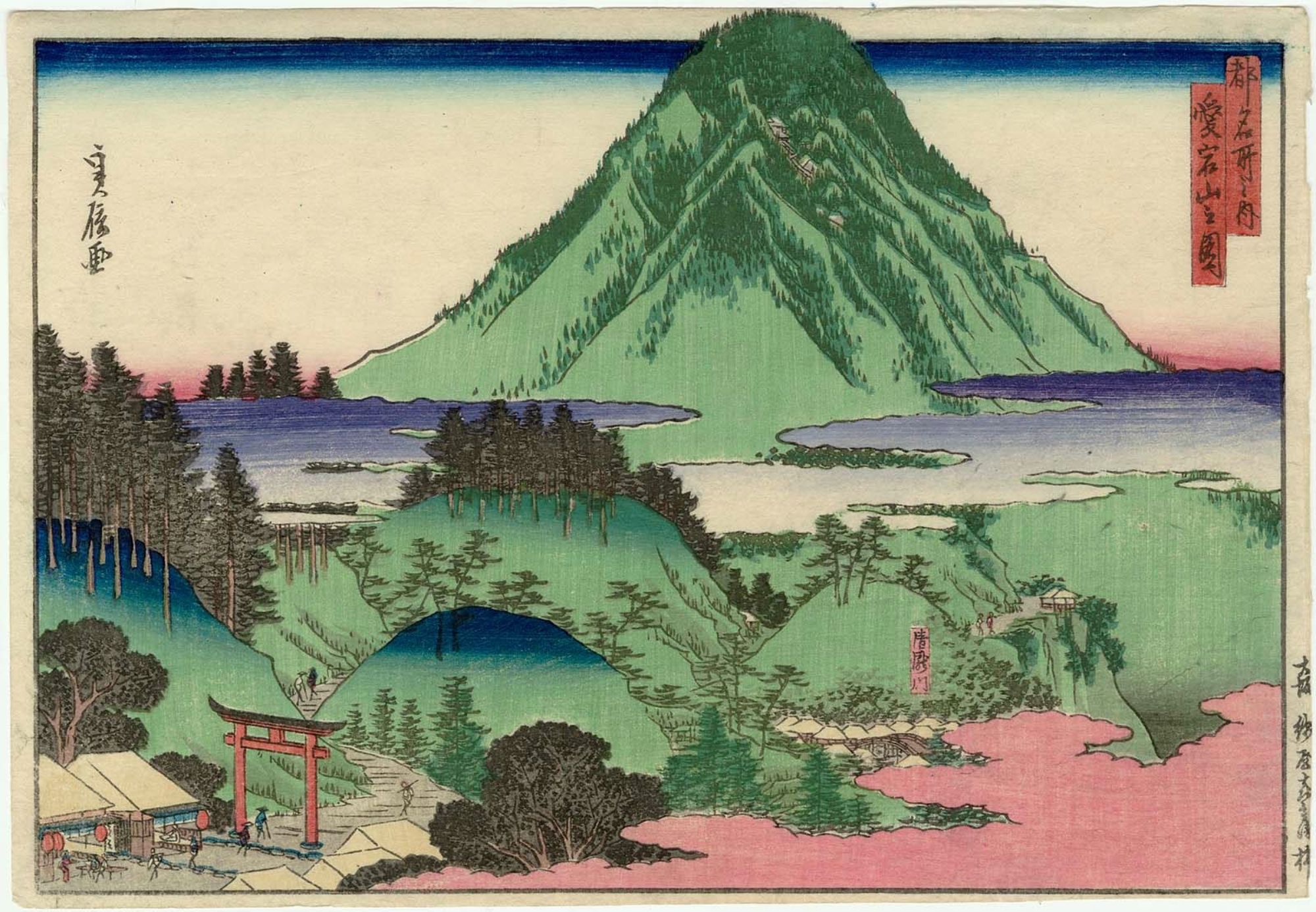
View of Mount Atago (Atago-yama no zu), from the series Famous Places in the Capital (Miyako meisho no uchi)
1870-71
Color woodblock print
More Landscapes Prints

Lake Kugushi in Wakasa Province (Wakasa Kugushiko), from the series Souvenirs of Travel I (Tabi miyage dai isshu)"
Wakasa Kugushiko
1920
Color woodblock print; oban
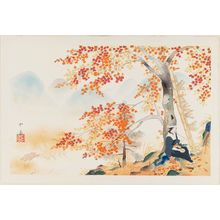
Autumn Maple Leaves at Takao, from the album Eight Views of Kyoto (Kyôto hakkei)
Woodblock print

The Beach at Kaiganji in Sanuki Province (Sanuki Kaiganji no hama), from the series "Collection of Views of Japan II, Kansai Edition (Nihon fukei shu II Kansai hen)"
1934
Color woodblock print; oban

Tea Kettle, section of a sheet from the series "Mirror of Stone Rubbings of Views of the Provinces" (Kohon meihitsu ishizuri kagami)
n.d.
Woodblock print; ishizuri-e, section of harimaze sheet
Featured in Collections
Curated cross-cuts that include this print.
Frequently Asked Questions
Kinkakuji seen in Falling Snow was created by Hasegawa Sadanobu I (長谷川貞信) in 1836-1870.
Kinkakuji seen in Falling Snow depicts landscapes, winter, and autumn foliage.