Biography
Kaburaki Kiyokata (鏑木清方, 1878–1972) was one of the most important nihonga (Japanese-style painting) masters of the twentieth century, a leading figure in the bijin-ga tradition whose influence on the shin-hanga movement was profound — primarily through his students, who included Ito Shinsui, Kasamatsu Shiro, and Yamakawa Shuho, three of the movement's most celebrated artists. Though Kiyokata's own woodblock print output was modest compared to his vast body of paintings, the prints he did produce are highly prized by collectors as rare works by one of the acknowledged masters of Japanese figure painting.
Born on August 31, 1878, in the Kanda district of Tokyo, Kiyokata grew up in the heart of the old capital, surrounded by the remnants of Edo-period culture that were rapidly vanishing under the pressures of Meiji modernization. His father was a novelist and journalist, the founder and president of the Tokyo Nichi Nichi Shimbun newspaper, and the young Kiyokata grew up in a cultivated household with access to literature, theater, and the arts. In 1891, at the age of thirteen, he entered the studio of Mizuno Toshikata, a painter in the ukiyo-e tradition known for historical subjects and bijin-ga, beginning his formal training.
Kiyokata's artistic vision was shaped by a deep nostalgia for the vanishing world of old Tokyo — the geisha of the pleasure quarters, the townswomen of the merchant class, the seasonal festivals and customs that gave rhythm to life in the traditional city. Throughout his career he painted these subjects with an elegance and sensitivity that preserved in paint the beauty and grace of a world that was slipping into memory.
As a painter, Kiyokata achieved the highest honors in the Japanese art world. He exhibited at the Bunten and Teiten national exhibitions, was made a member of the Imperial Fine Art Academy, and received the Order of Culture (Bunka Kunsho) in 1954, one of Japan's most prestigious cultural awards. His paintings, executed in mineral pigments on silk with the refined technique characteristic of the highest nihonga tradition, are prized as masterworks of modern Japanese painting.
Kiyokata's contribution to shin-hanga came in two forms. First and most importantly, as a teacher he trained the generation of artists who would become the movement's leading figure painters. His studio was a crucible of bijin-ga talent, and his insistence on drawing from life, mastering traditional technique, and observing the real world of Japanese women shaped the artistic vision of Shinsui, Kasamatsu, and others. The technical refinement and psychological sensitivity that characterize the best shin-hanga bijin-ga prints owe a great deal to Kiyokata's teaching.
Second, Kiyokata himself produced a small number of woodblock print designs. Depicting women in traditional settings with the master's characteristic elegance, these prints are extremely scarce and highly valued by collectors as the rare intersection of Kiyokata's painting mastery with the woodblock medium.
Kiyokata lived to the remarkable age of ninety-three, dying in 1972. His legacy encompasses his own paintings, his prints, and the extraordinary lineage of artists he trained. His former house in Kamakura has been preserved as the Kaburaki Kiyokata Memorial Museum, which displays many of his works and his studio, and his paintings are held in major Japanese museum collections throughout the country.
Key Facts
- Active Period
- 1878–1972
- Nationality
- 🇯🇵Japan
- Movement
- Shin-hanga
- Works Indexed
- 19
Frequently Asked Questions
Kaburaki Kiyokata (鏑木清方, 1878–1972) was one of the most important nihonga (Japanese-style painting) masters of the twentieth century, a leading figure in the bijin-ga tradition whose influence on the shin-hanga movement was profound — primarily through his students, who included Ito Shinsui, Kasamatsu Shiro, and Yamakawa Shuho, three of the movement's most celebrated artists. Though Kiyokata's own woodblock print output was modest compared to his vast body of paintings, the prints he did produce are highly prized by collectors as rare works by one of the acknowledged masters of Japanese figure painting.
Kaburaki Kiyokata was active from 1878 to 1972. They were associated with the Shin-hanga movement.
Kaburaki Kiyokata's work was shaped by the Shin-hanga tradition in Japanese woodblock printmaking. Shin-hanga: ## What is Shin-hanga? Shin-hanga (新版画), literally "new prints," is the early twentieth-century revival of the collaborative Japanese woodblock workshop, organized between roughly 1915 and 1960 by the Tokyo publisher Watanabe Shōzaburō (1885–1962) and a handful of competing houses.
Original prints by Kaburaki Kiyokata can be found in collections including Honolulu Museum of Art, Hara Shobō, Minneapolis Institute of Art, Japanese Art Open Database.
Woodblock Prints by Kaburaki Kiyokata (19)

Frontispiece for a Novel, 1903
1903
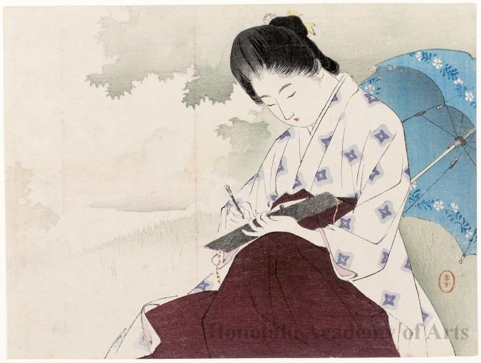
Beauty Sketching in a Field
1903
Woodblock print
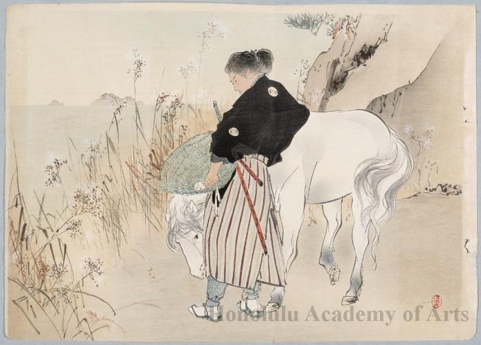
Kon Chüsuke
1904
Woodblock print
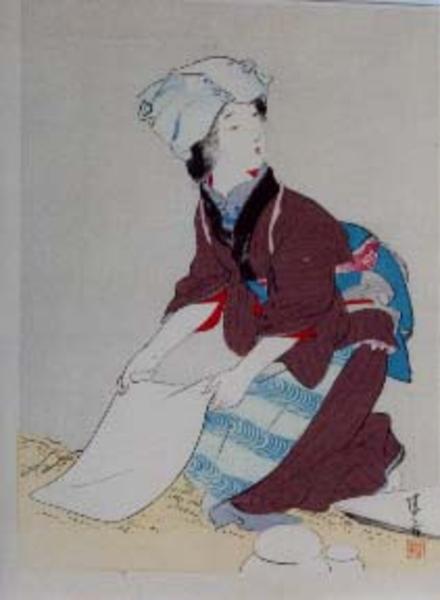
Mochi Mushiro — 餅むしろ
1908
Woodblock print
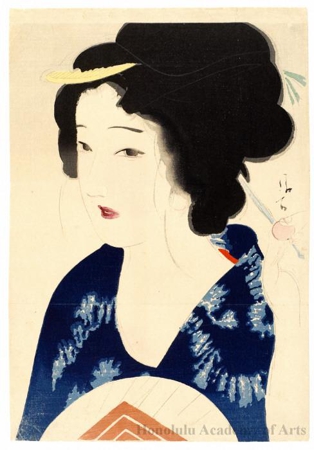
Young Woman with Fan (Descriptive Title)
c. 1910
Woodblock print
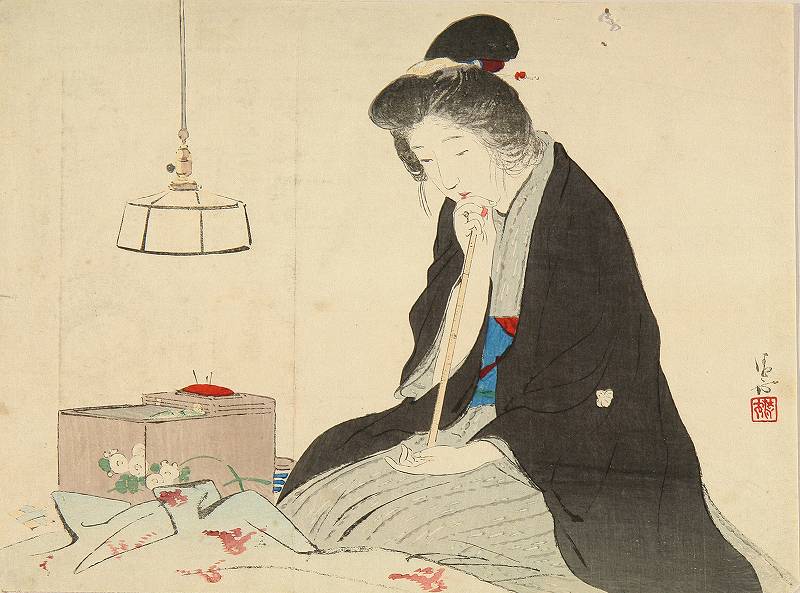
Frontispiece for a Novel, 1910 (II)
1910
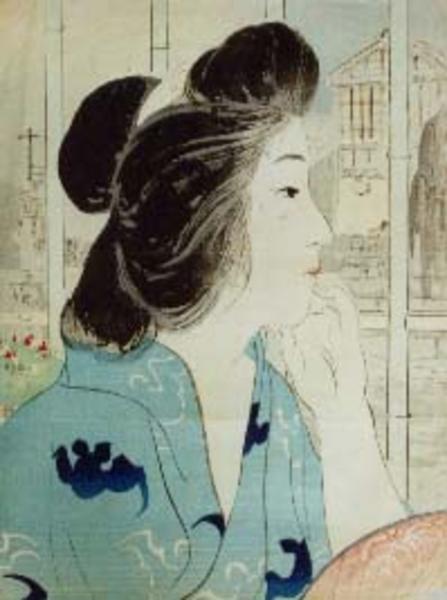
Onsen in the Evening — いで湯の夕べ
1912
Woodblock print
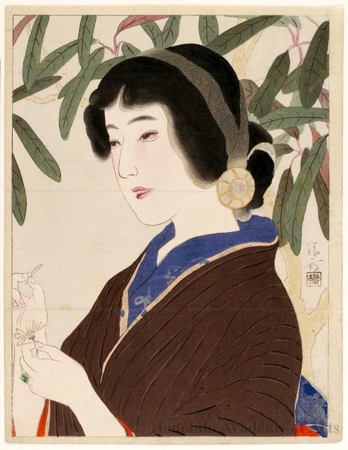
Chieko
1913
Woodblock print
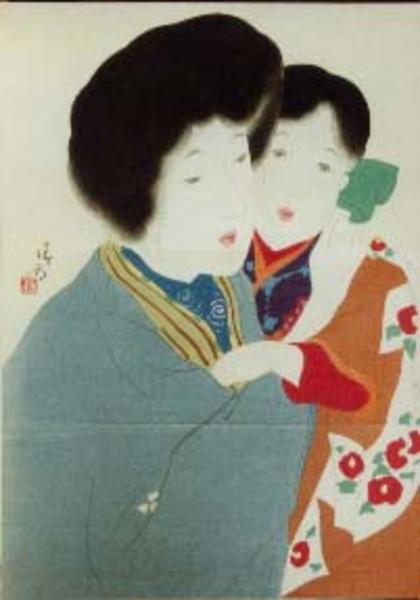
Whirlpool - last volume
1914
Woodblock print
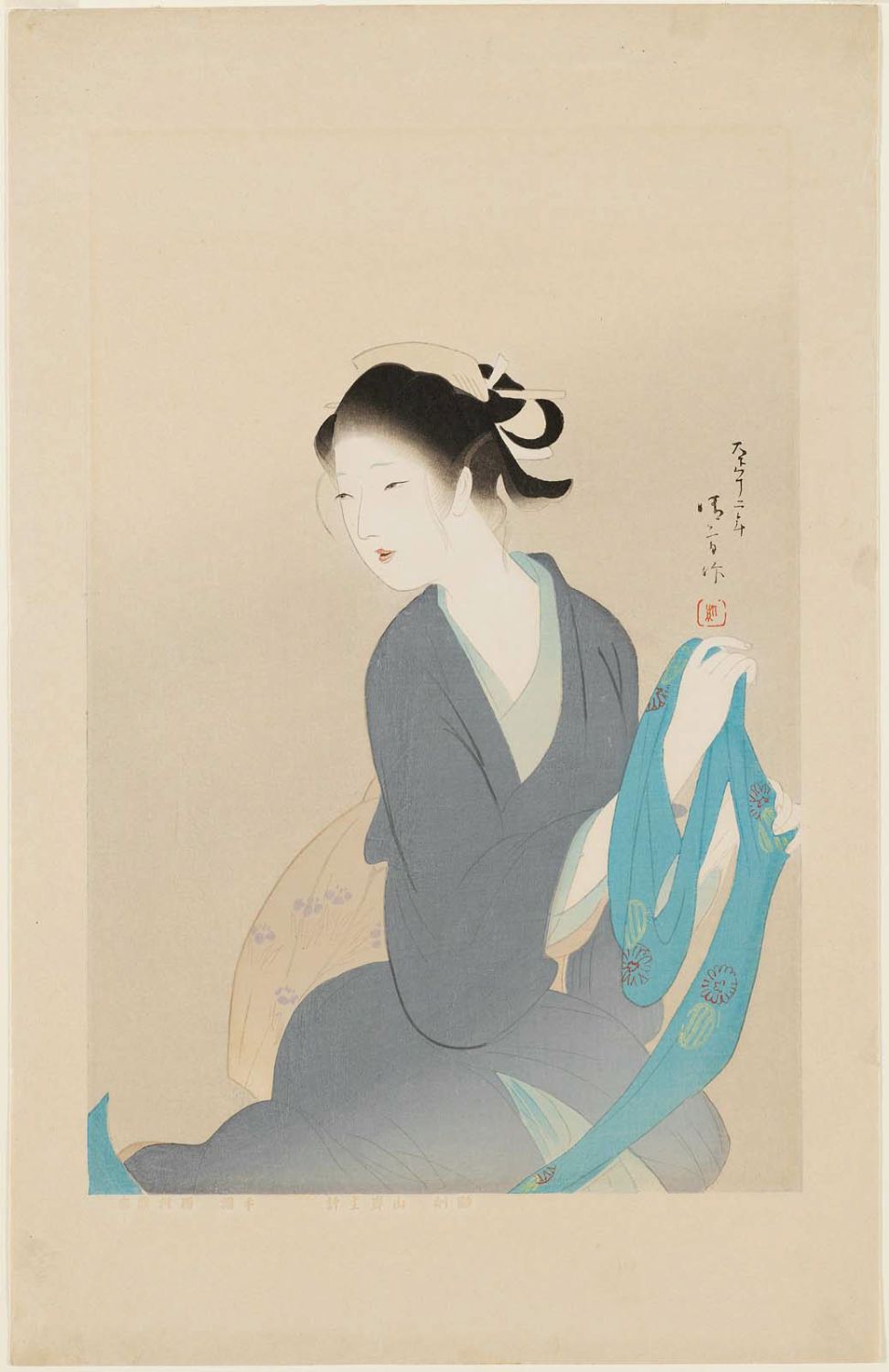
Woman Holding a Blue Sash
1923
Woodblock print
![Light Snow, Customs of Young Women: Beauty of the Fifteenth Year of Meiji [1882] (Meiji Jugonen Koro no Fuzoku) by Kaburaki Kiyokata](https://data.ukiyo-e.org/scholten/images/dd121e23b3aa0e77864754bb13fc0cc9.jpg)
Light Snow, Customs of Young Women: Beauty of the Fifteenth Year of Meiji [1882] (Meiji Jugonen Koro no Fuzoku)
1925
Woodblock print
Tipsy
1930
Woodblock print
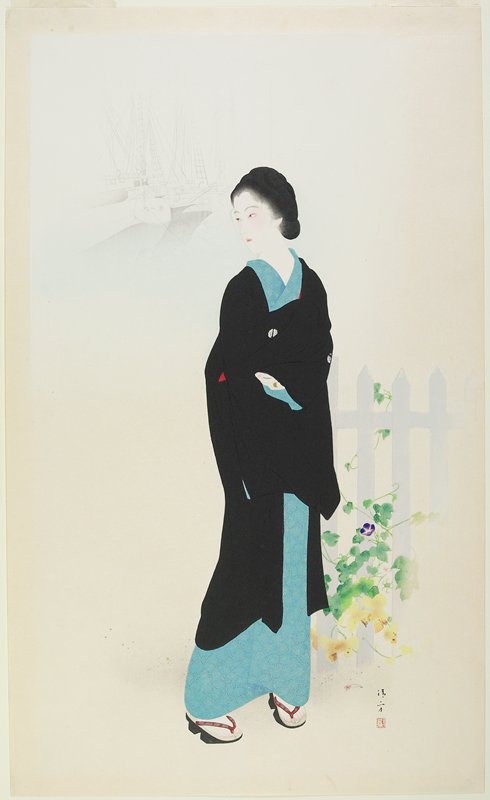
Akashi-chō in Tsukiji
1931
Woodblock print, ink and color on paper
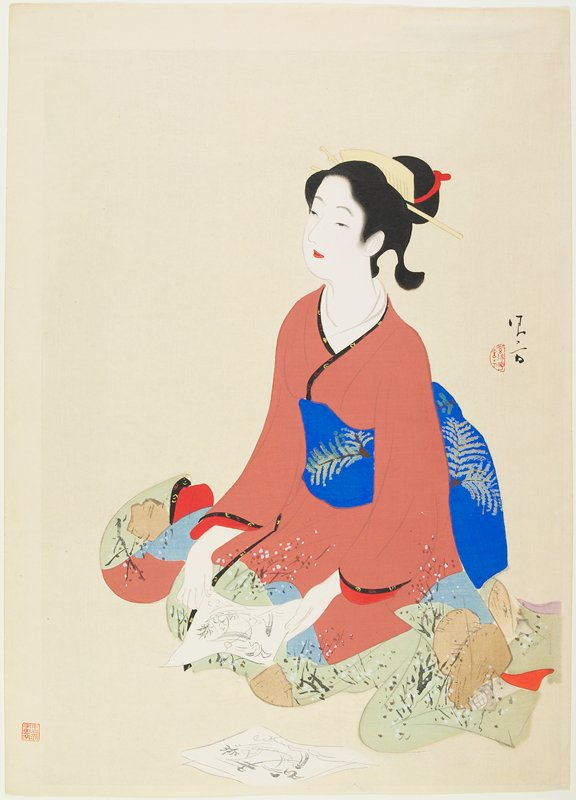
Treasure Ship
before 1973
Woodblock print, ink and color on paper
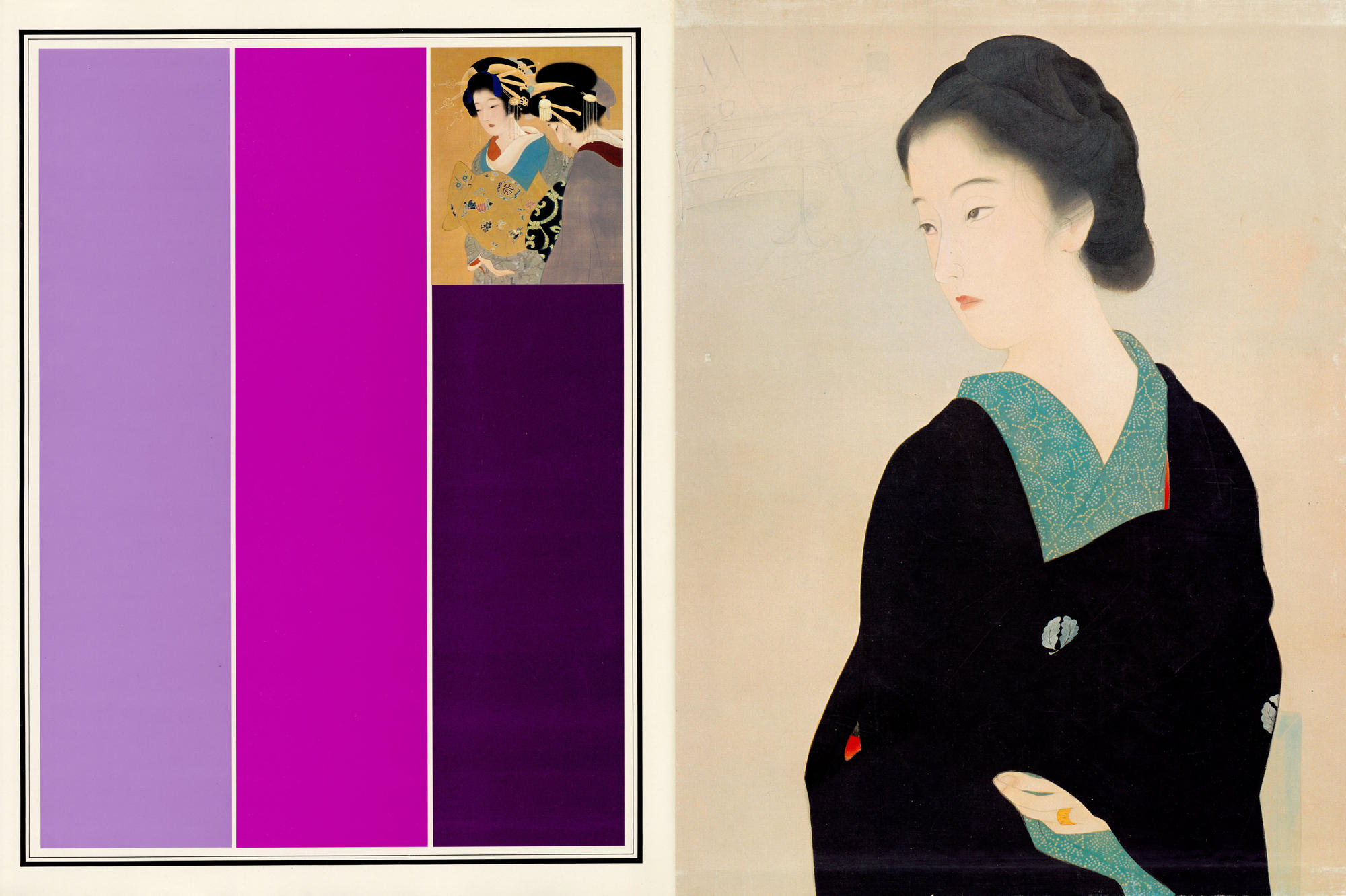
Volume 2 - Kaburagi Kiyokata
1977
Woodblock print

Frontispiece for a Novel
Kon Chüsuke
Woodblock print
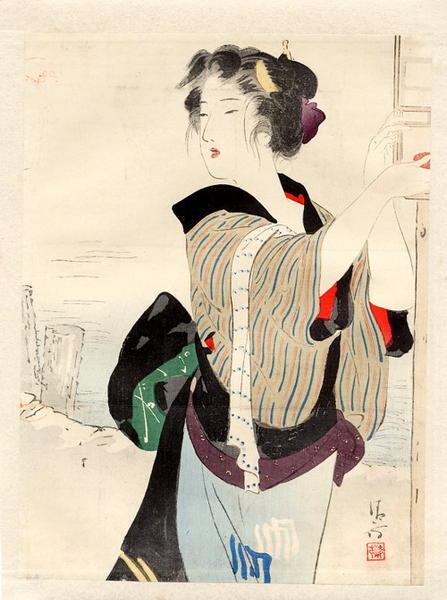
Three-quarter length portrait of a bijin beside a river
Not set
Woodblock print
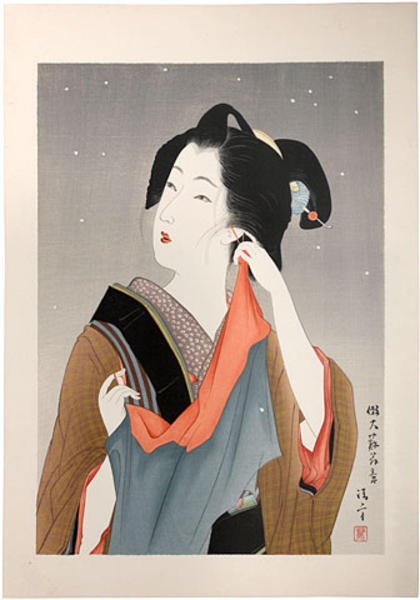
Light Snowfall- V1
Not set
Woodblock print