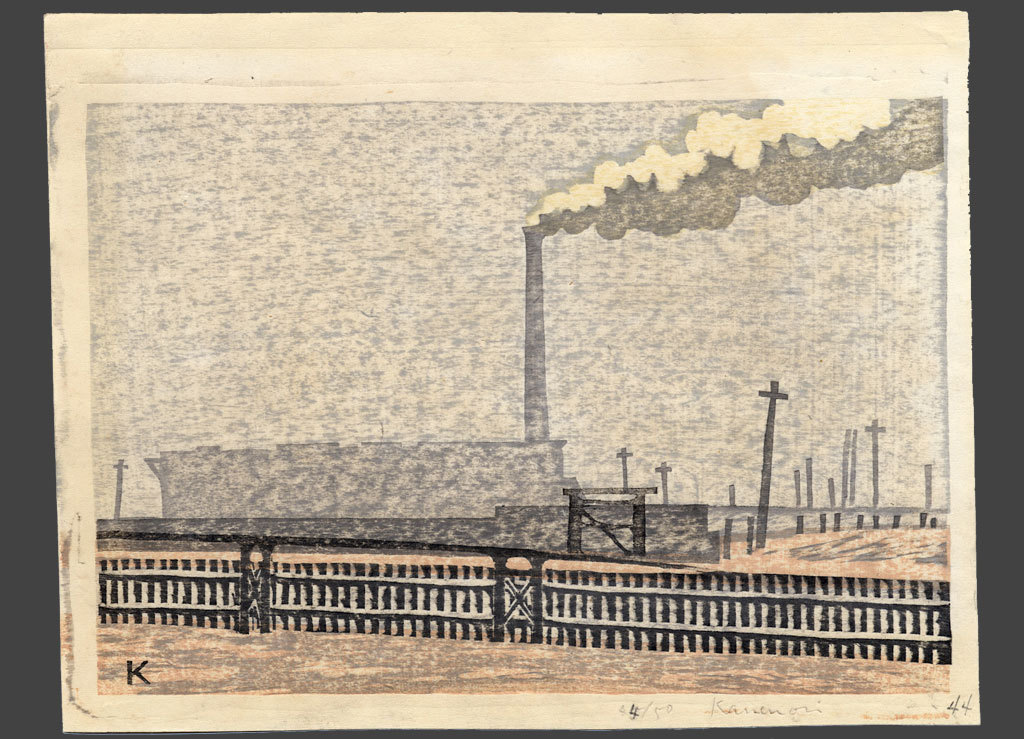
Biography
Kanenori Suwa (諏訪兼紀, 1897-1932) belonged to the second generation of sōsaku-hanga (creative print) artists — the printmakers who took up the movement's radical principle in the 1920s after the founding gestures of Kanae Yamamoto, whose 1904 woodcut Fisherman had declared that the artist, not a professional craftsman, should design, carve and print every impression by hand.
Born in 1897 — by most accounts in Kagoshima Prefecture — Suwa lost his father early and was raised by his mother in Kobe, where he began making woodblock prints as a teenager. In 1914 he moved to Tokyo and studied Western-style painting under Fujishima Takeji at the Hongō painting institute. The decisive turn came in 1919, when he saw the first exhibition of the Japan Creative Print Association (Nihon Sōsaku-Hanga Kyōkai) at the Mitsukoshi department store in Osaka and resolved to devote himself to printmaking. From the early 1920s he exhibited regularly with the association, and in 1927 his work was accepted for the first time into the Teiten, the official Imperial Art Exhibition.
Suwa became an active organiser of the movement during its most productive decade. In 1928 he was among the founders of the Takujōsha print group, and the following year he helped establish the Creative Print Club (Sōsaku-Hanga Kurabu). He contributed prints to the New Tokyo Hundred Views (Shin Tōkyō Hyakkei), the club's collaborative series recording the modern city rebuilt after the 1923 Great Kantō Earthquake, among them a view of the Shinbashi Enbujō theatre. In 1931 he took part in the founding of the Japan Print Association (Nihon Hanga Kyōkai), the umbrella body that consolidated the creative-print movement, and he also worked in advertising design for the Shiseido cosmetics company.
Like his fellow sōsaku-hanga printmakers, Suwa prized the direct, physical engagement with the block that the movement valued above all — the visible gouge marks of the carving tools, the irregularities of hand printing, and the grain of the wood itself treated as an expressive element rather than a flaw to be suppressed. This aesthetic stood in deliberate opposition to the polished, artisan-executed surfaces of shin-hanga, asserting the artist's own hand as the source of a print's authenticity.
Suwa died of acute appendicitis in Tokyo on 29 April 1932. His early death cut short a career still in its formative phase and left only a small surviving body of work, but his part in the founding of the Takujōsha, the Creative Print Club and the Japan Print Association places him among the generation that carried sōsaku-hanga from a fringe experiment to an established art form.
Key Facts
- Active Period
- 1897–1932
- Nationality
- 🇯🇵Japan
- Movement
- Sōsaku-hanga
- Works Indexed
- 14
Frequently Asked Questions
Kanenori Suwa (諏訪兼紀, 1897-1932) belonged to the second generation of sōsaku-hanga (creative print) artists — the printmakers who took up the movement's radical principle in the 1920s after the founding gestures of Kanae Yamamoto, whose 1904 woodcut Fisherman had declared that the artist, not a professional craftsman, should design, carve and print every impression by hand.
Kanenori Suwa was active from 1897 to 1932. They were associated with the Sōsaku-hanga movement.
Kanenori Suwa's work was shaped by the Sōsaku-hanga tradition in Japanese woodblock printmaking. Sōsaku-hanga: ## What is sōsaku-hanga? Sōsaku-hanga (創作版画, "creative prints") was a twentieth-century Japanese print movement defined by a single commitment: the artist must design, carve, and print every work alone.
Kanenori Suwa's prints frequently feature urban scenes, architecture, trees, temples & shrines, gardens, landscapes.
Original prints by Kanenori Suwa can be found in collections including Art of Japan, metro, British Museum.
Woodblock Prints by Kanenori Suwa (14)
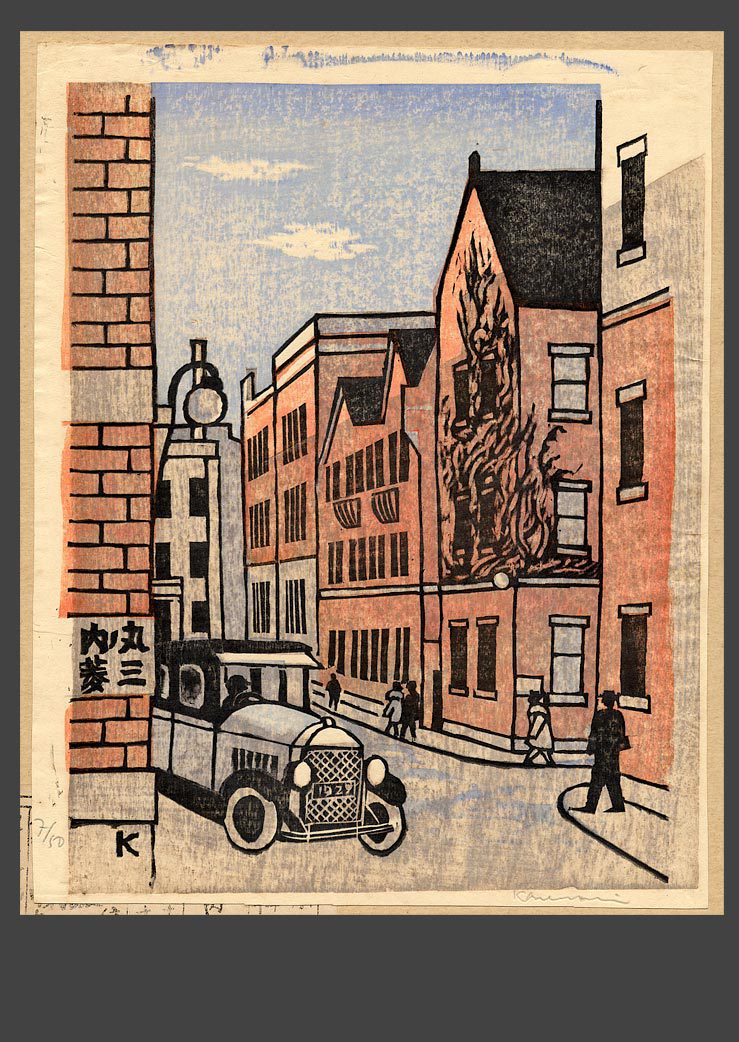
#5 Marunouchi Naka-dori
Woodblock print
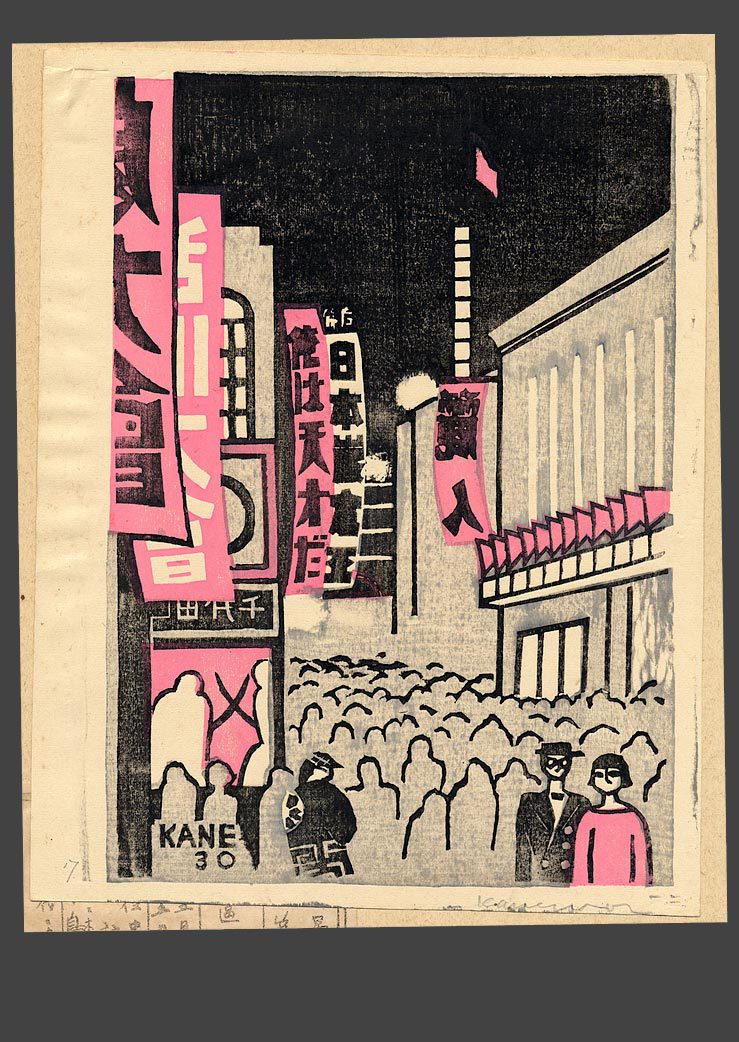
#67 Asakusa
Woodblock print
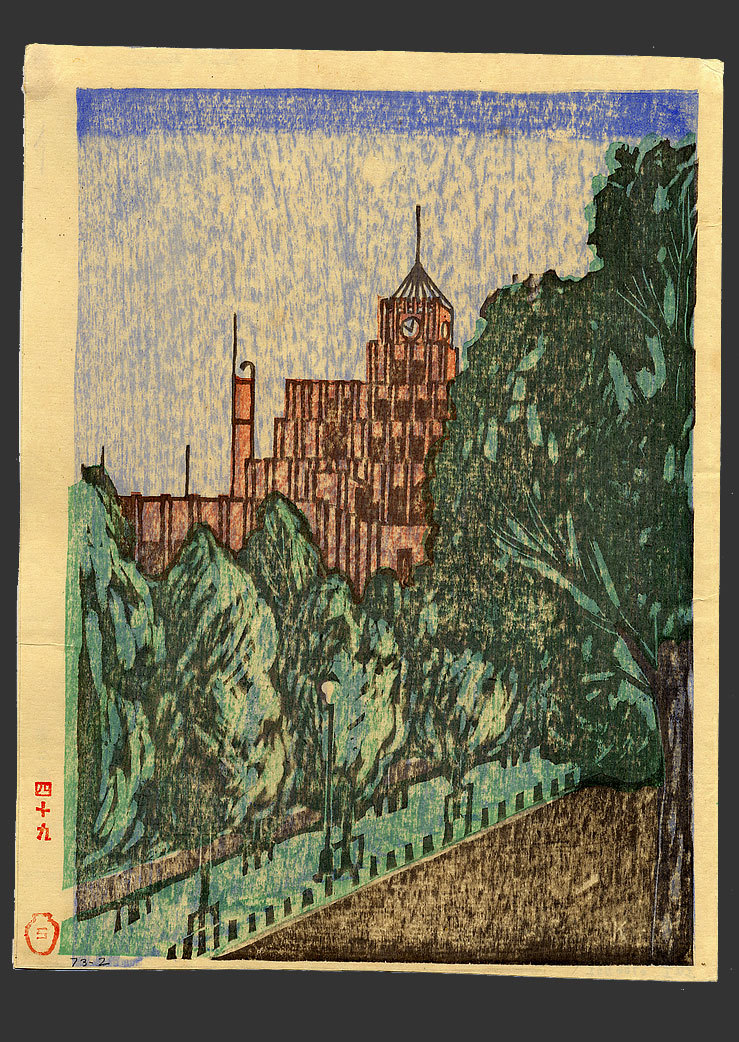
City Hall, Hibiya
Woodblock print

Hibiya Park
Woodblock print
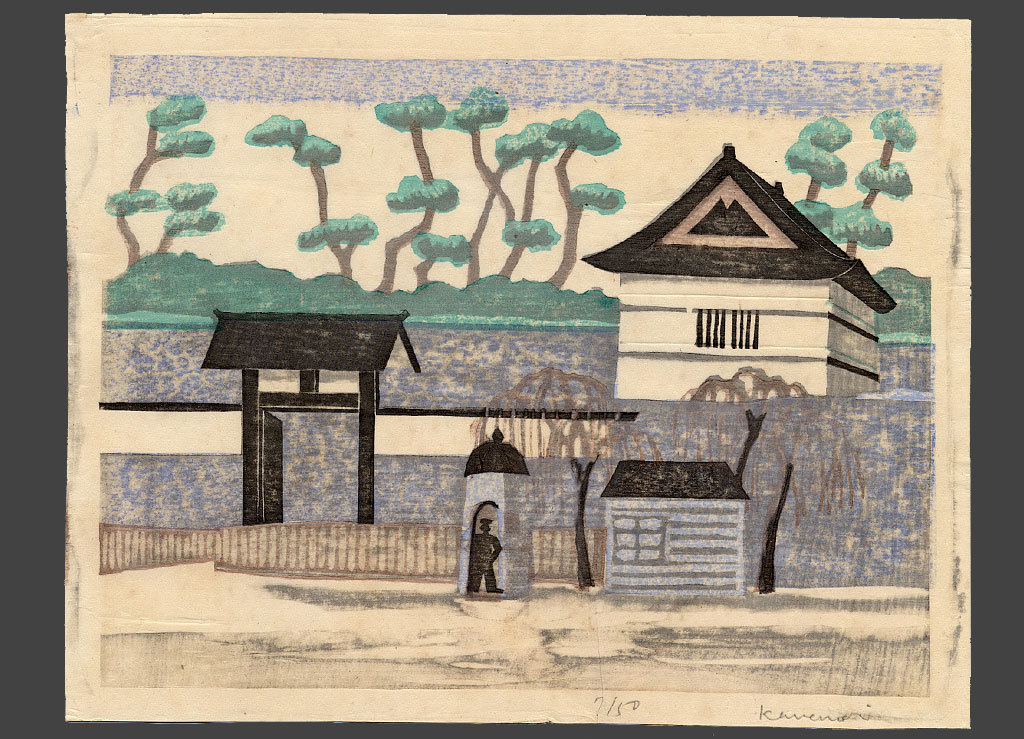
Sakurada Gate
Woodblock print
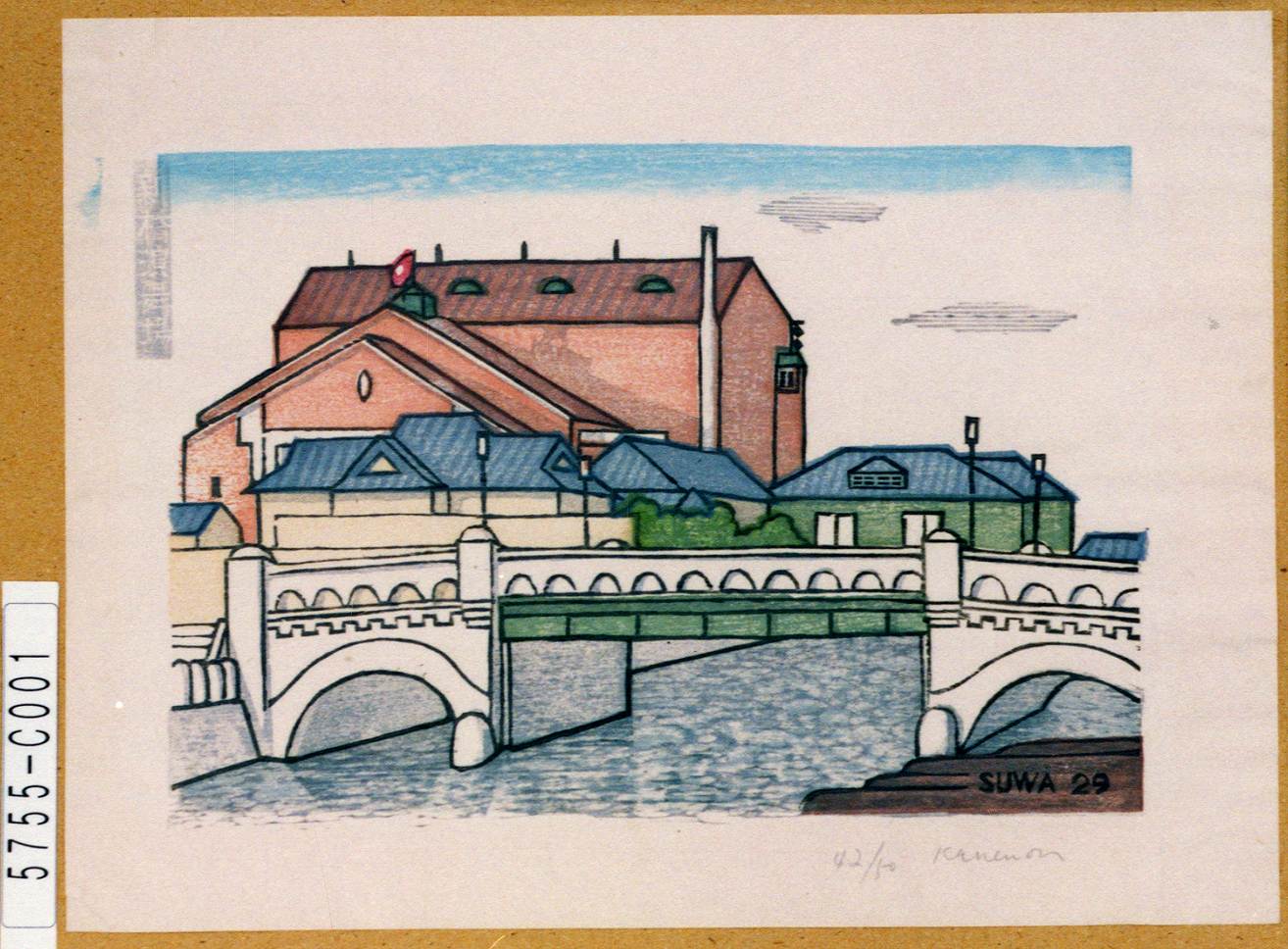
Tokyo Metro Library
Woodblock print
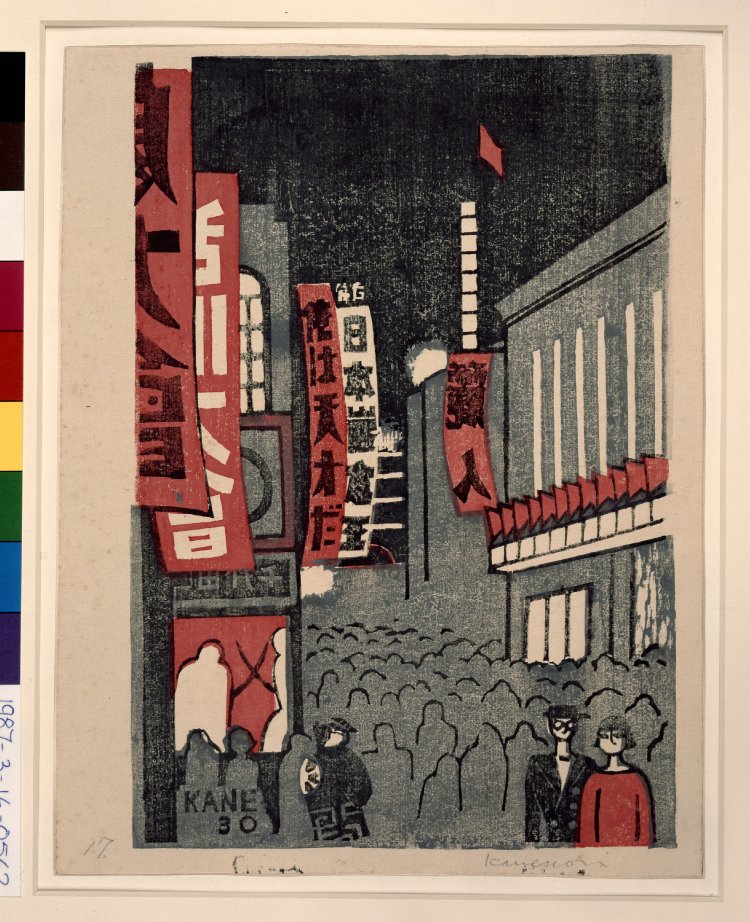
Asakusa rokku (Sixth District of Asakusa) / Shin Tokyo hyakkei (One Hundred New Views of Tokyo, No. 67)
Woodblock print
#38 Fukugawa Incinerator
Woodblock print

Grove in Kamo
Mokuhanga (Japanese woodblock)

Hibiya Park
Mokuhanga (Japanese woodblock)

Shibaura drawbridge
Mokuhanga (Japanese woodblock)

Fukagawa Garbage Incinerator
Mokuhanga (Japanese woodblock)

Woman Reading
Mokuhanga (Japanese woodblock)

After a pose
Mokuhanga (Japanese woodblock)