
Biography
Katsukawa Shunchō (active c. 1783–1795) was a Japanese ukiyo-e printmaker whose elegant bijin-ga (pictures of beautiful women) made him one of the distinctive figures of the late Tenmei era. Trained within the Katsukawa school under Katsukawa Shunshō, Shunchō is a notable case of a master whose Edo bijin-ga so closely echoed the contemporary work of Torii Kiyonaga that his prints have repeatedly been confused with, and attributed to, Kiyonaga. His career was brief: in little more than a decade he produced refined depictions of Yoshiwara courtesans and fashionable Edo women at leisure before his signed print work ceased around 1795.
Little is known of Shunchō's life outside his print signatures. His birth date and origins are not documented; by the early 1780s he was producing signed work as a member of the studio of Katsukawa Shunshō, the dominant master of yakusha-e (actor prints), whose workshop also trained Shunkō, Shun'ei, and the young Hokusai. Early in his career Shunchō followed the Katsukawa house specialty of hosoban (narrow-format) actor prints depicting kabuki performers, but he moved away from actor portraiture as his independent practice took shape.
What distinguishes Shunchō from his Katsukawa colleagues is the decisive turn he made toward Edo bijin-ga in the manner of Torii Kiyonaga. Through the Tenmei era (1781–1789) Kiyonaga had reshaped the depiction of women in ukiyo-e, replacing the dainty figures of an earlier generation with tall, stately women whose elongated proportions, calm faces, and naturalistic settings amounted to a reinvention of the genre. Shunchō absorbed this manner so thoroughly that connoisseurs have repeatedly mistaken his prints for Kiyonaga's. The two artists shared a taste for large ōban triptychs of women promenading in Edo, for chūban-format townscapes, and for the vertically compressed pillar-print (hashira-e) format. Yet a trained eye finds Shunchō's individual hand: a slightly softer line, a fondness for crisp pattern in kimono fabric, and warmer color harmonies than Kiyonaga's cooler palette.
Shunchō was a chronicler of Edo's pleasure quarters and famous places. He returned repeatedly to the Yoshiwara, the licensed pleasure district whose courtesans were the central celebrities of ukiyo-e iconography — among his subjects are courtesans gathered before the great gate (Ōmon) of the Shin-Yoshiwara. He worked in the seasonal and topographical themes that structured so much Tenmei-era bijin-ga, treating Edo as a layered text of seasons, fashions, and famous places read through the dress and gestures of fashionable women, as in his depiction of flower-viewing through the four seasons (Shiki no hanami). He also worked in the demanding hashira-e (pillar-print) format, whose elongated vertical field — many times taller than it was wide — required ingenious compositional solutions, and in the mitate-e (parody picture) mode that flourished in his decade, transposing classical and theatrical scenes into a contemporary register.
Shunchō's print career ended about as abruptly as it had begun: after roughly 1795 his name disappears from publishers' records, and little is firmly documented about his subsequent life. His close stylistic kinship with Kiyonaga meant that many of his prints continued to be cataloged as Kiyonaga's well into the modern period. Today, holdings in major collections — among them the British Museum, the Metropolitan Museum of Art, the Museum of Fine Arts, Boston, and the Art Institute of Chicago — have supported the systematic reattribution of his work, and Shunchō is now recognized as an essential second voice in the Tenmei bijin-ga current: neither a mere imitator nor a footnote, but a Katsukawa-trained master who carried his school's commitment to figure observation into a new genre.
Key Facts
- Nationality
- 🇯🇵Japan
- Movement
- Ukiyo-e
- Works Indexed
- 65
Frequently Asked Questions
Katsukawa Shunchō (active c. 1783–1795) was a Japanese ukiyo-e printmaker whose elegant bijin-ga (pictures of beautiful women) made him one of the distinctive figures of the late Tenmei era. Trained within the Katsukawa school under Katsukawa Shunshō, Shunchō is a notable case of a master whose Edo bijin-ga so closely echoed the contemporary work of Torii Kiyonaga that his prints have repeatedly been confused with, and attributed to, Kiyonaga. His career was brief: in little more than a decade he produced refined depictions of Yoshiwara courtesans and fashionable Edo women at leisure before his signed print work ceased around 1795.
Katsukawa Shunchō's work was shaped by the Ukiyo-e tradition in Japanese woodblock printmaking. Ukiyo-e: ## What is ukiyo-e? Ukiyo-e ([浮世絵](/glossary/ukiyo-e)) — literally "pictures of the floating world" — is the Edo-period Japanese print and painting tradition that flourished from roughly 1660 to 1868, depicting the pleasures of urban life in Edo (modern Tokyo): courtesans, kabuki actors, sumo wrestlers, famous landscapes, and seasonal beauties.
Katsukawa Shunchō's prints frequently feature birds & flowers, spring, winter, moonlight, sumo, bridges.
Original prints by Katsukawa Shunchō can be found in collections including Art Institute of Chicago, Metropolitan Museum of Art, Cleveland Museum of Art.
Woodblock Prints by Katsukawa Shunchō (65)
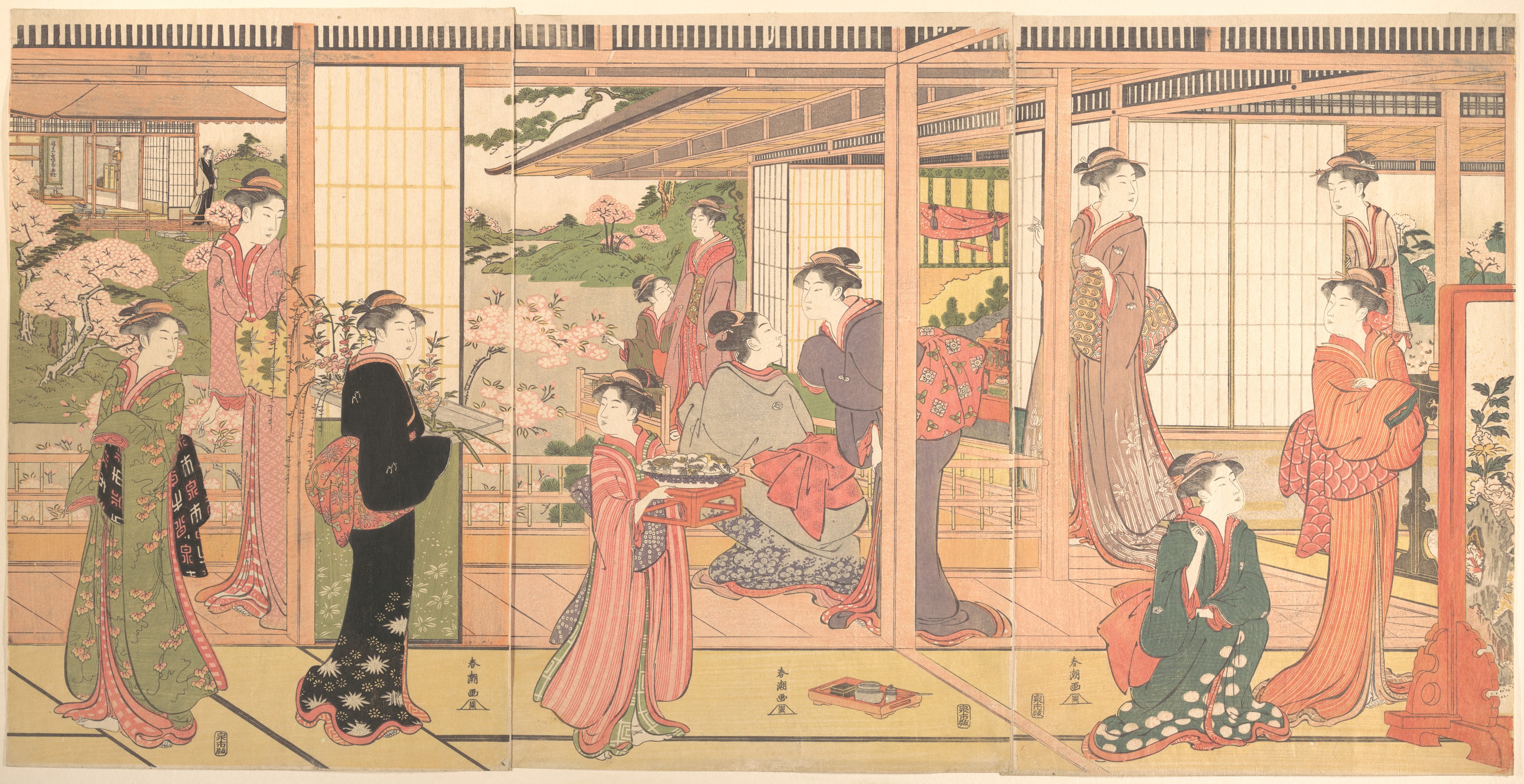
Mansion Opening onto a Garden
ca. 1786
Woodblock print; ink and color on paper

Iris Garden
c. 1781/89
Color woodblock print; oban triptych

Women and Children Viewing the Cherry Blossoms at Gotenyama
ca. 1787
Triptych of woodblock prints; ink and color on paper
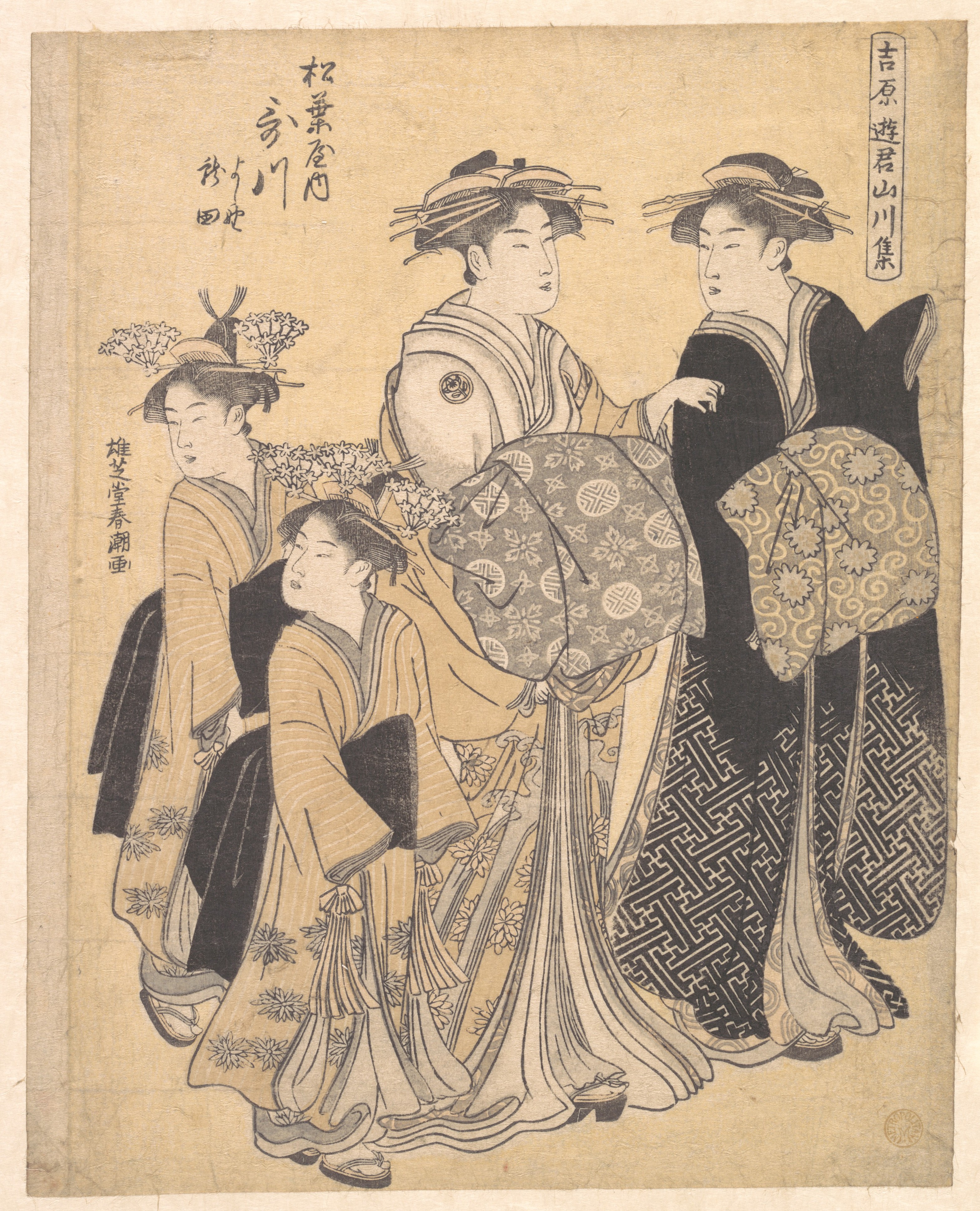
The Oiran Utagawa of Matsubaya attended by Her Kamuro Yoshino and Tatsuta
ca. 1788
Woodblock print; ink and color on paper

Interior View
ca. 1788
Woodblock print; ink and color on paper

Moon, from the series "Snow, Moon, and Flowers of the Floating World (Ukiyo setsugekka)"
c. 1784/85
Color woodblock print; oban
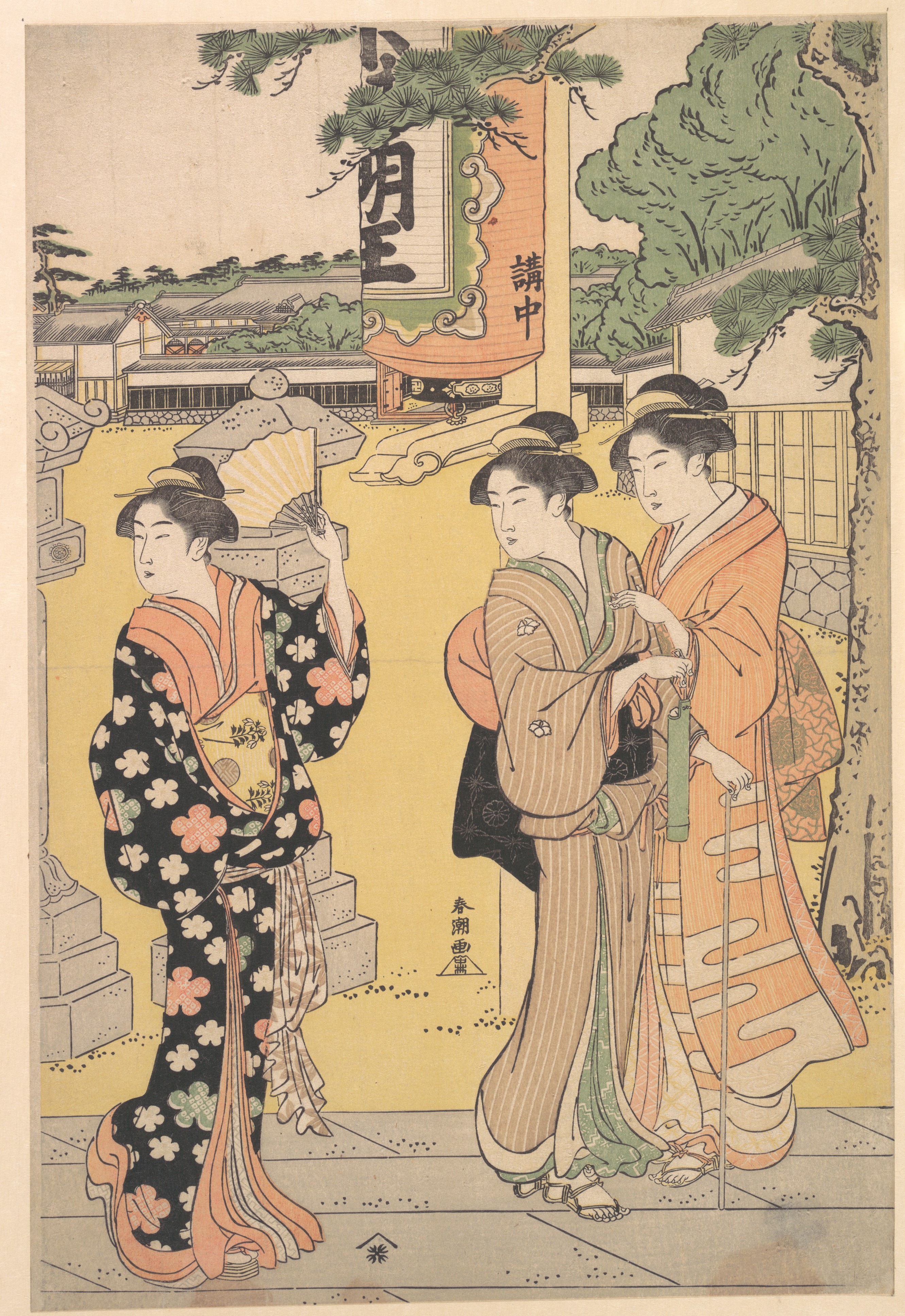
Fair Visitors in the Compound of a Buddhist Temple
ca. 1789
One sheet of a triptych of woodblock prints; ink and color on paper

Snow, from the series "Snow, Moon, and Flowers of the Floating World (Ukiyo setsugekka)"
c. 1784/85
Color woodblock print; oban
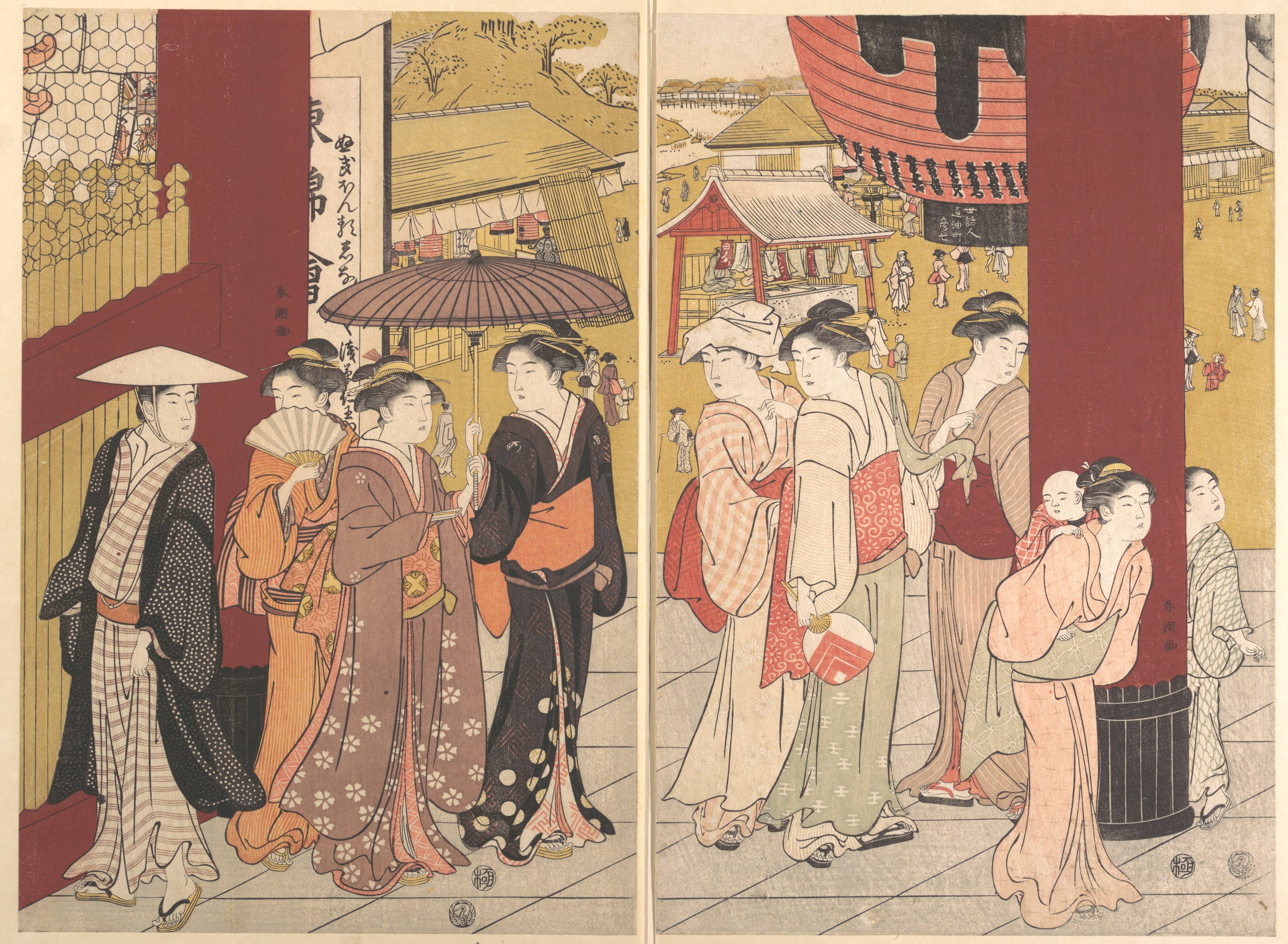
ca. 1789
Diptych of woodblock prints; ink and color on paper

Flowers, from the series "Snow, Moon, and Flowers of the Floating World (Ukiyo setsugekka)"
c. 1784/85
Color woodblock print; oban

Two Women Accompanied by a Maid
1780–1795
Woodblock print; ink and color on paper

Gathering Young Flowers
Middle sheet of a triptych of woodblock prints; ink and color on paper

Votive Offering
1780s
Color woodblock print; two sheets of oban pentaptych
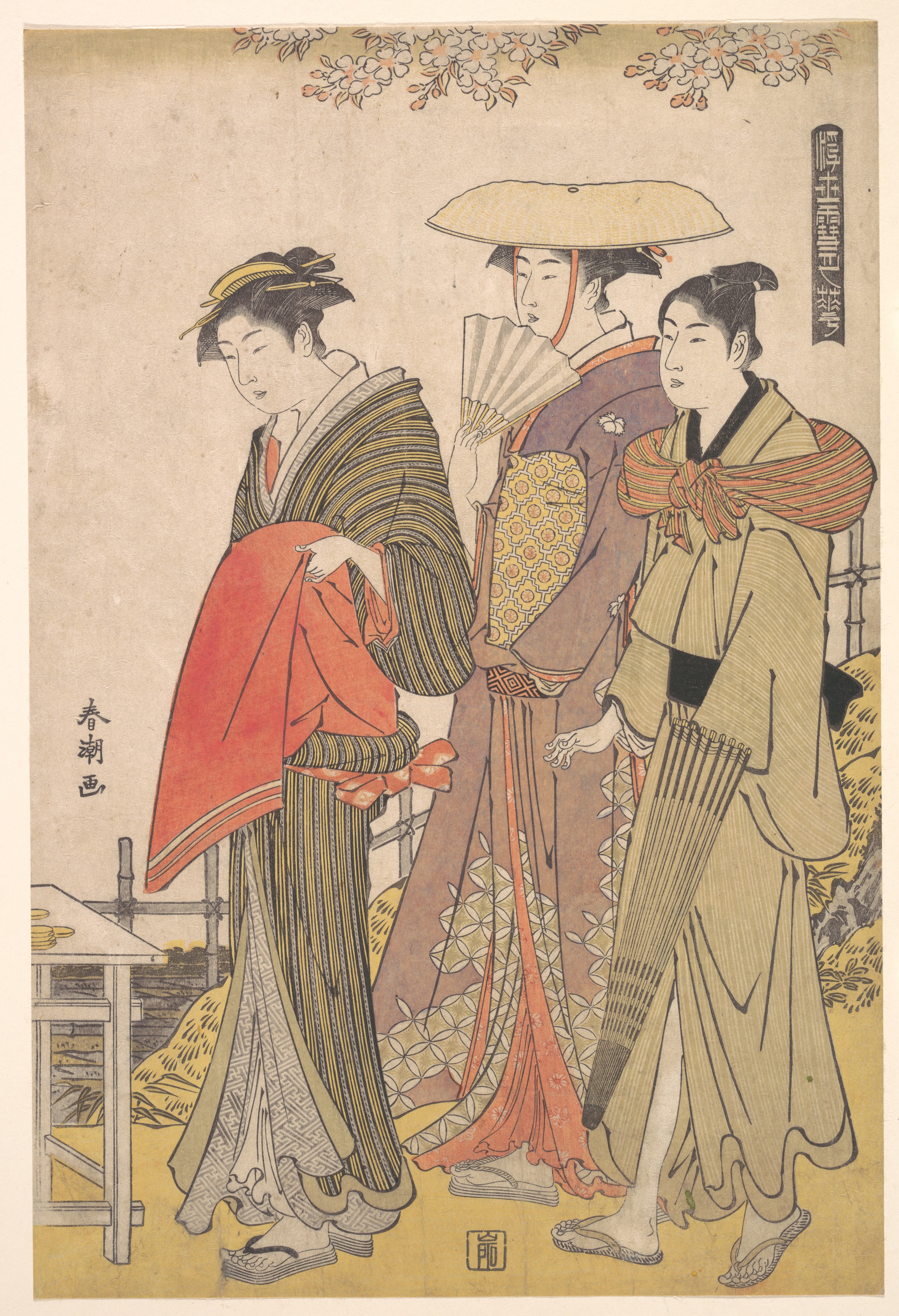
The Beauty of the Floating World
1780–1795
Woodblock print; ink and color on paper

Women Boarding a Pleasure Boat
1780s
Color woodblock print; oban diptych

Young Lady by the Shore
Woodblock print; ink and color on paper

Women Walking by a Moat
1780s
Color woodblock print; two sheets from oban triptych

Woman and Small Boy
Woodblock print; ink and color on paper

A Picnic Party at Hagidera
c. 1785/95
Diptych of woodblock prints; ink and color on paper
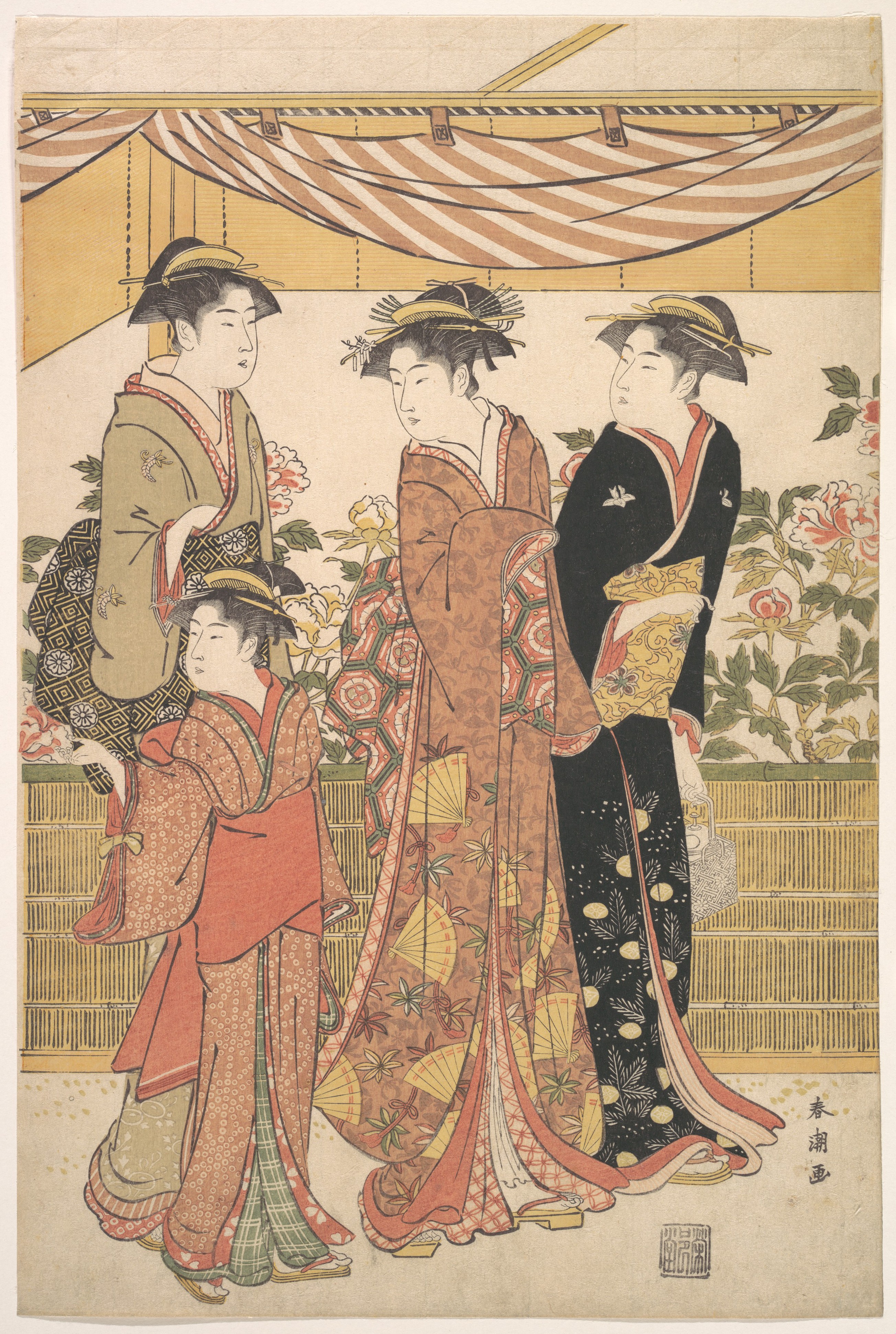
The Bōtan Show
ca. 1790
Woodblock print; ink and color on paper
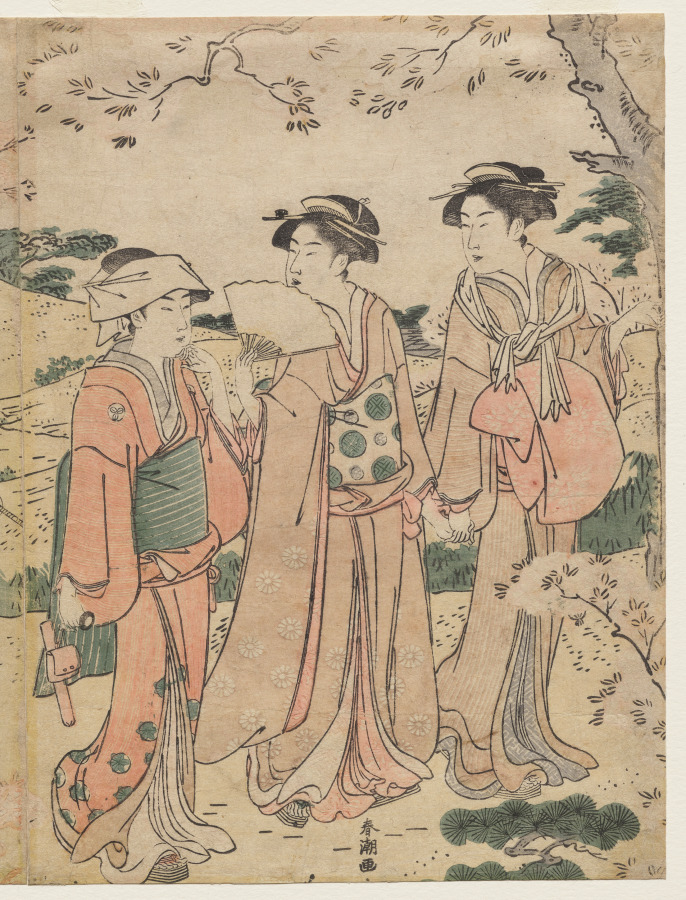
Women Viewing Cherry Blossoms at Asukayama
1780s
color woodblock print

Group of Young Women on the Veranda of a Tea House
Woodblock print; ink and color on paper

Women on a Balcony of a Yoshiwara Teahouse
c. 1780s
Color woodblock print; left sheet of oban triptych

Women Admiring Peonies
c. 1789/1801
Color woodblock print; oban triptych