
Biography
Komura Settai (小村雪岱, 1887–1940) was a Japanese nihonga painter, book illustrator, and print designer whose refined, elegant aesthetic made him one of the most distinctive artistic voices of the Taisho and early Showa periods. Known for his exquisite bijin-ga and literary illustrations that combined traditional Japanese pictorial conventions with a modern sense of design, Settai created works of haunting beauty that have experienced a significant critical reappraisal in recent decades.
Born in 1887 in Saitama Prefecture near Tokyo, Settai studied nihonga painting and developed a style that was deeply rooted in classical Japanese aesthetics while possessing a spare, modern quality that distinguished it from the more naturalistic approaches of many of his contemporaries. His compositions are characterized by clean lines, flat areas of color, and a sophisticated sense of space and negative space that reflects the influence of traditional Japanese design principles.
Settai's most celebrated work is his book illustration, particularly his designs for the novels of Izumi Kyoka, one of Japan's most important writers of the Meiji and Taisho periods. Kyoka's atmospheric, romantically gothic fiction — set in the twilight world of old Japan's geisha quarters, waterways, and mysterious landscapes — found its ideal visual interpreter in Settai, whose illustrations captured the dreamlike, elegiac quality of the texts with perfect sympathy. The Kyoka illustrations are considered masterpieces of modern Japanese book design and have influenced generations of illustrators and designers.
Settai's woodblock print designs, while fewer in number than his illustrations and paintings, display the same refined aesthetic sensibility. His bijin-ga prints depict women with an ethereal beauty that owes more to the idealized elegance of Heian-period court painting than to the naturalistic observation characteristic of mainstream shin-hanga. His figures seem to inhabit a world removed from everyday reality — a world of literary romance, seasonal mood, and aesthetic contemplation.
His approach to composition was particularly sophisticated. Settai frequently employed bold cropping, asymmetrical arrangements, and the dramatic use of empty space to create compositions of striking originality within the traditional bijin-ga format. Snow, rain, and twilight appear as recurring atmospheric motifs, contributing to the melancholic, romantic mood that pervades his work.
Settai also worked as a stage designer for kabuki and shimpa (new school drama) theater, bringing his refined visual sensibility to the three-dimensional space of the stage. This theatrical work informed his print and illustration compositions, which often possess a quality of staged intimacy — figures arranged in carefully constructed settings that function almost as stage tableaux.
Settai died in 1940 at the age of fifty-three, his career cut short before he could see the full flowering of his influence on subsequent generations of Japanese artists and designers. In recent decades, his work has undergone a significant reappraisal, with exhibitions and publications bringing renewed attention to an artist whose refined aesthetic anticipated many of the concerns of postwar Japanese design. His prints and illustrations are held in public collections, most notably the Saitama Prefectural Museum of Modern Art, which holds the largest collection of his work.
Key Facts
- Active Period
- 1887–1940
- Nationality
- 🇯🇵Japan
- Movement
- Shin-hanga
- Works Indexed
- 54
Frequently Asked Questions
Komura Settai (小村雪岱, 1887–1940) was a Japanese nihonga painter, book illustrator, and print designer whose refined, elegant aesthetic made him one of the most distinctive artistic voices of the Taisho and early Showa periods. Known for his exquisite bijin-ga and literary illustrations that combined traditional Japanese pictorial conventions with a modern sense of design, Settai created works of haunting beauty that have experienced a significant critical reappraisal in recent decades.
Komura Settai was active from 1887 to 1940. They were associated with the Shin-hanga movement.
Komura Settai's work was shaped by the Shin-hanga tradition in Japanese woodblock printmaking. Shin-hanga: ## What is Shin-hanga? Shin-hanga (新版画), literally "new prints," is the early twentieth-century revival of the collaborative Japanese woodblock workshop, organized between roughly 1915 and 1960 by the Tokyo publisher Watanabe Shōzaburō (1885–1962) and a handful of competing houses.
Komura Settai's prints frequently feature bijin-ga, figures, children, birds & flowers, rain, snow scenes.
Original prints by Komura Settai can be found in collections including Art Institute of Chicago, Art of Japan, Japanese Art Open Database, wbp.
Woodblock Prints by Komura Settai (54)

Spring Rain
Early 20th century, or 1940s printing of earlier design
Color woodblock print

Osen-rain
Early 20th century, or 1940s printing of earlier design
Woodblock print; sumizuri-e

Japanese House in Snow / Snowy Morning
Early 20th century, or 1940s printing of earlier design
Color woodblock print
Woman Standing in Kimono on Rokka
Early 20th century, or 1940s printing of earlier design
Woodblock print; sumizuri-e
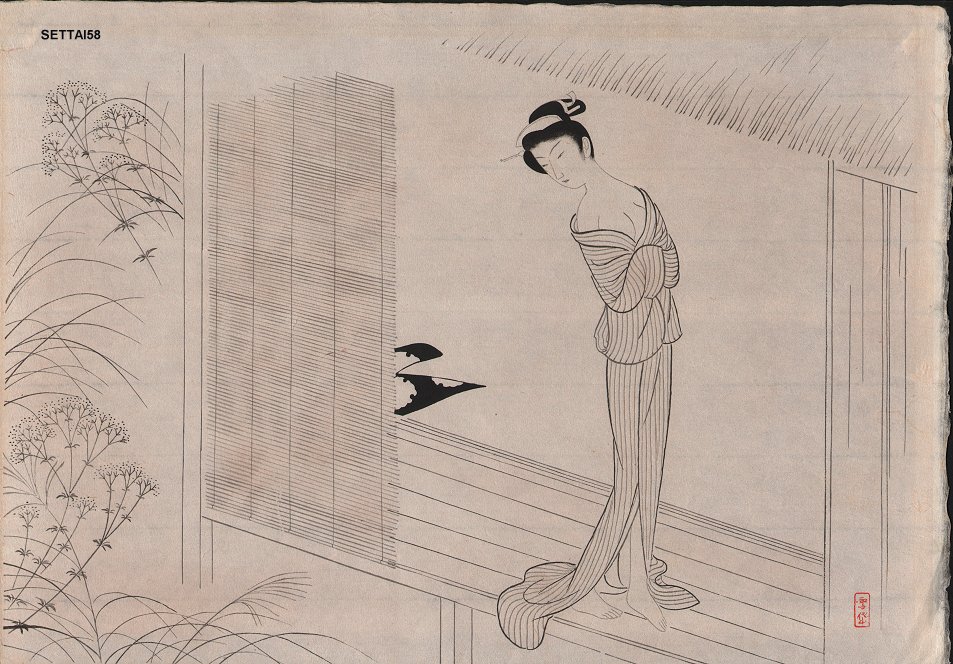
Beauty on veranda, in the style of Harunobu
Not dated (1930's)
Woodblock print
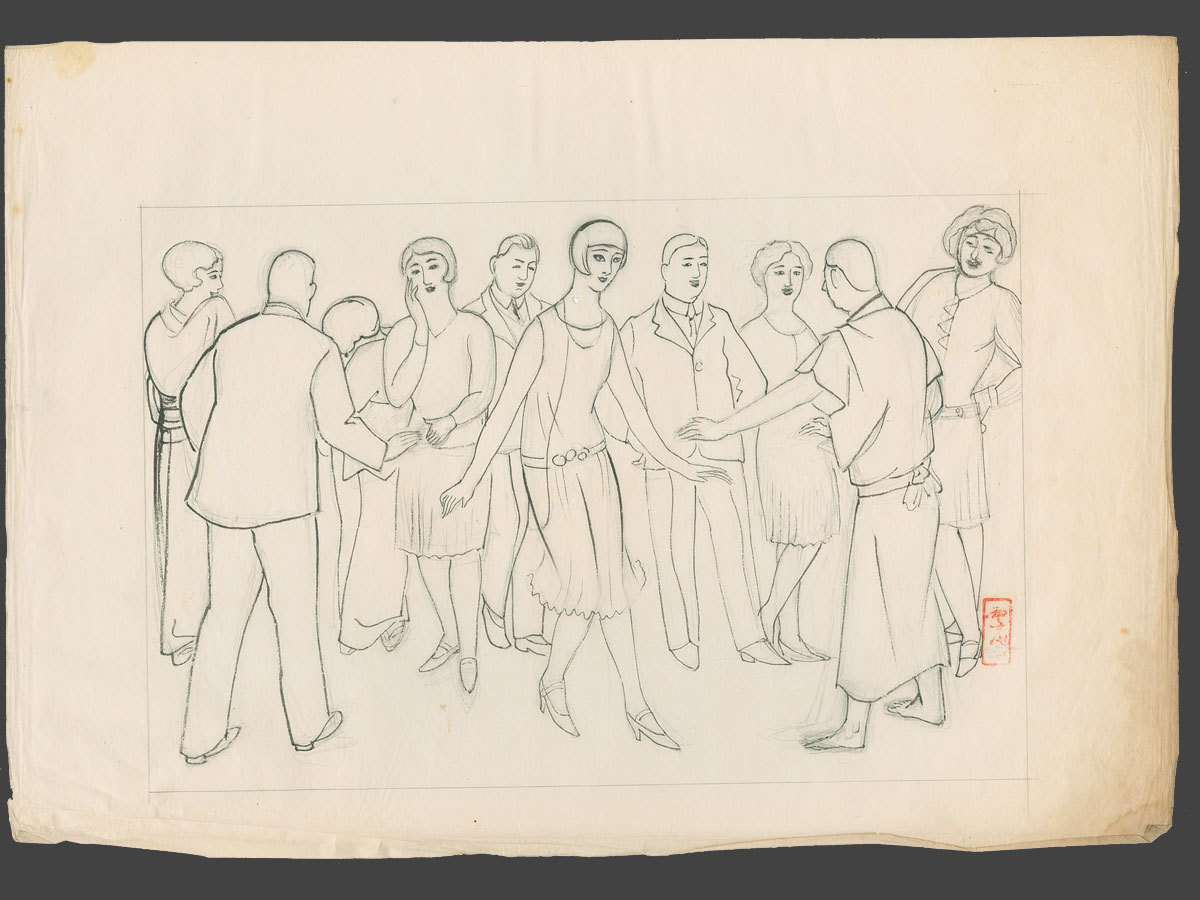
Moga (Modern) Girl Dancing in a Flapper Style Dress
c. 1930
Drawing
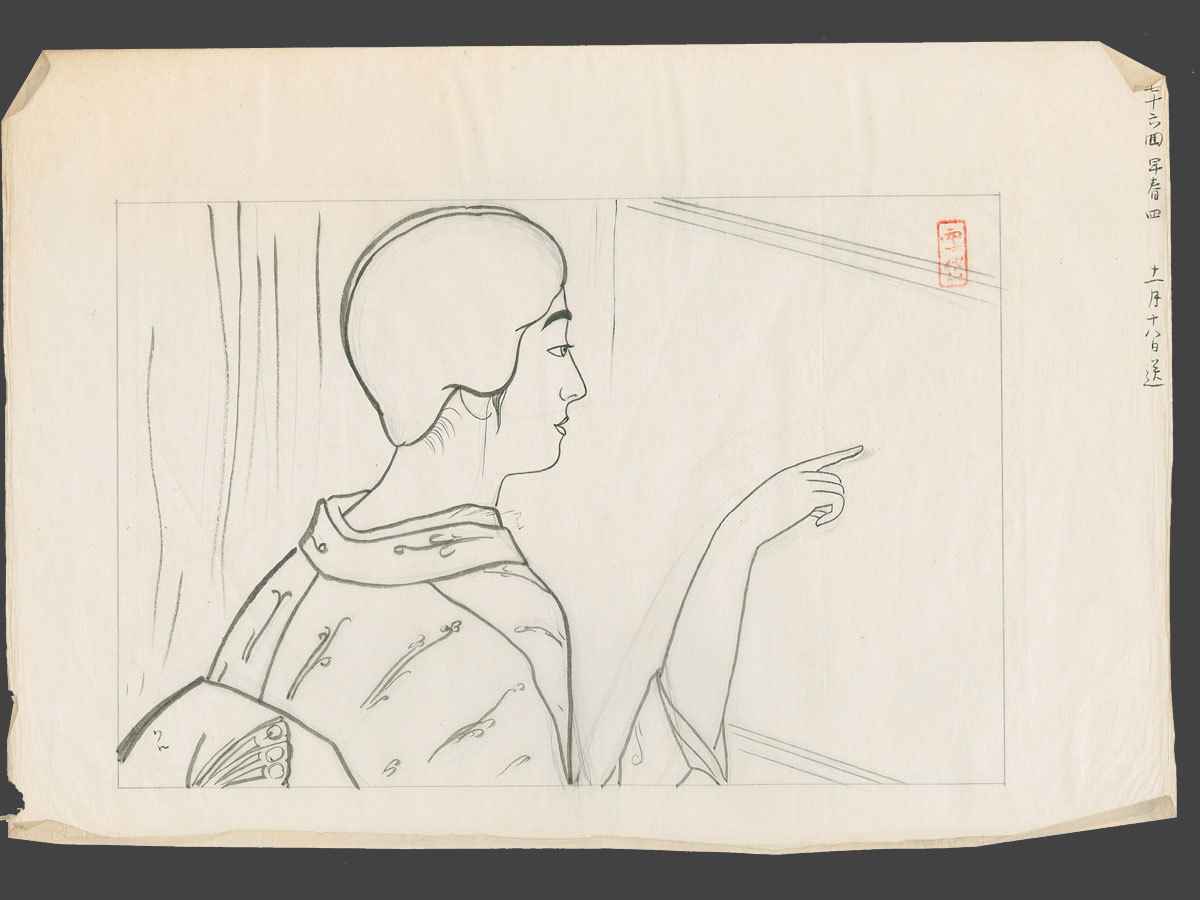
Moga (Modern) Girl
c. 1930
Woodblock print
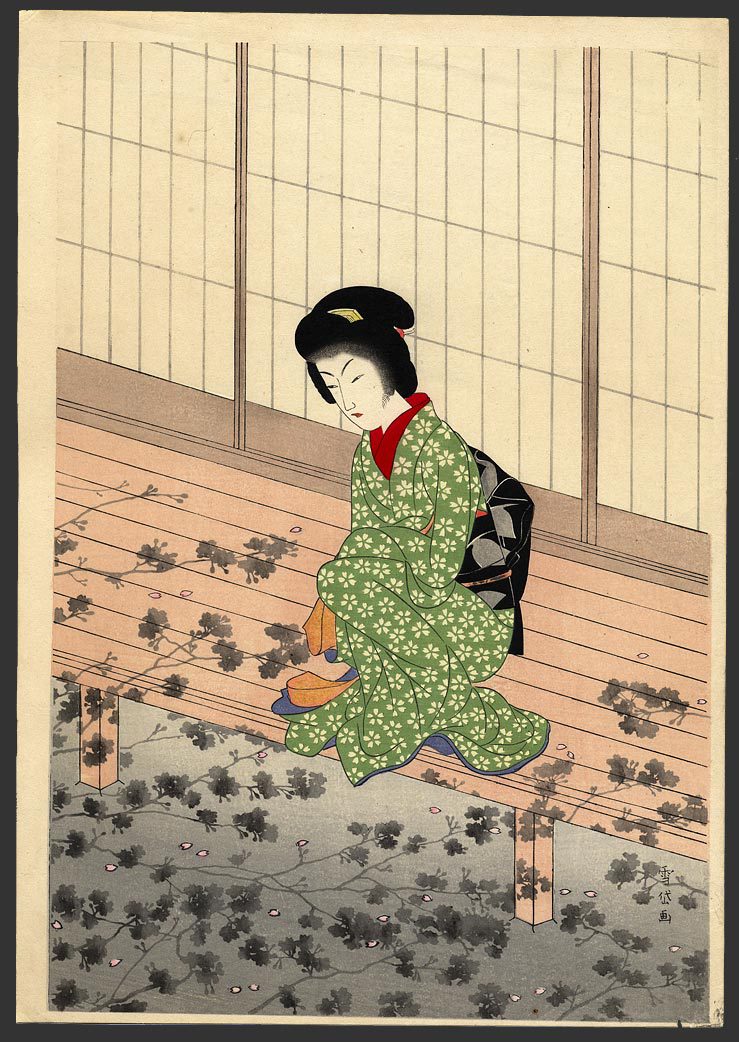
Shadow of a Cherry Tree
1933
Painting
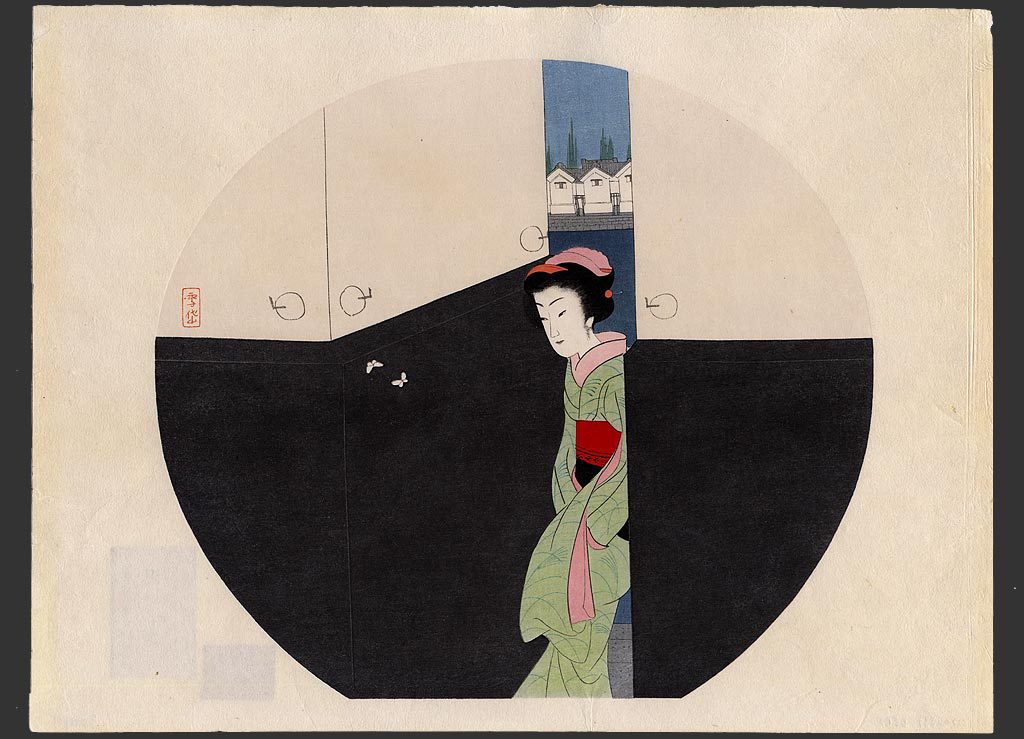
Riverside
1935
Woodblock print
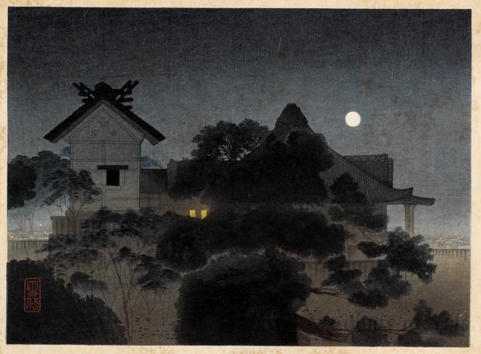
Evening scene at yushima
c. 1935
Woodblock print
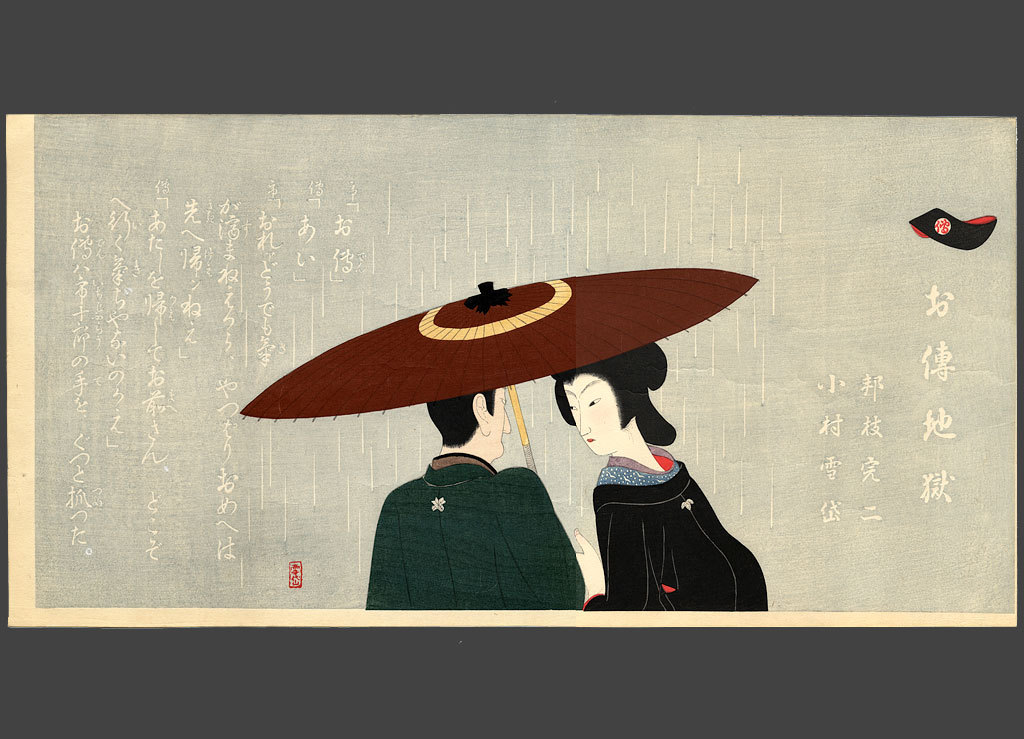
Umbrella
1935
Woodblock print
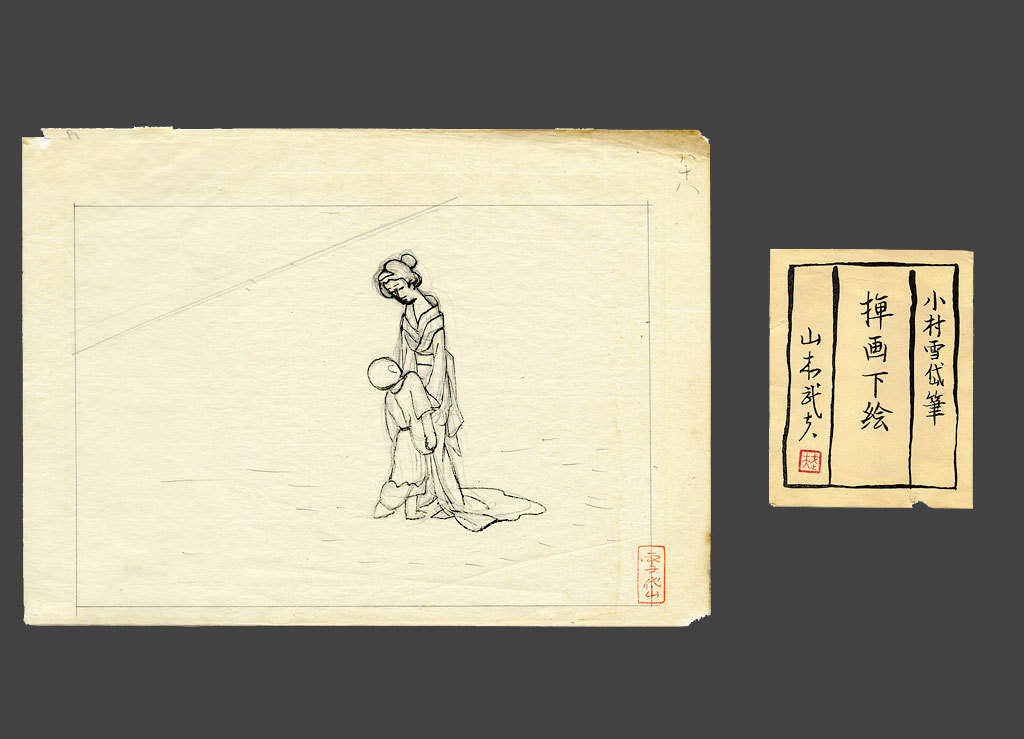
#88 Scene from Act VII
c. 1935
Woodblock print
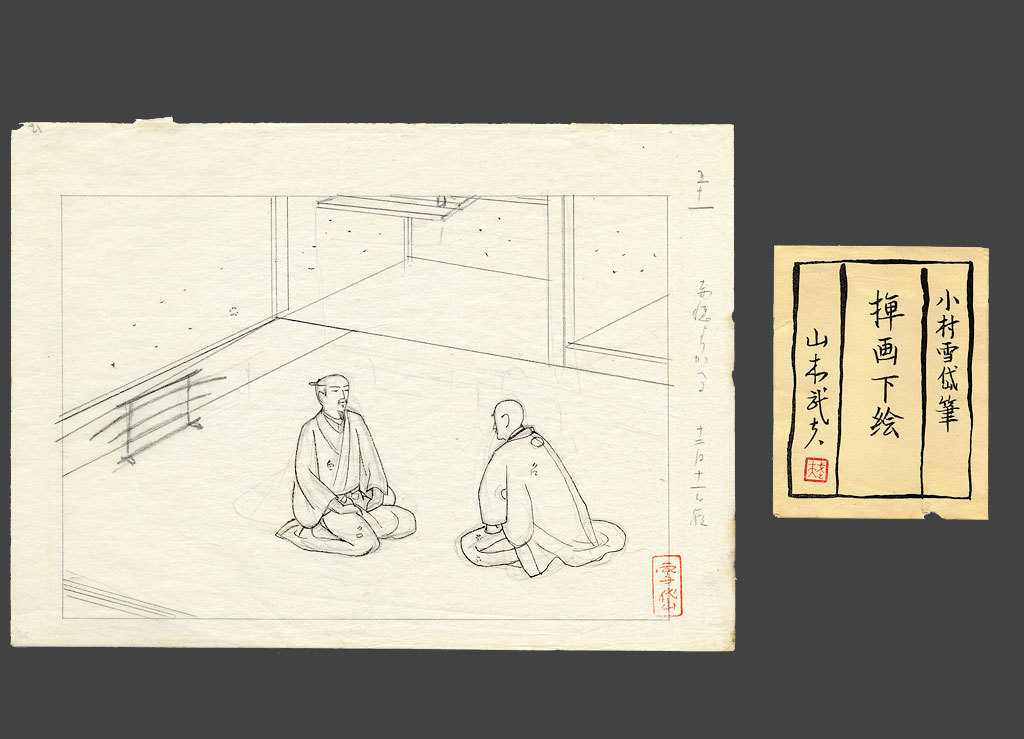
#51 Scene from Act IV
c. 1935
Woodblock print
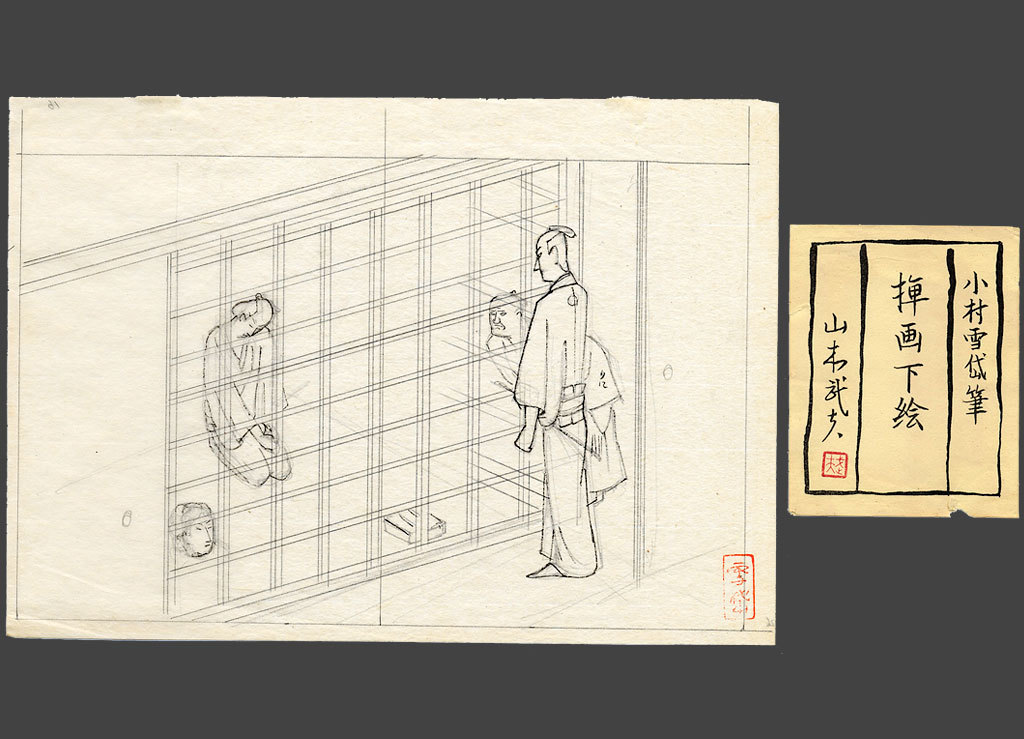
Scene from Act 11
c.1935
Woodblock print
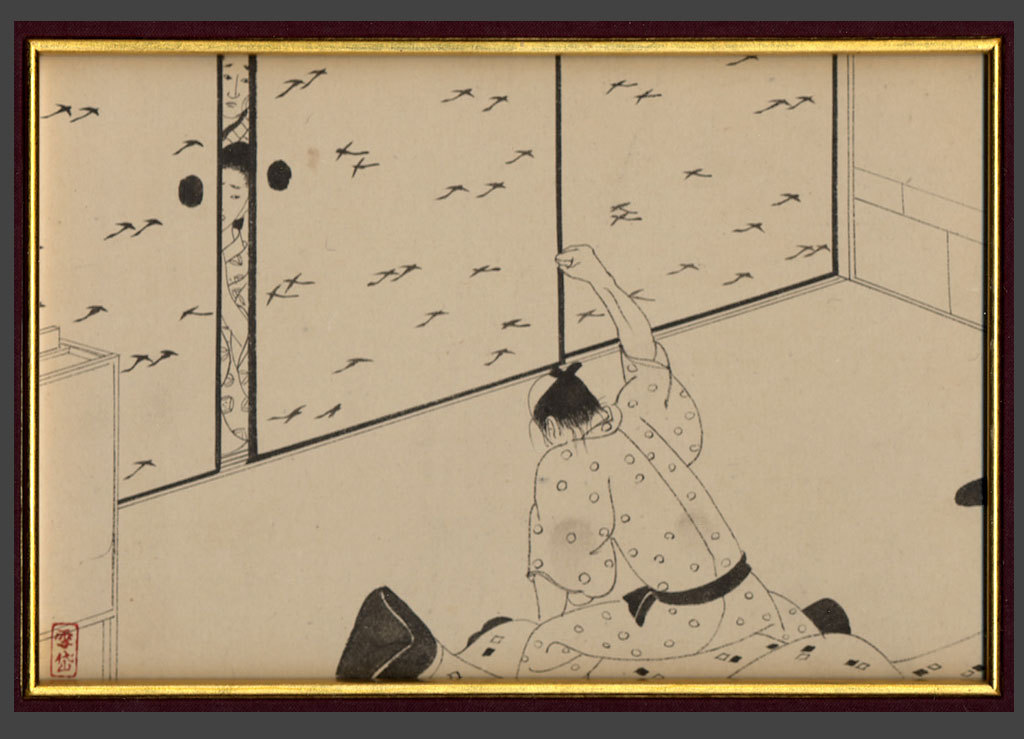
Finished drawing for an early act
c. 1935
Drawing
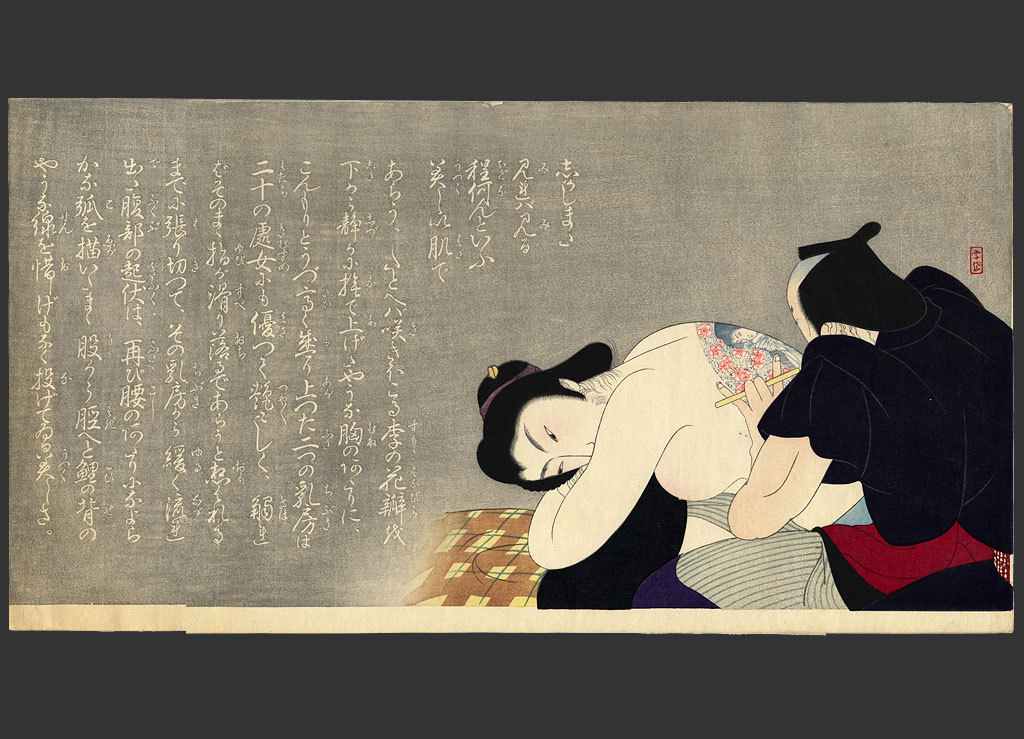
Tattoo
1935
Woodblock print
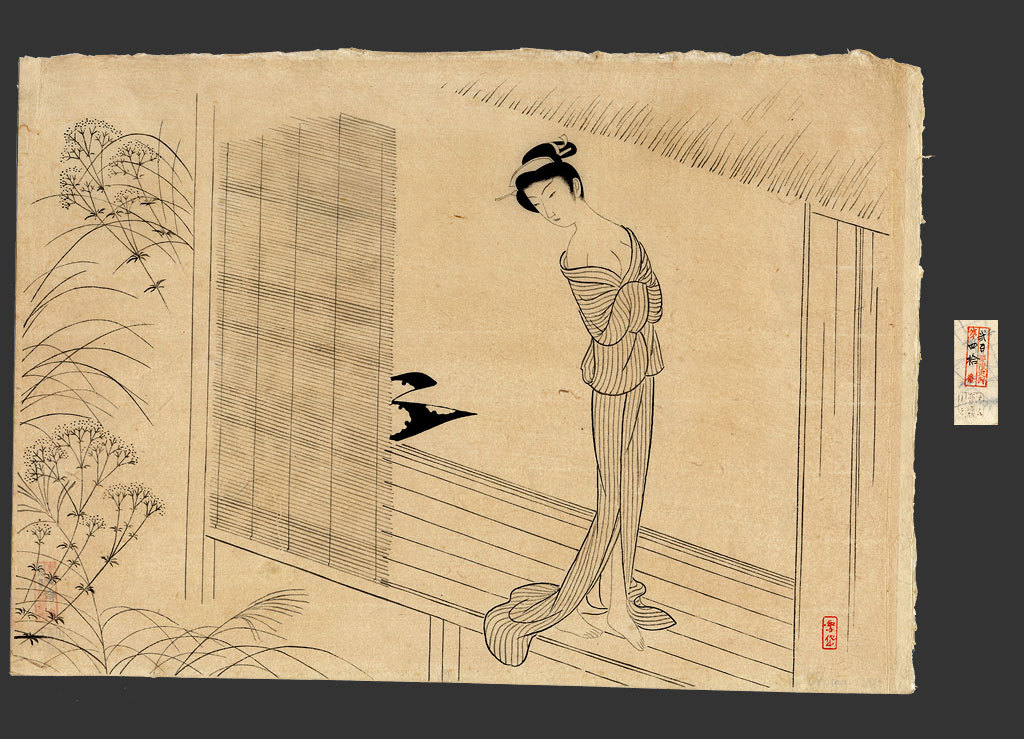
The Heroine Osen after a Bath 40/200
c. 1938
Woodblock print

Woman Kneeling in Shade
c. 1940
Color woodblock print

Night Rain
1940s printing of earlier design
Color woodblock print
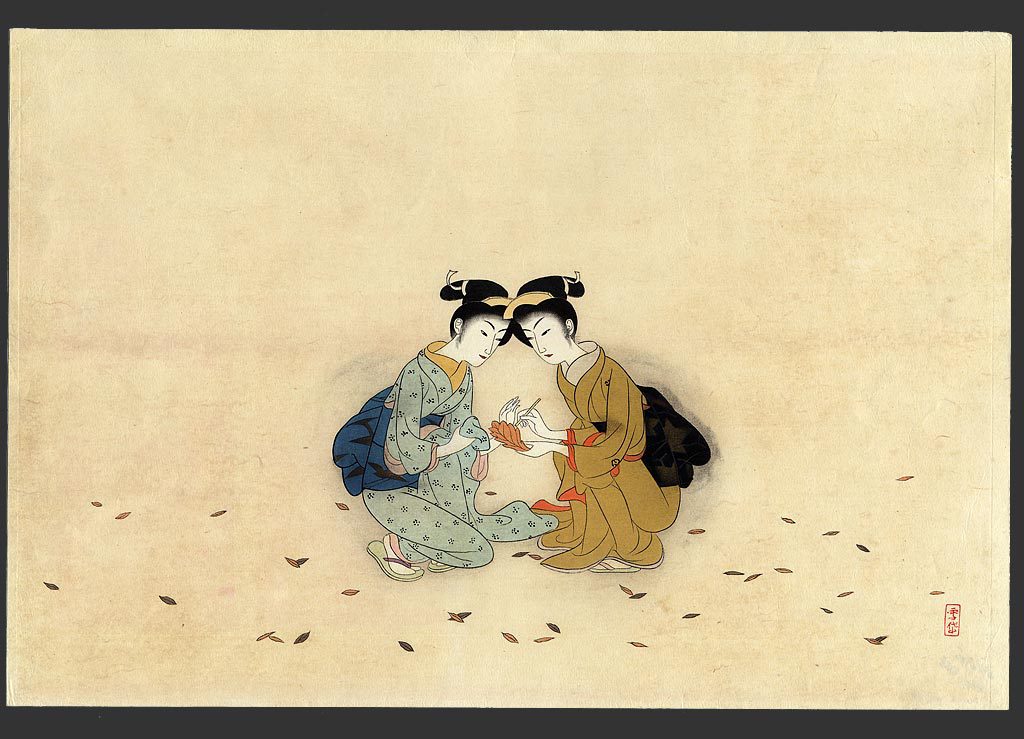
A parody of Hanshin and Shide, two chinese monks
1941
Woodblock print

Torn Calendar
1941
Woodblock print
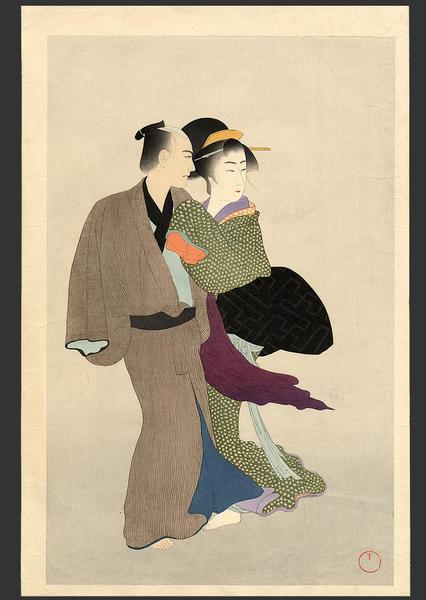
Portrait of Osan and Mohei
1941
Woodblock print
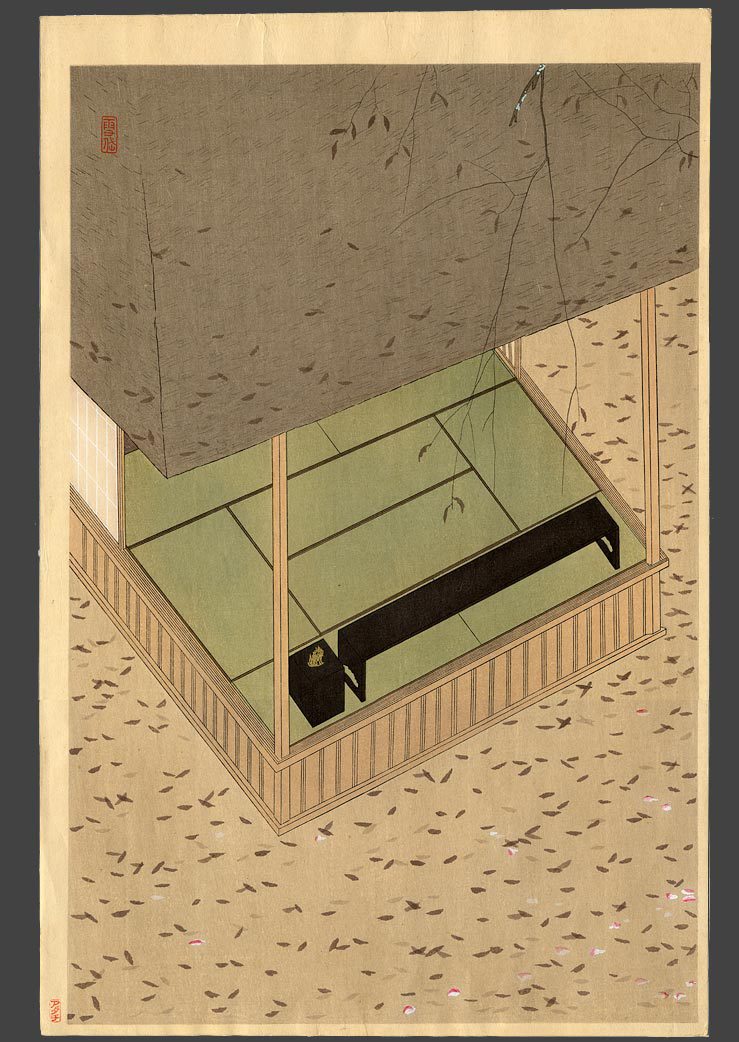
Fallen Leaves
1942
Painting

Parody of Kanzan and Jittoku
1942
Color woodblock print