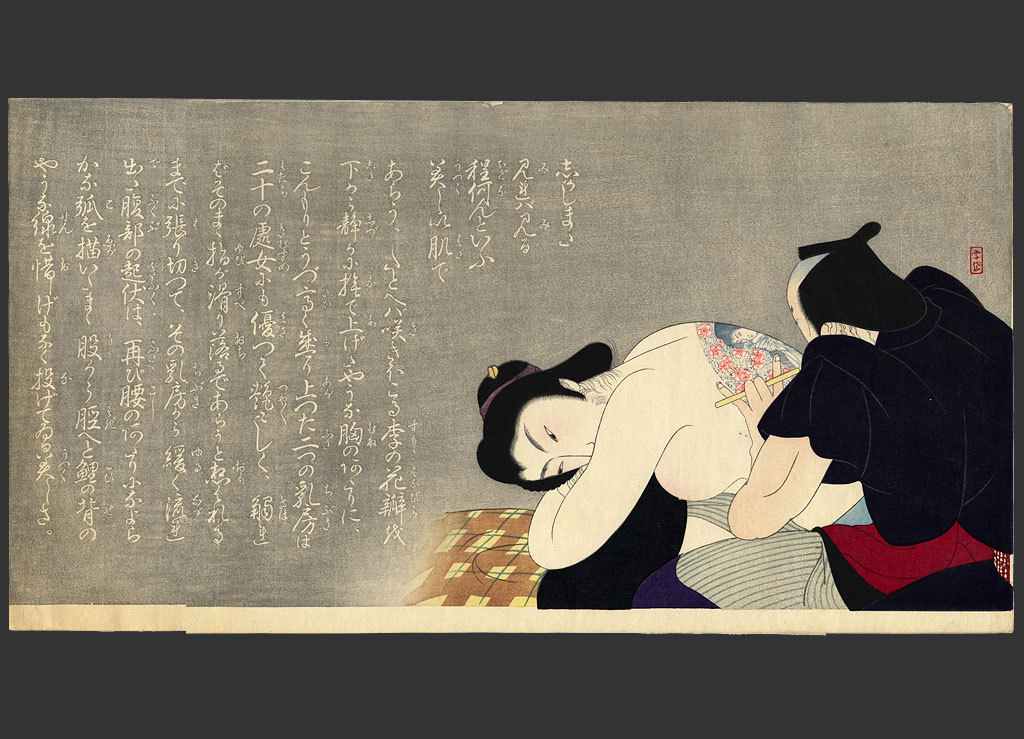
Tattoo
- Date:
- 1935
- Medium:
- Woodblock print
- Format:
- Oban
- Publisher:
- Watanabe Shozaburo
- Source:
- Art of Japan
Description
An elaborate tattoo covering a figure's back or body provides the striking subject of this 1935 oban woodblock print. Japanese tattooing, or irezumi, reached its artistic apex in the Edo period and became a frequent subject in ukiyo-e prints, most famously in the warrior prints of Kuniyoshi. Komura Settai's treatment brings his refined line sensibility to a subject traditionally associated with bolder, more muscular aesthetics. The woodblock medium is particularly apt for depicting tattoos, as both art forms rely on precise line work and flat color areas contained within outlines. Settai likely drew on literary sources for the specific imagery, given his deep engagement with Edo-period fiction where tattooed characters appear as figures of transgressive beauty and underworld glamour.
More Prints by Komura Settai

More Figures Prints
Featured in Collections
Curated cross-cuts that include this print.
Frequently Asked Questions
Tattoo was created by Komura Settai (小村雪岱) in 1935.
Tattoo was published by Watanabe Shozaburo (1935).
Tattoo depicts figures and daily life.