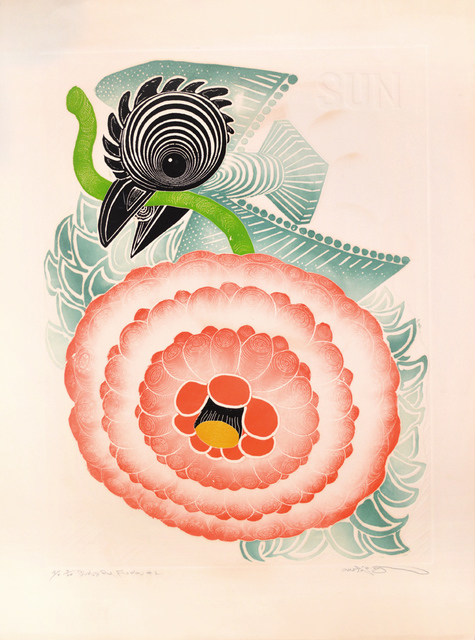
Biography
Motoi Oi (大井基, 1910–2004) was a Japanese-American painter, printmaker, and teacher whose principal contribution to the introduction of East Asian brush traditions in the United States was the founding of the Sumi-e Society of America in 1963. Born in Japan in 1910, he trained in both Western and East Asian painting traditions, working in the brush-and-ink (sumi-e) tradition of Chinese-derived monochrome ink painting as well as Western media. The early phase of his Japanese career was occupied principally with mural commissions; after the Second World War his work was shown in exhibitions throughout Japan. In 1958, in his late forties, he emigrated to the United States and settled in New York City, where he began a parallel teaching career: appointments at Queens College of the City University of New York and at the Brooklyn Institute of Arts and Sciences (the educational arm of what later became the Brooklyn Museum) placed him at the center of the New York art-school circuit during the years when interest in East Asian brushwork was growing among American painters. In 1963 he founded the Sumi-e Society of America as a non-profit educational organization dedicated to fostering appreciation for East Asian brush traditions through publication, workshops, lectures, and juried exhibitions. The Society grew into a national organization with chapters in multiple states, and Oi produced instructional manuals on sumi-e painting that were used in art schools and libraries. His own studio output covers a wider technical range than his pedagogical material implies, encompassing sumi-e brush painting, color etchings — some issued through the Ronin Gallery — and color lithographs; he is best known as a printmaker working in color etching rather than in traditional Japanese woodblock, although his sumi-e teaching practice draws on the same East Asian brush logic that underlies the older woodblock kachō-e tradition. For his work in cultural exchange between the United States and Japan he was awarded the Order of the Rising Sun by the Emperor of Japan, the standard imperial honor extended to civilians who have promoted Japanese culture abroad. His paintings and prints are held in the collections of the Metropolitan Museum of Art and the National Gallery of Art in Washington. The standing of his career in the historical record sits at the intersection of two narratives: the post-war emigration of Japanese artists to New York, and the broader institutional history of East Asian art education in the United States, in which the Sumi-e Society of America continues to function as a leading national membership organization for ink-painting practitioners.
Key Facts
- Active Period
- 1910–2004
- Nationality
- 🇯🇵Japan
- Movement
- Contemporary Mokuhanga
- Works Indexed
- 18
Frequently Asked Questions
Motoi Oi (大井基, 1910–2004) was a Japanese-American painter, printmaker, and teacher whose principal contribution to the introduction of East Asian brush traditions in the United States was the founding of the Sumi-e Society of America in 1963. Born in Japan in 1910, he trained in both Western and East Asian painting traditions, working in the brush-and-ink (sumi-e) tradition of Chinese-derived monochrome ink painting as well as Western media. The early phase of his Japanese career was occupied principally with mural commissions; after the Second World War his work was shown in exhibitions throughout Japan. In 1958, in his late forties, he emigrated to the United States and settled in New York City, where he began a parallel teaching career: appointments at Queens College of the City University of New York and at the Brooklyn Institute of Arts and Sciences (the educational arm of what later became the Brooklyn Museum) placed him at the center of the New York art-school circuit during the years when interest in East Asian brushwork was growing among American painters. In 1963 he founded the Sumi-e Society of America as a non-profit educational organization dedicated to fostering appreciation for East Asian brush traditions through publication, workshops, lectures, and juried exhibitions. The Society grew into a national organization with chapters in multiple states, and Oi produced instructional manuals on sumi-e painting that were used in art schools and libraries. His own studio output covers a wider technical range than his pedagogical material implies, encompassing sumi-e brush painting, color etchings — some issued through the Ronin Gallery — and color lithographs; he is best known as a printmaker working in color etching rather than in traditional Japanese woodblock, although his sumi-e teaching practice draws on the same East Asian brush logic that underlies the older woodblock kachō-e tradition. For his work in cultural exchange between the United States and Japan he was awarded the Order of the Rising Sun by the Emperor of Japan, the standard imperial honor extended to civilians who have promoted Japanese culture abroad. His paintings and prints are held in the collections of the Metropolitan Museum of Art and the National Gallery of Art in Washington. The standing of his career in the historical record sits at the intersection of two narratives: the post-war emigration of Japanese artists to New York, and the broader institutional history of East Asian art education in the United States, in which the Sumi-e Society of America continues to function as a leading national membership organization for ink-painting practitioners.
Motoi Oi was active from 1910 to 2004. They were associated with the Contemporary Mokuhanga movement.
Motoi Oi's work was shaped by the Contemporary Mokuhanga tradition in Japanese woodblock printmaking. Contemporary Mokuhanga: Contemporary mokuhanga (literally "wood-block print") encompasses artists working from approximately 1970 to the present who continue or reinvent traditional Japanese woodblock printing techniques.
Motoi Oi's prints frequently feature animals, birds & flowers, etching, spring, nature, abstract.
Original prints by Motoi Oi can be found in collections including Watanabe Print.
Woodblock Prints by Motoi Oi (18)
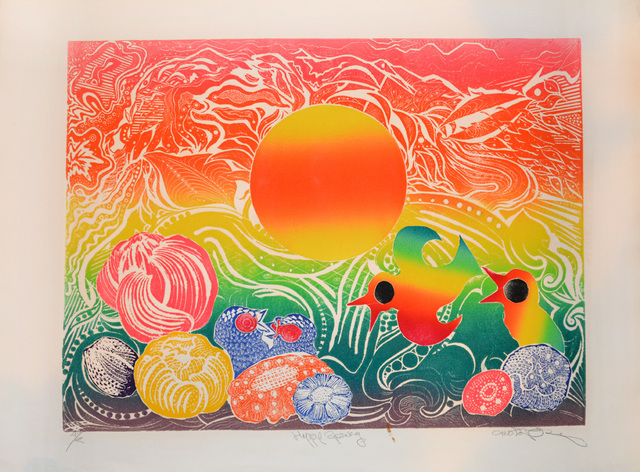
Happy Spring
Etching
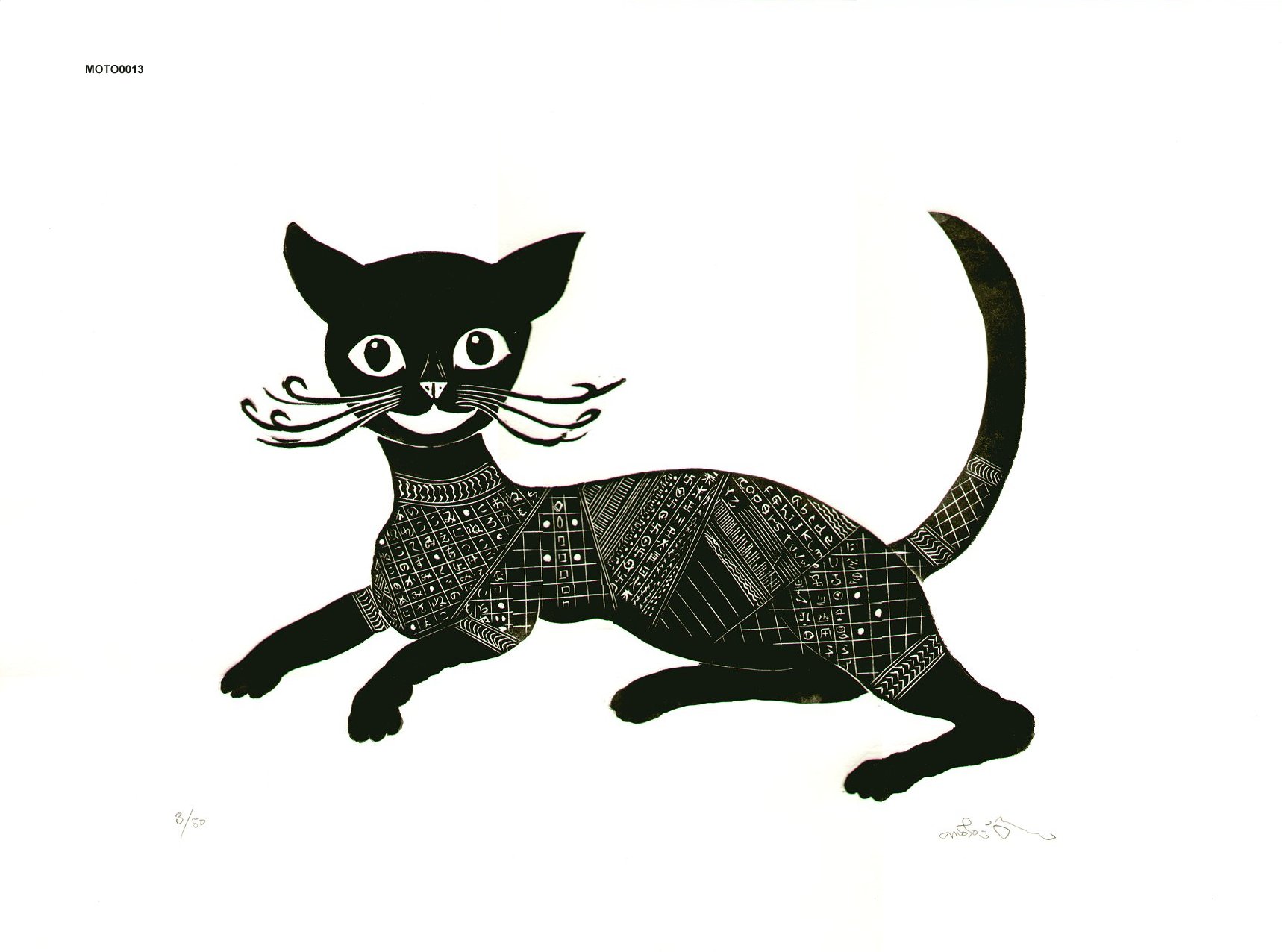
Calligraphy Cat
Woodblock print
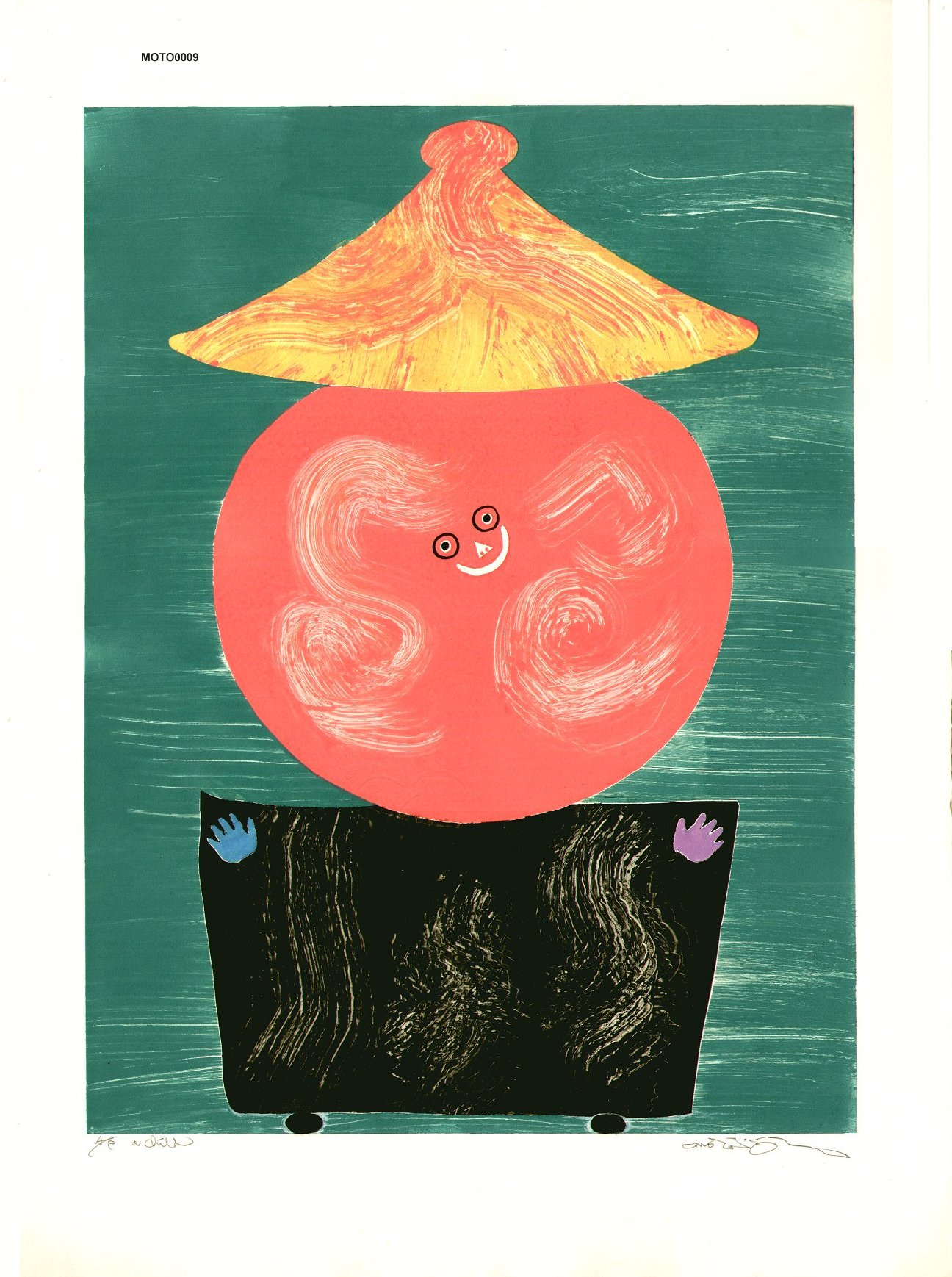
A Child
Woodblock print
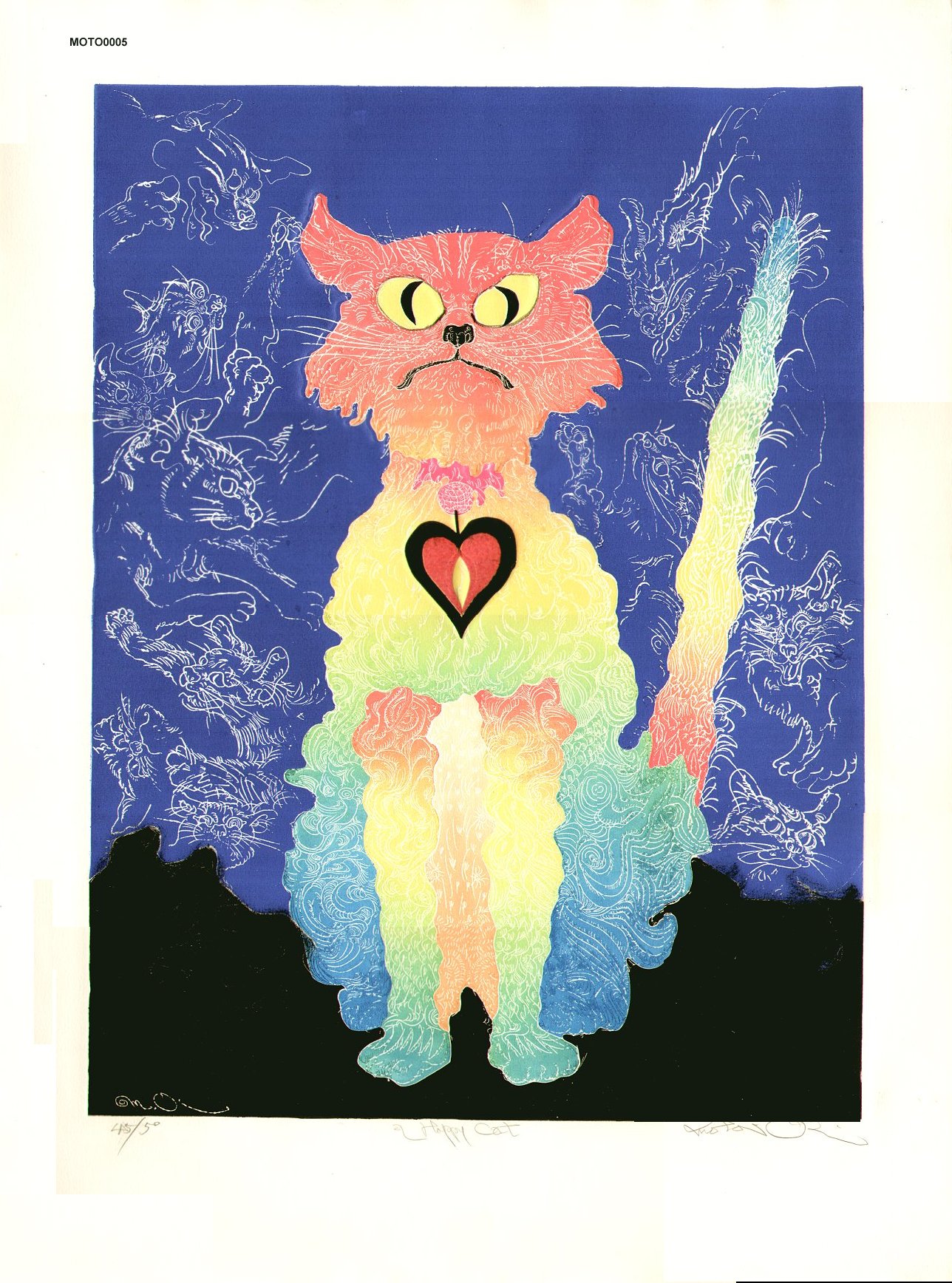
Happy Cat
Woodblock print
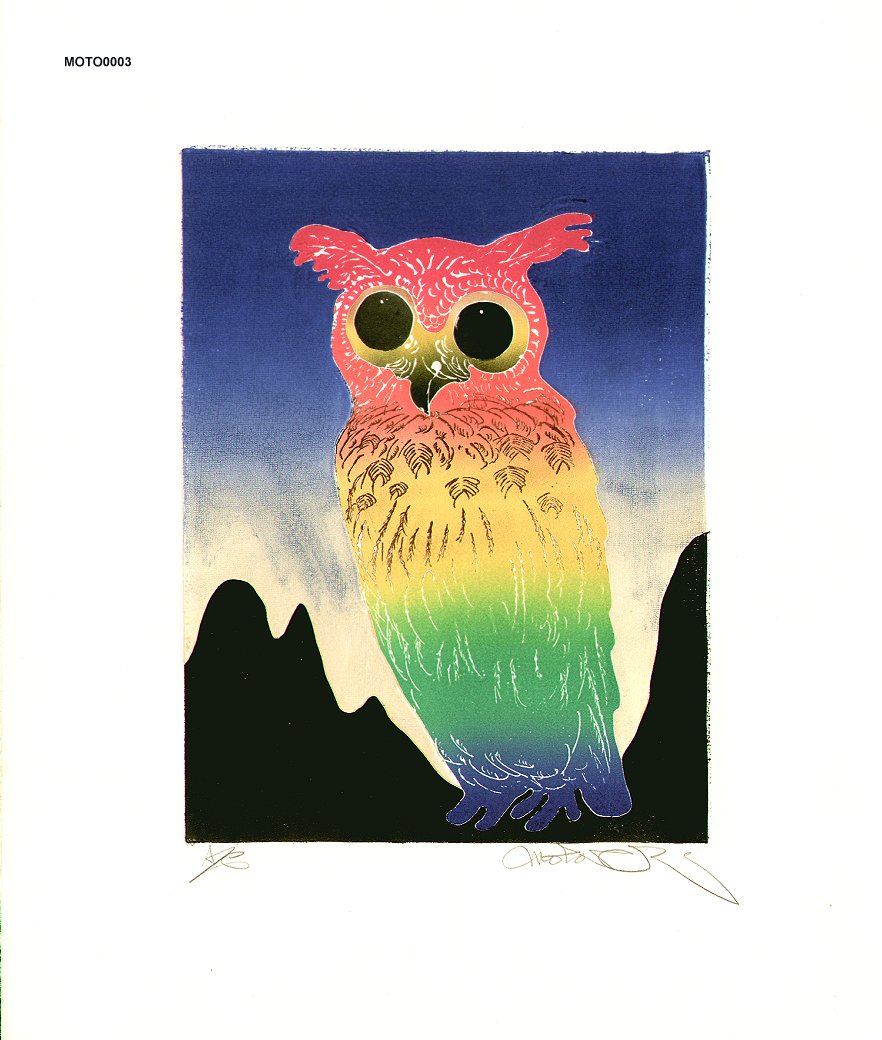
Owl
Woodblock print
Bird & Red Flower #1
Etching
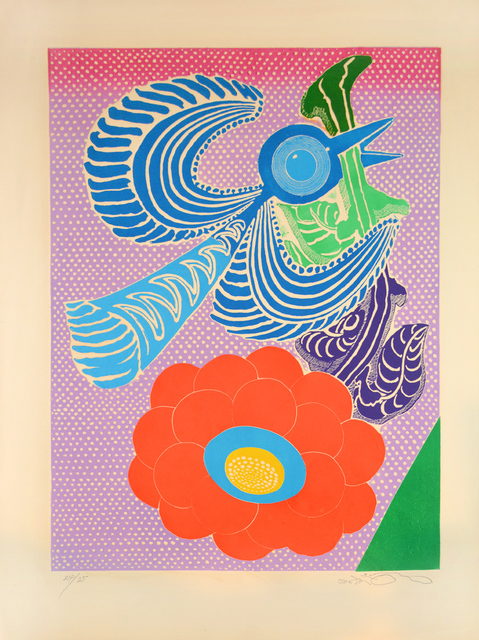
Blue Bird and Red Flower
Etching
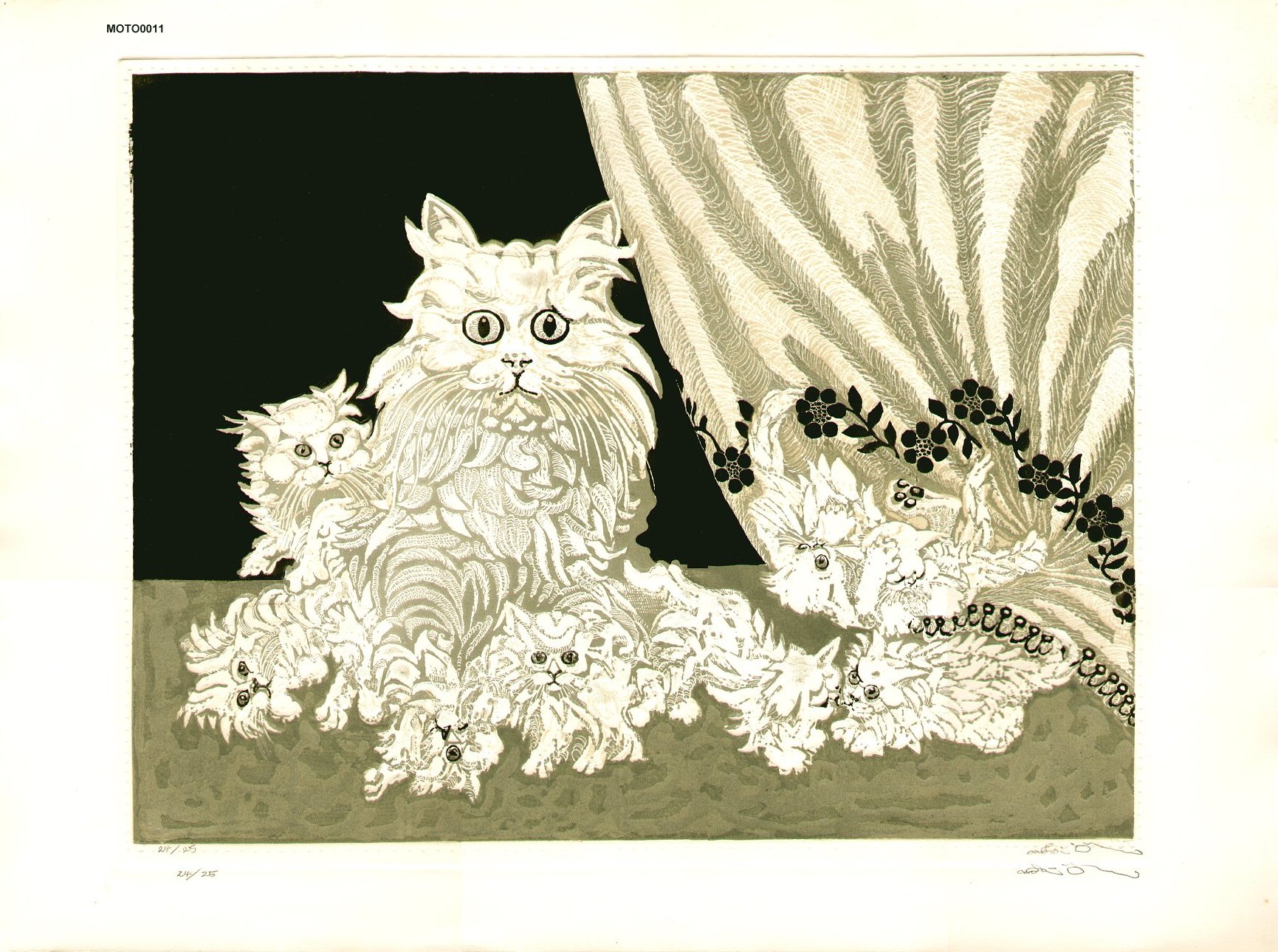
Cat and 8 Kittens
Woodblock print
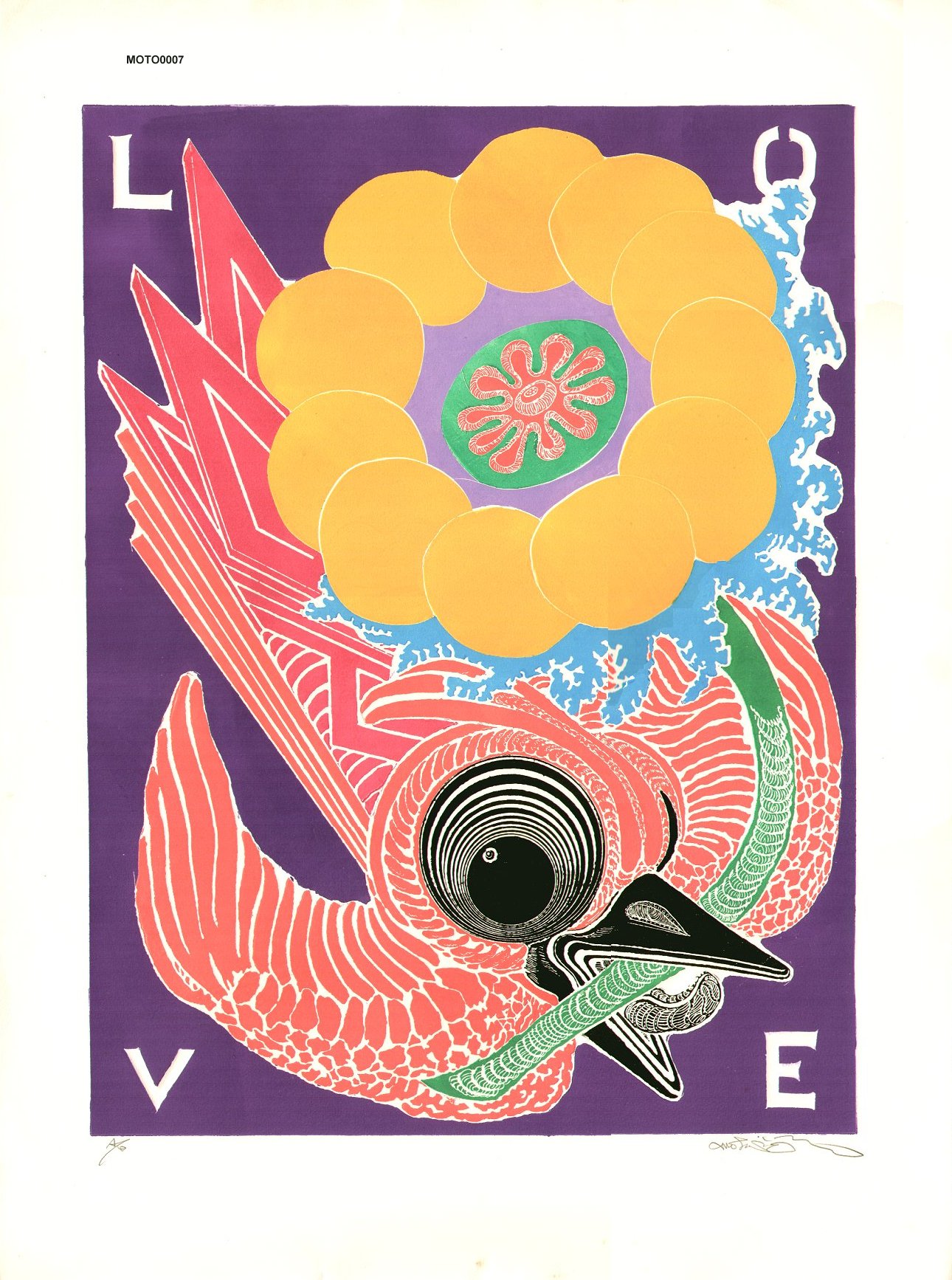
Love
Woodblock print
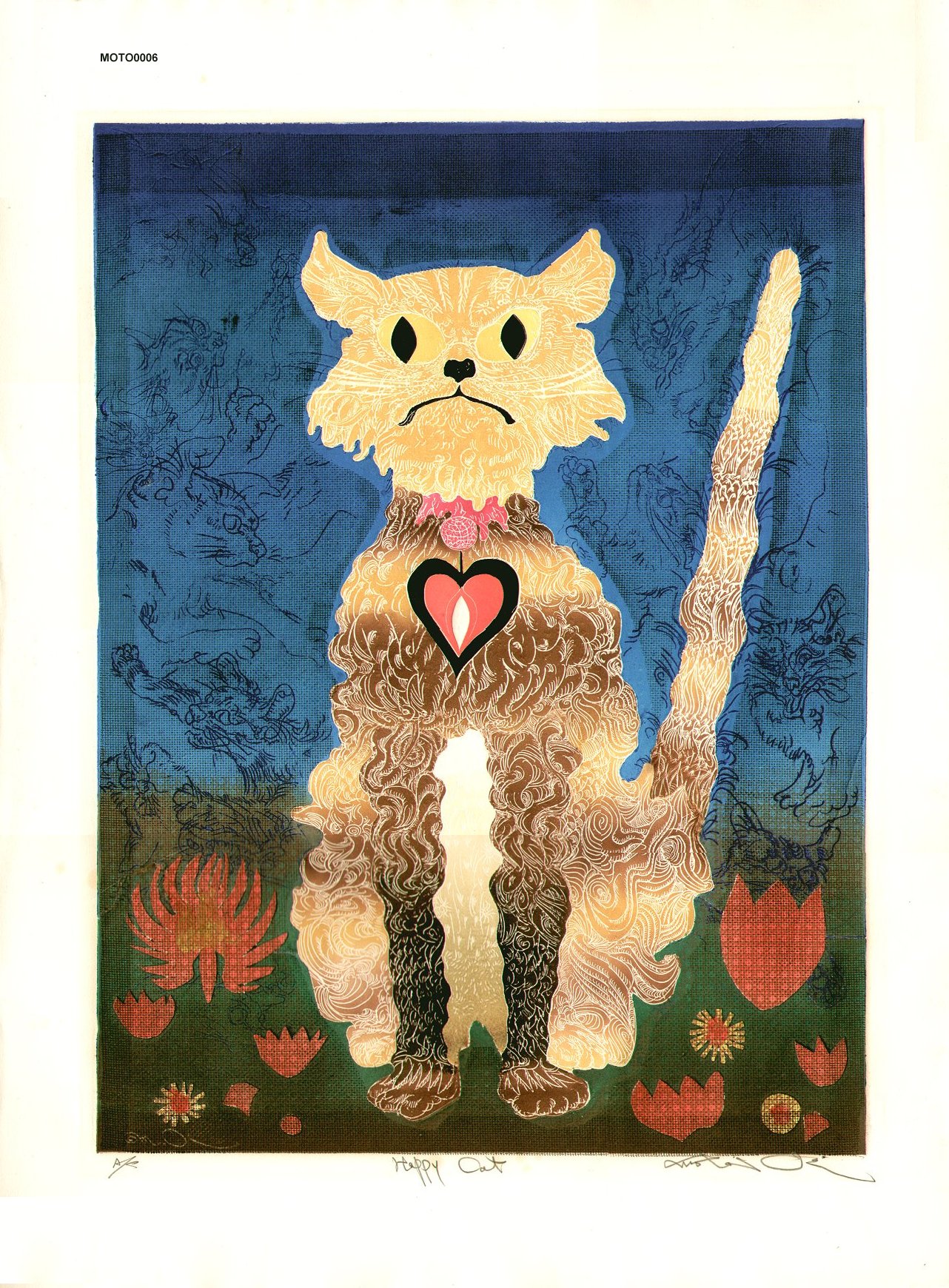
Happy Cat
Woodblock print
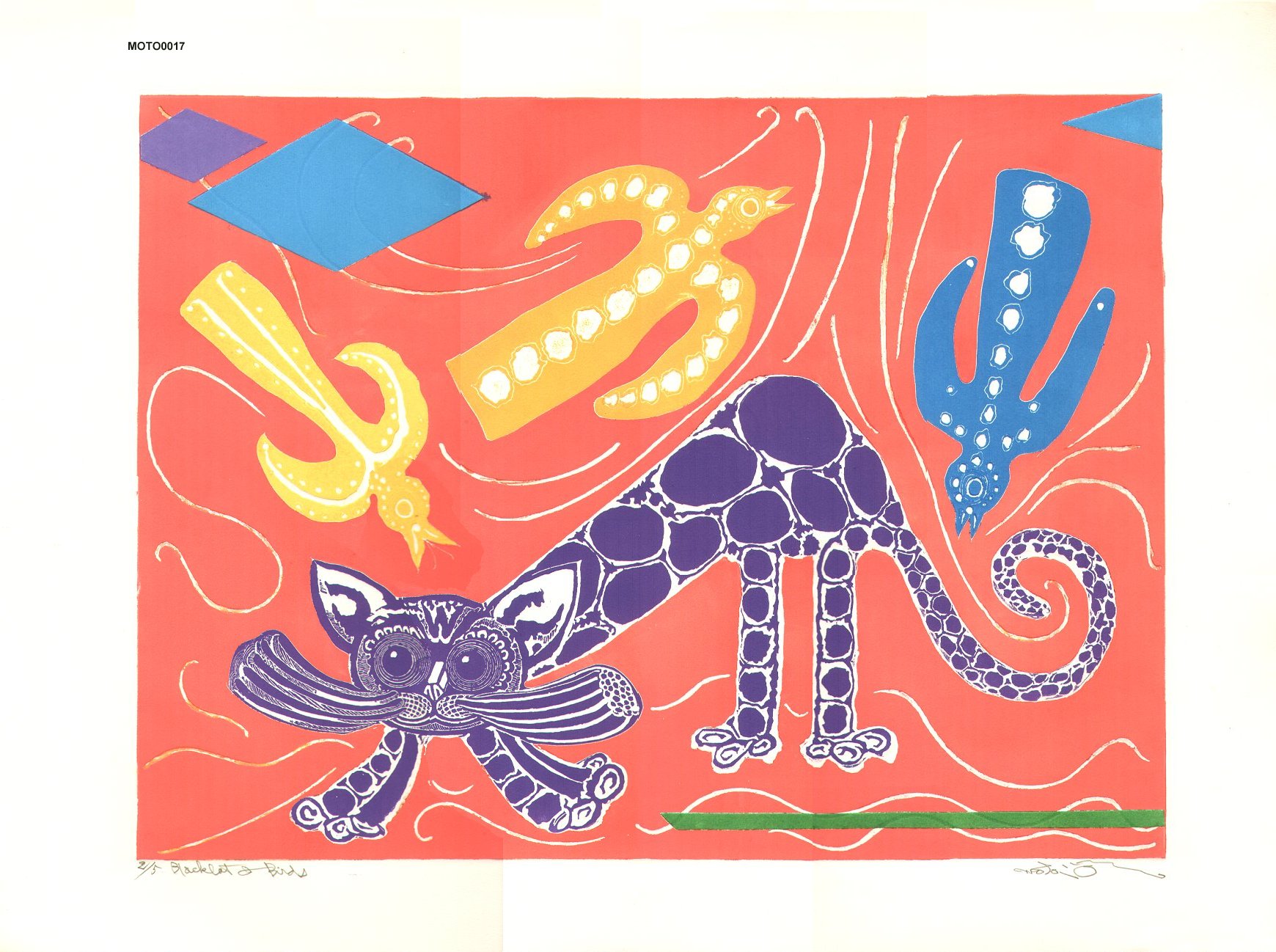
Black Cat and Birds
Woodblock print
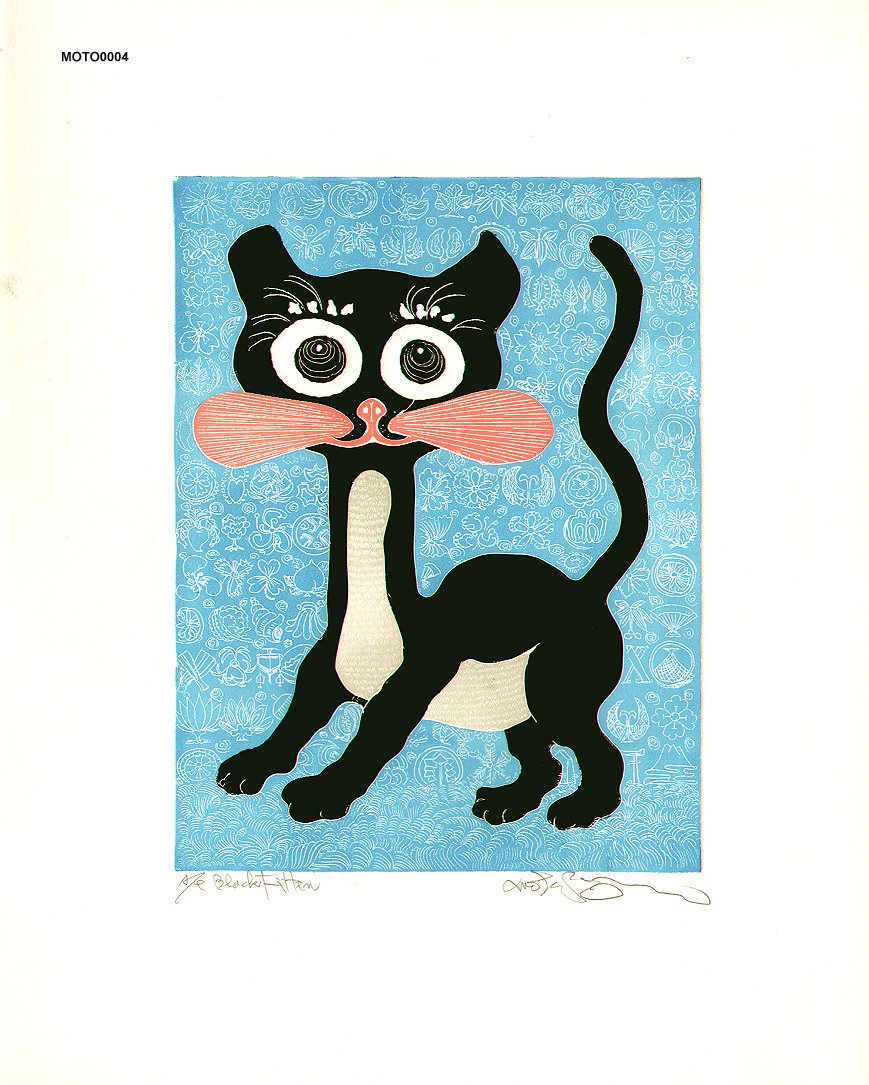
Black Kitten
Woodblock print
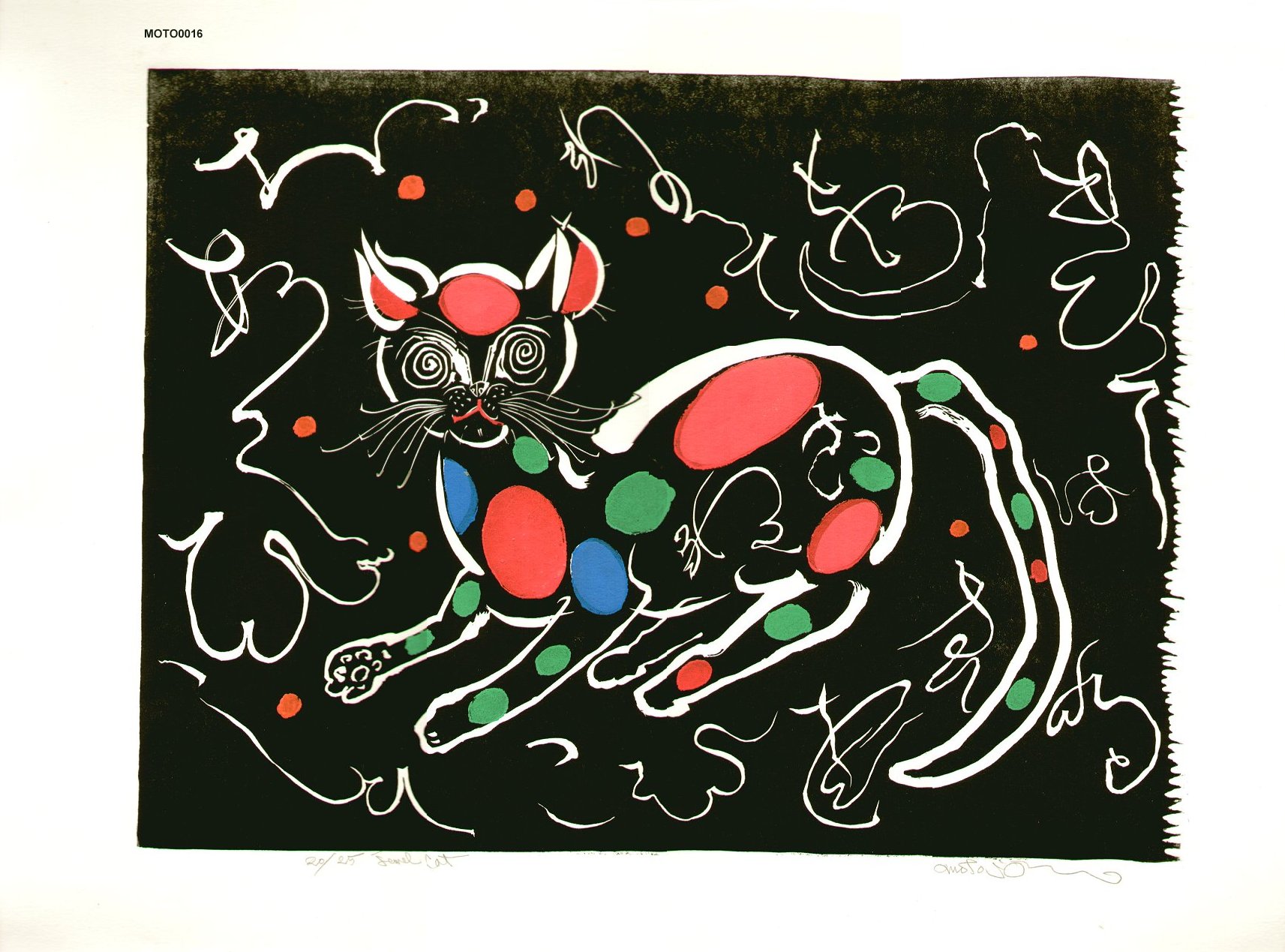
Jewel Cat
Woodblock print
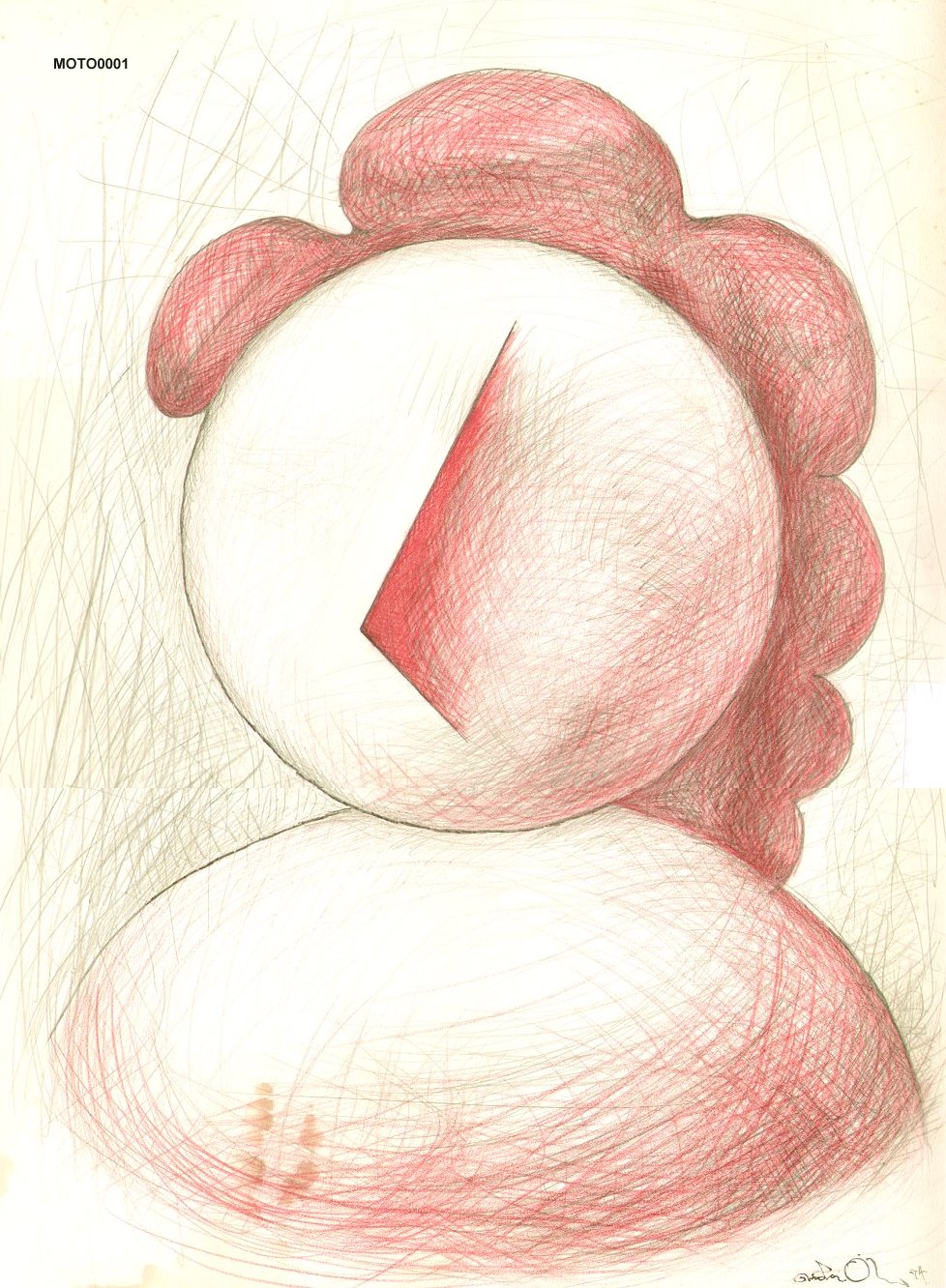
Abstract
Woodblock print
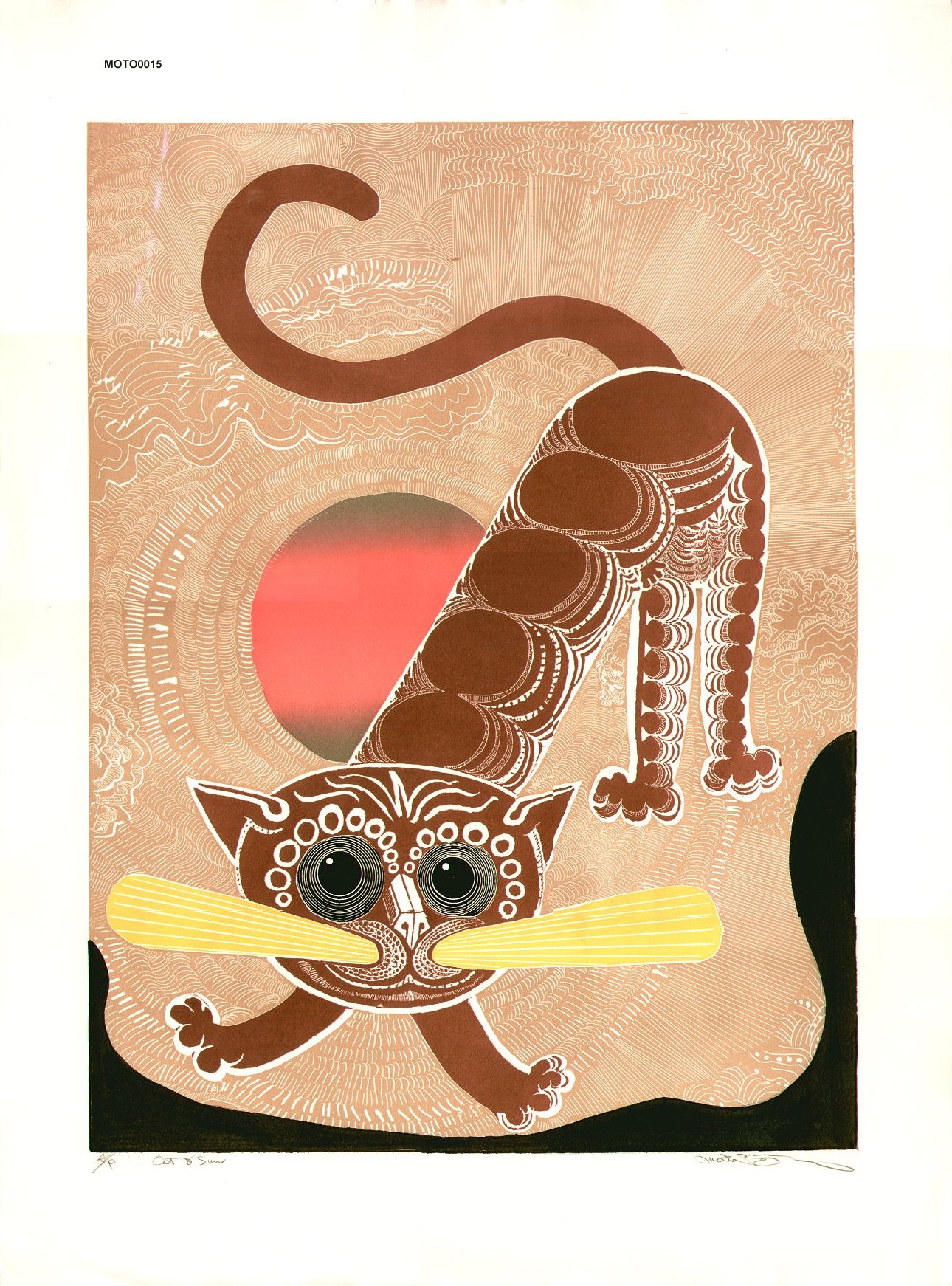
Cat and sun
Woodblock print

Purple cat
Woodblock print
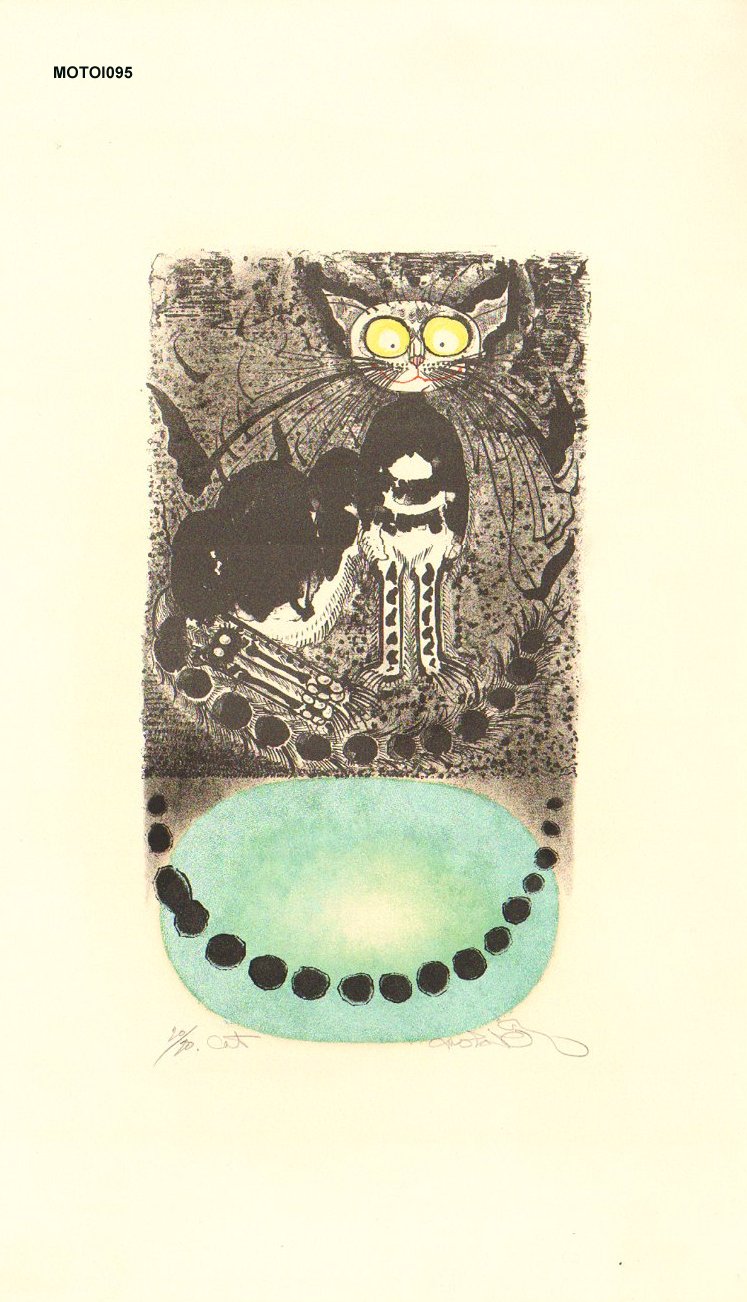
Cat
Woodblock print
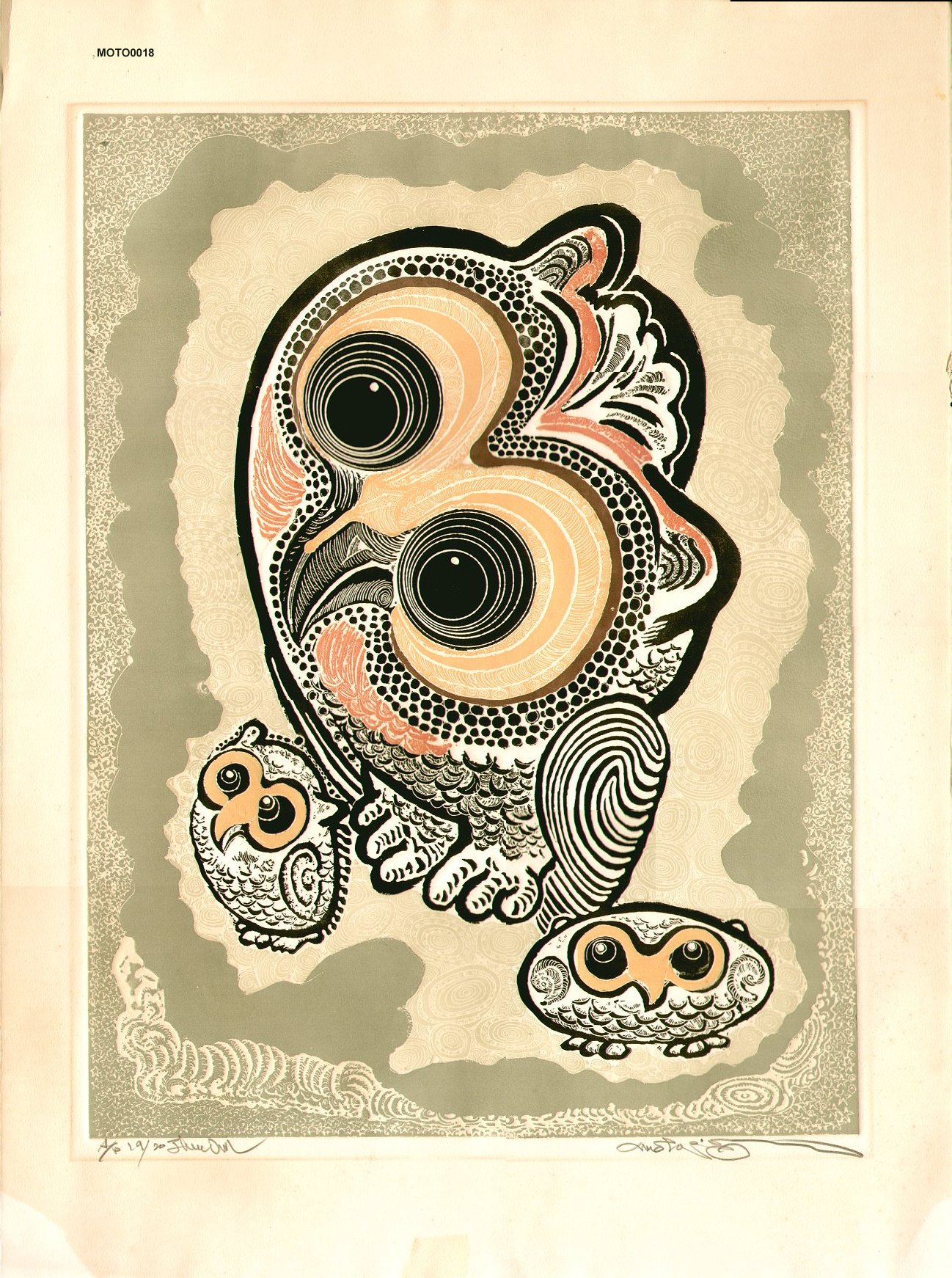
Three Owls
Woodblock print