Nagayama Kōin
長山孔寅
1765–1849
Japan
Biography
Nagayama Kōin (長山孔寅, 1765–1849), also recorded as Nagayama Hirotora and catalogued in some collections under the alternate reading Nagayama Kien, was an Edo-period painter and print designer who worked at the intersection of the Maruyama-Shijō tradition of naturalistic painting centered in Kyoto and Osaka and the surimono culture of the kyōka poetry circles. His career spanned the long decades from the An'ei era to the Kōka years and produced both finely brushed paintings and a body of privately commissioned woodblock prints, and his appearance in the collections of the Metropolitan Museum of Art, the British Museum, and the Art Institute of Chicago documents his reach across the print culture of late Edo Japan.
Kōin worked in the Maruyama-Shijō tradition — the school of naturalistic painting founded in Kyoto by Maruyama Ōkyo, which by the early nineteenth century had established a flourishing branch in Osaka. His work carries the school's commitments to direct observation, controlled brushwork, and the dignified treatment of plants, animals, and human figures that distinguished Ōkyo's lineage from the more decorative Kanō and Tosa academies. Although his biographical record is thin, his signed and sealed works place him in the Osaka–Kyoto Maruyama-Shijō orbit during the early decades of the nineteenth century, where he produced paintings of birds, animals, and figural subjects in the Shijō manner. He participated in the broader cross-pollination of Maruyama-Shijō painting and surimono design that defined the late Bunka and Bunsei periods, when school-trained painters supplied designs to the privately commissioned, lavishly printed surimono format.
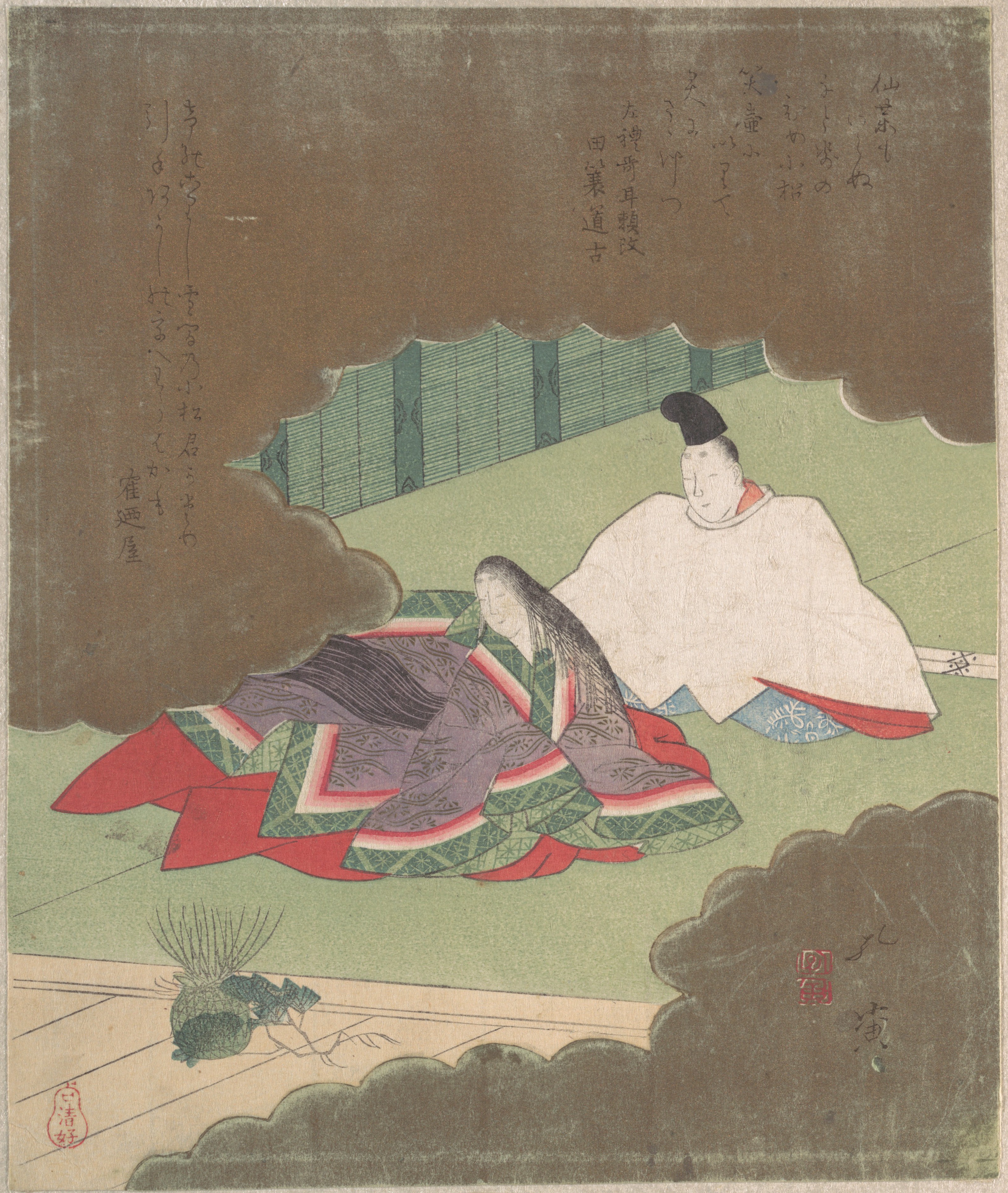
His most documented body of work is in the surimono and woodblock-printed book formats. The Metropolitan Museum of Art holds his surimono Man and Woman in Court Dress Looking at Young Pines for New Year Ceremony, representing the New Year courtly ceremony of selecting young pines, as well as The Nanpo Album (Nanpo jō, 南畝帖), a woodblock-printed picture book of 1824 produced in collaboration with the Edo kyōka master Ōta Nanpo (Shokusanjin, 1749–1823), illustrating the poet's verses with Kōin's brushwork in the year following Nanpo's death. The Nanpo Album is surviving evidence of Kōin's standing in the Edo kyōka world and of his recognized capacity as a figural illustrator for one of the most celebrated kyōka poets of the era. The Art Institute of Chicago holds a surimono catalogued under the name Nagayama Kien in which he depicted the implements of the sencha tea ceremony — a sophisticated literary-circle subject reflecting the Chinese-influenced sencha culture popular among Edo and Osaka intellectuals — associated with the Takemoto chanting school. The British Museum holds additional surimono attributed to him from the Osaka surimono culture of the 1820s.
Kōin's importance lies less in any single masterpiece than in his role as a bridge figure between the Maruyama-Shijō painting tradition and the Edo–Osaka surimono economy, working alongside the literati and print designers of Kyoto, Osaka, and Edo while maintaining the technical signature of his Shijō training. His surviving works in major museum collections establish him as a recognized, if not central, figure among the second generation of Maruyama-Shijō designers who carried the school's naturalistic aesthetic into the privately commissioned print culture of the late Edo period, and his collaboration with Ōta Nanpo on the Nanpo Album of 1824 places him within the Edo kyōka poetry world at one of its most productive moments.
Key Facts
- Active Period
- 1765–1849
- Nationality
- 🇯🇵Japan
- Works Indexed
- 3
Frequently Asked Questions
Nagayama Kōin (長山孔寅, 1765–1849), also recorded as Nagayama Hirotora and catalogued in some collections under the alternate reading Nagayama Kien, was an Edo-period painter and print designer who worked at the intersection of the Maruyama-Shijō tradition of naturalistic painting centered in Kyoto and Osaka and the surimono culture of the kyōka poetry circles. His career spanned the long decades from the An'ei era to the Kōka years and produced both finely brushed paintings and a body of privately commissioned woodblock prints, and his appearance in the collections of the Metropolitan Museum of Art, the British Museum, and the Art Institute of Chicago documents his reach across the print culture of late Edo Japan.
Nagayama Kōin was active from 1765 to 1849.
Original prints by Nagayama Kōin can be found in collections including Metropolitan Museum of Art, Art Institute of Chicago.
Woodblock Prints by Nagayama Kōin (3)
Man and Woman in Court Dress Looking at Young Pines for New Year Ceremony
19th century
Woodblock print (surimono); ink and color on paper; 21.6 x 18.3 cm
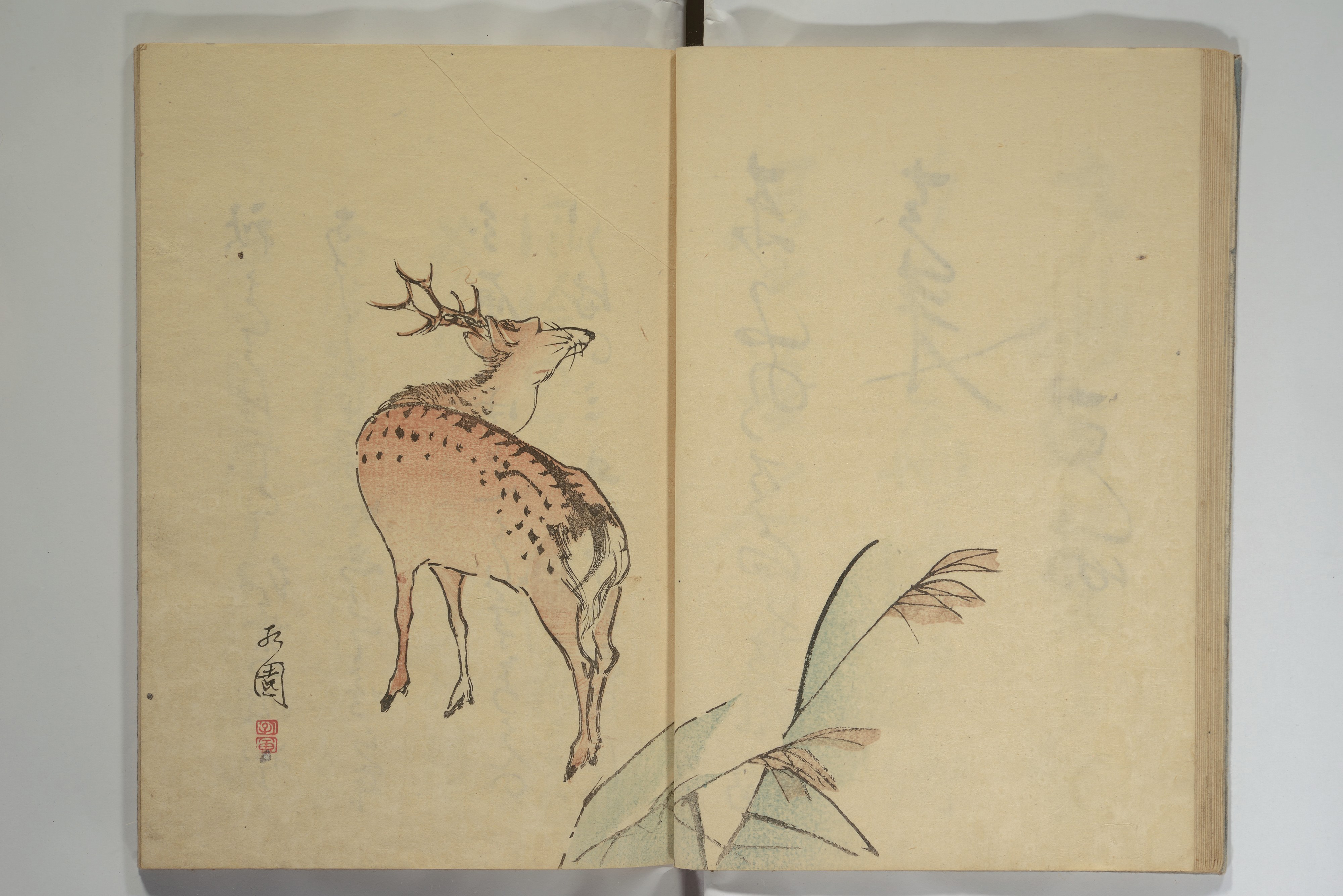
The Nanpo Album (Nanpo jō)
南畝帖
1824
Woodblock printed book; ink and color on paper; 25.5 x 18.2 cm

Takemoto-School Surimono (Memorial for Takemoto Sakidayū I)
1829 (Bunsei 12); cataloged at AIC as 1847
Color woodblock print; surimono; 50.8 x 37 cm