
Takemoto-School Surimono (Memorial for Takemoto Sakidayū I)
- Date:
- 1829 (Bunsei 12); cataloged at AIC as 1847
- Medium:
- Color woodblock print; surimono; 50.8 x 37 cm
- Source:
- Art Institute of Chicago
Description
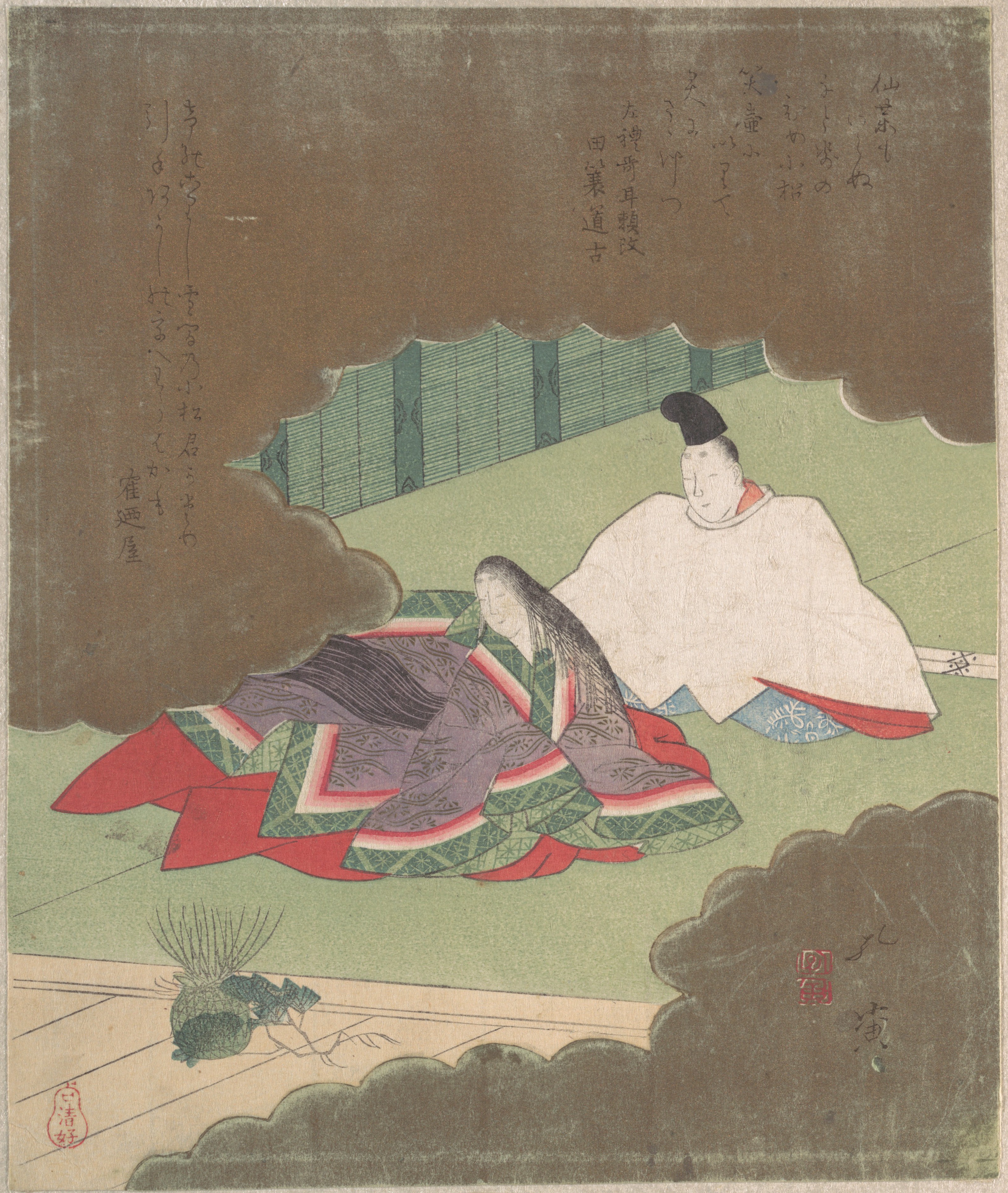
This memorial surimono, held by the Art Institute of Chicago (accession reference 42801, Charles H. Mitchell Collection unrestricted gift) and cataloged under the alternate romanization Nagayama Kien for the same artist Nagayama Kōin (長山孔寅, with 寅 readable as both en/in), commemorates the fiftieth anniversary of the death of Takemoto Sakidayū I (竹本咲太夫, d. 1779), the renowned Osaka chanter of the Takemoto-za gidayū tradition of jōruri puppet-theater narration. Sakidayū I was one of the central figures in the eighteenth-century Osaka and Kyoto theater world, and a 1828-1829 memorial surimono for the fiftieth anniversary of his death (the standard fifty-year Buddhist memorial cycle) reflects the continuing prestige of his name within the Takemoto chanting lineage and the Osaka theatrical economy that Kōin moved in during his mature years. Printed in color on paper at 50.8 by 37 centimeters in the larger ōban-plus surimono format, the print depicts implements used in the sencha (steeped-tea) ceremony — the Chinese-influenced literati tea tradition that intellectuals and artists championed in the late eighteenth and early nineteenth centuries as an alternative to the more codified chanoyu ceremony of the established schools. The selection of sencha implements as the subject of a memorial surimono for a kabuki chanter reflects the multi-layered literary and social culture of the surimono tradition, in which the visual subject often stood in oblique relationship to the commemorative occasion, and in which the literati associations of the sencha ceremony aligned the memorial with the cultivated, Chinese-inflected intellectual culture of the period's poetry clubs. Kōin's Maruyama-Shijō training shows in the carefully observed rendering of the tea implements, treated with the school's disciplined attention to material detail and surface texture. The Charles H. Mitchell Collection's gift to the Art Institute placed the surimono in one of the foundational American collections of Japanese privately commissioned prints, and its survival there documents Kōin's participation in the late Bunsei surimono economy and his connection to the Osaka theatrical and literary circles whose memorial occasions provided occasions for the most ambitious surimono productions of the 1820s. The print's dating in the AIC catalogue to 1847 reflects an alternate chronology in the museum's record; the subject — a fiftieth-anniversary memorial for a 1779 death — most naturally locates the print's commissioning to 1828-1829, during the central period of Kōin's documented Maruyama-Shijō surimono activity.
More Prints by Nagayama Kōin
Frequently Asked Questions
Takemoto-School Surimono (Memorial for Takemoto Sakidayū I) was created by Nagayama Kōin (長山孔寅) in 1829 (Bunsei 12); cataloged at AIC as 1847.