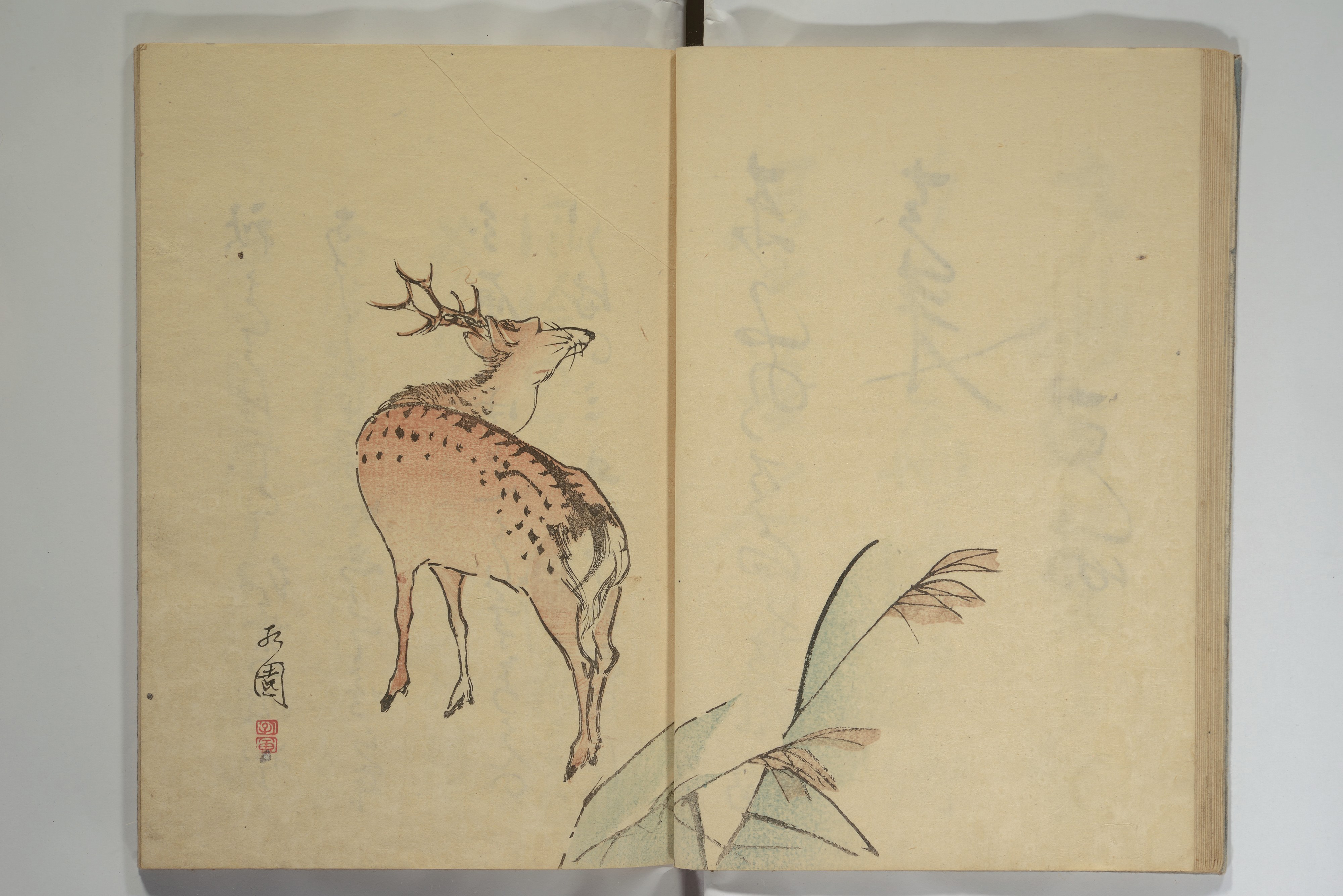
The Nanpo Album (Nanpo jō)
南畝帖
- Date:
- 1824
- Medium:
- Woodblock printed book; ink and color on paper; 25.5 x 18.2 cm
- Source:
- Metropolitan Museum of Art
Description
This 1824 woodblock-printed book by Nagayama Kōin, held by the Metropolitan Museum of Art (accession 2013.891, acquired in 2013 through the Mary and James G. Wallach Foundation Gift), illustrates the kyōka and prose writings of Ōta Nanpo (Shokusanjin, 1749-1823), one of the most celebrated literary figures of the late Edo period and the central impresario of the Edo kyōka movement. Produced the year following Nanpo's death, the album is in part a memorial production, gathering selections of the poet's work and giving them visual form in Kōin's brushwork, in the long-established Japanese tradition of the gajō (picture album) as a vehicle for the joint presentation of poetry and image. Printed in ink and color on paper at 25.5 by 18.2 centimeters, the album follows the standard yokobon format favored for kyōka and senryū collections, and the Met catalogue identifies the work jointly under Kōin as illustrator and Nanpo as author (長山孔寅画・蜀山人, 'Painted by Nagayama Kōin, written by Shokusanjin'). Kōin's selection as the figural illustrator for a posthumous Nanpo collection is itself a documentary record of his standing in the Edo literary-print culture of the early Bunsei era. Nanpo's kyōka circles had supplied much of the patronage for the surimono boom of the 1810s and 1820s, and the album represents Kōin's engagement with that world at the highest level. The figural designs throughout the album show Kōin applying the Maruyama-Shijō manner of brushwork — economical, observational, and controlled — to the kinds of figure subjects that the kyōka tradition favored: poets, courtesans, street scenes, and small-scale narrative moments illustrating individual verses. The Met's 2013 acquisition through the Wallach Foundation Gift placed the album in the institution's Japanese illustrated-book holdings alongside the canonical kyōka collections of the Hokusai and Shijō schools, and its survival is one of the principal documents for Kōin's collaboration with the Nanpo-centered kyōka world and for the cross-school visual culture of late Bunka and Bunsei Edo. The dual attribution to Kōin and Shokusanjin in the colophon also documents the customary practice in early nineteenth-century kyōka book production, where the illustrator's name appeared alongside the author's as a joint authorial claim, a convention that gave figural designers like Kōin a recognized position in the literary-print economy.
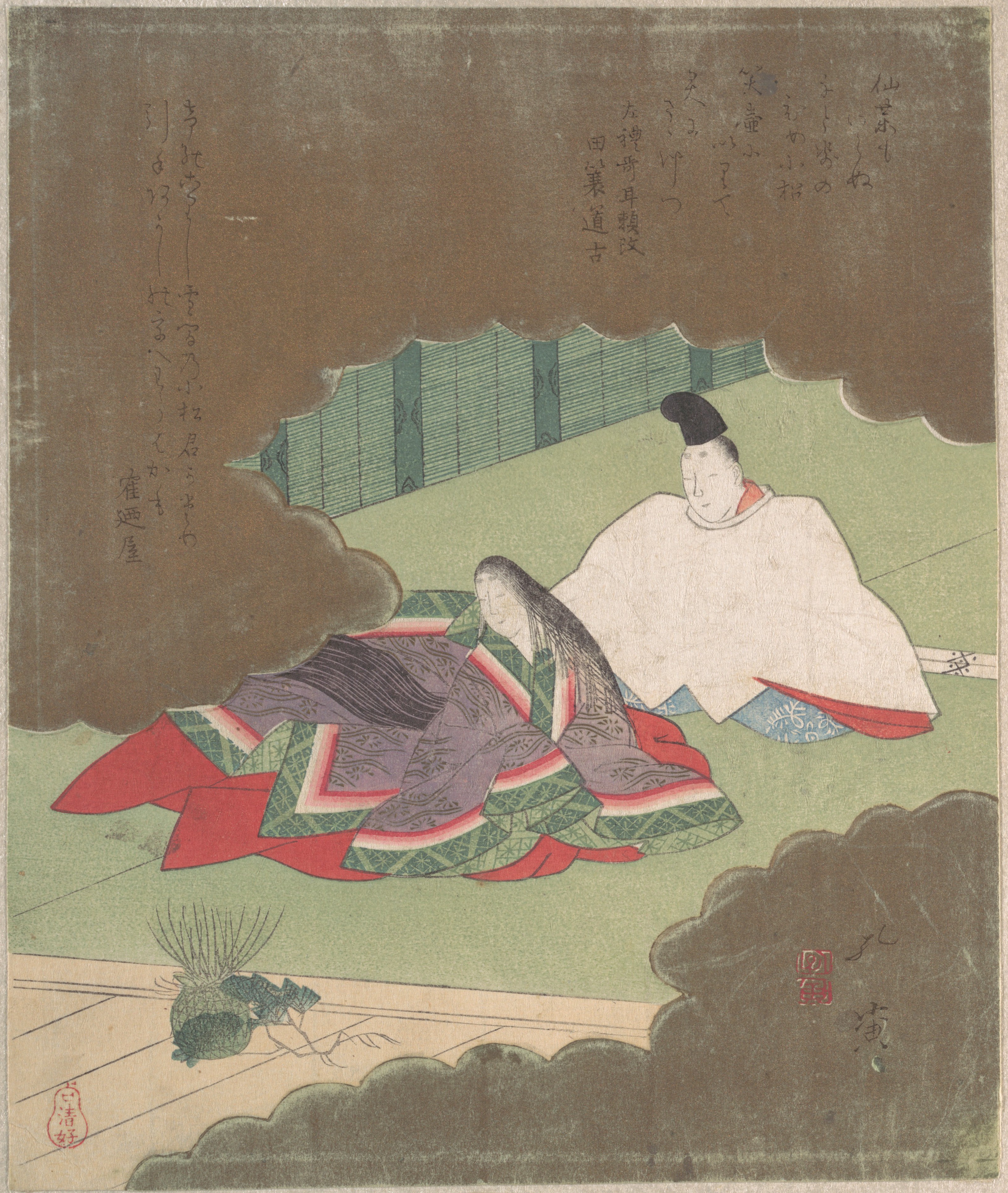
More Prints by Nagayama Kōin

Frequently Asked Questions
The Nanpo Album (Nanpo jō) (南畝帖) was created by Nagayama Kōin (長山孔寅) in 1824.