Biography
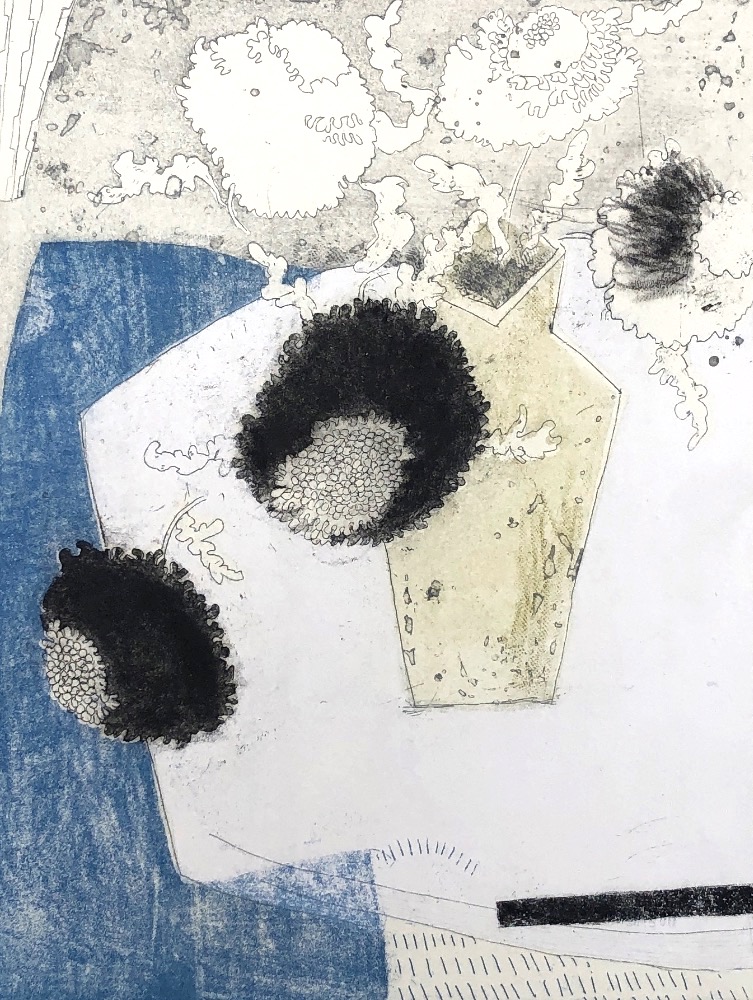
Sakie Ogura (小倉咲枝) is a Kyoto-based Japanese printmaker whose practice centres on copperplate etching and aquatint, with a quietly autobiographical sensibility that turns small domestic spaces — most often the dining room — into stages for an intimate inner theatre. Although she works in a medium long associated with Western fine-art printmaking, her sensibility is distinctly Japanese: the meditative attention to ordinary objects, the privacy of the room, and the pacing of light and shadow all draw on traditions much older than the etching needle.
Ogura trained as a Western-style painter, graduating from the Western Painting (Yōga) course at Kyoto Junior College of Art (京都芸術短期大学), where she received the Uryū Prize (瓜生賞). Her path to copperplate work was unconventional: after graduating she stepped away from a sustained studio practice for a number of years, returning to art only when she joined the Kōbaicho Copperplate Print Workshop (紅梅町版画工房) in Kyoto in 2015. There she took up etching, and the workshop became the technical and social anchor for her artistic life.
The imagery in Ogura's prints is unmistakable. She works with the dining table as a recurring motif — sometimes empty, sometimes set, sometimes occupied by a single solitary cup or by the small accumulating objects of a domestic afternoon. Around these compositions she gathers fragments from a life lived alone or in quiet companionship: the ticking of a clock in an otherwise silent room, the small spider crawling across the wall, the slow swelling of a hyacinth's roots. The prose-poem statement on her website distils this sensibility precisely: 'In a room alone, listening to the ticking of a clock; naming the small spider crawling on the wall; waiting eagerly for hyacinth roots to emerge.' What might in other hands sound merely lyrical becomes, through the technical register of etching and aquatint, an exercise in noticing — slowness made visible.
Ogura's solo exhibitions include 'Arranged Soliloquy' (並べた独り言) at fei art gallery in Yokohama in 2022, 'Where I Am' (私の居るところ) at Gallery Arai in Koshien in 2023, and 'Desk Landscapes' (机上の風景) at the same gallery in 2025. She has been a regular presence at the annual Japan Print Association exhibitions: she received the Encouragement Award at the 90th exhibition (2023), both the Encouragement Award and the Gallery Award at the 91st (2024), and at the 92nd (2025) she was recommended for associate membership of the association. In 2021 she was named a finalist for the FEI Print Award.
Internationally, Ogura took part in the Japan-Korea Print Exchange Exhibition in 2019, shown in Osaka and Seoul, and her prints have been selected for the Cadaqués International Mini Print Exhibition in Spain across several years (2023–2025) and for the Awagami International Miniature Print Exhibition in Tokushima, where in 2025 she received the Kobayashi Keisei Juror's Prize (小林敬生賞). The mini-print circuit, with its constraint on scale and its emphasis on tightly composed image-making, suits the intimate scope of her dining-room-based imagery particularly well.
Ogura's quiet, accumulating studio practice — a return to a fine-art career after a long hiatus, anchored in the routines of the Kōbaicho workshop and in the dining tables that recur across her prints — is one of the more distinctive contemporary Japanese voices in the etching tradition.
Key Facts
- Nationality
- 🇯🇵Japan
- Movement
- Contemporary Mokuhanga
- Works Indexed
- 8
Frequently Asked Questions
Sakie Ogura (小倉咲枝) is a Kyoto-based Japanese printmaker whose practice centres on copperplate etching and aquatint, with a quietly autobiographical sensibility that turns small domestic spaces — most often the dining room — into stages for an intimate inner theatre. Although she works in a medium long associated with Western fine-art printmaking, her sensibility is distinctly Japanese: the meditative attention to ordinary objects, the privacy of the room, and the pacing of light and shadow all draw on traditions much older than the etching needle.
Sakie Ogura's work was shaped by the Contemporary Mokuhanga tradition in Japanese woodblock printmaking. Contemporary Mokuhanga: Contemporary mokuhanga (literally "wood-block print") encompasses artists working from approximately 1970 to the present who continue or reinvent traditional Japanese woodblock printing techniques.
Woodblock Prints by Sakie Ogura (8)
Where I Am — composition 1
私の居るところ
Soft-ground etching and aquatint
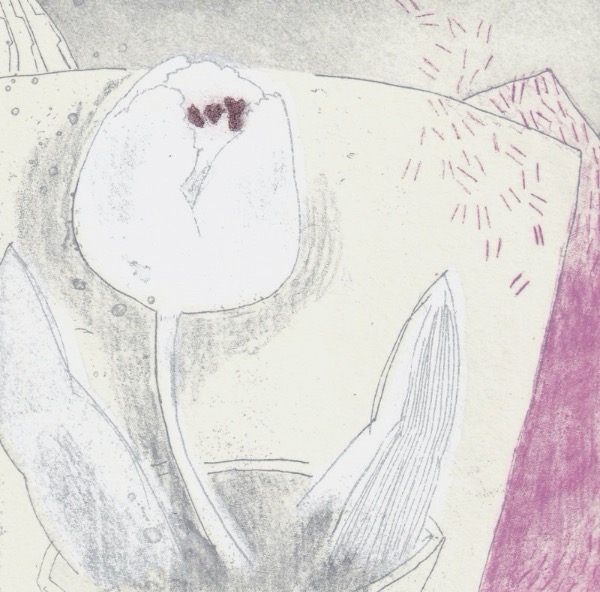
Where I Am — composition 2
私の居るところ
Soft-ground etching and aquatint
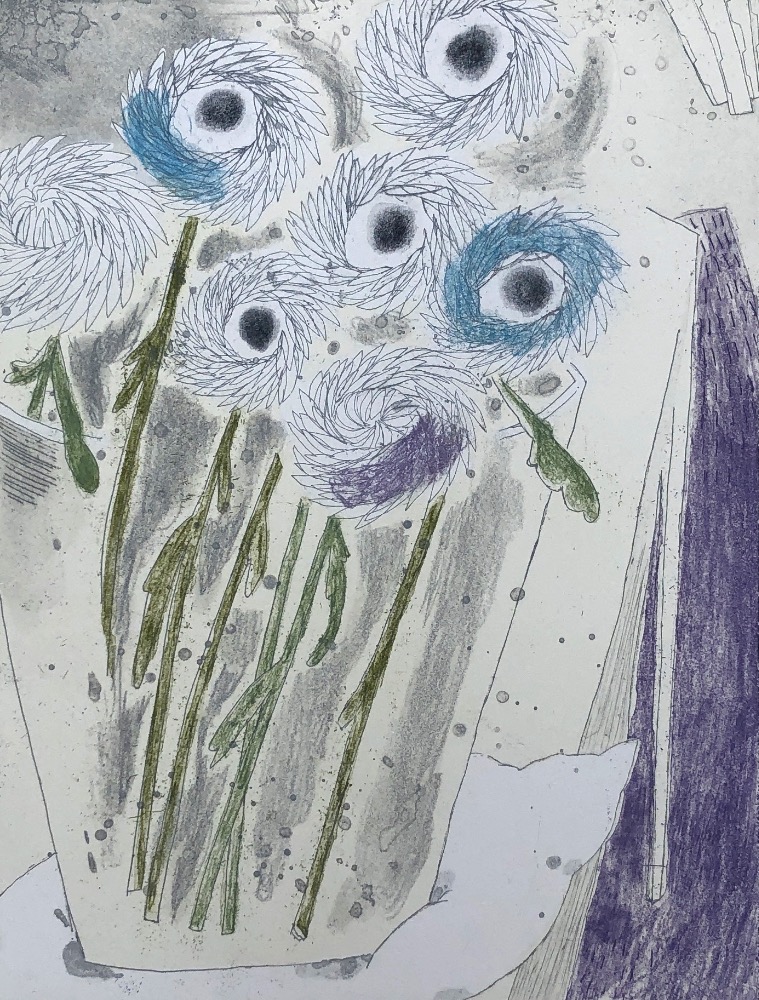
Where I Am — composition 3
私の居るところ
Soft-ground etching and aquatint
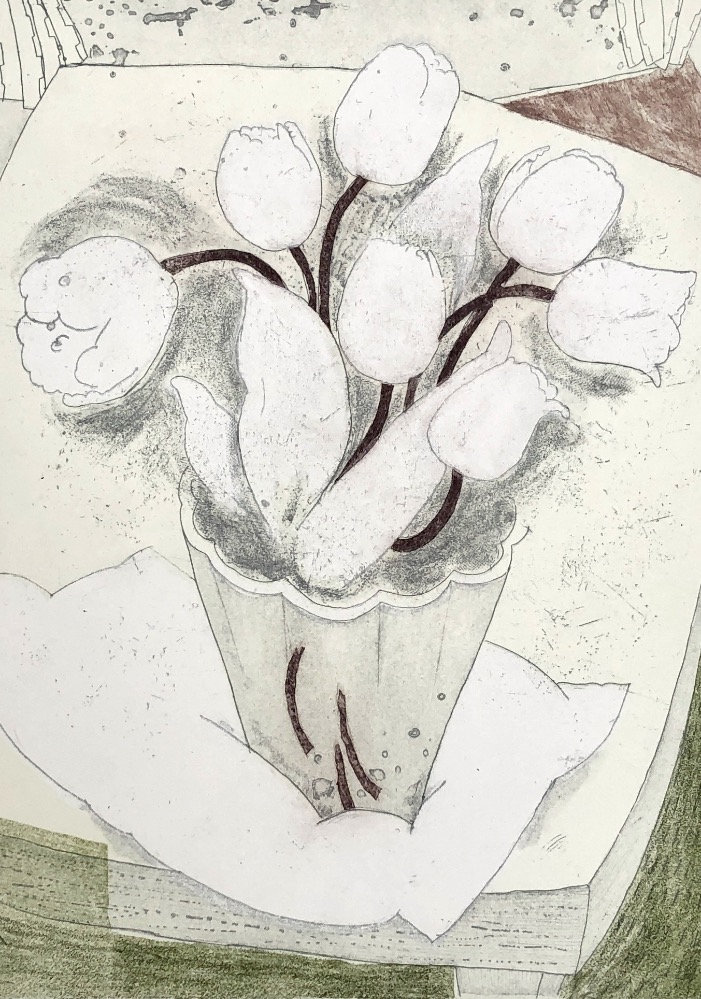
Where I Am — composition 4
私の居るところ
Soft-ground etching and aquatint
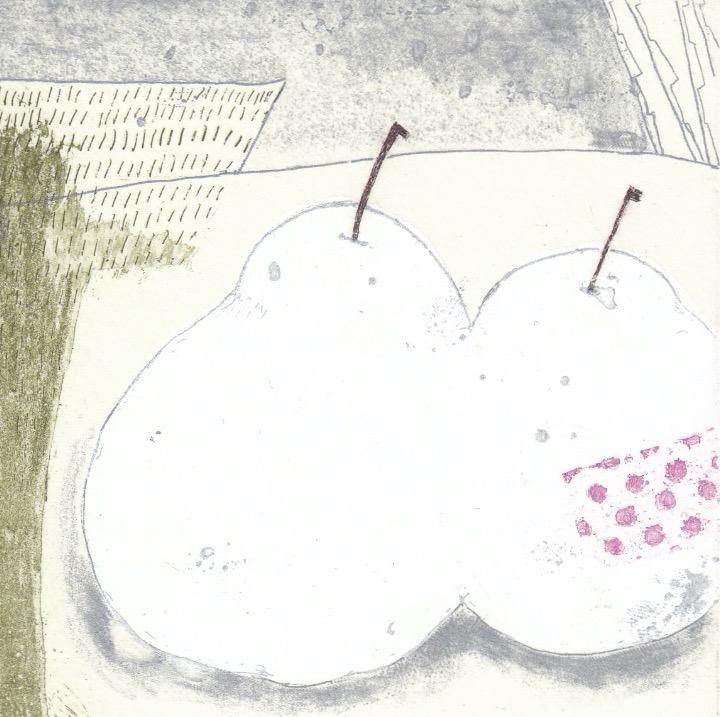
Where I Am — composition 5
私の居るところ
Soft-ground etching and aquatint
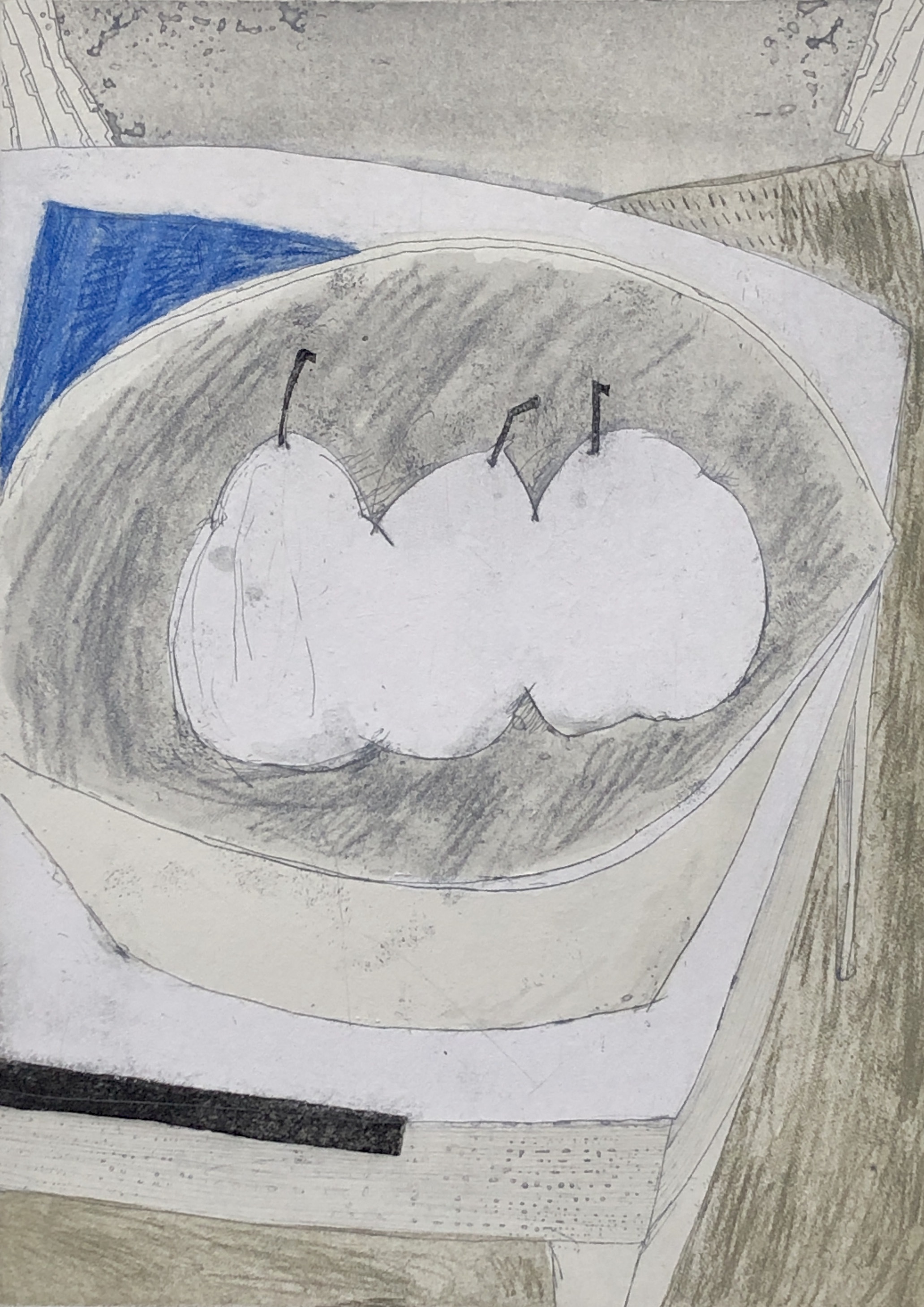
Where I Am — composition 6
私の居るところ
Soft-ground etching and aquatint
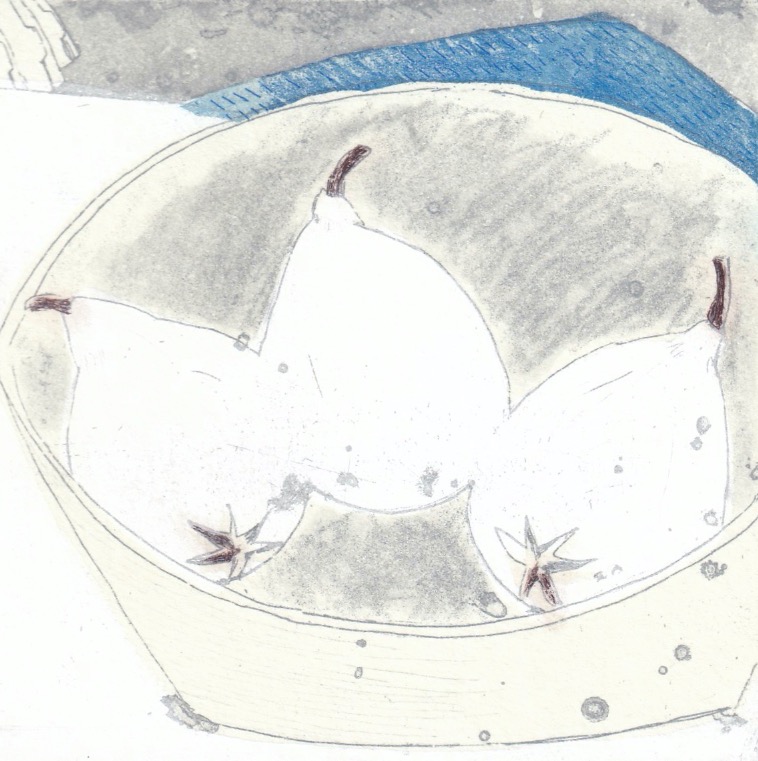
Where I Am — composition 8
私の居るところ
Soft-ground etching and aquatint
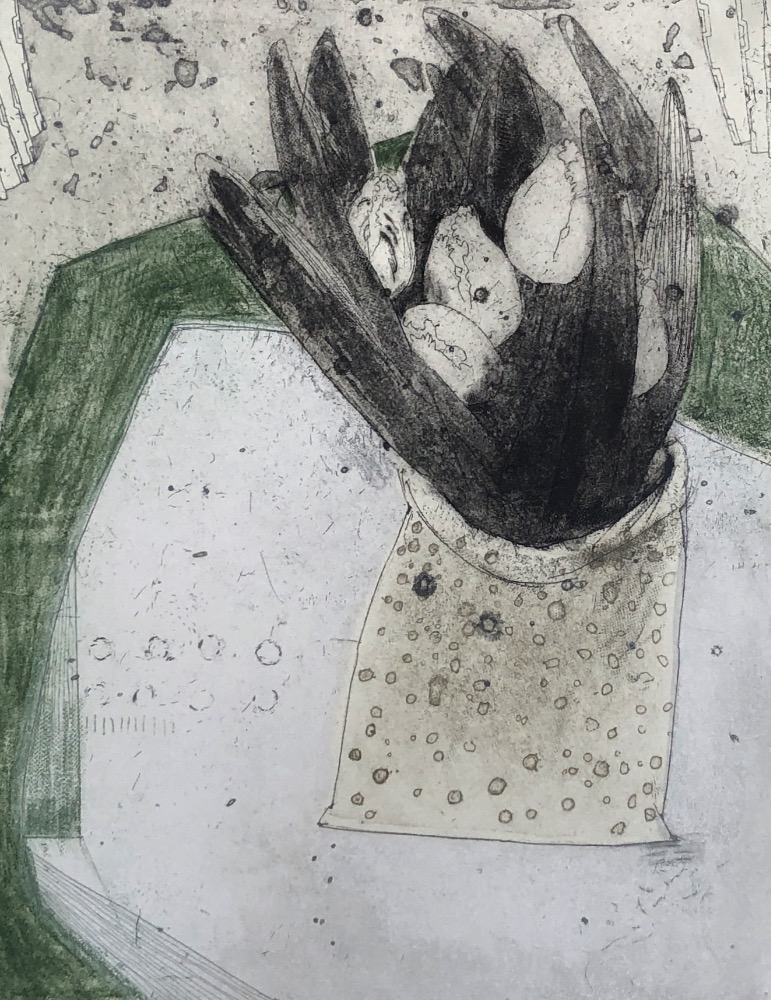
Where I Am — composition 9
私の居るところ
Soft-ground etching and aquatint