
Okada Hankō
岡田半江
1782–1846
Japan
Biography
Okada Hankō (1782–1846) was an Osaka nanga painter whose elegant, atmospheric landscapes in the literati manner placed him among the most refined practitioners of the third generation of Japanese bunjinga. The son of the wealthy rice merchant and individualist nanga painter Okada Beisanjin, Hankō inherited both his father's mercantile means and his deep absorption in Chinese scholar-painter culture, and he spent his career adapting Ming and Qing landscape conventions to a softer, distinctly Osaka literati sensibility.
Hankō was born in Osaka, where his father had built a successful rice business while simultaneously establishing himself as one of the leading nanga painters of the Kansai region. The household into which he was born was steeped in Chinese learning, calligraphy, and the bunjin ideal of the cultivated amateur, and Hankō received his earliest training from Beisanjin himself, studying the family's collection of Chinese paintings and absorbing the literati outlook that prized poetic mood over decorative finish. He took the art name Hankō, meaning Half River, and like his father he moved freely among the merchant intellectuals, Confucian scholars, and tea connoisseurs who made Osaka one of the great centers of late Edo literati culture. He was close to the Confucian historian and poet Rai San'yō and associated with other leading nanga figures including Tanomura Chikuden, Uragami Gyokudō, and Totoki Baigai, with whom he shared aesthetic principles rooted in the Chinese literati masters of the Ming and Qing.
After the death of his wife, Hankō retired early from his government position with the Tsu domain and moved to the Temma district of Osaka, where — living as a proper literatus, apart from the bustle of commerce — he devoted himself to painting, calligraphy, poetry, and the sencha tea culture prized by bunjin. In 1837 the uprising led by Ōshio Heihachirō swept through Osaka and destroyed his secondary residence, along with the collection of books and paintings he had inherited from his father. His later years nonetheless yielded the soft, mist-laden landscapes for which he is now best known. Bamboo and Plum in Early Spring of 1843 shows his sure handling of the bunjinga repertoire of seasonal symbolism, while Misty Dawn at the Seashore at the Metropolitan Museum of Art demonstrates the gentle tonal washes and elongated compositional rhythms that distinguish his mature work from his father's more idiosyncratic, angular manner.
Hankō's technique combined sophisticated brushwork in complex compositions with subtle washes of color over a predominant black ink, but he was also capable of more vigorous, dryly textured ink work, and he was admired in his own lifetime as a calligrapher of note. His Letter Enclosing Flowers handscroll at the Metropolitan Museum is a charmingly informal demonstration of the unity of brush culture in nanga practice, in which an intimate written message becomes the occasion for spontaneous botanical sketches in the Chinese scholarly manner. Works like these reveal the looser side of his brush, capturing seasonal moods in the abbreviated, personal formats that bunjin painters favored for circulation among friends.
Hankō died in Osaka in 1846 at the age of sixty-four and was buried near his parents in the cemetery of Jikishi-an. His paintings are held today in major public collections in Japan and the United States, including the Metropolitan Museum of Art and the Los Angeles County Museum of Art, where his refined late landscapes continue to represent the Osaka literati tradition at its most contemplative and lyrical.
Key Facts
- Active Period
- 1782–1846
- Nationality
- 🇯🇵Japan
- Subjects
- Birds & FlowersSummerSpring
- Works Indexed
- 5
Frequently Asked Questions
Okada Hankō (1782–1846) was an Osaka nanga painter whose elegant, atmospheric landscapes in the literati manner placed him among the most refined practitioners of the third generation of Japanese bunjinga. The son of the wealthy rice merchant and individualist nanga painter Okada Beisanjin, Hankō inherited both his father's mercantile means and his deep absorption in Chinese scholar-painter culture, and he spent his career adapting Ming and Qing landscape conventions to a softer, distinctly Osaka literati sensibility.
Okada Hankō was active from 1782 to 1846.
Okada Hankō's prints frequently feature birds & flowers, summer, spring.
Original prints by Okada Hankō can be found in collections including Metropolitan Museum of Art, Cleveland Museum of Art.
Woodblock Prints by Okada Hankō (5)

Misty Dawn at the Seashore
19th century
Hanging scroll; ink and color on paper
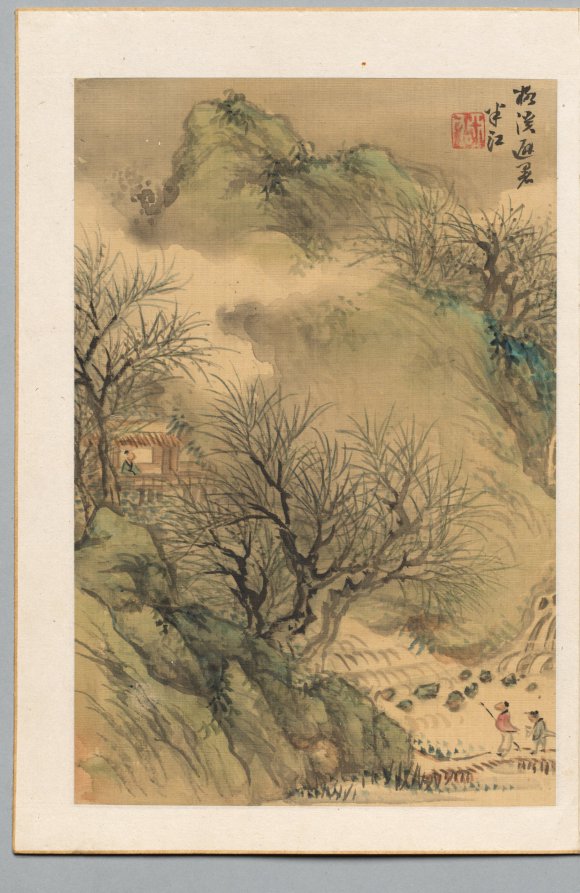
Summer Retreat
early to mid-1800s
Leaf from a pair of folding albums; ink and light color on paper
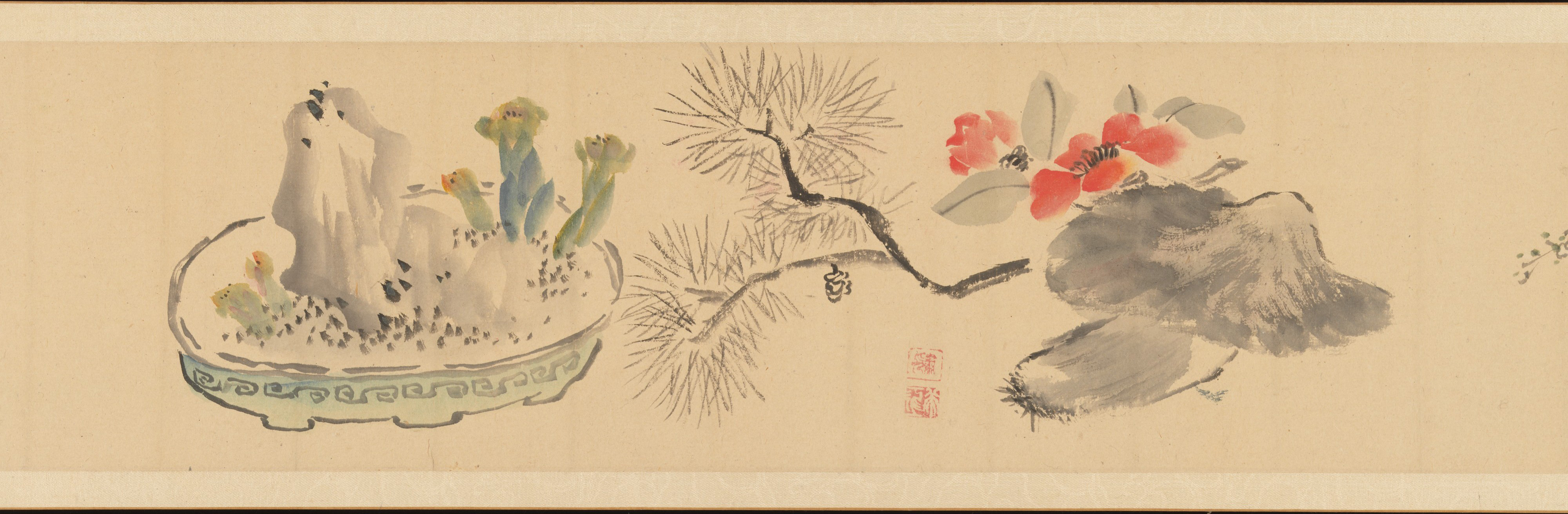
Letter Enclosing Flowers
1831
Handscroll; ink and color on paper
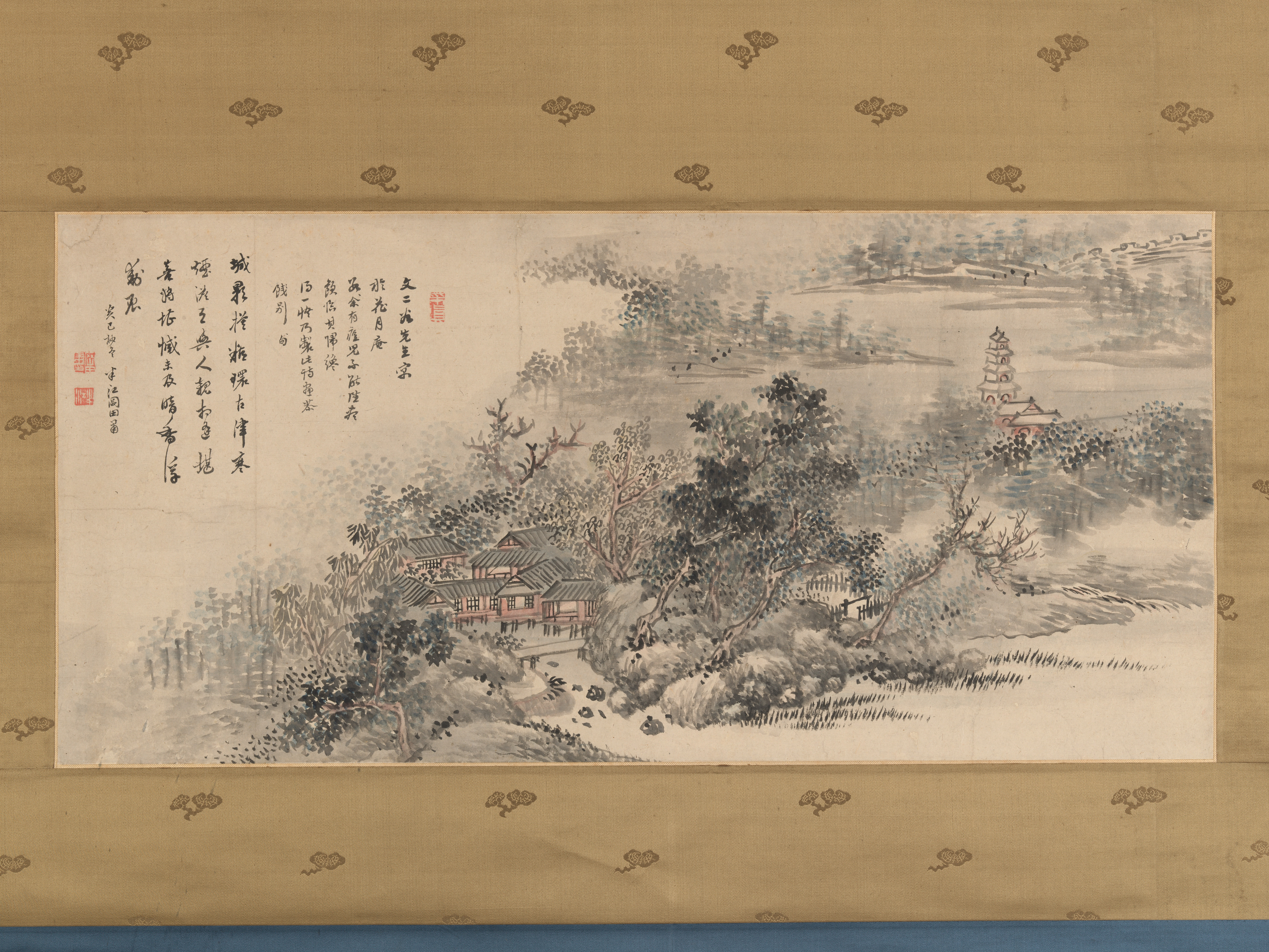
Farewell Gift to Tani Bunji
1833
Hanging scroll; ink and color on paper
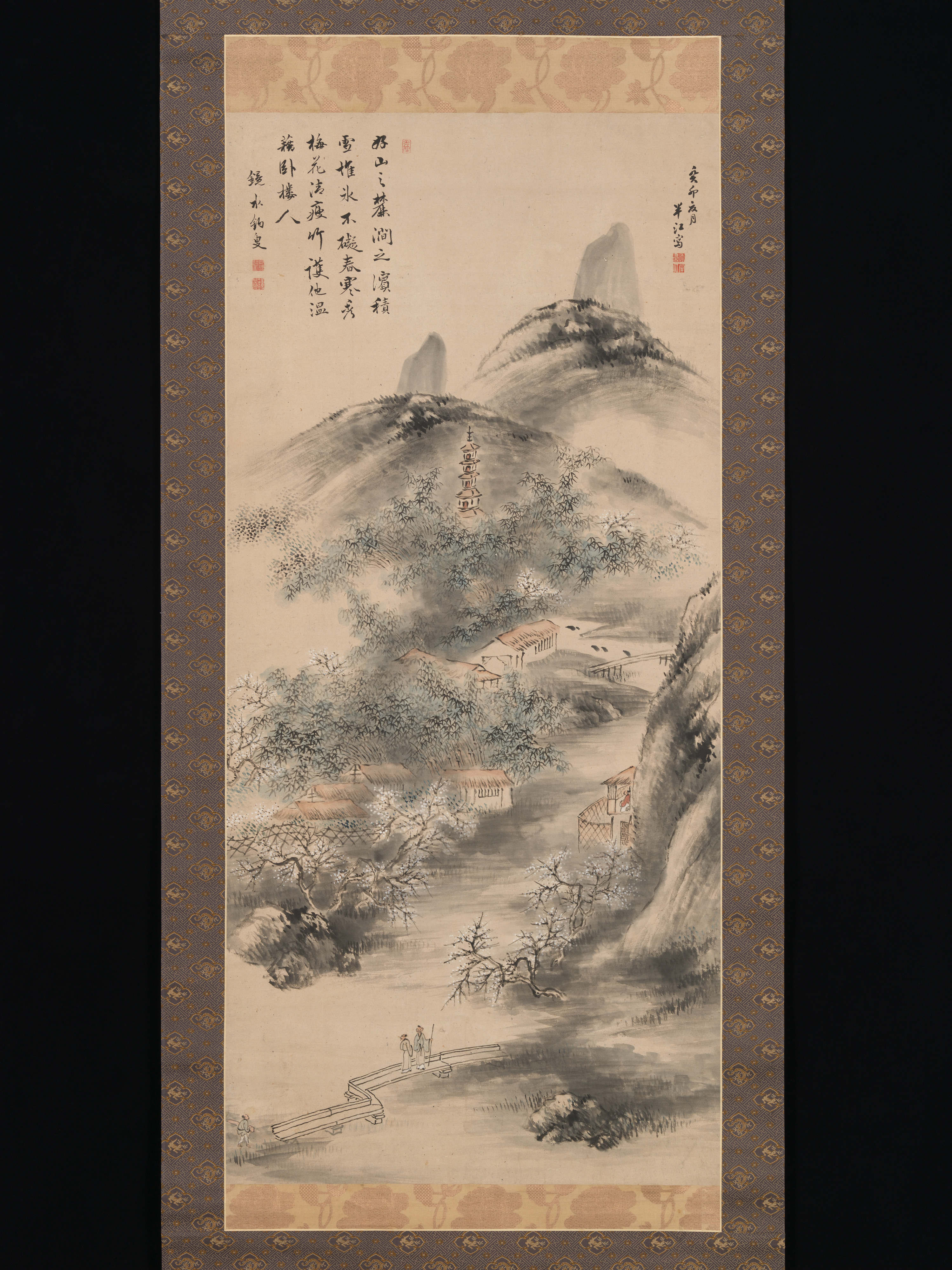
Bamboo and Plum in Early Spring
1843
Hanging scroll; ink and color on paper