
Misty Dawn at the Seashore
by Okada Hankō
- Date:
- 19th century
- Medium:
- Hanging scroll; ink and color on paper
- Source:
- Metropolitan Museum of Art
Description
Misty Dawn at the Seashore, dated 1830, is a hanging-scroll landscape by Okada Hankō (岡田半江, 1782-1846), held in the collection of the Metropolitan Museum of Art (accession recorded at https://www.metmuseum.org/art/collection/search/48997). Mist at dawn over water is among the most enduring atmospheric subjects of the Chinese literati landscape tradition that Edo and Kansai bunjinga painters absorbed: the motif allows the brush to disappear into wash, the horizon to dissolve, and the landscape to be made as much by withholding as by description. The theme descends from the Song masters of misty river landscapes — Mi Fu, Mi Youren, and the Mi school of cloud-and-mist painting — and continues through the Yuan and Ming landscape painters whose model albums reached Edo Japan through Nagasaki imports. As the son and pupil of Okada Beisanjin (1744-1820), Hankō was the principal transmitter of his father's Osaka bunjinga lineage into the second generation of Kansai nanga; he had been schooled from boyhood in the imported Chinese painting manuals and scrolls his father studied, and by 1830 — a decade after Beisanjin's death — he was the recognized senior nanga painter of Osaka. His mature manner refined the deliberately untutored brush of his father into a more lyrical, atmospheric idiom, more polished in handling but still committed to the literati conviction that brushwork and tonal management, rather than topographic specificity, carry the substance of a landscape. A composition of this kind would invite wet-into-wet wash for the mist, a low-keyed warm-cool palette for the dawn, and a few summary indications of distant shore and small structures or boats to anchor the scene.
More Prints by Okada Hankō
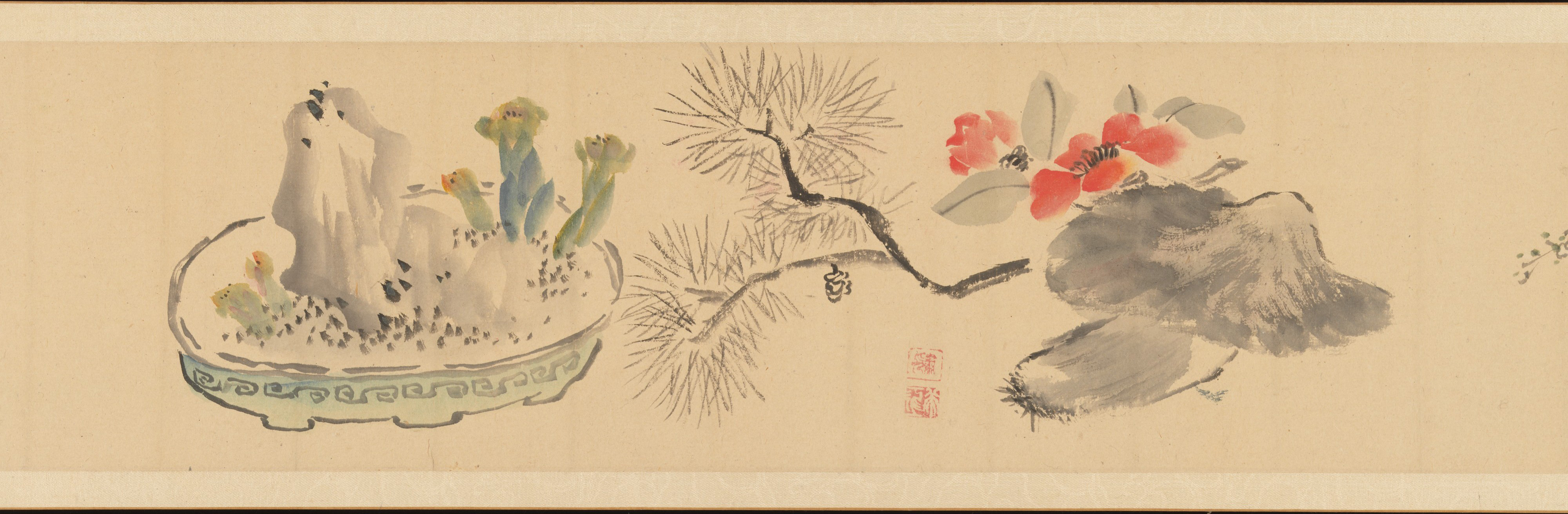
Letter Enclosing Flowers
1831
Handscroll; ink and color on paper
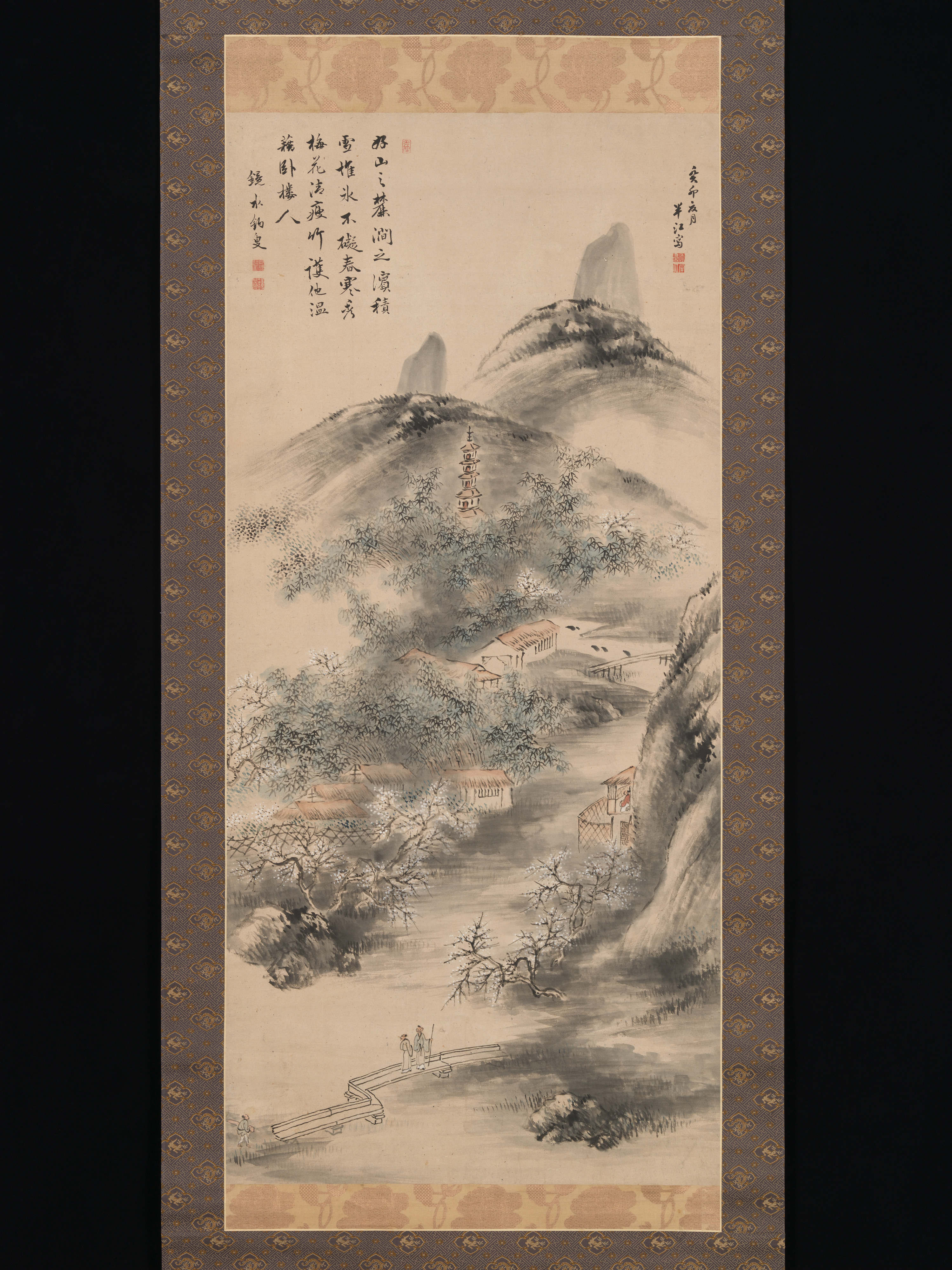
Bamboo and Plum in Early Spring
1843
Hanging scroll; ink and color on paper
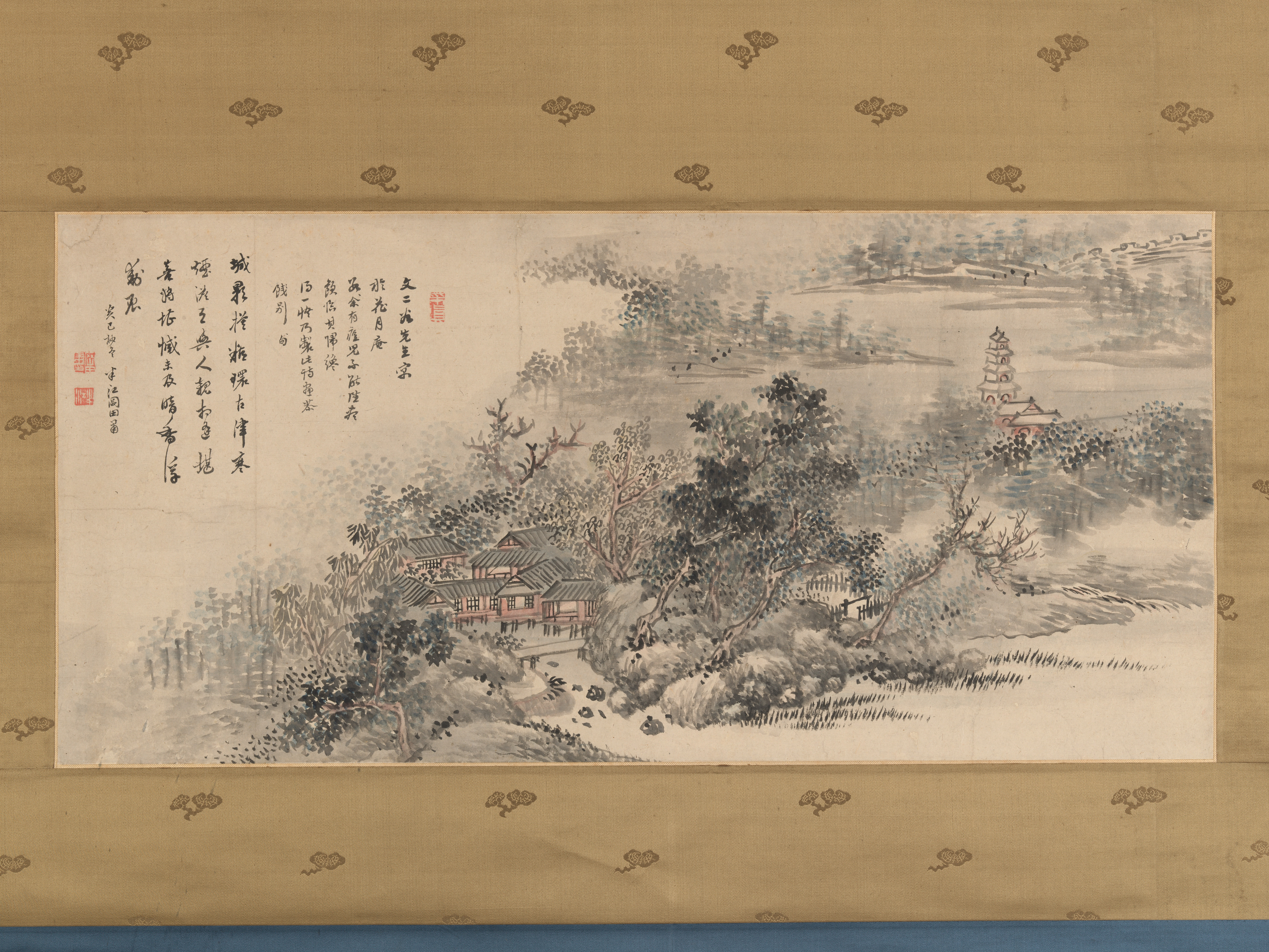
Farewell Gift to Tani Bunji
1833
Hanging scroll; ink and color on paper
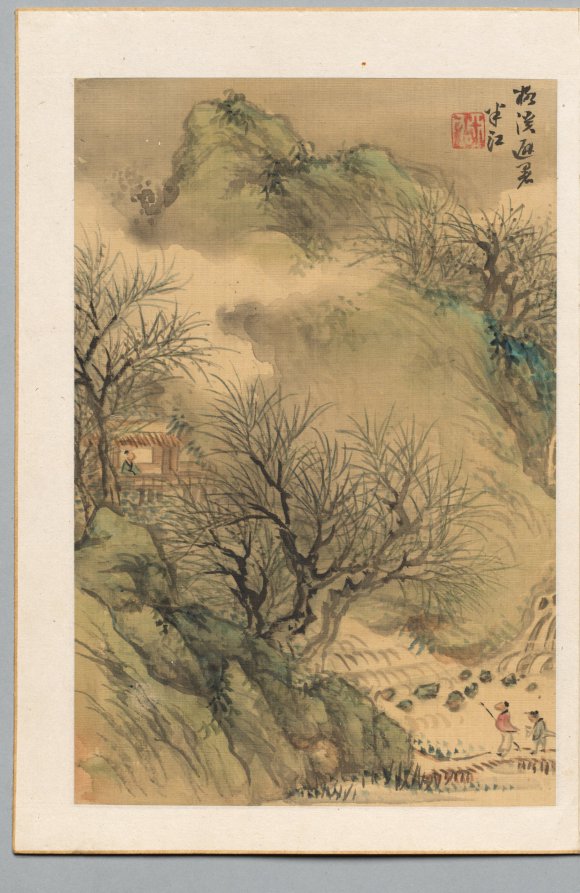
Summer Retreat
early to mid-1800s
Leaf from a pair of folding albums; ink and light color on paper
Frequently Asked Questions
Misty Dawn at the Seashore was created by Okada Hankō (岡田半江) in 19th century.